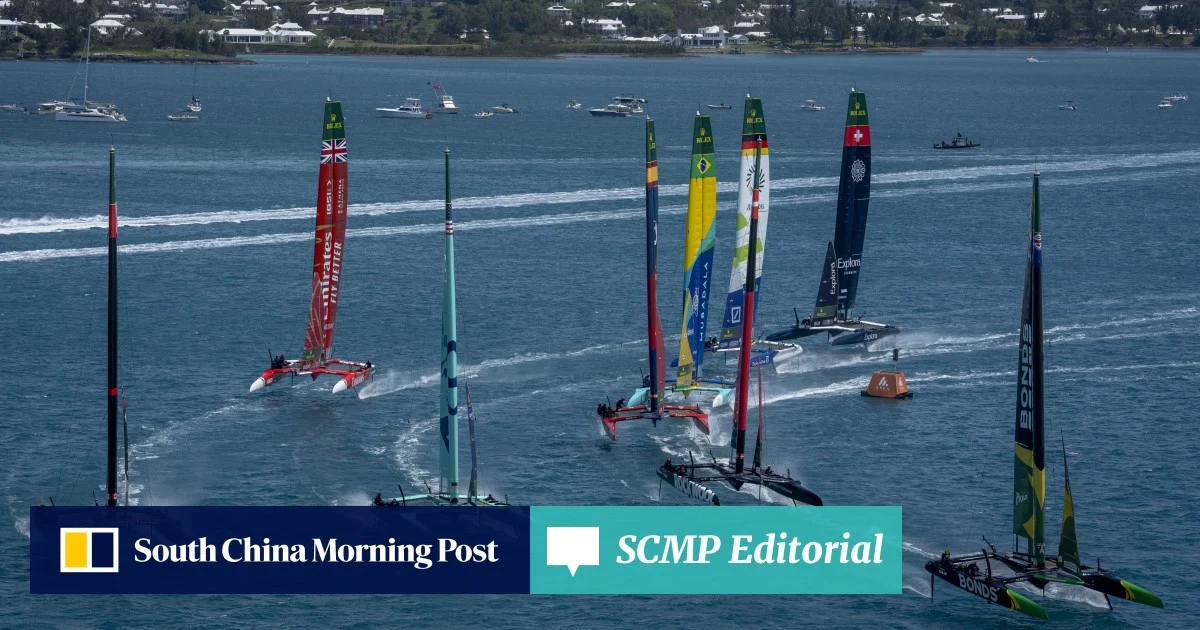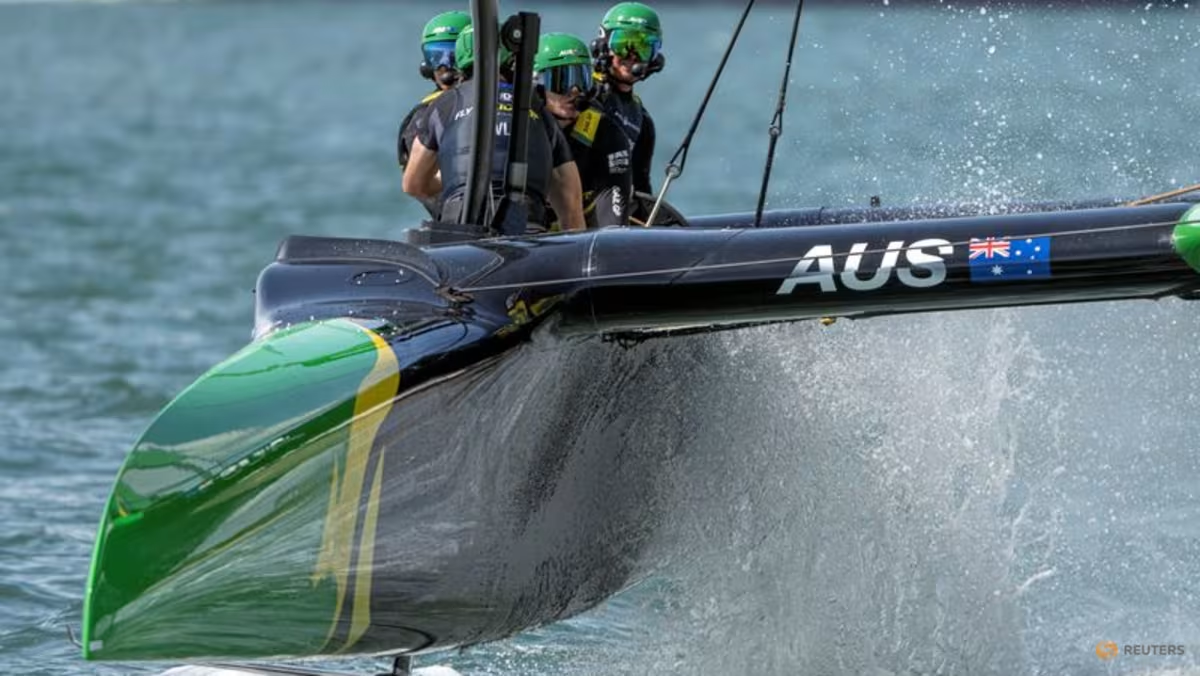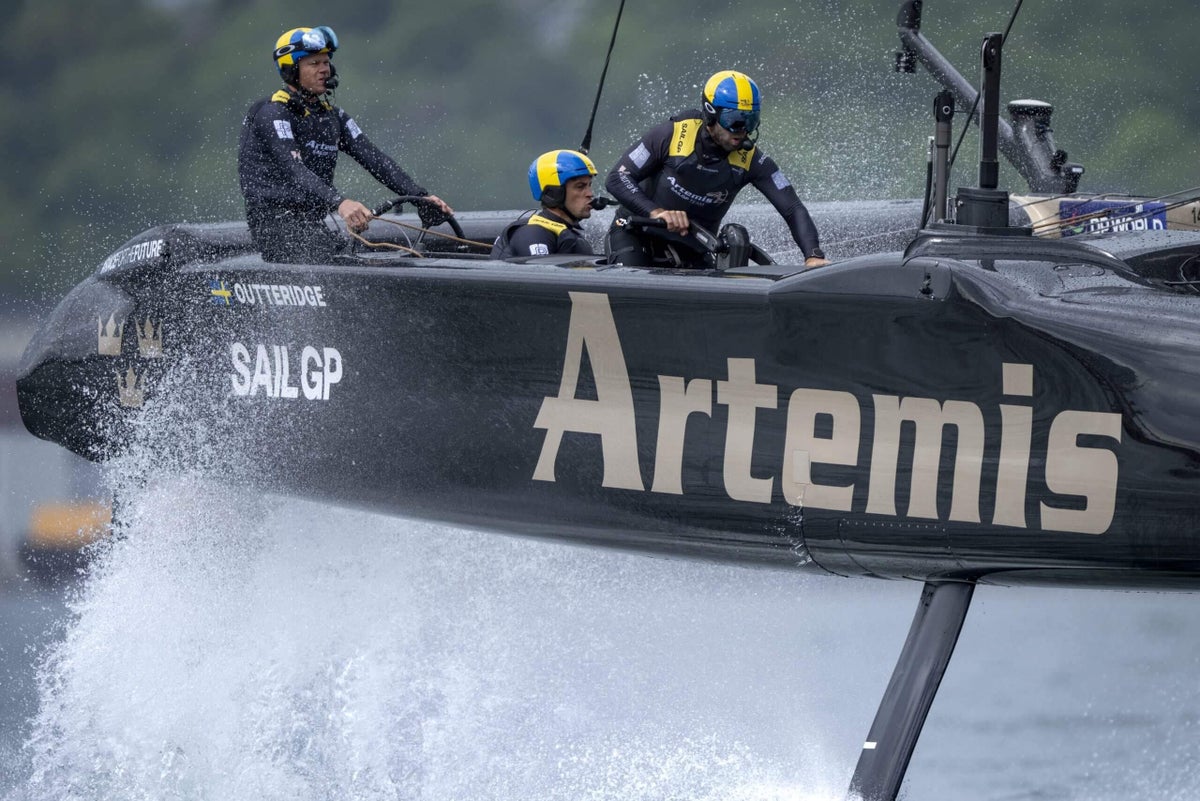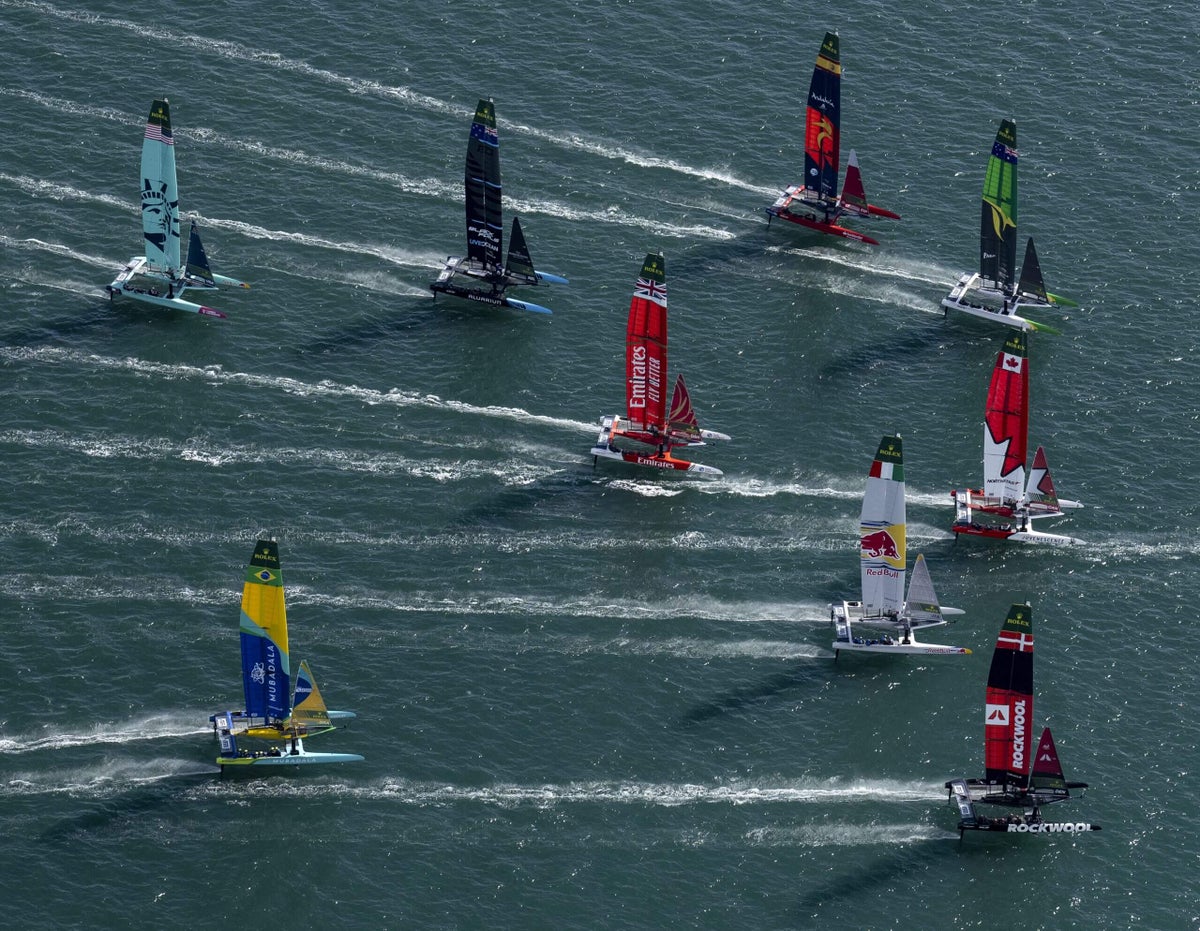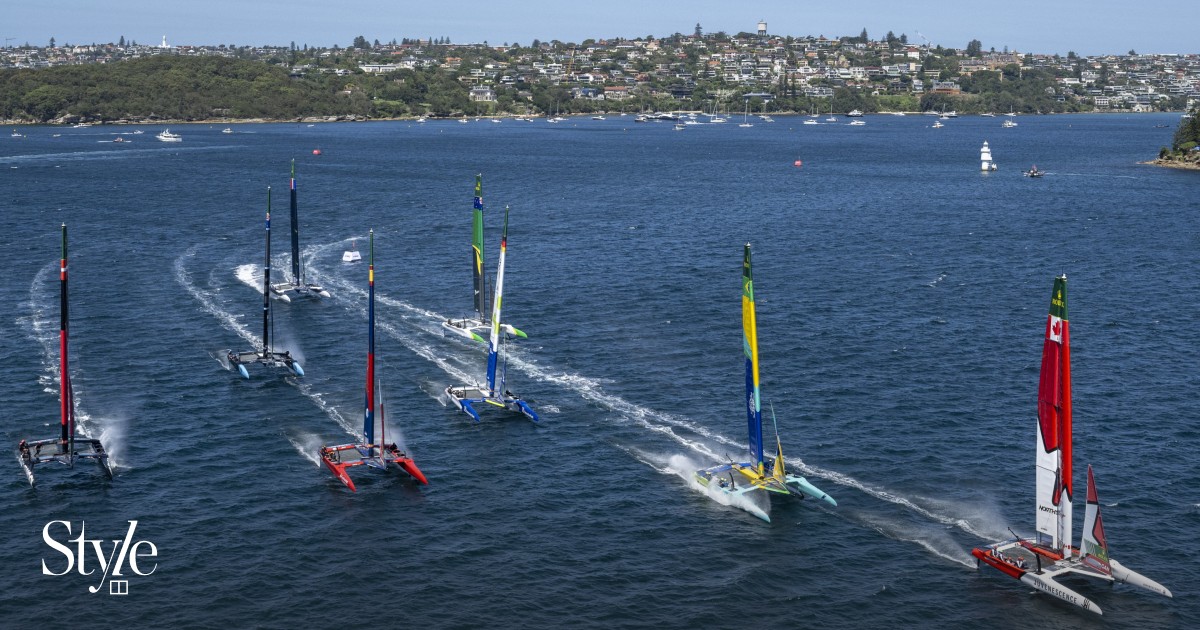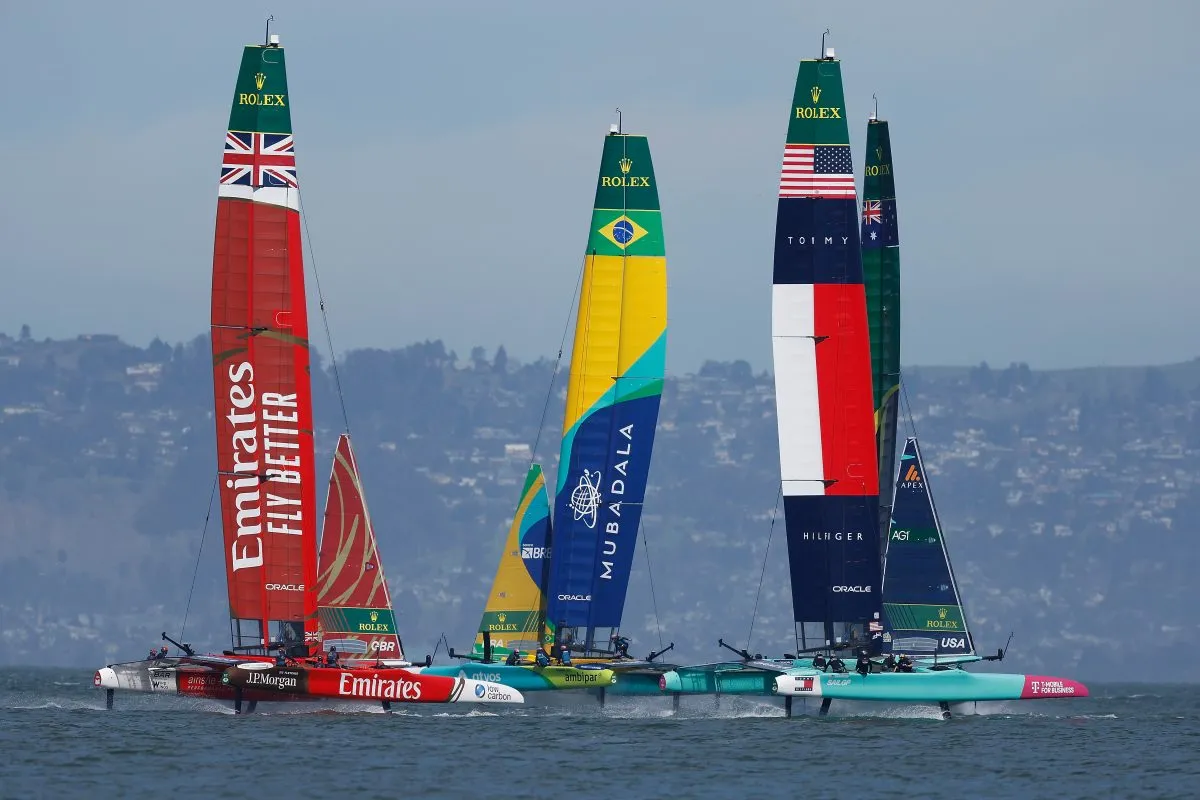
Editor’s note: This story is part of The Athletic’s coverage of SailGP, an international sailing competition that has been likened to Formula 1 on water. Follow SailGP here.Gathering data and inside knowledge on your competitors is a precious commodity in professional sport.Some teams can take it too far. English soccer team Southampton, for example, or the 2007 ‘Spygate’ controversy between Formula 1 teams Ferrari and McLaren.But in SailGP, spying of this kind is encouraged.Around 35,000 unique data points per second flow out of each 13 foiling F50s as they sail around the race track. But unlike F1, for example, all the data is owned and centrally managed by the SailGP organisation.Over the span of a typical race weekend, the computing platform Oracle Cloud Infrastructure delivers and tracks around 80 billion individual pieces of information. This firehose of data — which offers stats on all performance aspects of the boat, from speed and number of manoeuvres to positioning on the race track — is freely available for all the teams to analyse to their heart’s content.The aim is to help the lower order, less experienced teams to grasp and understand the performance gap to the top of the fleet much more quickly than if they had to do it all themselves.Australia has been the dominant force in the league since it launched in 2019. Driver Tom Slingsby and his crew won the first three seasons and while the Aussies were pipped to the post in the three-boat, winner-takes-all final race of the season in 2024 to Spain and 2025 to Great Britain, the Bonds Flying Roos have rarely been off the podium.Last month, on the Sunday of the Brazil Grand Prix in Rio de Janeiro, Slingsby and his crew racked up four wins from four races, a perfect score that has never been achieved before in five seasons of the league.All the boats were kitted out with the big 27.5m wing sail, which turned out to be far too powerful when the wind came in stronger than had been forecast. But where other teams were complaining about the boat feeling out of sorts, Slingsby said he and the Australian team were operating in some kind of flow state, where they felt in sync with the F50 despite its oversized sail.Since then the other teams will have been digging hard into the data from Rio to work out what the Australians were doing differently.General view inside the coaches’ booth and race management platform in June 2024. (Andrew Baker for SailGP)It’s the kind of hard information F1 teams would kill for. Closer to home in the sailing world, the America’s Cup is also a game of closely guarded secrets.Finding a small performance edge can cost millions of dollars, so why would you give away that intellectual property to the people trying to beat you? It’s such an intrinsic part of professional sport, yet when Oracle billionaire Larry Ellison and five-time America’s Cup winner Russell Coutts co-founded SailGP seven years ago, they decided to take their new league in a completely different direction.“Making the data completely transparent to everyone was one of the early themes of SailGP,” Alex Reid, SailGP’s director of performance engineering, told The Athletic. “It was one of the founding principles of SailGP, really, to have everything open.”“Whenever people come into the data container or go and have a look at the boat, half the people will always say, ‘Oh, can I take a picture?’ expecting us to say ‘no’,” added Reid. “And the opposite is true. We encourage it.”Despite the ongoing dominance of Australia, overall there are strong signs that SailGP’s push for data transparency is working. Across the 12 events of the 2025 season, all 12 teams won races at some point in the year and there were seven different winners of Grand Prix events.Coutts is encouraged by what he sees. “The data being in an open forum allows teams to be competitive, which of course makes the racing more compelling,” said SailGP’s CEO.He compared the concept to the draft systems used in American sports, designed to prevent structural stagnation and ensure that no single franchise dominates to the point of turning the sport dull. “We don’t want a team finishing at the back of the league every season,” said Coutts. “When I look at even some of the biggest sports properties in the world, there’s a lot of secrecy around their particular performance data and so forth, and they can’t storytell. Some of those teams just dominate on and on and on. I think that’s one of the things that we might have got right in SailGP.”The data collected over a Grand Prix weekend is freely available for all teams to analyze. (Gabriel_Heusi for SailGP)Reid recalled hosting a group of F1 engineers who experienced a mild form of culture shock when they walked into the SailGP data nerve center. “The open data is certainly a surprise to them, and you talk about it and then you kind of do comparisons between the sports,” said Reid. “A good example of openness versus individuality is before the start of every race, we give a strategy guide for the race course, in terms of: this is how many maneuvers, this gate is favored, etc. We provide that to the teams.“The equivalent for motorsport is how they go and measure the track accurately. Each team will go and do that themselves, and it’s pretty expensive to do that, so you’ll probably get 10 very, very similar answers.“When you take one step back, it would make a lot more sense if just one group did it and shared the results with all the teams. They [the F1 engineers] were also quite surprised how technical set-up information was available so easily to everybody.”
SailGP makes sure teams share their data. Is the push for transparency working?
During a typical SailGP weekend, around 80 billion pieces of data is collected, all of which is made available to the teams to analyze.
2,005 words~9 min read