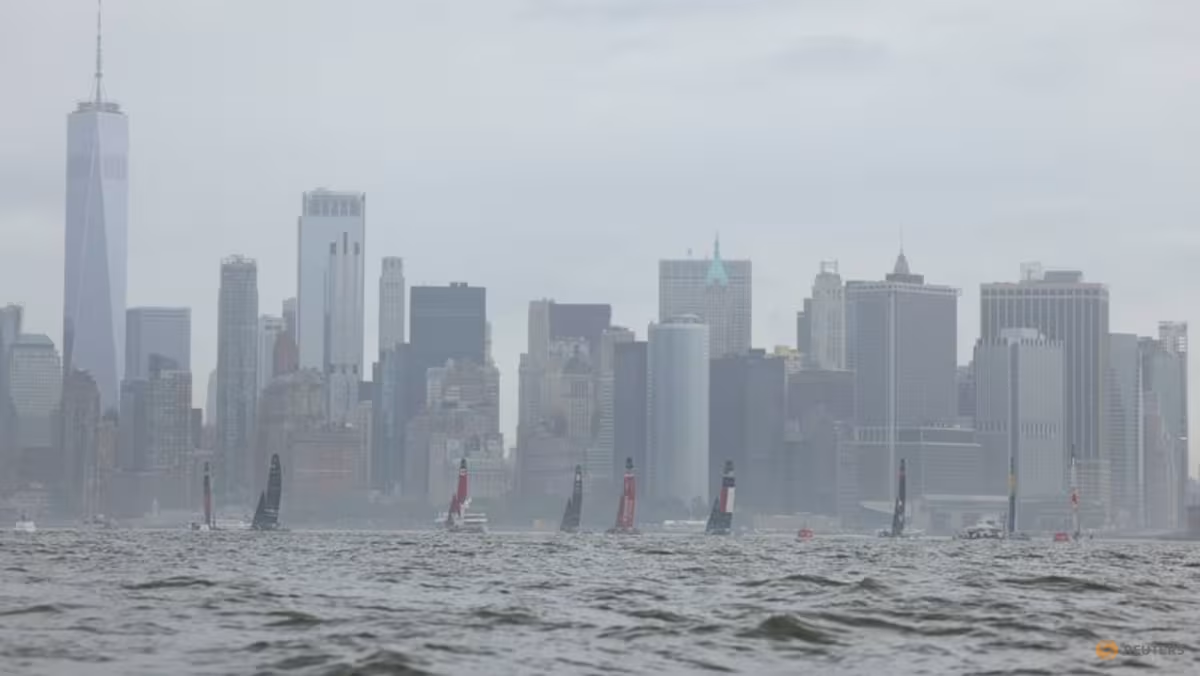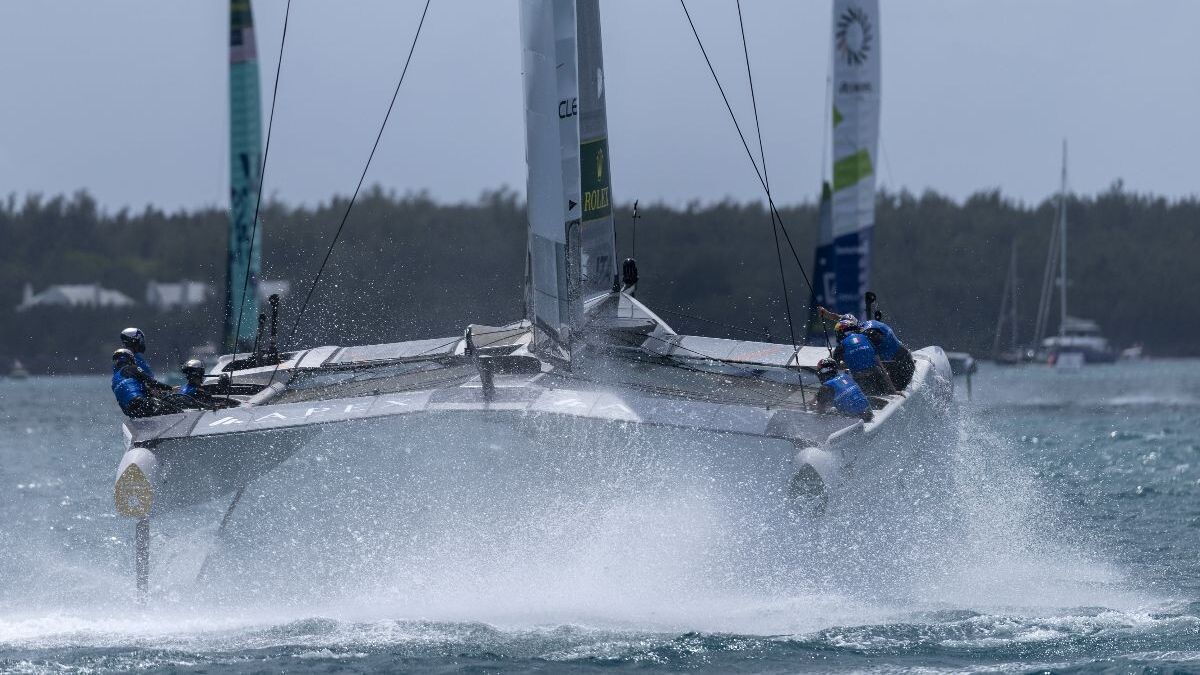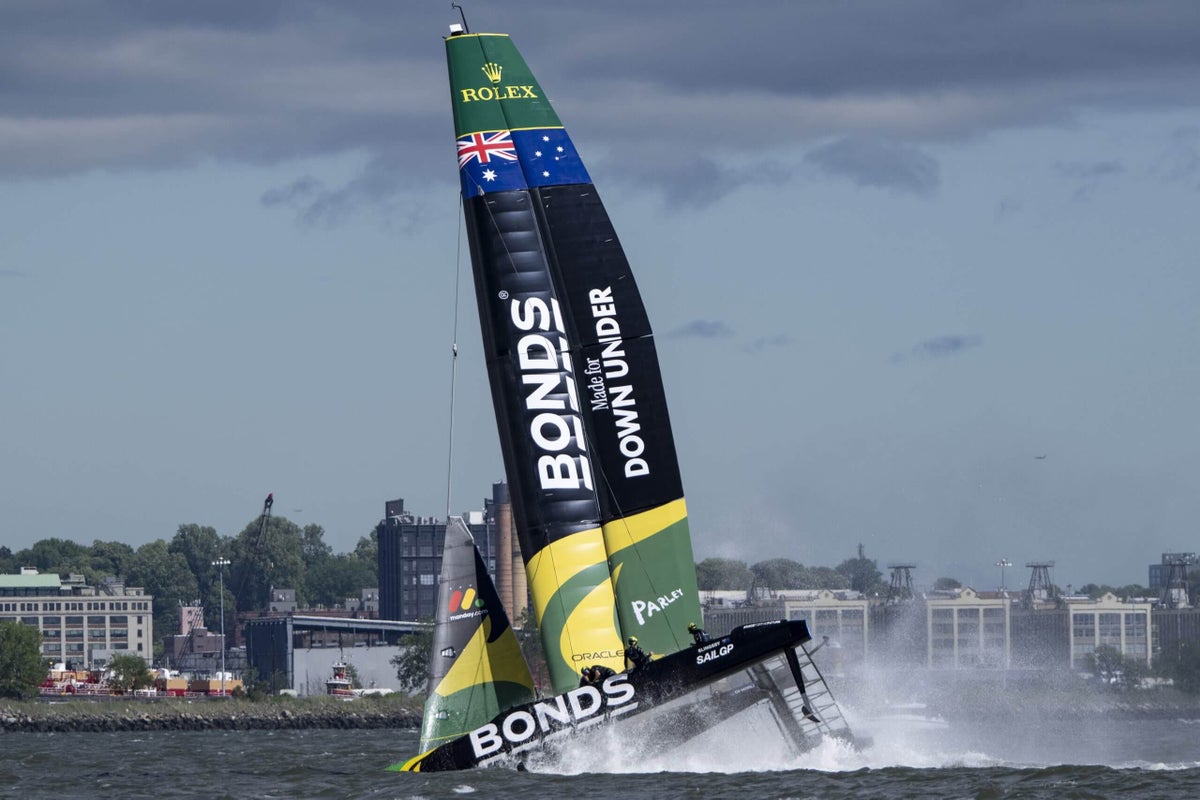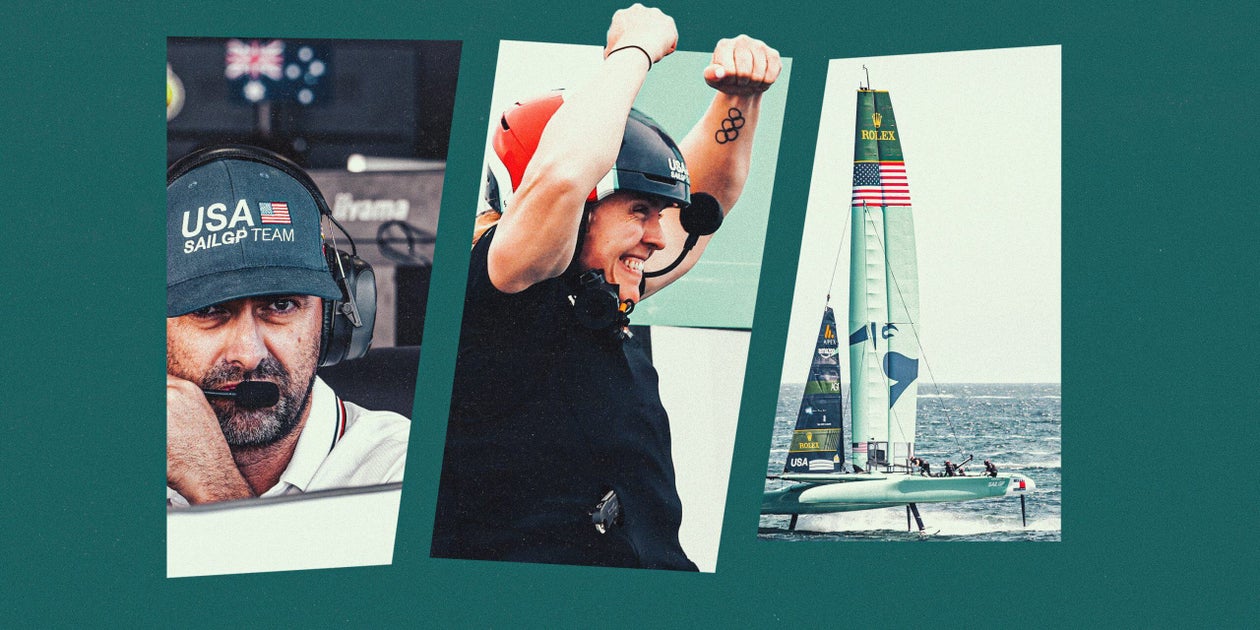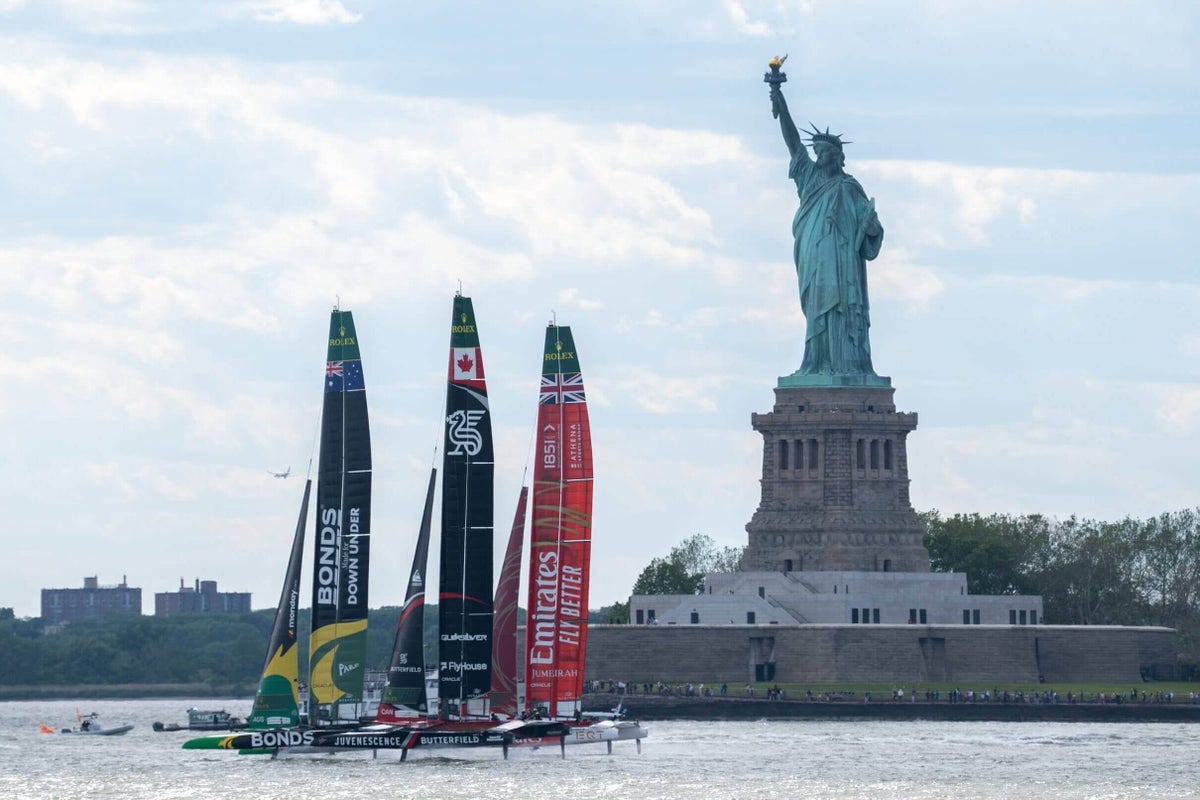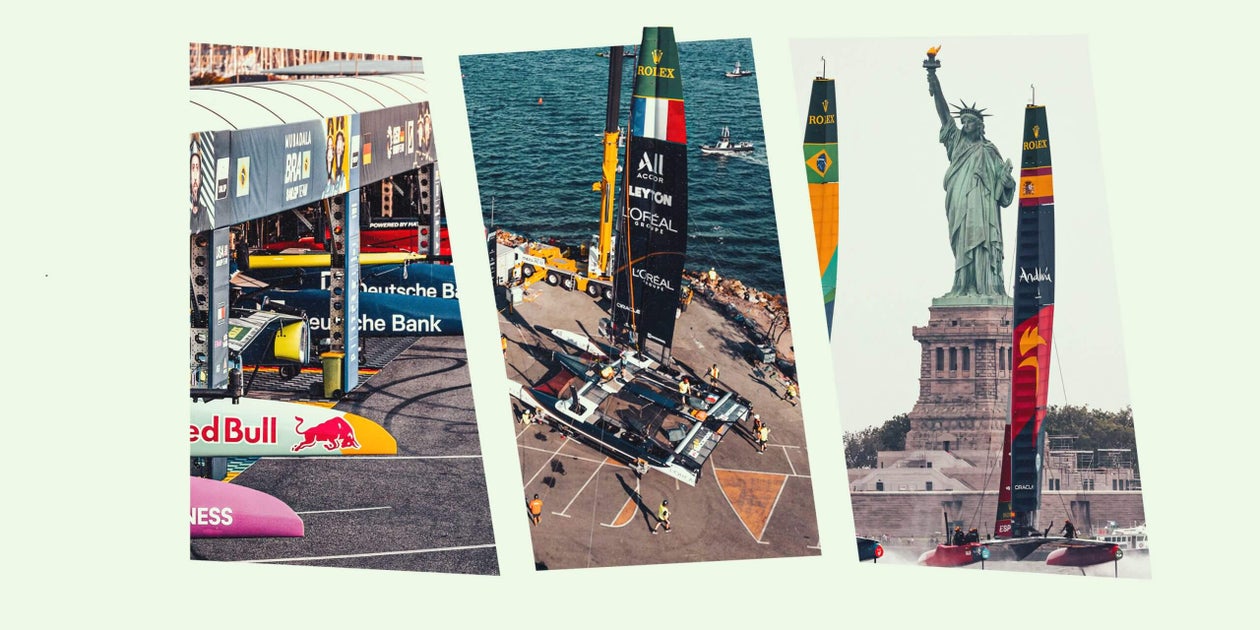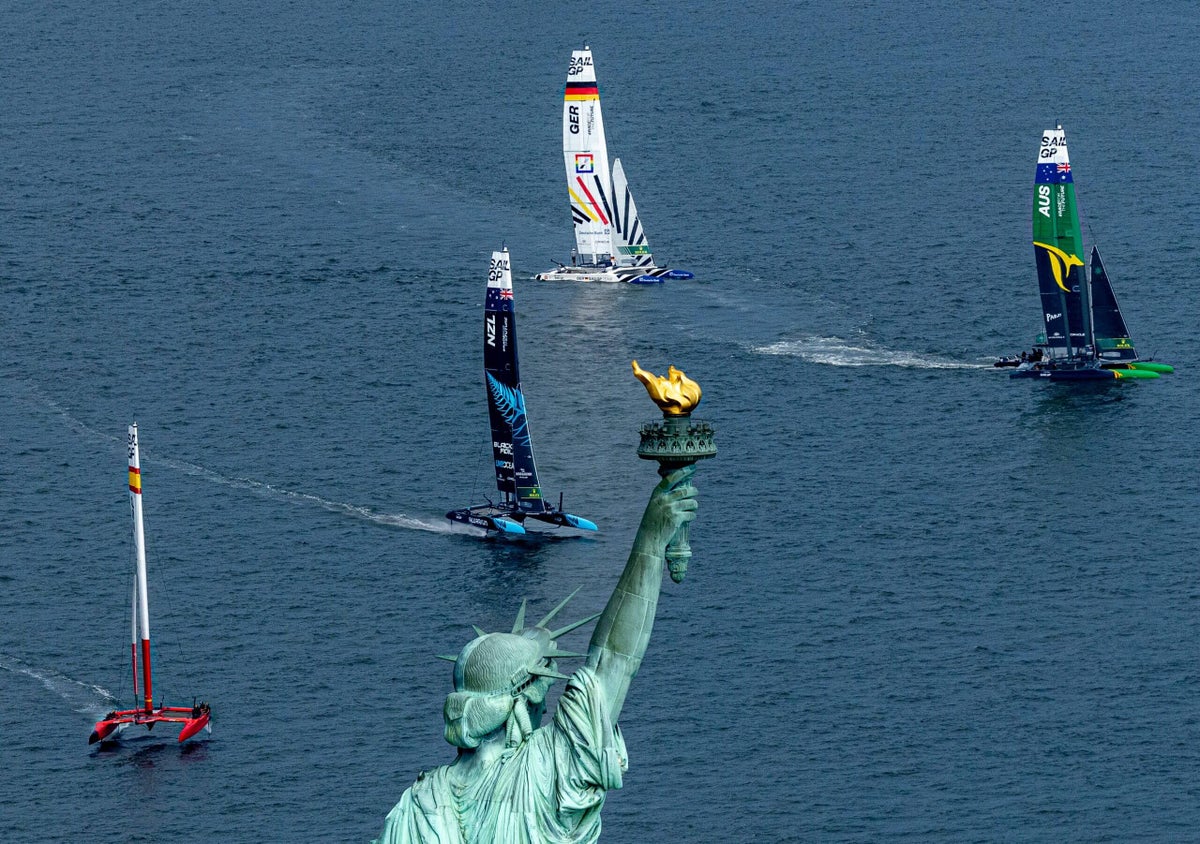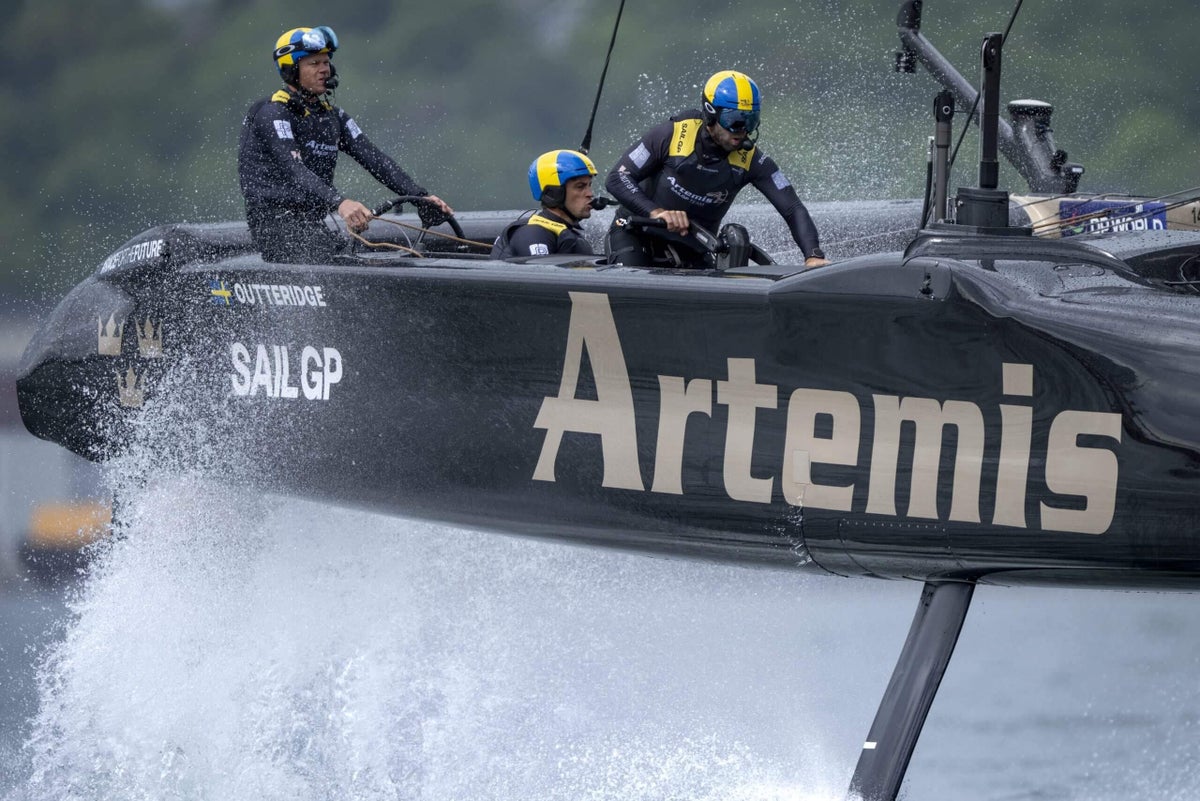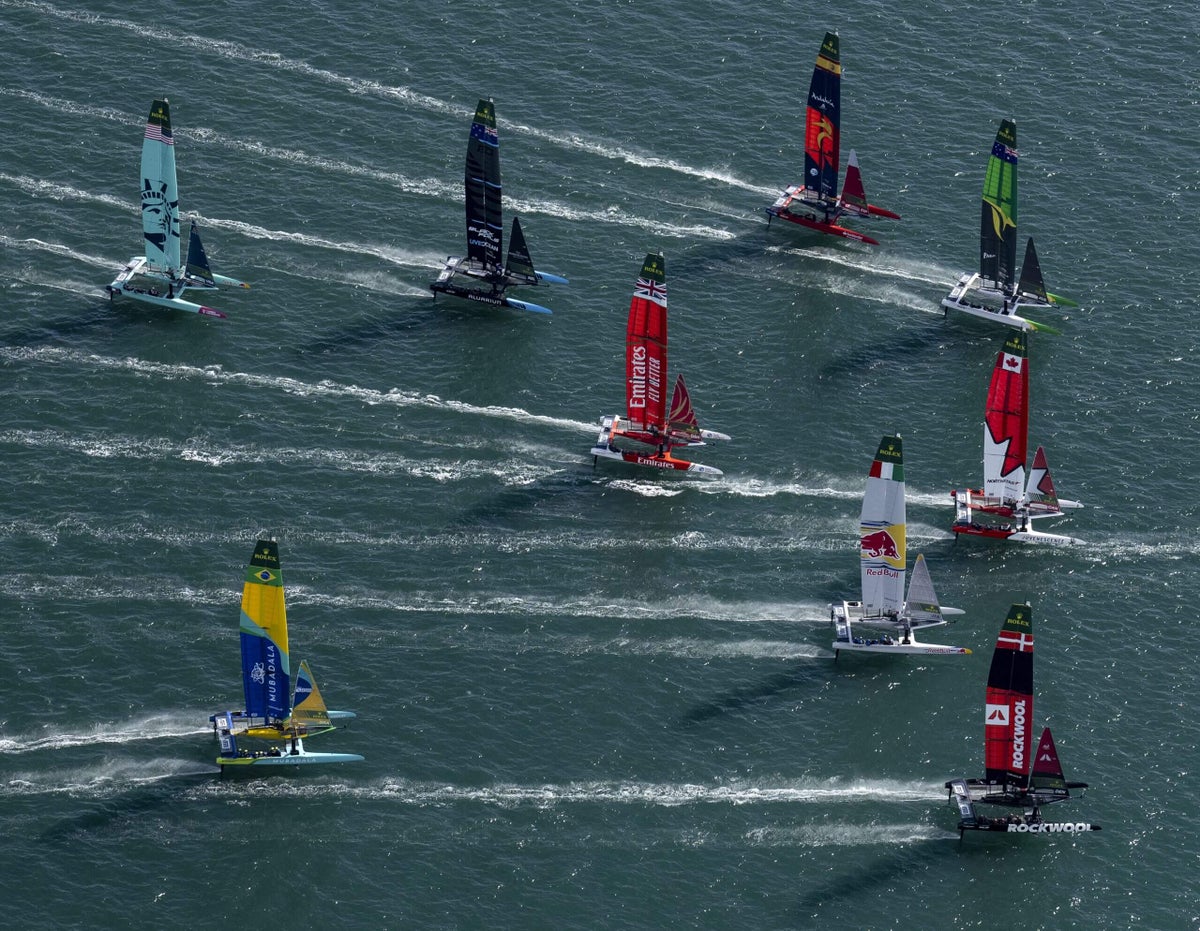
Editor’s note: This story is part of The Athletic’s coverage of SailGP, an international sailing competition that has been likened to Formula 1 on water. Follow SailGP here.In the spring of 1995, a nine-year-old girl named Melanie Roberts sat glued to a television screen in San Diego, watching the America’s Cup unfold in her own Californian backyard.It was a historic summer, the year of the first all-women’s crew, Mighty Mary, and Roberts had become an obsessive super-fan, dropping handwritten notes and sweet treats off at their team base.When Russell Coutts steered the New Zealand boat to victory that year, and took the America’s Cup to Auckland for the first time in the event’s long history, little did Roberts imagine that, many years later, she would find herself running races for the very same Coutts in SailGP, the global league which New Zealand’s five-time America’s Cup winner founded with Oracle software billionaire Larry Ellison.When Coutts and Ellison won the Cup together and brought it to San Francisco in 2013, Roberts found herself in the right place at the right time.“Sometimes it’s not what you know, it’s who you know,” smiled Roberts. “The person I was working with at the time got appointed to be the principal race officer of that America’s Cup and took me along with him. And that’s when I met Iain Murray, and the rest is kind of history.”Murray is the principal race officer of both SailGP and the America’s Cup, and Roberts finds herself in a double-act working alongside him, managing a tight race course for SailGP’s fleet of foiling F50 catamarans, which are capable of speeds in excess of 50 knots.With most sailing competitions, the race committee will wait for the right breeze to come along. Too light, or too strong, and the event will be postponed, or canceled altogether. In the made-for-TV world of SailGP, however, that’s not an option. The show must go on, even if the quality of the racing is compromised.“I have not done a lot of work in traditional sailing,” said Roberts. “But I have raced them, and I know what it’s like to be able to set a course. In that world, when someone asks, ‘How long is the race going to take?’, it takes as long as it takes. Whereas SailGP, we like to say, ‘The race is going to take 12 minutes’, and we’ll make sure it does.”Melanie Roberts in Race HQ on the second day of racing in Perth earlier this year. (Andrew Baker for SailGP)Sometimes, SailGP races even take as little as five minutes, depending on how the 90-minute broadcast window is running, and it’s up to Murray and Roberts to adjust the course length accordingly.“Iain is a mastermind in race timing,” Roberts explained. “He’s got a special little spreadsheet where he can put in the wind speed and basically figure out what time the boats are going to finish, which is very important when we’re sticking to broadcast times. I go to him a lot for advice on how long or short to make the course, based on what speed we think they will finish the race in.”To help make these rapid adjustments, SailGP abandoned old-fashioned anchored buoys in favor of robotic, autonomous marks that can be repositioned remotely via GPS. “It’s been a complete game-changer because we can do pretty instant shifts to the racecourse,” Roberts said. “So if the wind shifts a few degrees, we can match it up so it’s not completely skewed, and the same for lengthening and shortening just based on the weather.”The other challenge for Roberts and Murray is that SailGP races need to take place near shore. The finish line is always in front of the spectators in the stadium and the VIP lounge.By butting up close to the land, SailGP forces its sailors to contend with ‘dirty air’ — wind that bends, shears, and dies as it hits skyscrapers, grandstands and hills.This year, SailGP raced in Rio de Janeiro for the first time. (Jason Ludlow for SailGP)Sugarloaf Mountain was a new challenge for the competitors when they raced in Rio de Janeiro, Brazil, for the first time in April. Even the stadium itself can mess with the breeze, and in Bermuda earlier this month, the banks of temporary bleachers set up for spectators were creating a dead spot at the top of the course.Nathan Outteridge, the Australian skipper of the Swedish team, Artemis SailGP, complained to The Athletic that they should move the course 300 meters to leeward (away from the wind). Which would have cleaned up the fluky breeze, but also meant the action would have been 300 meters away from the paying public.Roberts is unsympathetic.“There’s 12 other boats that are dealing with the exact same conditions,” she said. “Part of the entertainment factor is to bring the marks super-close to shore, and if that compromises the wind a little bit, these are the best sailors and they can figure that out. We work with the conditions that are there, and I think it keeps it really interesting because if it was nice, stable conditions the whole time, you’d just be watching the same thing.”When you’re in the middle of New York City, watching F50s racing on the Hudson River, you’re never likely to be watching the same thing for too long.If Outteridge had complaints about Bermuda, he knows he’s in for much flukier conditions in New York this weekend. As well as the vagaries of the wind, there’s a strong current flowing through the Hudson, sometimes as much as three knots.“The current can play a big role there,” said Roberts. “We purposely look at the dates and times of day when the current is going to have the least impact. Most of the time, the breeze is some sort of variation of south, which is good for us, but I’ve also seen it from every direction there. So it’s just one that keeps us on our toes, it’s super-tricky, but that’s exciting too.”Quite aside from the weather, there is a bundle of red tape to get past just to make the event happen in one of the world’s most frenetic, impatient cities.“It takes a lot of coordination with the local authorities in New York, months and months and months in advance, because New York is super-busy,” Roberts said.“They’ve got a super-efficient and reliable transportation system, particularly the ferry system on the water. And so to ask for a certain area exclusive to us, and shut down normal ferry routes, is a huge ask. We’re so lucky to have the support of New York to do that for us for a few hours each day, so that we can put our racing in front of that amazing backdrop.”New York could throw any kind of wind at the sailors. It could be too strong — as it was to calamitous effect in Auckland — although more likely it might be too light. And it’s the latter winds that really pose the biggest threat to the commercial appeal of a weather-dependent league like SailGP. When the wind dies, the F50s drop off their hydrofoils, settling into the water like heavy, sluggish geese.On television, the high-octane spectacle evaporates into something more akin to a slow-moving game of chess.SailGP is back in New York City this weekend. (Dustin Satloff / Getty Images)Coutts is a ruthless modernist when it comes to sports broadcasting. He views light air as a technical problem to be engineered out of existence.“When we are looking at the product, the question is: is it going to make the racing better, is it going to be a more compelling product?” he told The Athletic. “Our emphasis is actually on light-wind performance right now, because we think the light-wind racing was pretty dull.”To solve this, SailGP has thrown millions of dollars at engineering. It introduced a massive, adjustable light-air wing sail and redesigned the carbon-fiber foils that lift the boats out of the water. “These new foils have had a dramatic impact,” Coutts explained. “When you’re looking at the boats, the boats will glide down as they lose speed, and it will basically drop down quite equally.”According to Roberts, these innovations have drastically lowered the sport’s operational floor. “With the full light-air package, we’re probably looking at four to five knots of wind to be sailable, which is pretty unheard of for any class,” she said. “Obviously, for foiling, we need a few knots more, but at least we can still deliver a product when the wind’s that light.”However, Coutts isn’t stopping at improving foil design or wing size. In a radical move that blurs the line between traditional sailing and motorsport, SailGP last year quietly began testing an active water-jet propulsion system designed to artificially push the boats up onto their foils when nature refuses to cooperate.News of the project has gone silent lately, but it goes to show how far Coutts is prepared to break the traditional limits of the sport in order to provide a reliable made-for-TV product. “The idea is that the propulsion system is really just assisting you up on the foil, and then from there on out, you are racing a sailboat. But it would have a pretty dramatic effect, we think, on the racing product and allow the boat to foil in very light winds,” he said.Coutts knows such a move towards artificial propulsion will annoy the purists, but he points to professional tennis for his justification. “Let’s talk about a big sports property,” he said. “At Wimbledon, even with their great tennis players and star attractions for the audience, if they had a rained-off match, they lose 40 percent of their audience within 20 minutes, which is why they spent money on a roof.”SailGP races need to take place near shore. (Kieran Cleeves for SailGP)Roberts marveled at how interest in the league has taken off in recent years, which is only going to make her job more challenging, although she relished the prospect.“I think the fleet size is going to keep increasing. There’s huge interest in SailGP, and it’s testament that people are willing to buy teams. Didn’t see that coming in Season One, but that’s where we are now, and we’re just trying to build boats fast enough for the demand,” she said.“I can see, in X amount of years’ time, we’re certainly going to have to split the fleet. Probably from next season, just because the course is getting way too congested. But how cool would it be if we end up with two fleets of 10?”
New York SailGP: How to manage a championship that’s so reliant on the weather
Strong currents and an unpredictable wind will make this weekend's New York SailGP a real test for sailors.
1,758 words~8 min read