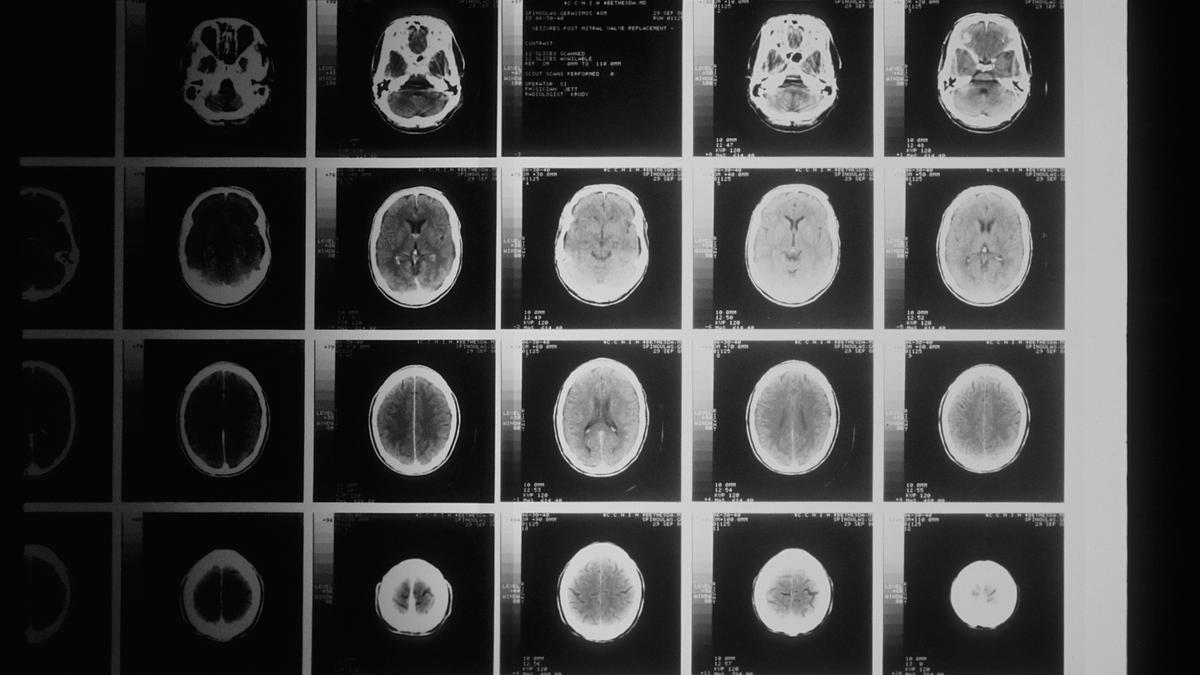
Many people have reported moments when the sense of being a distinct self ‘loosens’. Among astronauts, it is called the overview effect while deep-sea explorers report a similar shift sometimes called the underview effect. Both involve sudden changes in perspective in which the usual boundary of ‘me’ briefly softens, as if the vastness they encounter is mirrored inwardly and the distance between self and world is momentarily absent.This dissolution often translates into shared experiences of oneness and interconnectedness with the outside world.The 19th century Indian teacher Ramana Maharshi treated this instability not as an anomaly but as something to examine directly. Continuing a long philosophical tradition, he invited people to look for the ‘I’ in their own experiences — in the body, sensations, and thoughts — and notice that none of them fully captures the true nature of the self.Such inquiry explores experience from the inside, a subjective, first-person view. Modern science, by contrast, examines the brain processes that accompany experience from the outside, making these inner shifts harder to access directly.Only recently, however, has a new experimental tool offered a way to observe what happens in the brain as the sense of self begins to shift. Psychedelics can temporarily ‘loosen’ the brain patterns that support the feeling of a ‘me’, allowing researchers to watch that system reorganise itself in real time.The brain in actionTo study what happens when the sense of self weakens, an international team of researchers turned to a fast-acting psychedelic compound called N,N-Dimethyltryptamine (DMT) in a laboratory study with 27 volunteers. DMT produces a brief and intense shift in awareness that often includes a loss of the usual feeling of being a separate ‘me’. In the experiment, published in The Journal of Neuroscience on January 14, volunteers received DMT while researchers recorded their brain activity using electroencephalography (EEG) to track rhythmic electrical patterns across the scalp.In normal conditions, one of the brain’s dominant rhythms is the alpha wave — a slow oscillation linked to inward focus. This rhythm helps regulate internally focused processing. Importantly, this rhythm is not the self itself but one neural signature associated with how the brain maintains a coherent sense of self over time.During the DMT experience, that pattern began to loosen. Alpha rhythms weakened and lost coordination. Overall brain activity also shifted away from its usual organisation. And the more this rhythm weakened, the more strongly participants reported losing their ordinary sense of self.
Psychedelics are revealing how the brain builds the sense of self
Explore how psychedelics and meditation reveal the brain's construction of self, influencing our acceptance of change and mortality.
1,707 words~8 min read