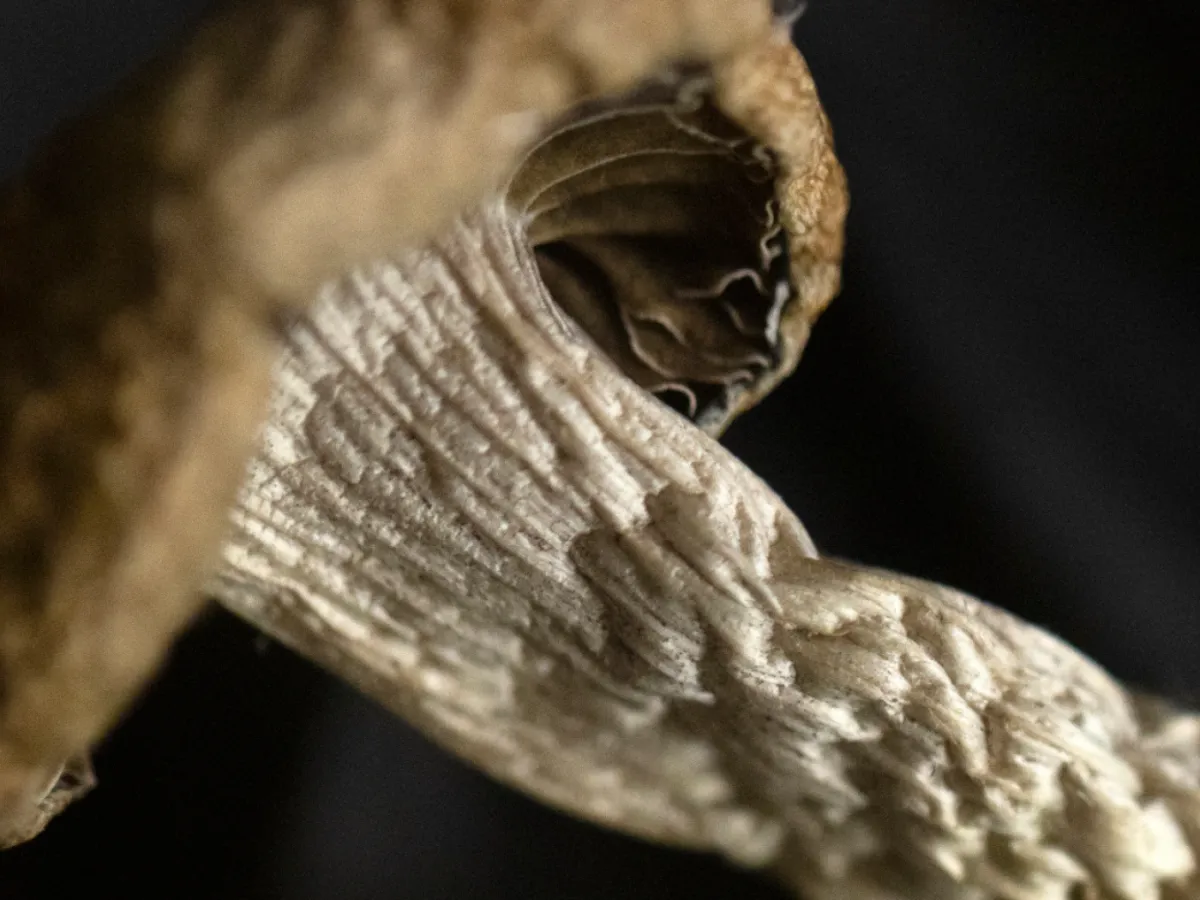
Psychedelics are becoming more clinically relevant, and a slew of recent research has explored the effects of psilocybin in ever-greater detail, revealing that it has the ability to imprint lasting, meaningful changes in brain activity. Psilocybin, the psychoactive powerhouse in 'magic mushrooms', is thought to induce brain plasticity, reorganizing neural connections and signaling pathways to potentially alter our otherwise stagnant mind states. Indeed, some users have reported increased universal immersion: a deconstruction and interconnection of the senses of space, time, and selfhood – a melding of one's identity into the cosmic milieu, if you will. If this sounds a bit chaotic, some scientists agree. The brain disruptions caused by psilocybin have generally been considered disorganized and entropic, with some brain networks shifting from an orderly, rigid state to a more disordered, flexible one (at least temporarily). But that apparent disorder is not the whole story, according to the largest single-site psychedelic brain study to date, just published in the journal Nature. "We uncovered hidden order within that disruption," explains Devon Stoliker, a neuroscientist and consciousness researcher at Monash University in Australia and the study's lead author. "Under psilocybin, brain networks that help us process our inner world and the world around us became less distinct, but reorganised into patterns that reflected what people were experiencing." "This was strongest in people who had more positive psychedelic experiences and felt less separate from the world around them." The psychedelic psilocybin molecule was originally derived from mushroom species. (Kateryna Kon/Science Photo Library/Getty Images)In a five-year study at Monash University, researchers used functional magnetic resonance imaging (fMRI) and electroencephalography (EEG), along with machine learning models and questionnaires, to explore how the mind naturally responds after a psilocybin dose.The study involved 62 healthy adults with no previous psychedelic experiences. They had their brains scanned before and after receiving psilocybin treatment while they rested, meditated, listened to music, or watched a silent movie of moving clouds.By mapping blood-oxygen signals across different brain regions, the researchers detected a drop in functional modularity, the usual segregation of brain activity into distinct networks.The default mode network (DMN), a linkage of brain regions, appears to be a central mediator. The DMN is like a neurological flight controller, integrating information from different brain areas that perceive heady concepts like space, time, and identity. It's especially active during daydreaming and introspection. Psilocybin seems to relax the division between brain networks, allowing novel neurological interactions.
The World's Largest Psychedelic Brain Study of Its Kind Just Found 'Hidden Order' in The Chaos
Psychedelics are becoming more clinically relevant, and a slew of recent research has explored the effects of psilocybin in ever-greater detail, revealing that it has the ability to imprint lasting, meaningful changes in brain activity. Psilocybin, the psychoactive powerhouse in 'magic mushrooms', is thought to induce brain plasticity, reorganizing neural connections and signaling pathways to potentially alter our otherwise stagnant mind states. Indeed, some users have reported increased universal immersion: a deconstruction and interconnection of the senses of space, time, and selfhood – a melding of one's identity into the cosmic milieu, if you will. If this sounds a bit chaotic, some scientists agree.
952 words~4 min read