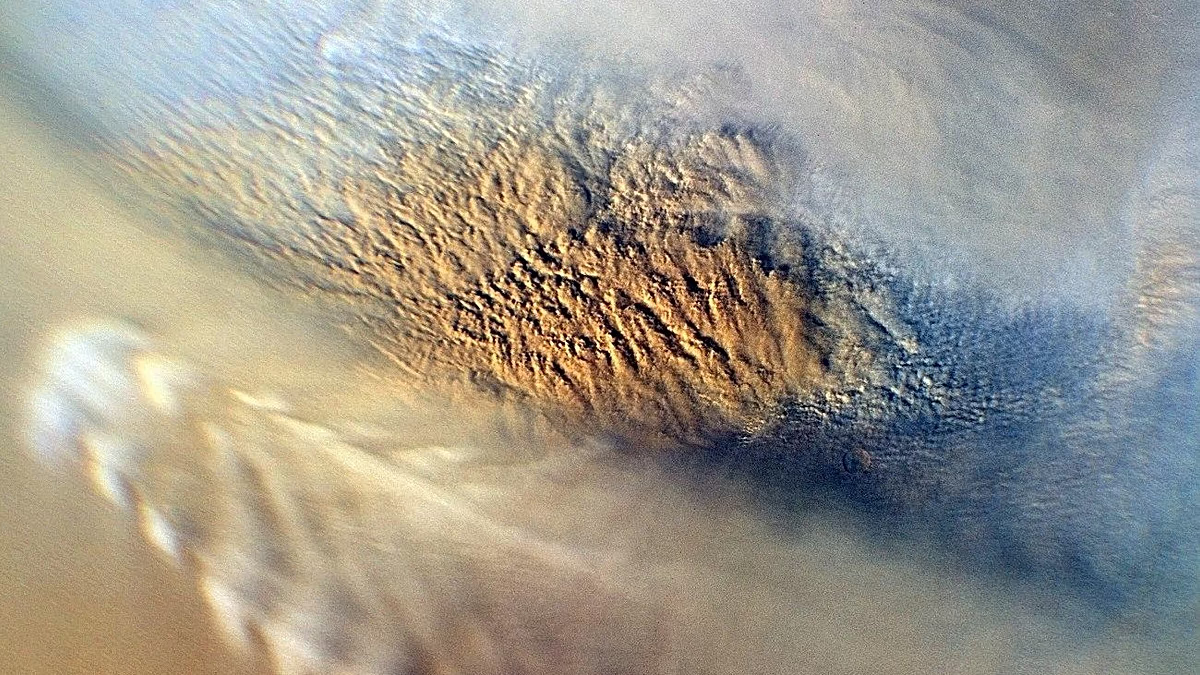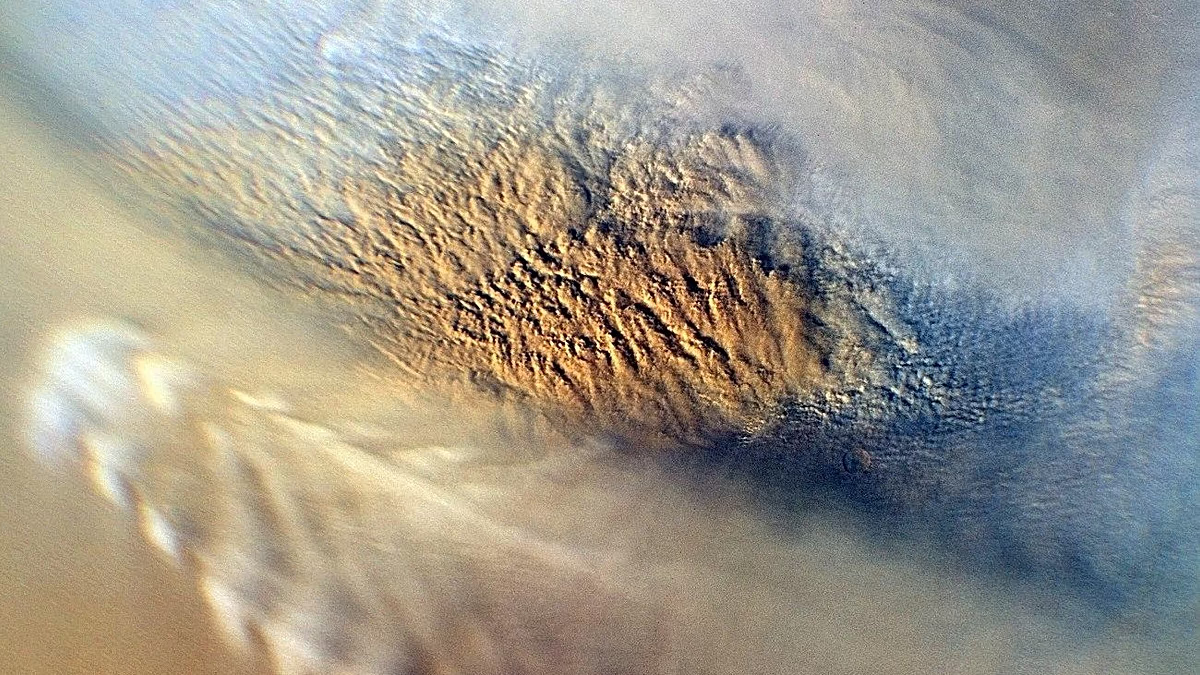
Two Portuguese scientists were the lead authors of a study, published in the scientific journal Journal of Geophysical Research: Planets, (source in Portuguese) which set out to “hunt” and analyse clouds on Mars, in a breakthrough designed to make future missions to the Red Planet easier.
As part of this research, the aim was to measure simultaneously the altitude and propagation speed of Martian atmospheric waves, which are a key element in understanding how energy is transported in the planet’s atmosphere.
As scientist Francisco Brasil, who led the study alongside Pedro Machado, both from the Faculty of Sciences of the University of Lisbon (CIÊNCIAS ULisboa) and the Institute of Astrophysics and Space Sciences (IA), explained to Euronews, this was achieved essentially on the basis of data from the Mars Express mission.
The work draws on “one of the European Space Agency’s longest missions”, which has been in orbit for 23 years and has since been extended “until 2029” — with key elements of this unmanned initiative having been used in the study.
Outlining why the research matters, Francisco Brasil noted that “to land on a planet, just as we land on Earth, we need to know, more or less, how that atmosphere is distributed in terms of layers”.