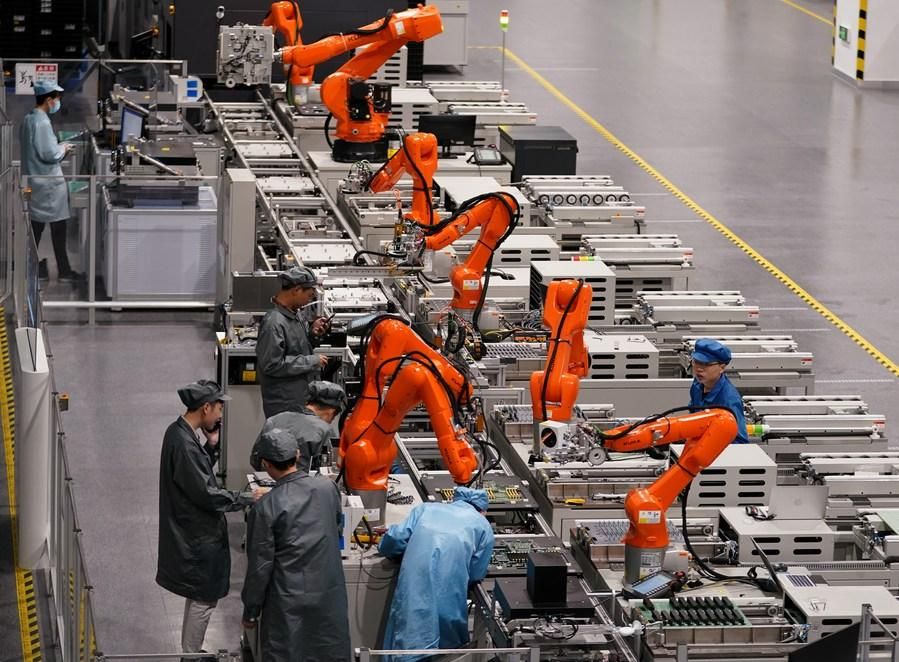
“For the past five decades we’ve been able to throw labour at accelerating outcomes,” he says. “That labour is not available anymore.“Our remit is how do we, over the next five years, build and manufacture fundamentally differently?” Ganatra asks. “That’s through ‘delabouring’ – not losing labour but making technology, automation and AI actually step in to take up part of that workload so it’s balanced with the current resourcing.”One solution McNab is investing in is Bedrock. Says Ganatra: “They’re in the space of autonomous civil work equipment, where you basically keep big yellow equipment operating overnight, so you’re getting a different level of productivity.”New methods, better outputThe business is also exploring new construction methods, including modular building, to reduce labour intensity, emissions and construction waste, and improve consistency, safety and output. Ganatra says the need is urgent.McNab CEO Kunjan Ganatra. “The industry’s productivity has actually gone backwards over the past five years,” he says. “So, we’ve got demand going through the roof, but productivity going the other way.”To drive improvement, McNab has set up a Robotics, Automation and Data team. Its work includes weather-forecasting apps for scheduling, sensors on hoists to improve planning and predictive maintenance programs to reduce downtime. These applications show how automation and data can improve day-to-day decision-making, not just long-term strategy.Huxley says the most effective manufacturers are using technology to lift the value of human work, not replace it.“Technology is on the mind of every customer we talk to,” she says. The most successful adopters are combining digital capability with experienced people and moving employees into higher-value work.”Sustainability core to commercial strategySarah Lalor, general manager Specialist Sales at CommBank, says sustainability is shifting from a reporting exercise to a core component of commercial strategy.“For manufacturers, the pressure is commercial first,” she says. “Energy costs, supply stability and mandatory climate reporting flowing through procurement. Measuring emissions is how businesses manage some of that risk, and it’s often where the first cost and efficiency wins surface, building toward stronger margins and a more resilient business over time.”Ganatra agrees sustainability must consider both environmental and economic outcomes.“Some of the businesses we’re seeing do sustainability best are those that deliver the right outcome for community and environment, while having commercial impact,” he says.McNab’s battery business, Powershift, is one example. By replacing diesel generators with batteries on work sites, it helps customers lower emissions while also responding to high fuel costs.Cash flow and balance sheet managementHuxley says manufacturers need to consider whether rising freight costs, earlier supplier payments and slower stock arrivals are causing cash to leave the business sooner and return later. CommBank’s research shows more inventory stockpiling, longer cash-conversion cycles and higher working-capital costs across the sector.Ganatra’s view is simple: “We follow very clear practices and principles of having more-than-adequate cash reserves and balance sheet strength to not only create certainty but also chase the right opportunities,” he says.A stronger balance sheet can give businesses more than borrowing capacity. It can give them options. In uncertain conditions, that flexibility matters.Manufacturers that can lift productivity, manage cash carefully and treat sustainability as a commercial opportunity will be best placed when conditions improve.Disclaimer:Information is solely for educational purposes only. It has been prepared without considering your objectives, financial situation or needs, you should, before acting on the information, consider its appropriateness to your circumstances and if necessary seek the appropriate professional advice. Any opinions, conclusions or recommendations are reasonably held or made, based on the information available at the time of publication, but no representation or warranty, either expressed or implied, is made or provided as to the accuracy, reliability or completeness of any statement made.
How manufacturers are responding in a high-cost economy
Despite simultaneous pressure from energy challenges, skills shortages, supply-chain disruption, rising material costs and fuel volatility, Australian manufacturers are taking steps to set themselves up for long-term success.
605 words~3 min read