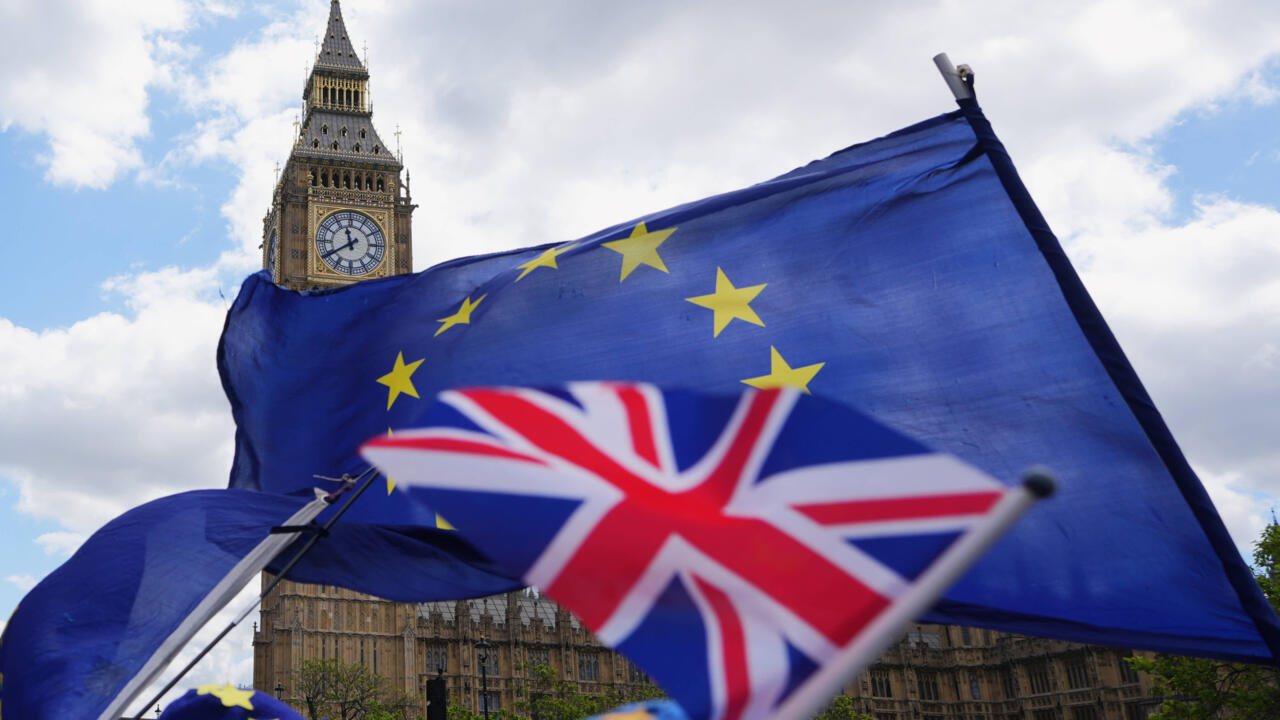
The prolonged policy uncertainty of the Brexit process contributed importantly to the magnitude of the economic impact
| Photo Credit:
Douglas Rissing
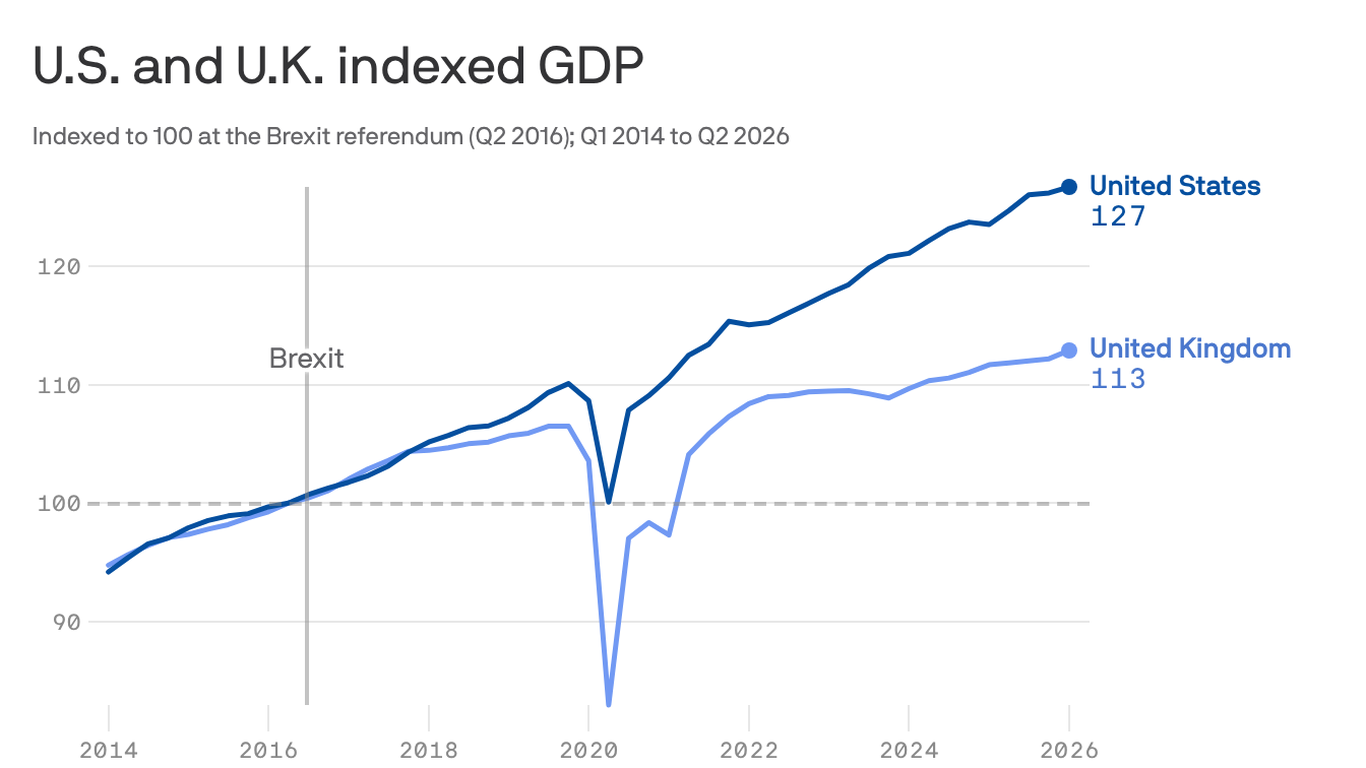
When British voters chose to leave the European Union in June 2016 by a narrow margin of 51.9 per cent to 48.1 per cent, economists warned of economic pain. Most assumed the damage would be sharp, visible, and short lived. A decade on, the evidence tells a different story. New research estimates that by 2025, Brexit had reduced UK GDP by between 6 per cent and 8 per cent (CEPR, 2025), with the costs accumulating quietly and persistently over time rather than arriving all at once.This was not the dramatic overnight collapse that Remain campaigners had warned of, nor the manageable blip that Leave supporters had promised. It was something slower and, in many ways, more damaging: a structural drag on investment, productivity, and trade that embedded itself into the fabric of the British economy before most people had noticed it happening. For a country like India, ambitious, fast-growing, and increasingly vocal about its own economic sovereignty, the Brexit story offers a sobering set of lessons about the true costs of economic disengagement.What actually happened to Britain?The popular narrative around Brexit promised liberation from EU regulations, open borders, and the constraints of pooled sovereignty. What followed was far more complicated than its architects had anticipated. Investment plans were shelved, and managerial time was spent on risk assessments and Brexit preparation rather than developing new products or expanding operations.In the financial sector, the UK’s departure from the EU’s financial passporting regime significantly curtailed market access for UK-based financial institutions, dealing a serious blow to one of the country’s most productive industries, and, critically, the damage was not front-loaded. Early projections anticipated short-run disruption with limited persistence, but long-run expectations were revised downward as evidence mounted of slower investment and productivity growth. What looked manageable in 2016 had quietly compounded into a structural wound by 2025.Lessons India cannot afford to ignore: The most underappreciated lesson of Brexit is that not knowing is as damaging as the eventual outcome. The prolonged policy uncertainty of the Brexit process contributed importantly to the magnitude of the economic impact. Firms delayed investments, avoided hiring, and redirected management attention towards contingency planning rather than growth. By leaving the EU, the UK lost negotiating power and found itself in a weaker bargaining position as it tried to recreate trade deals with other countries.India has long been ambivalent about deep trade integration, sometimes treating free trade agreements with suspicion and stepping back from the Regional Comprehensive Economic Partnership in 2019. Nevertheless, Brexit demonstrates that the costs of reduced market access are real and accumulate silently over the years. The largest productivity losses in the UK were concentrated in manufacturing sectors integrated into complex supply chains.India’s manufacturing ambitions under initiatives like Make in India and the Production Linked Incentive scheme depend critically on integration into global value chains. Brexit shows that disrupting established supply relationships is deeply costly and not easily reversed. India must work to embed itself more deeply in these networks and ensure that domestic policy does not inadvertently raise the cost of partnering with international firms.The human cost that is forgotten: Brexit carried a quieter human toll. The end of the free EU labour movement significantly disrupted sectors that had relied on European workers, particularly in food, hospitality, healthcare, and social care. Skills gaps emerged faster than training programmes could fill, and communities that had voted Leave in search of economic dignity often found themselves squeezed the hardest. India faces its own version of this tension. But the Brexit experience suggests that the real danger is not openness to the world. It is the failure to build institutions at home that makes returning worthwhile. The answer is not to close doors but to make the home more liveable, more professionally rewarding, and more institutionally trustworthy.Way forwardThe deepest lesson Brexit offers to any developing economy is philosophical. The Leave campaign framed the choice as one between sovereignty and subjugation. A decade later, what policymakers once treated as a temporary adjustment has morphed into a structural shift still working its way through the economy. Economic sovereignty is not diminished by trade, investment, or integration. It is strengthened by the prosperity those connections generate. India’s growing diplomatic weight, its assertive multilateralism, and its emergence as a trusted global partner are all built on economic substance, not economic isolation.The way forward for India is not to mimic Brexit’s defensiveness but to learn from its consequences. That means building stable, transparent policy environments that investors can plan around. It means treating global value chain participation as a national priority, not a reluctant concession. And it means investing in the institutions, infrastructure, and human capital that make openness sustainable rather than threatening. Brexit is not simply a cautionary tale about the EU or about Britain alone. It is a cautionary tale about the seductive simplicity of economic nationalism and about how gradual, cumulative costs can remain invisible until they become irreversible.Saravanan is a professor of finance and accounting at IIM Tiruchirappalli, and Williams is the Head of India at Sernova FinancialPublished on July 21, 2026