The impressive capabilities of Chinese lab Moonshot’s Kimi K3, the biggest open-weight large language model, has kicked off a debate that conflates two things: the economic possibilities of American AI giants and the future of LLMs as a technology.
OpenAI’s head of strategic futures, Dean W. Ball, went so far as to argue that the US government should find a pretext to create regulatory fear, uncertainty, and distrust around the new models, since open-weight models must necessarily deter capital spending by the frontier labs.
People freaked out, with tech luminaries like Yann LeCun and Martin Casado arguing that open software can accelerate innovation and coexist with proprietary projects. Ball soon retracted his claims that a regulatory crackdown was the White House’s “best strategy” and that open-weight models necessarily slow down advances in the technology.
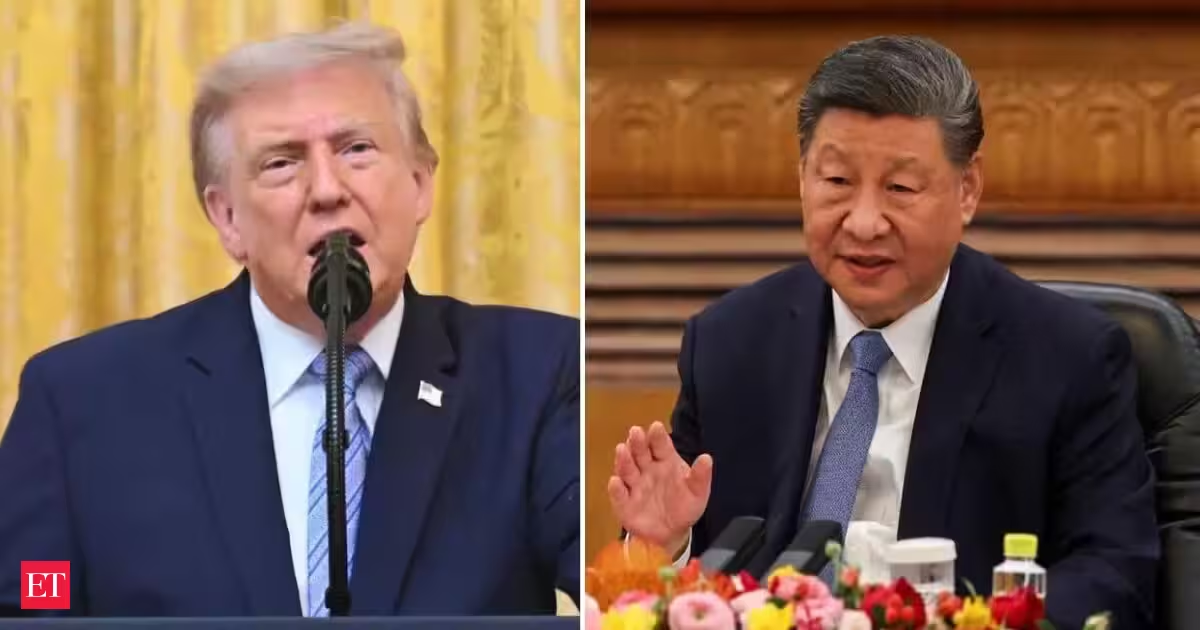
However, Axios reports that the Trump administration is considering banning K3 and other advanced Chinese models at the behest of American frontier labs. Another report from Politico said that the Department of Commerce would not take that step anytime soon.
The benefit for major AI companies is clear: Open-weight models, running on independent infrastructure or inside major enterprises, offers cheaper intelligence than Anthropic or OpenAI’s class-leading models. If users increasingly spend more outside the closed labs, that means smaller return on their massive investments in model training.