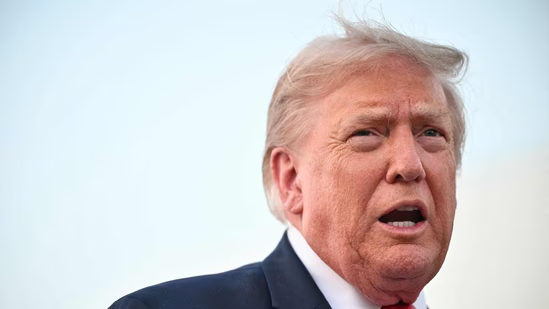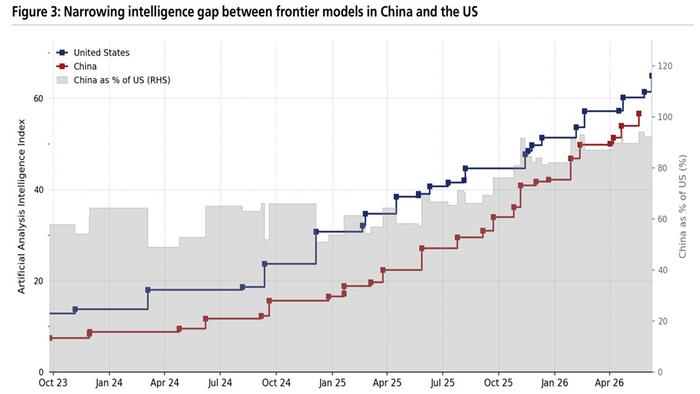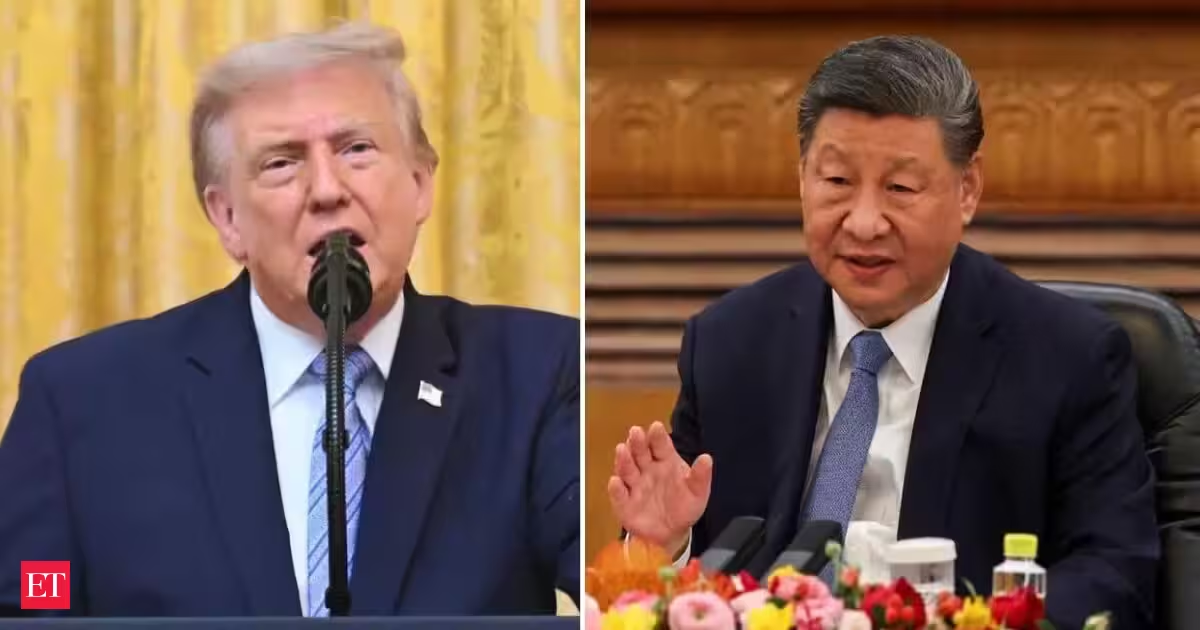
The Trump administration is showing signs it could restrict access to advanced Chinese AI models, a move that could cement the lead held by OpenAI and Anthropic, Axios reported, citing people familiar with the matter.Parts of the administration have previously tried to impose de facto bans on foreign open-source models. The recent emergence of Chinese model Kimi has revived those efforts, the report said.U.S. companies have increasingly turned to open-source Chinese models because they are cheaper and, with Kimi's rise, nearly on par with American alternatives.Also read: China calls US visa regulations 'discriminatory', threatens countermeasuresWhat was considered earlierThe Commerce Department last year weighed adding several Chinese AI labs to its Entity List, a step that would cut off U.S. access without a license, a source close to the administration said, according to the report.The National Security Agency and the White House Office of the National Cyber Director had also discussed issuing an advisory on Chinese AI lab threats, effectively discouraging U.S. firms from using the technology, the source added.Separately, the White House considered an executive order requiring U.S. companies to guarantee security and accept liability for breaches before hosting Chinese models.Commerce also circulated draft rules last summer aimed at Chinese open-source models under its domestic supply chain authorities, a second source close to the administration said. All these efforts were shelved by administration officials wary of regulation stifling innovation.Sriram Krishnan, a former White House adviser who had opposed such restrictions, has since left his post. With that shift and growing cybersecurity concerns, national security hawks have grown louder, pushing ban momentum higher.Neither the White House nor the Commerce Department responded to requests for comment.A softer approachAn outright ban may not be necessary to push U.S. firms away from Chinese platforms. "What's actually happening is slower and more durable," a source familiar with government discussions said, pointing to procurement rules, Entity List threats and public pressure campaigns.Another source described a strategy of highlighting potential backdoors and security gaps in Chinese models rather than pursuing a formal ban. This approach also aims to encourage a more competitive U.S. open-source ecosystem, the source said.Also read: China's Kimi K3 rattles US AI industryHowever, U.S. open-source alternatives currently lag behind cheaper, more capable Chinese models.Industry pushbackWhite House AI adviser David Sacks weighed in on X on Sunday, warning that "the leading closed labs, already a duopoly in terms of AI model revenue, want the government to eliminate their open-source competition." Sacks has repeatedly cautioned against regulatory capture that could favour large U.S. labs at the expense of competition.Leading AI labs or their allies have approached the administration roughly every three to five months with proposals to restrict open-source models, Axios reported.Anthropic and OpenAI have long backed safety regimes that include licensing frameworks, though those calls have largely stayed abstract until now.
Trump administration may ban Chinese AI models, Axios reports
The Trump administration is exploring ways to limit access to advanced Chinese AI models. This move could benefit American companies like OpenAI and Anthropic. Previous efforts to ban foreign open-source models have been revived due to Kimi's emergence. Cybersecurity concerns and national security advocates are now pushing for these restrictions. A softer approach involving procurement rules and public pressure is also being considered.
466 words~2 min read