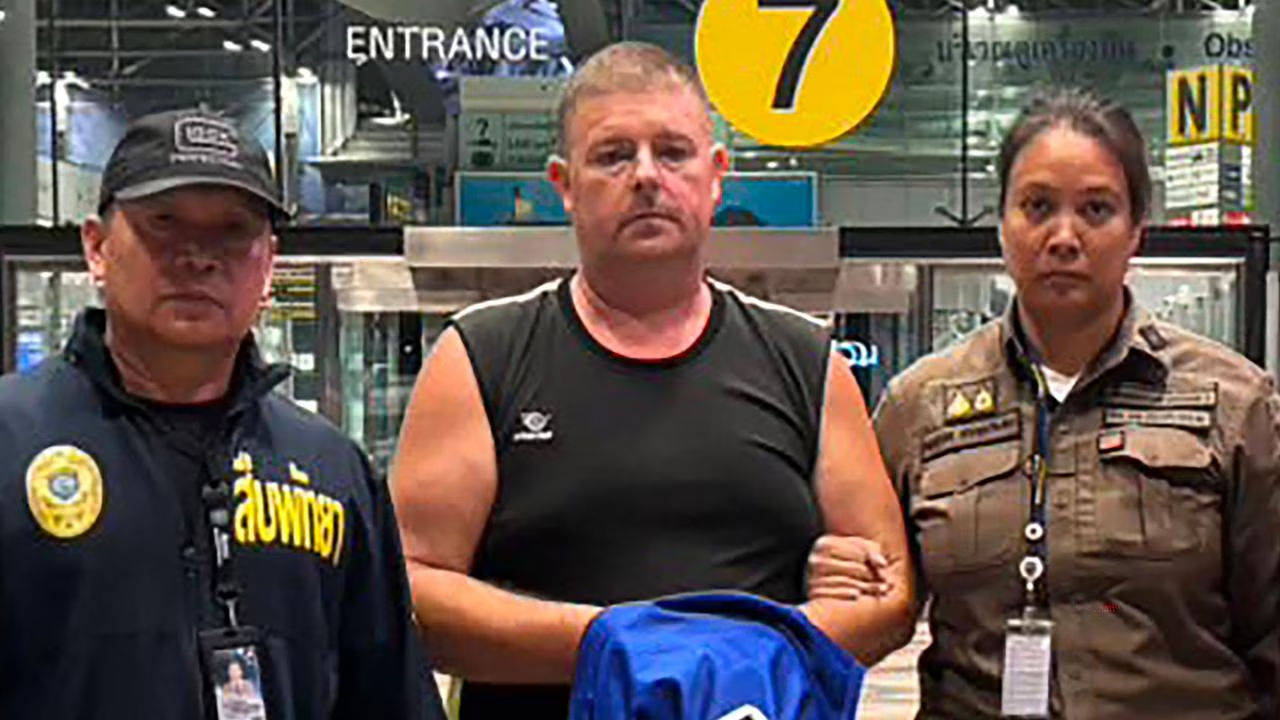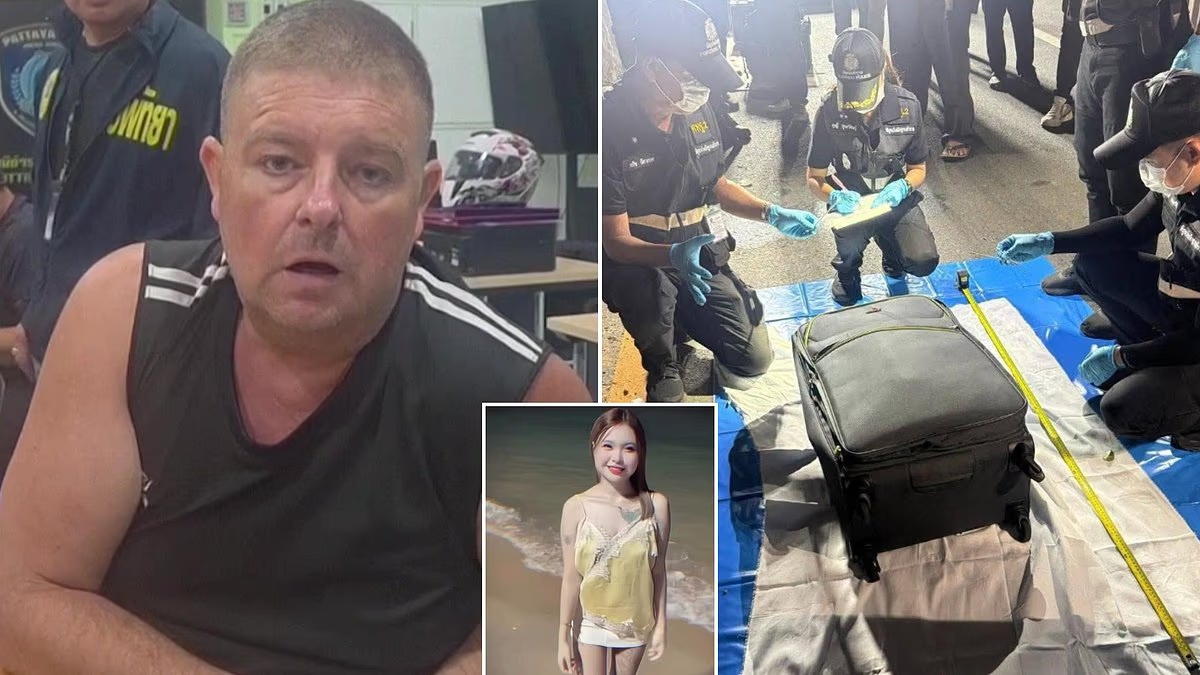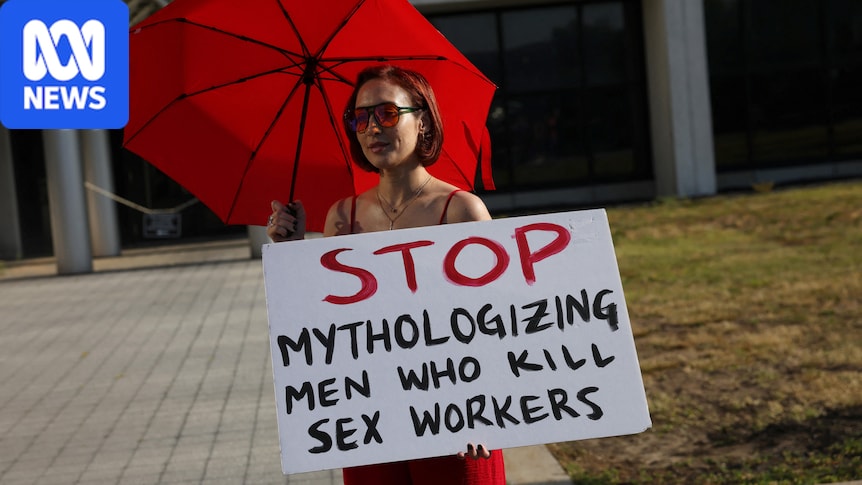
As far as diplomatic missteps go, the United Nations' stumble was spectacular. In 2024, the Special Rapporteur on violence against women and girls invited civil society contributions to a report on the nexus between "prostitution and violence against women and girls".Instead of responding with submissions, though, thousands of sex workers and their allies circulated a petition rejecting the very premise of the call. The petitioners particularly objected to the use of the term "prostitution", which they believed conflated sex work with exploitative sex trafficking and failed to recognise sex work as a legitimate livelihood. A process built on such a disrespectful framework, they argued, could not possibly lead to the protection and fulfilment of sex workers' rights.But rather than fizzle, as many petitions do, two years on it is being credited as one of the driving forces behind an inquiry into violence against sex workers in Australia and Thailand, which this week will hear testimonies from sex worker organisations about how different areas of law intersect with sex workers' lives, and what they see as priorities for legal reform.The inquiry's organisers say the findings will inform the upcoming review of Victoria's Sex Work Decriminalisation Act, as well as support a grassroots campaign for decriminalisation in Thailand, which has gained momentum in recent weeks following the murder of teenager Tunchanok Donhomla, allegedly by Australian man Simon Carman. A citizen-sponsored bill giving adult sex workers labour rights and protections is now making its way through the Thai parliament.Still, while decriminalisation in Australian jurisdictions like NSW, Victoria and Queensland has led to positive change, serious systemic problems and legal grey areas remain, including for Asian migrant sex workers and street-based sex workers who experts and advocacy groups say are particularly vulnerable to violence and exploitation."Even after decriminalisation, stigma remains one of the big issues," said inquiry organiser Debolina Dutta, research fellow at the Centre of Excellence for the Elimination of Violence Against Women (CEVAW) at Melbourne Law School. "Many sex workers talk about how they are often living a double life; that's how they deal with the stigma — you just don't tell anybody that you do sex work."But that means sex work is "underground", Dr Dutta said, which can make sex workers more vulnerable to violence and more reluctant to report violent crimes like rape, assault or stealthing because they believe the criminal justice system won't take them seriously.ABF raids a major focusFor some sex workers and anti-violence campaigners, the case of a man who killed two women within 24 hours in Melbourne in 2022 only confirmed their fears. Advocates were outraged when Xiaozheng Lin was sentenced to a maximum of 14 years in prison for the manslaughter of Asian migrant sex workers Yuqi Luo and Hyun Sook Jeon, arguing it sent a message that the justice system did not value the lives of sex workers as highly as other victims of crime. (Lin was this year resentenced on appeal to a maximum of 18 years behind bars, with three judges agreeing his initial sentence had been "manifestly too low".)But stubborn stigma and sentencing decisions aren't the only problems migrant sex workers face. Mish Pony, chief executive of Scarlet Alliance, the national peak body for sex worker organisations, said their organisation's submission to the inquiry focused on Australian Border Force (ABF) raids on the workplaces of Asian migrant sex workers around the country since late 2022."They've been reported to us as being extremely aggressive and intimidatory," Pony said. "Migrant workers might have English as a second, third or fourth language, and that makes these interactions even more stressful and difficult."Pony said Scarlet Alliance had obtained data via Freedom of Information applications and Senate estimates hearings showing the raids were detecting "very low numbers" of visa non-compliance and "virtually no" incidents of exploitation of migrant workers.Scarlet Alliance chief executive Mish Pony. (ABC News: Greg Bigelow)"If workers are facing workplace exploitation, it is well recognised domestically and internationally that raids are not the answer, that providing rights-based responses that allow workers to come forward and report exploitation to trusted services or agencies is a much safer mechanism of addressing this," they said."What these raids do is make migrant workers fearful of authorities, less likely to report exploitation, and push them into working in more hidden venues in order to avoid these harmful raids."At a broader level, Pony said they were "very concerned" that sex workers were not being meaningfully consulted on the development of the Second Action Plan under the National Plan to End Violence Against Women and Children."There have been round tables that … have been happening but we haven't been invited to them," they said. "There is an open submission process, so we will be making a submission, but we will also be seeking to have some dedicated consultation as has been afforded to other communities."Laws mark street sex workers 'a threat'Gia Green, manager of the Victorian sex worker organisation Vixen, said her group had provided the inquiry with two submissions: one on ABF raids, and one about issues affecting street-based sex workers.Although Victoria decriminalised sex work in 2022, street-based sex work near schools, childcare services and places of worship is a criminal offence between 6am and 7pm.Vixen is advocating for sex work to be fully decriminalised. "Even if these laws around street-based sex work aren't enforced … they mark sex workers as a threat … to children and religious communities," Ms Green said, ultimately reinforcing harmful stigma. "We feel that this state-sanctioned stigma also emboldens perpetrators, violent clients, residents and members of the public who harass street-based sex workers as well."Vixen manager Gia Green. (Supplied: Gia Green)Another concern, Ms Green said, was the recent amendments to local laws in the City of Port Phillip, which empower the council to seize personal belongings in encampments in suburbs including St Kilda, South Melbourne and Port Melbourne. The council has insisted they are a "last resort" option to address anti-social behaviour, not an attack on homelessness.But Ms Green said the changes were having an outsized impact on street-based sex workers, many of whom experience homelessness and housing insecurity."What we notice is when people are constantly having to chase up their belongings that have been impounded — that could include medications … and [supplies] to keep warm in cold Melbourne winters — it has a really big effect on the health, wellbeing, stability and safety of street-based sex workers," said Ms Green, who wants the amendment scrapped.Violence and victim blamingThe inquiry is being heard by a panel of experts including former judge and academic Marcia Neave, Thai feminist lawyer Pranom Somwong, Melbourne University Professor Heather Douglas, and Christine Robinson, chief executive of the NSW Aboriginal women's legal centre Wirringa Baiya. The panellists will produce a final report with recommendations for law and policy reform, which will likely include decriminalisation in South Australia and Thailand."What we want the report for is really to make some noise about the right kinds of issues, for the right kinds of people to be visible, to be seen, to be able to speak and inform law reform, as well as policy advocacy," Dr Dutta said. "And … the Thai sex worker groups [Empower and SWING] … want to mobilise this event to help … fundraise — they want to showcase their work and their issues."Panellist Fiona Patten, a former Victorian MP and former sex worker, said it was important for the inquiry to examine both the benefits and shortfalls of decriminalisation, which she said was never going to be a "silver bullet" for the stigma and discrimination many in the industry still experience."In jurisdictions where decriminalisation has been implemented there are still residual assumptions that affect sex workers," Ms Patten said. "These may present as sex workers being seen as morally suspect, unreliable, inherently vulnerable and … less deserving of protection." These assumptions affect how sex workers interact with authorities, she said, "but also whether sex workers are treated as ordinary workers and members of the community".Inquiry panellist Fiona Patten is a former Victorian MP. (ABC News: Patrick Rocca)Ms Patten pointed to the case of Heros Hakopian, who in 1991 was convicted of the kidnap, aggravated indecent assault and aggravated rape of a St Kilda-based sex worker. The County Court judge who sentenced Hakopian to 16 months in prison said that because the victim was a sex worker, "the likely psychological effect" of the attack on her was "much less a factor" and "lessens the gravity of the offending".One of the Supreme Court judges who increased Hakopian's sentence to 30 months on appeal agreed, pointing to a 1981 ruling which asserted sex workers suffered "little or no sense of shame or defilement" when raped, and that raping a sex worker was "not as heinous as when committed on a happily married woman", nor did it cause "a reaction of revulsion which it might cause in a chaste woman"."I am fearful and suspect that that opinion still exists in our community," Ms Patten said — that violence against sex workers is seen as less serious, or that sex workers are to blame if they experience it. "I would argue it's actually more dangerous, it's actually worse … violence in the workplace should never, ever be accepted. But somehow, for sex workers, it does seem to be accepted."To that end, the inquiry is an "extraordinary opportunity" to understand what else needs to be done to ensure people working in the industry are safe, she said: "I would hope it will assist other jurisdictions that haven't gone down a decriminalisation path with some tools and some evidence to further those campaigns."
Stubborn stigma fuelling shocking violence against sex workers in Australia
A new inquiry into violence against sex workers in Australia and Thailand comes just weeks after the murder of Thai teenager Tunchanok Donhomla, allegedly by an Australian man.
1,598 words~7 min read