Story audio is generated using AI
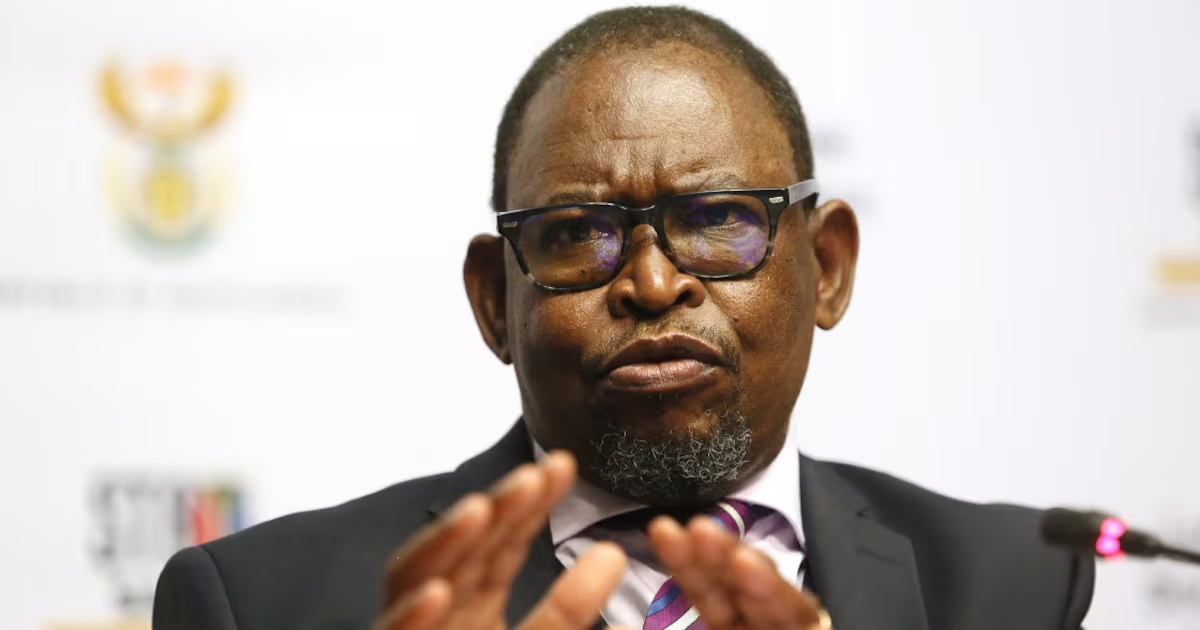
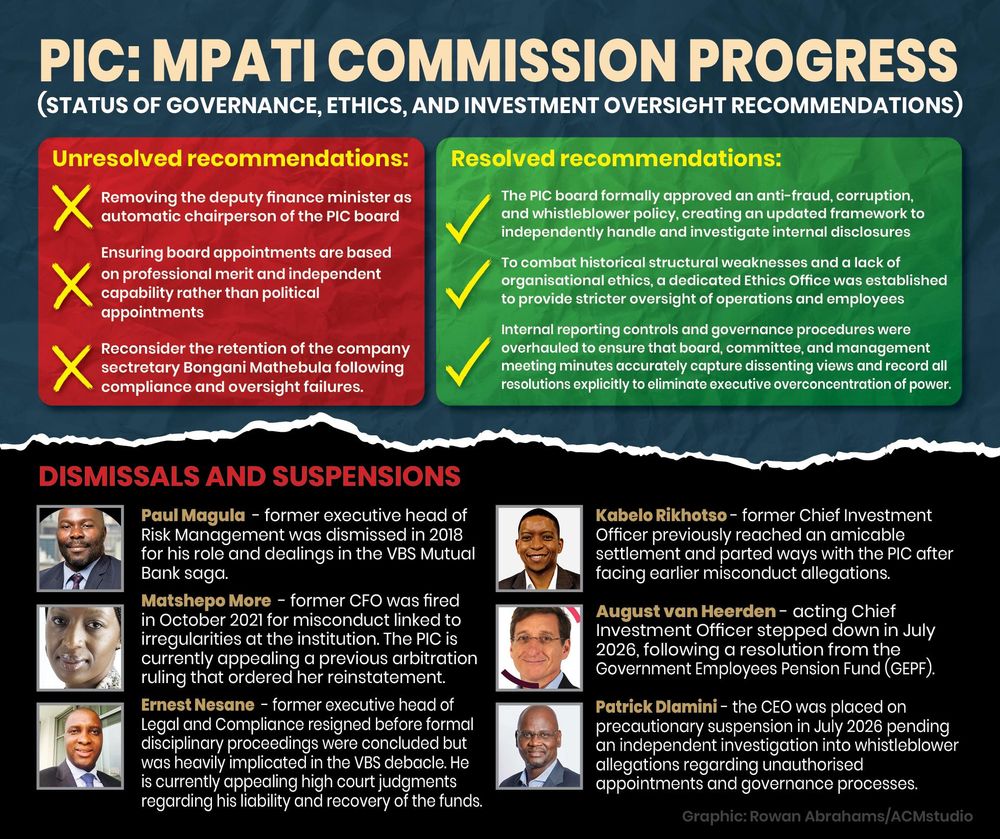
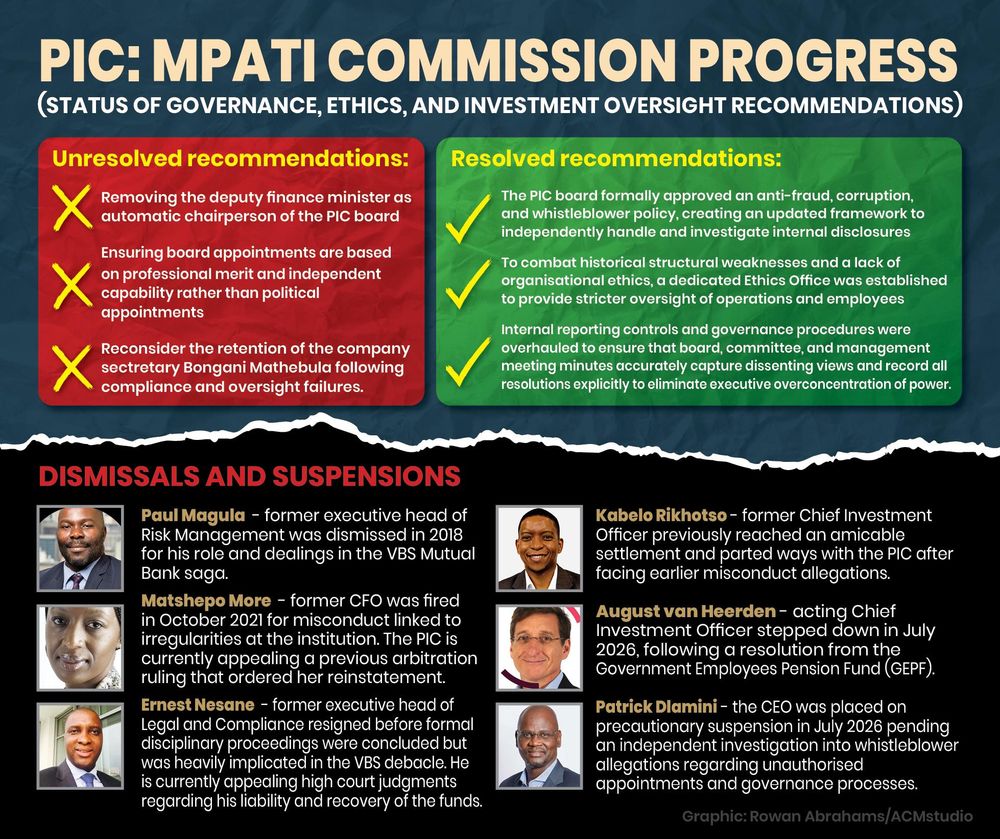
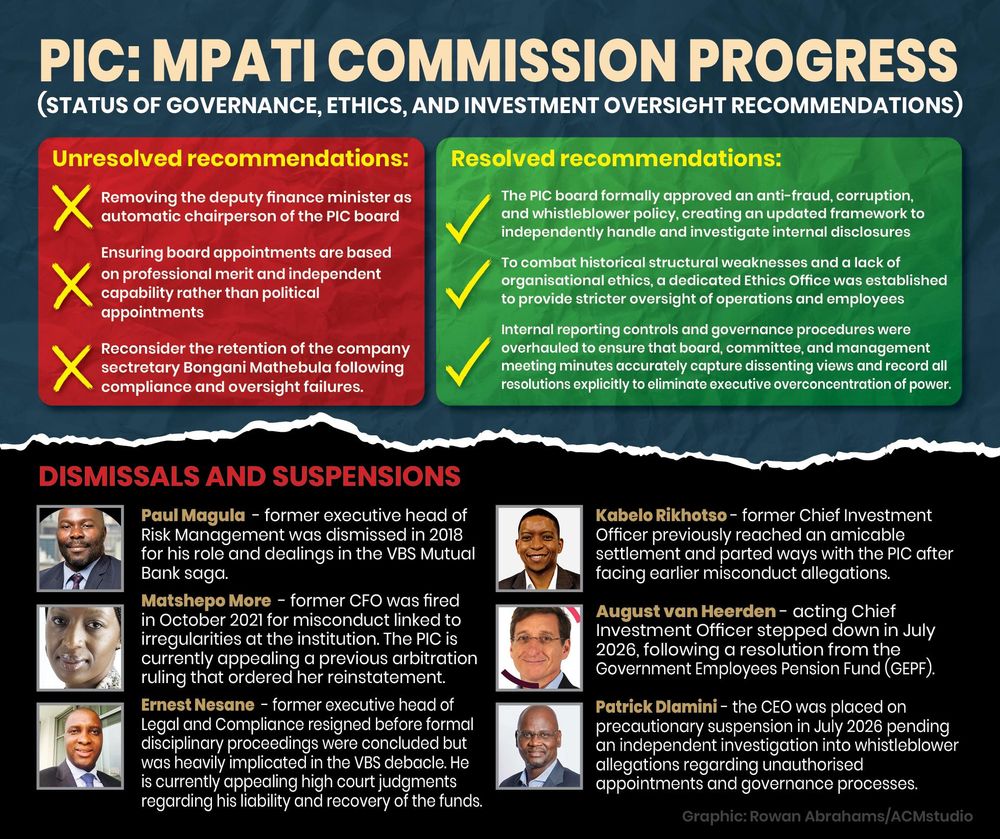
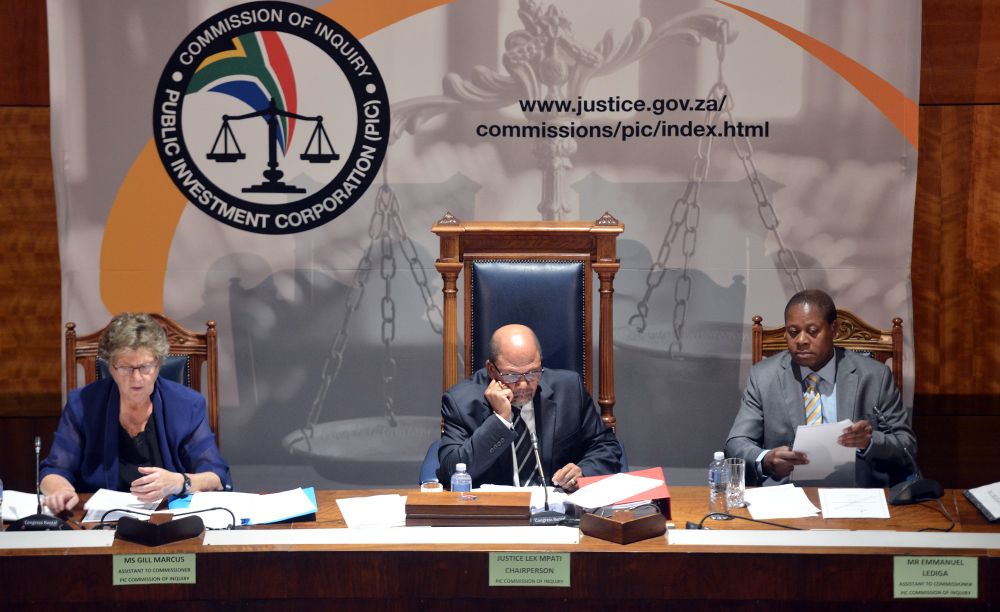
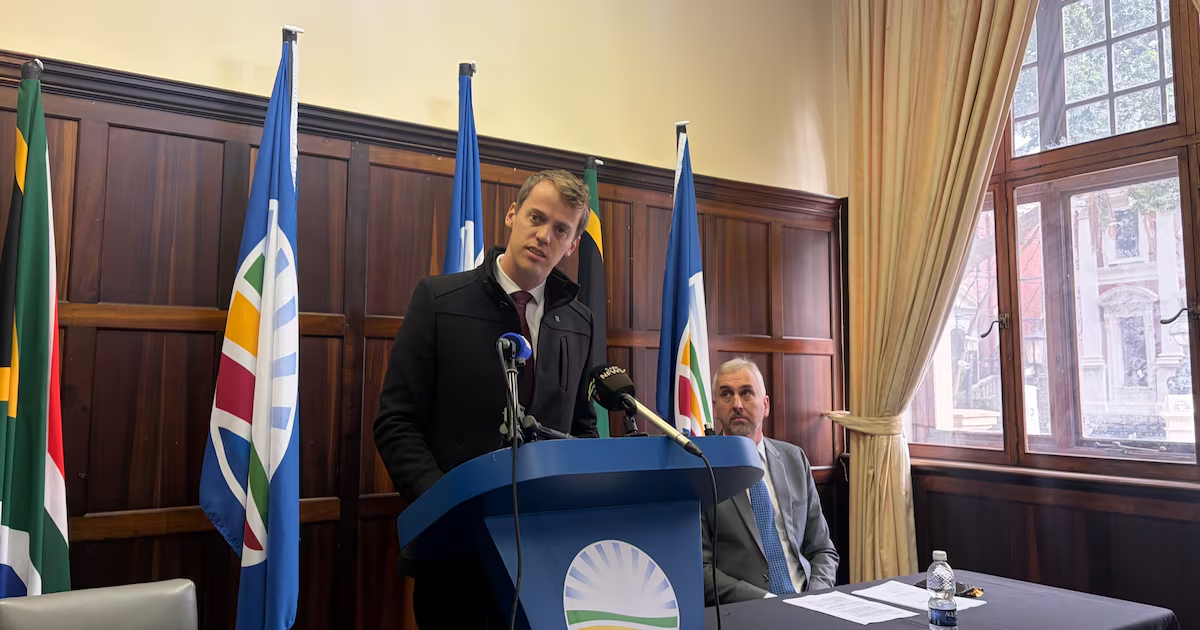
The DA has introduced draft legislation aimed at removing political influence from the governance of the Public Investment Corporation (PIC), arguing that repeated governance failures and scandals at the state asset manager have placed the retirement savings of millions of public servants at risk.Governance issues have bedevilled the PIC in recent weeks, culminating in the precautionary suspension of CEO Patrick Dlamini and chief investment officer Vuyani Dayimani, boardroom disputes, and investigations into allegations surrounding the Acapulco and Lanseria Airport investments. The governance concerns have their roots in the commission of inquiry into the PIC established by President Cyril Ramaphosa in October 2018 and chaired by retired Supreme Court of Appeal president Lex Mpati. The commission’s final report, released in 2020, concluded that weaknesses in governance and political interference contributed to repeated problems at the PIC and recommended that the deputy finance minister should no longer chair the PIC board, political appointments should be avoided, an independent nonexecutive chair should be appointed and directors should be selected on merit based on the skills required by the board. Read: EDITORIAL | Time for Ramaphosa to break his silence on the PICThe DA announced its proposed Pension Protection Bill on Monday, saying it would fundamentally overhaul how the PIC’s board is appointed by preventing politicians from serving as directors and by introducing an independent appointment process.The PIC manages more than R3-trillion in assets on behalf of government entities, including the Government Employees Pension Fund (GEPF), the Unemployment Insurance Fund and the Compensation Fund.DA finance spokesperson Mark Burke said the PIC had become “a single point of capture and failure” rather than one of South Africa’s premier financial institutions.“The Pension Protection Bill seeks to take the politics out of the PIC,” Burke said.“Government workers’ savings are ultimately under the chair of an ANC politician. Their funds are used for broken BEE projects, fronted by ANC-connected people, and then more of their funds are used to bail those projects out.”The proposed legislation would prohibit anyone currently holding political office or who has held political office within the preceding three years from serving as a PIC director.Instead, parliament’s standing committee on finance would appoint an independent selection panel to identify suitable nonexecutive directors based on merit and the skills required by the board.While the finance minister would retain the power to reject nominees, the minister would not be permitted to appoint candidates who had not been recommended by the panel.The board would also appoint executive directors, including the CEO, rather than the minister, while the board would elect its own chair.DA MP Andrew Bateman said the Mpati commission concluded that the PIC’s recurring governance crises stemmed from weak governance structures compounded by political interference.He said the commission recommended that the deputy minister of finance should no longer chair the board, that political appointments should be avoided, that appointments should be based on merit, and that the board should be chaired by an independent person with investment and governance expertise.“Unfortunately, it’s now more than six years later, and not one of these recommendations has been implemented,” Bateman said. “So it’s no surprise that the scandals continue.”He said the DA’s bill would “finish the Mpati reforms” by implementing the commission’s governance recommendations.David MasondoThe party said it had submitted the draft legislation to parliament’s constitutional and legal services office for legal scrutiny and expected to table it after receiving a certificate confirming its constitutional compliance.Burke said the legislation was not a “last resort”, but rather the culmination of years of engagement and parliamentary oversight.Responsibility for the PIC rests with deputy finance minister David Masondo, whose portfolio includes oversight of the corporation.Burke said finance minister Enoch Godongwana previously acknowledged that legislative amendments were required to implement the Mpati commission’s recommendations but had yet to introduce the necessary changes.“Minister Godongwana himself has insisted that this legislative change is needed and has said that the Mpati recommendation needs to be implemented … yet he has failed to bring the requisite legislative amendments,” Burke said.He added that the DA believed a private member’s bill now had a greater chance of succeeding in parliament because the ANC no longer held a majority.Minister Godongwana himself has insisted that this legislative change is needed and has said that the Mpati recommendation needs to be implemented … yet he has failed to bring the requisite legislative amendments— Mark BurkeBurke said the party would continue using parliament, the media and information provided by whistle-blowers to scrutinise the PIC while the legislative process unfolded.The bill follows weeks of renewed turmoil at the PIC, including the suspension of senior executives, boardroom disputes and growing scrutiny over governance failures linked to major investment decisions.On Sunday, Cosatu weighed in on the debate, although it stopped short of backing the DA’s proposed legislative changes. Instead, the federation called on politicians to allow the PIC board to complete its oversight responsibilities “without fear, favour or interference”, saying it was deeply concerned by whistle-blower allegations of political interference in investigations into the Acapulco and Lanseria airport investments. Cosatu warned against attempts by politicians to disband the board before investigations had been completed, arguing such moves could undermine ongoing probes.Acapulco investmentThe federation welcomed the board’s referral of the Acapulco investment to the Special Investigating Unit (SIU) and urged Ramaphosa to issue a proclamation authorising the SIU, supported by the Hawks and auditor-general, to undertake a comprehensive investigation into all PIC investments. It also called on the PIC to ensure full compliance with the PIC Act by disclosing information relating to both its listed and unlisted investments, saying workers and pensioners deserved governance that was transparent, accountable and credible.The latest controversy has centred on the PIC’s handling of the Lanseria airport investment, with Burke allegin that questions remained about the valuation process and governance surrounding the transaction. Read: Wikipedia and double counting: ‘other shoddy work’ by auditor in PIC blunderHe also pointed to the departure of several board members in recent years and ongoing disputes over whether the recommendations of the Mpati commission had in fact been fully implemented.The DA has intensified its focus on the PIC since Burke’s National Treasury budget vote speech in May, during which he accused the corporation’s unlisted investment portfolio of generating significant losses on numerous investments.The speech relied heavily on a parliamentary reply obtained by the DA, which disclosed the PIC’s Isibaya portfolio of unlisted investments. According to the response, the question sought details of each investment’s cost, date, latest valuation and returns, as well as the aggregate performance of the portfolio.The accompanying annexures showed the portfolio contained investments in dozens of companies and funds. The aggregated annual internal rate of return for the Isibaya portfolio over the previous 10 years, excluding the 2022 private placement memorandums, stood at 1.43%. Since the introduction of the 2022 private placement memorandums, the portfolio recorded an internal rate of return of 16.39%.Burke has argued that the disclosures demonstrated the need for stronger oversight of the PIC’s unlisted investments and greater accountability for how public servants’ retirement savings are managed. The DA said the proposed Pension Protection Bill represents the next step in that campaign by seeking to remove political influence from the governance of South Africa’s largest asset manager.