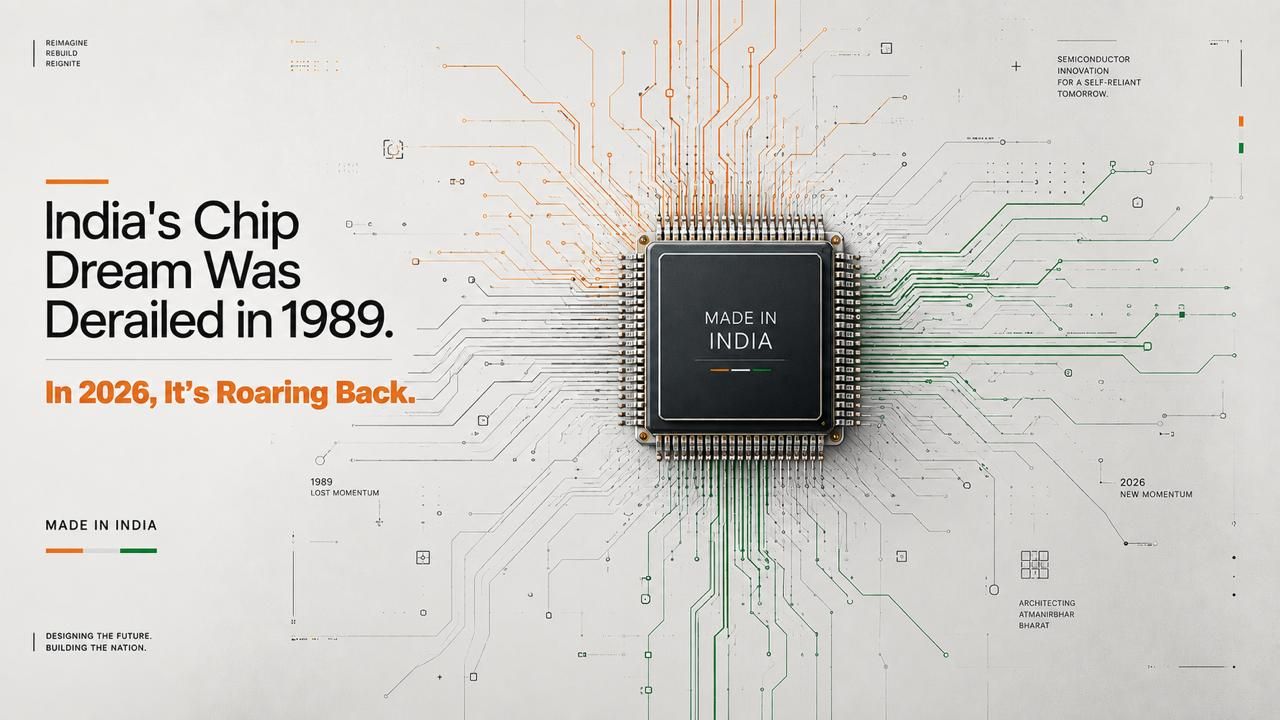
India's first commercial chip fab will open its account with a process node that celebrated its fifteenth birthday this year, and that, argue a growing chorus of critics, is precisely the problem. When the Tata Electronics-PSMC plant in Dholera, Gujarat rolls out its first silicon in December 2026, it will do so at 28 nanometres, a technology TSMC shipped commercially in 2010 . Spend Rs 91,000 crore of mostly public money on fifteen-year-old technology, the argument goes, and you have built a museum with cleanrooms.The argument collapses the moment you examine what the world actually buys. More than 80 per cent of all chips consumed globally, across cars, televisions, base stations, appliances and industrial controllers, are built on 28nm and older processes, according to Omdia . India is a Rs 4 lakh crore semiconductor market sprinting towards $100–110 billion by 2030, and nearly every rupee of that demand sits in mature nodes . The Dholera bet, examined coldly, is a demand-matched entry into the only segment of the chip business where a newcomer can win volume in its first decade. The genuine risks sit elsewhere: a Chinese capacity glut, a subsidy tap that is already narrowing, and the climb from 28nm to anywhere further down the roadmap.About The AuthorAt heart, I am a storyteller drawn to the watershed moments that bend the technology landscape. I braid narrative with data, humanise statistics, and trace the arc from first spark to world-changing impact. My reportage, features and reviews are witty, sardonic, visual and vivid, using anecdote to illuminate rather than eviscerate.
Tata Dholera Fab: Why India's First Chip Plant Betting On 28nm Looks Smarter Than Its Critics Think
Expected to open in December 2026, India's inaugural commercial chip fab in Dholera, Gujarat, will leverage 28 nanometre technology. Despite being considered older tech, this decision is driven by the high demand for mature node semiconductors. Detractors may raise eyebrows, but data suggests the strategy is sound. The government's vision focuses on fostering a robust semiconductor ecosystem within the country.
3,004 words~14 min read