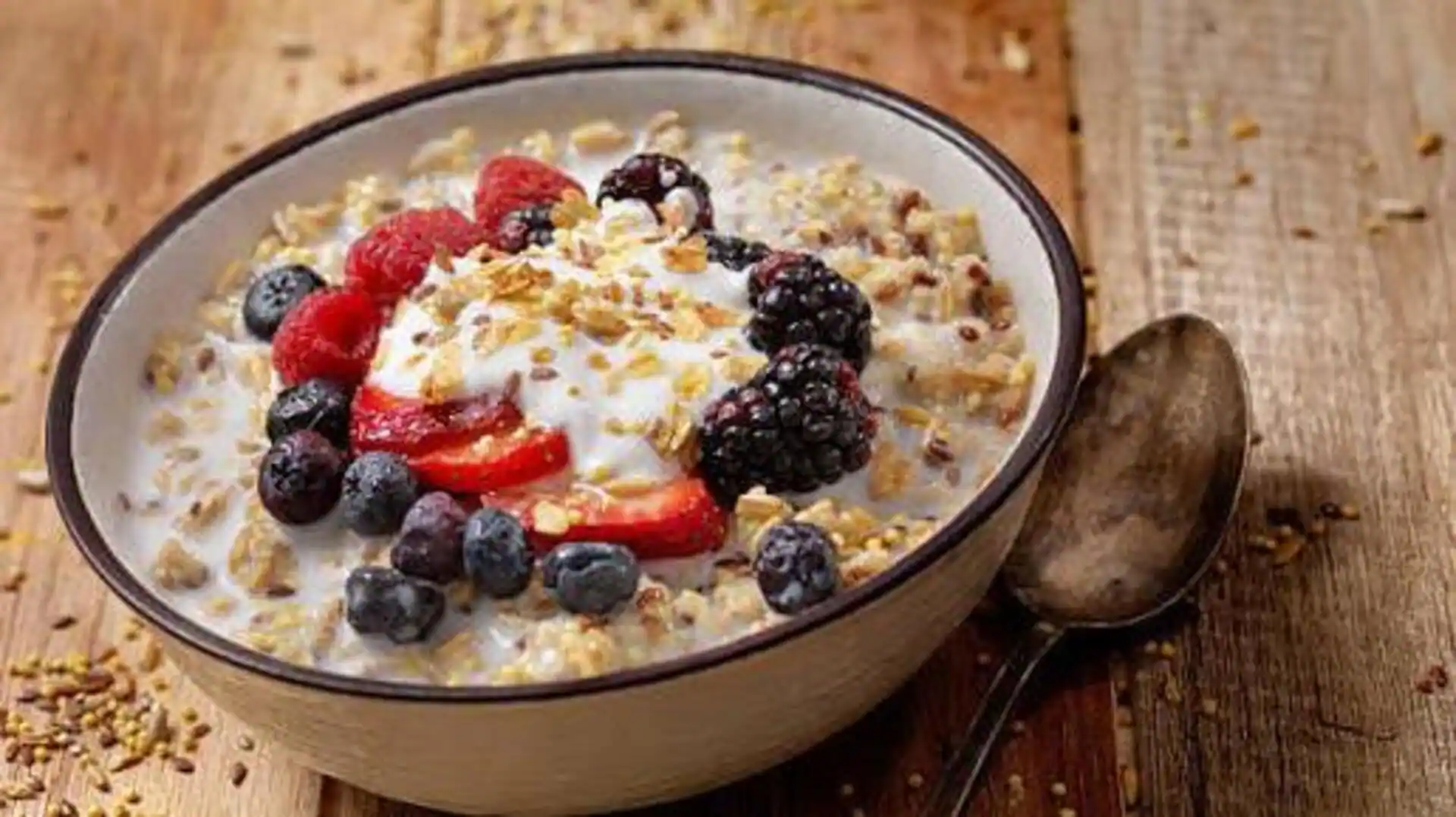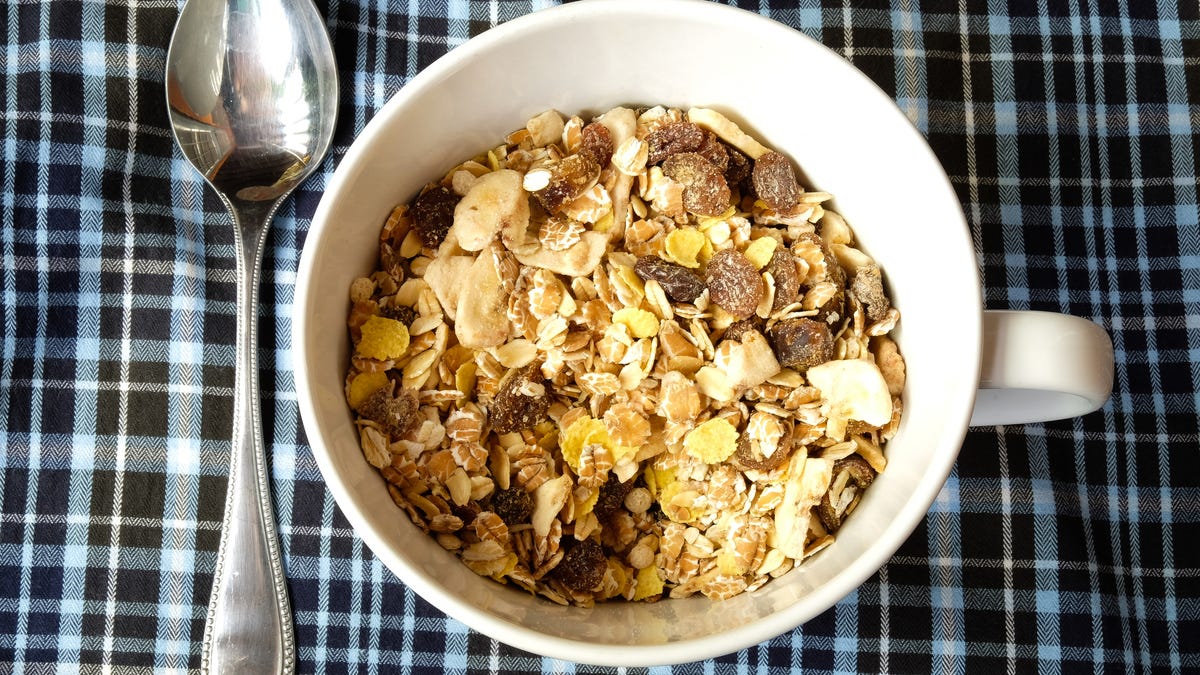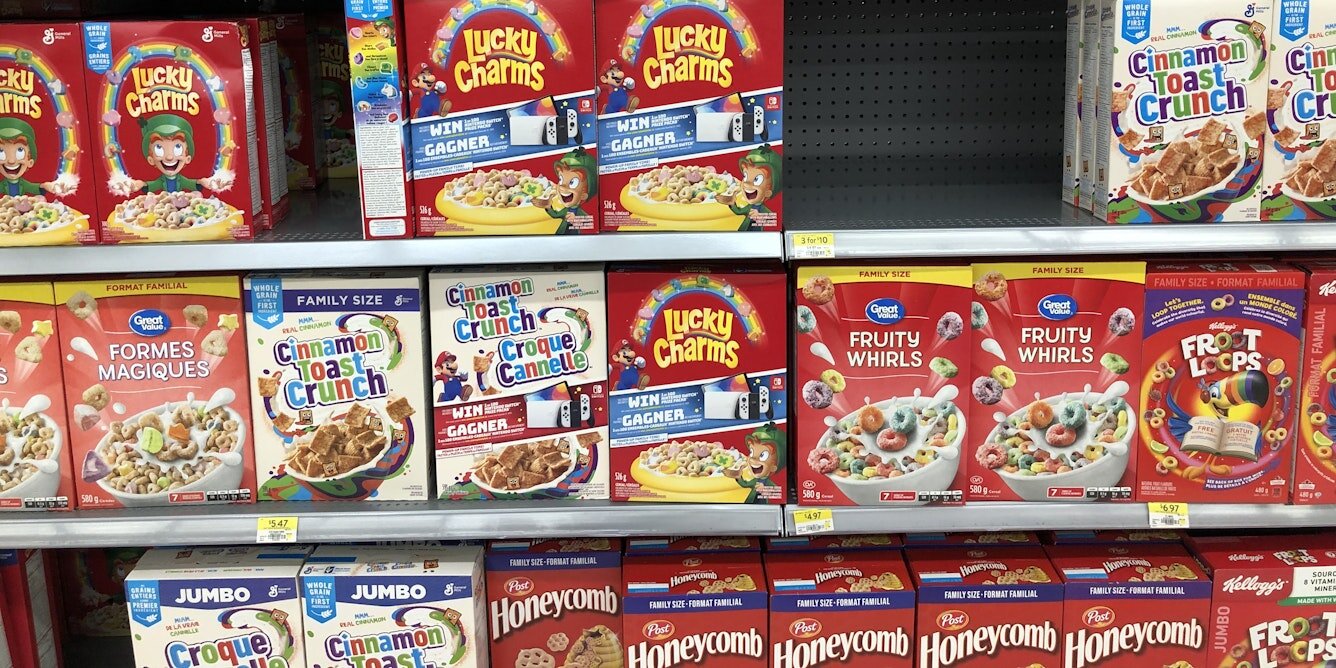
Cereals use an array of techniques to capture kids’ (and parental) attention, for example, cartoon mascots, licensed media characters or fun shapes, colours and/or flavours. Credit: THE CANADIAN PRESS/Richard Buchan
Many of us have grown up hearing the mantra that breakfast is the most important meal of the day, yet children's cereals fall short of that standard. That is the takeaway of new research analyzing child-targeted cereals in Canada.
The study examined 103 unique children's cereals found in supermarkets for their nutritional content, nutrition claims and how their packaging captured children's attention. It also assessed the cereals using two nutritional criteria: Health Canada's proposed, government-led criteria for marketing to children (unpublished, described in the study) and the food industry's Code for Responsible Food and Beverage Advertising to Children.
While 88% of products had nutrition claims communicating "health" value to shoppers, these cereals averaged 30% of their calories from sugar, and 96% exceeded appropriate sugar thresholds set by Health Canada. Beyond this, using Health Canada's criteria developed to support "responsible" marketing to children, not one of the cereals explicitly packaged to appeal to children would be permitted to be advertised to them.