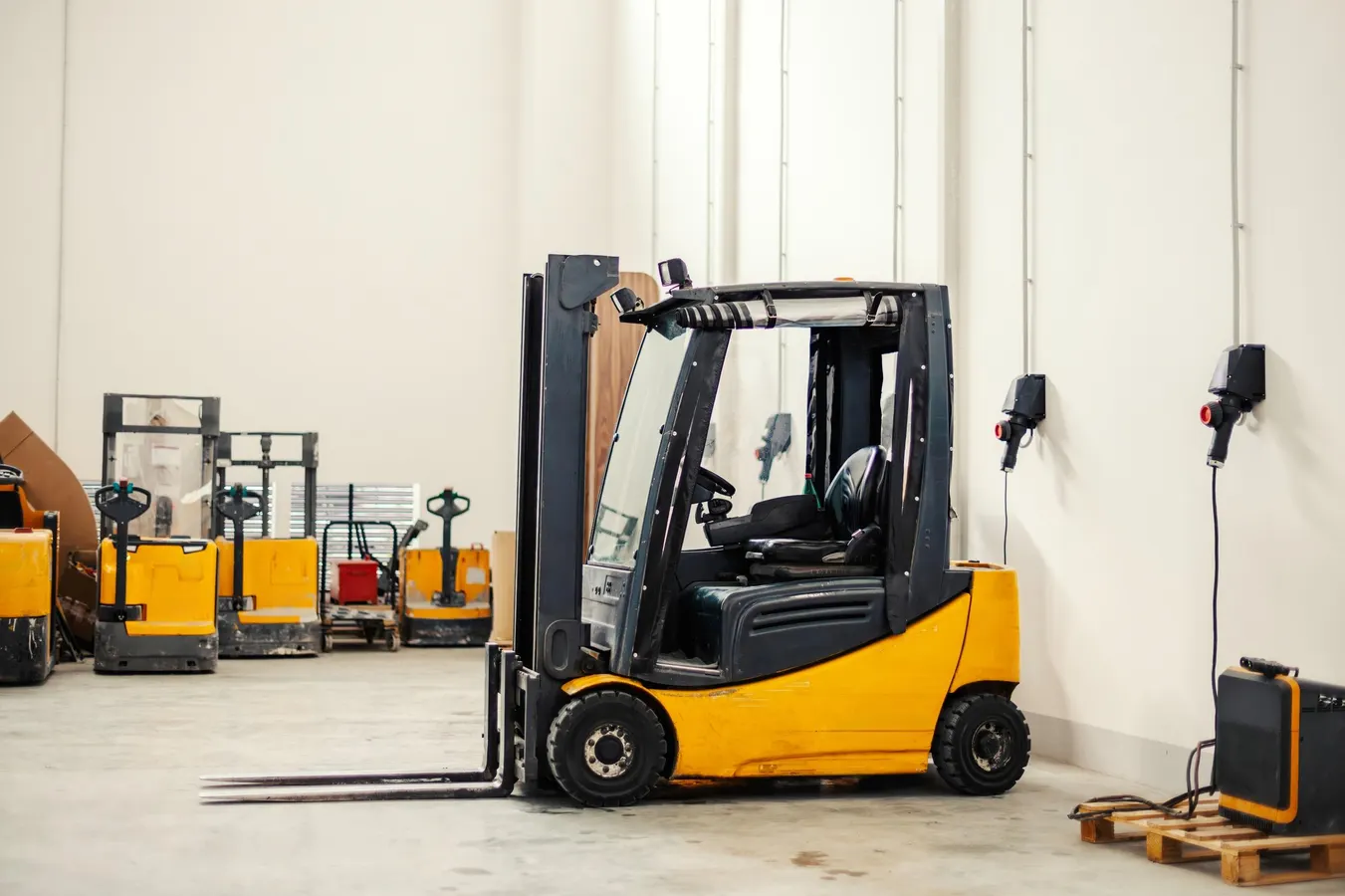
Darren H. S. Tan. Chief Executive Officer at UNIGRID.gettyThe electric vehicle conversation has become almost synonymous with passenger cars. Yet, the bigger electrification opportunity may be unfolding in warehouses, airports, ports, farms, construction sites and industrial facilities.Though often overlooked, these vehicles perform some of the most essential work in the economy, operating every day, often for long hours and under demanding conditions. They move inventory through warehouses, keep airports running smoothly, handle cargo at ports, support utility crews and send robots into underground systems in environments too dangerous for people to safely access, and often, autonomously.These are not futuristic use cases with hypothetical applications. They are existing markets with real operational needs, and many are seeking better battery solutions. As a result, industrial and off-highway vehicles represent one of the most significant and underappreciated opportunities in electrification today. While EVs may dominate the headlines, the next wave of EV adoption is likely to be shaped less by consumer demand alone and more by the operational needs of fleets that already run every day.The EV market is bigger than cars.Electric forklifts now account for more than 70% of the forklift market in many regions, and supply chain leaders are increasingly investing in robotics, automation, autonomous vehicles and drones. These trends point to a broader shift that electrification is moving into the industrial settings where equipment runs on repeatable routes, fixed schedules and clear performance requirements.This makes off-highway electrification different from the consumer EV market. Passenger cars require long OEM qualification cycles, road testing, regulatory approvals and large-scale consumer adoption. Industrial fleets have room to experiment in ways passenger vehicles often do not. A warehouse might test a new battery system at one site before expanding it across the network, while an airport could begin with a portion of its ground support vehicles and a robotics company could validate a pack in one defined use case before scaling.For battery makers, this creates a more practical path to adoption. Although deployment volumes may start lower than those of passenger vehicles, the operational needs are immediate, the ROI can be clearer and the barriers to entry can be lower.Industrial and autonomous fleets need a different battery playbook.Passenger EVs are built to maximize range, public charging networks and unpredictable routes. Industrial vehicles are different. They often run shorter, repeatable routes and return to the same depot, warehouse or worksite. For these fleets, the priority is uptime, not drive range. A forklift waiting on a charge is not moving inventory. An airport vehicle that goes down can delay flights. A warehouse robot that spends too much time charging can create bottlenecks across the entire workflow.These operational demands reshape battery requirements. Industrial applications often need fast charging, swappable packs, very long cycle life, high power, safety and reliable performance in tough environments. There is no universal battery chemistry, and the best battery for an industrial fleet is not necessarily the lightest or highest-energy-density battery. It is the one that best matches the job.Lead acid operates across a wide range of conditions and is well established in the market. However, lifespan can be short, often comparable to automotive batteries. For long-term resilience planning, replacement frequency becomes part of the total cost equation.Lithium-ion works well in many cases, especially where weight and energy density are the top priorities. Drones, for example, often benefit from lightweight lithium-ion packs because every gram matters. Lead-acid still has a role in certain legacy or maritime applications where existing standards, cost structures or safety practices make it difficult to replace quickly.Sodium-ion is emerging for applications where safety, durability, temperature resilience, cost stability and supply chain resilience matter. In some industrial settings, a battery that is heavier may even be an advantage. Forklifts, for example, need counterweight. Replacing lead-acid with a much lighter battery can require adding weight back into the vehicle, which defeats part of the purpose.Consider these key takeaways for leaders in motive power.For companies evaluating electrification, the opportunity starts with operations. The most successful projects will be built around where downtime is costly, where safety matters most and where a better battery can improve how the fleet actually works.• Consider a specific fleet problem, rather than a broad electrification goal. This is where downtime, maintenance, safety risk or fuel cost is already creating operational friction. A warehouse, airport, port or construction site can often test a new battery system in one location before scaling across a larger fleet.• Design around uptime. For many off-highway vehicles, the priority is not maximum range; it’s whether the vehicle can stay in service across shifts. This makes fast charging, swappable packs, long cycle life and reliable performance in heat, cold or fire-sensitive environments critical evaluation criteria.• Choose the chemistry that fits the workflow. Lithium-ion, lead-acid, sodium-ion and other technologies all have a role to play in the electrification landscape. The right choice depends on the application, safety requirements, weight needs, charging model and operating environment. The companies that gain the greatest advantage will be the ones that match the battery to the application, instead of forcing every fleet into the passenger EV model.The next phase of electrification will not be driven by technology alone. It will be driven by practical use cases where better batteries can reduce downtime, improve safety and make existing operations more efficient.For business leaders, the opportunity is to look beyond the most visible EV markets and identify where electrification can solve real operational problems today. The companies that embrace this approach will be best positioned to modernize critical fleets that keep the global economy running and participate in a market that extends far beyond passenger vehicles.Forbes Technology Council is an invitation-only community for world-class CIOs, CTOs and technology executives. Do I qualify?
Beyond Passenger EVs: The Electrification Market Everyone Is Ignoring
For business leaders, the opportunity is to look beyond the most visible EV markets and identify where electrification can solve real operational problems today.
950 words~4 min read