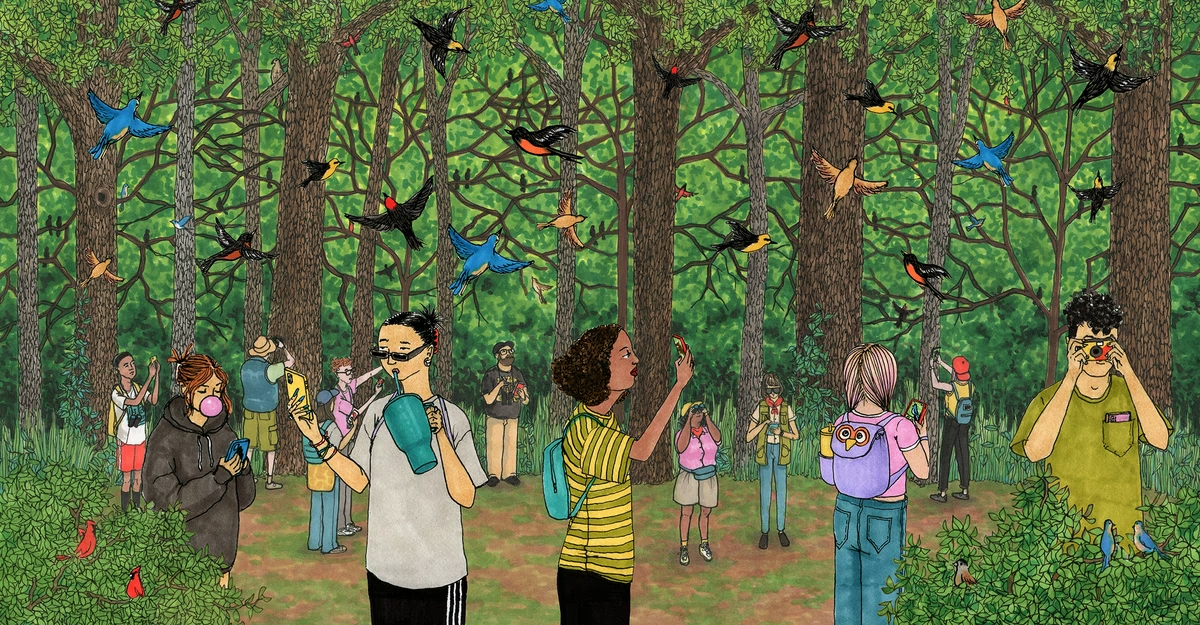
On a quiet Sunday morning, as I was going for a walk, a stranger sidled up to me and said his “Good morning, sir”. “I see you on walks around the estate, with a camera. Are you into architecture?”, he then asked. The reality, I told him, is more prosaic: “I’m a birdwatching and photography hobbyist”. “Birdwatching?!” I wasn’t sure what the additional look on his face was. Disbelief? Disgust? Pleasant surprise? “Isn’t that what ‘Oyinbo people’ do?”, he blurted out. And that’s how seven years after the covid-19 pandemic forced me into a more intimate conversation with the space that my species occupies on this planet, especially how this tenancy isn’t exclusive to humanity but co-dependent on every other species that the earth is made up of and includes, I realised that I’d strayed into a culturally dubious territory.
A few months earlier, on a much larger birdwatching excursion outside urban Lagos, our group walked by a gathering of villagers. Pleasantries casually exchanged, we moved on to the faint whisper of a stray comment. One of the team we’d just passed by was overheard telling another that “àwọn ègbè ẹ l’ẹyẹ nìyẹn”. Loosely translated, it means “those are members of the bird group”. As we sashayed through the thickets, the import of this statement exercised members of the team. Absolutely nothing wrong on the face of it? Yes. But that’s before you remember that for a lot of Nigerians, birds (and bats) are, in reality, shape-shifting elementals (more often than not, witches on their way to meetings of their covens) – or at the very least, other even more unsavoury entities.