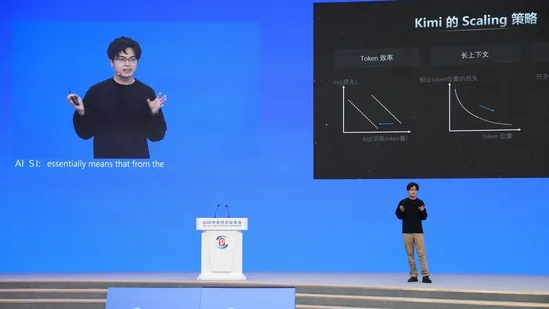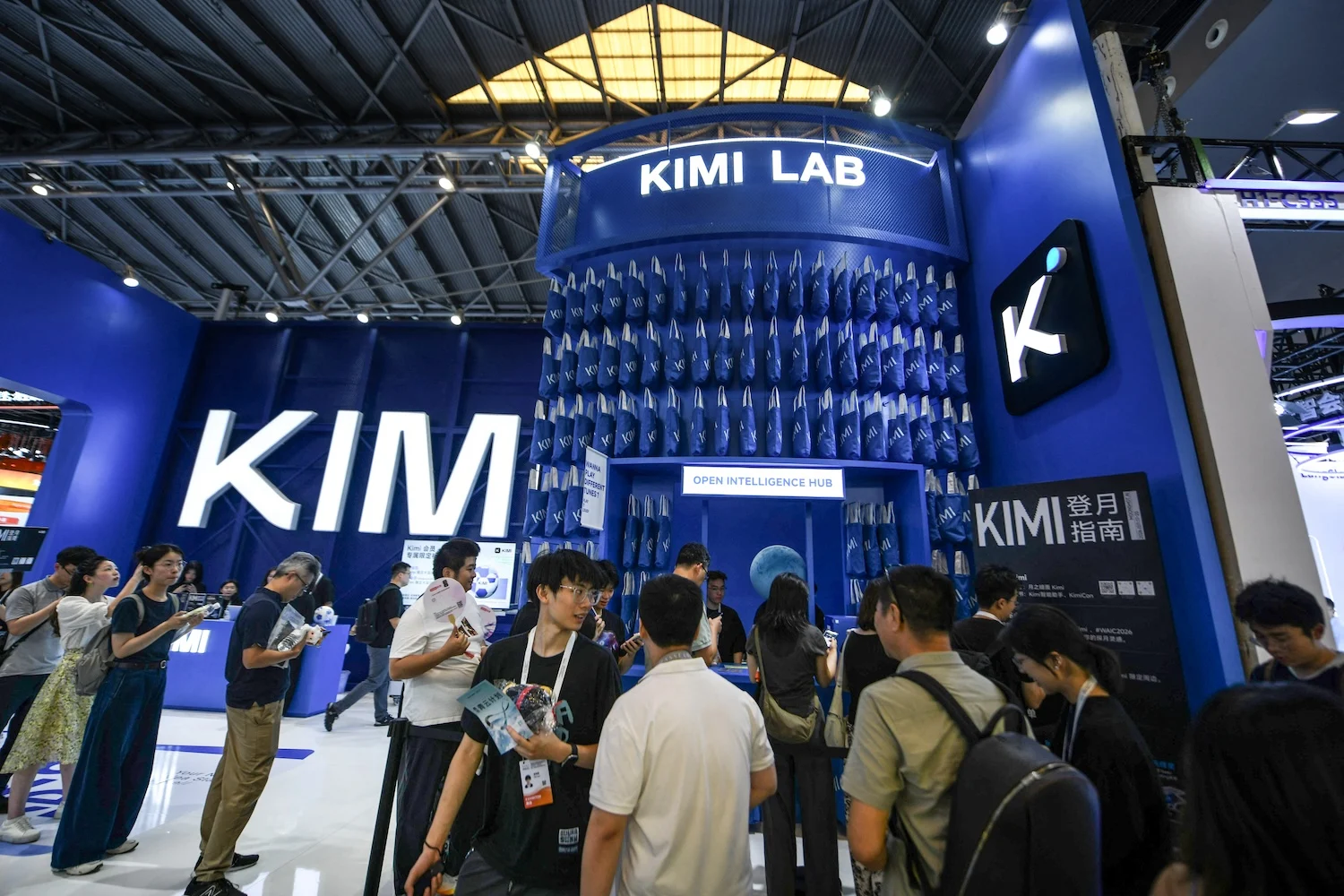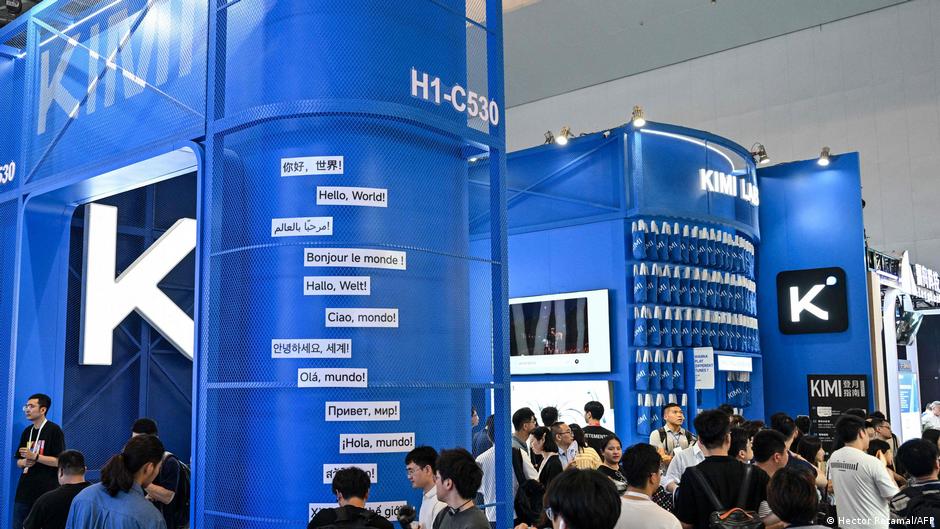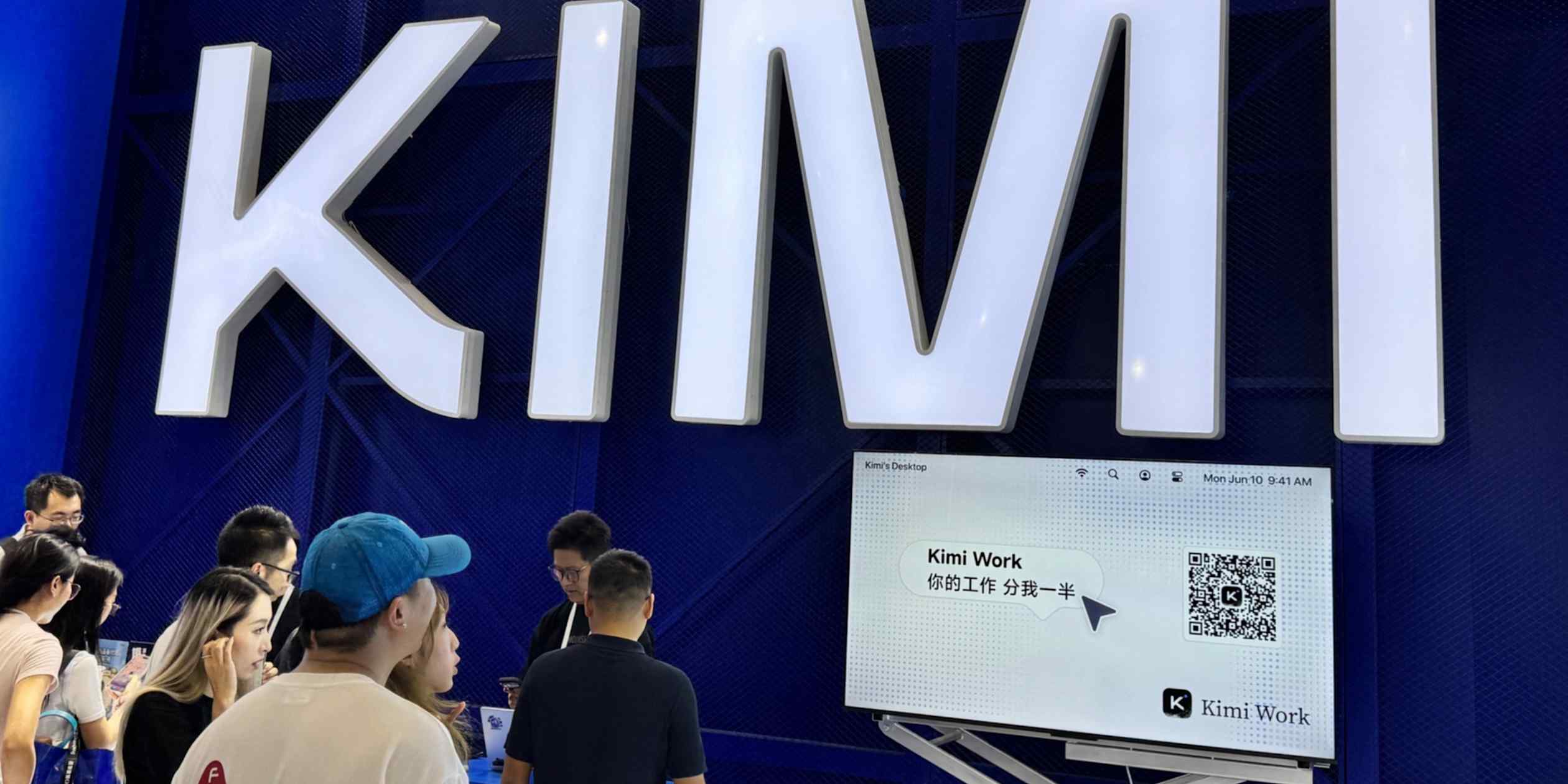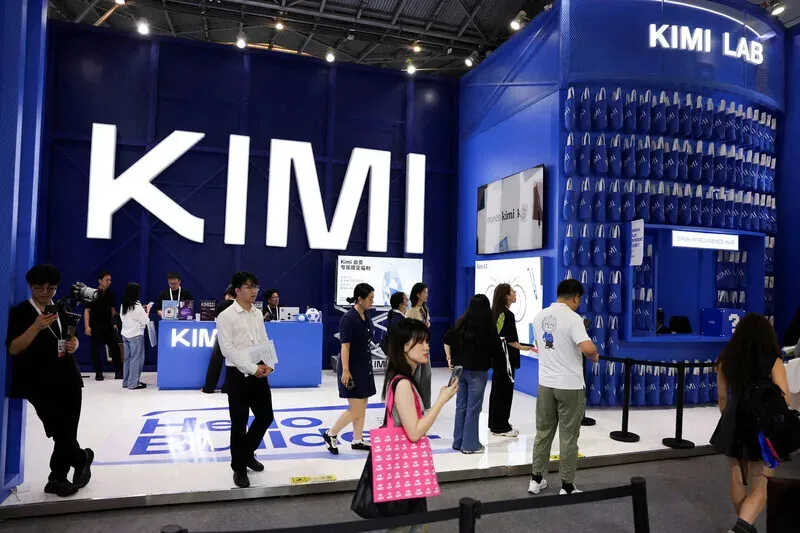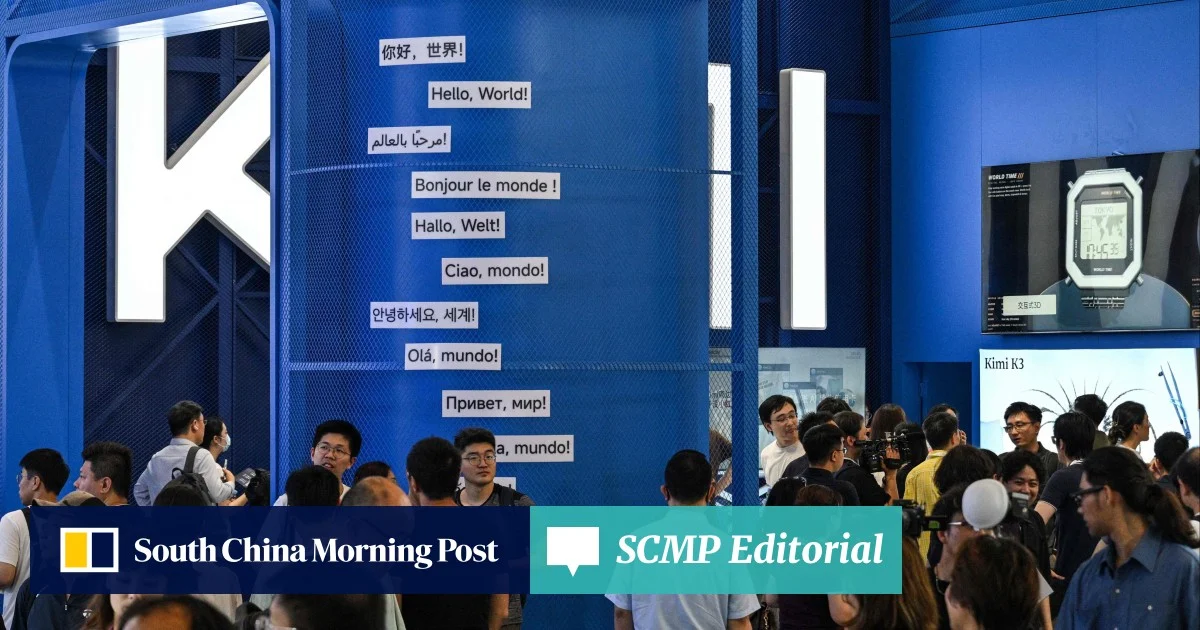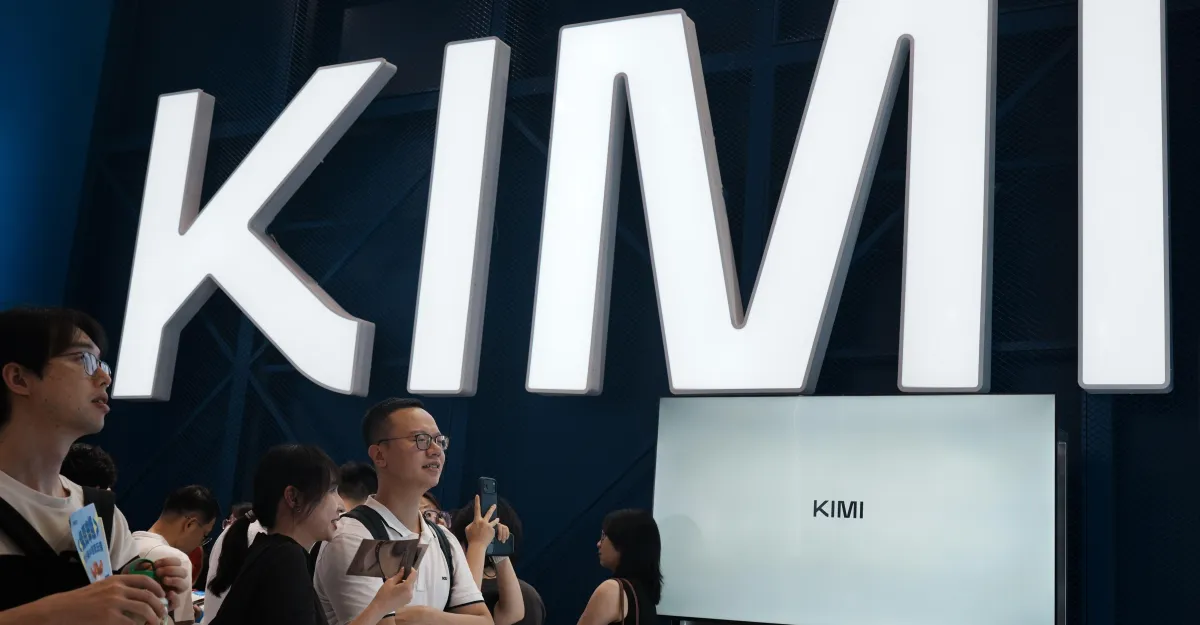
China’s leading AI companies are ramping up the pressure on Silicon Valley, as Moonshot and Alibaba unveiled models they claim can go toe-to-toe with the best from OpenAI and Anthropic at a fraction of the cost. The rapid-fire releases suggest America’s lead at the AI frontier is increasingly tight, just as the technology is becoming central to national security, economic power, and geopolitical influence.The opening salvo came from Beijing-based Moonshot AI, one of China’s leading AI model developers, which unveiled Kimi K3 on Friday. Moonshot claims its own testing ranks it consistently above nearly every US system, trailing only OpenAI’s GPT-5.6 Sol and Anthropic’s Claude Fable 5, though it came out ahead on certain benchmarks.Over the weekend, Chinese tech behemoth Alibaba followed with a preview of Qwen3.8, a new model it says is ‘one of the most powerful model[s] available today” and “second only to Fable 5,” Anthropic’s flagship model.Both companies are emphasizing a key difference from the leading US labs: rather than locking their most advanced models behind closed doors, they are making them publicly available. While some US companies, most notably Meta, have taken a similar approach, releasing models that developers can freely download, modify, and build upon has become a growing point of differentiation for China’s AI industry.Moonshot describes Kimi K3 as the world’s largest open-source AI system, with 2.8 trillion parameters. Parameter counts are measures of a model’s complexity during training and offer a rough indication of its scale and performance, though bigger does not always mean better. Alibaba says Qwen3.8 is a 2.4 trillion parameter model and “continuously evolving.” Neither OpenAI nor Anthropic disclose exact parameter counts for their leading systems.It remains difficult to assess how capable either Chinese model is until they are fully released and independently tested. Moonshot says it will release full model weights — the internal numerical learned during an AI model’s training period — a week from now on July 27th. Alibaba says Qwen3.8 is “going open-weight soon.”Even so, the releases have already sharpened competition between the US and China in what has been repeatedly characterized as the defining technological race of our time. They have shaken up the industry in a way not seen since DeepSeek unveiled a low-cost model last year that rivaled leading US systems. The models also raise questions about whether the vast sums of money US companies are pouring into chips, data centers, and model training can secure a durable advantage, particularly if Chinese rivals can approach — or surpass — that frontier with fewer resources.The prospect of two highly capable Chinese models being released for others to download and adapt also contrasts starkly with the more guarded approach of US labs, whose most advanced systems remain proprietary. That openness emerges even as Washington moves rapidly to restrict global access to the underlying technology. The government has used export controls to restrict China’s access to the most advanced chips, as well as to force Anthropic to pull its most capable system from the market over concerns it could help foreign competitors catch up.Whether the new Chinese models live up to their creator’s claims remains to be seen. But, like DeepSeek before them, they are likely to sharpen the technological rivalry between the US and China, influence economic and national security policy, and show that America’s lead is far narrower than it once appeared.Follow topics and authors from this story to see more like this in your personalized homepage feed and to receive email updates.Robert Hart
China delivers a one-two punch to America’s AI dominance
Within days, Moonshot and Alibaba unveiled frontier models they claim rival OpenAI and Anthropic.
580 words~3 min read