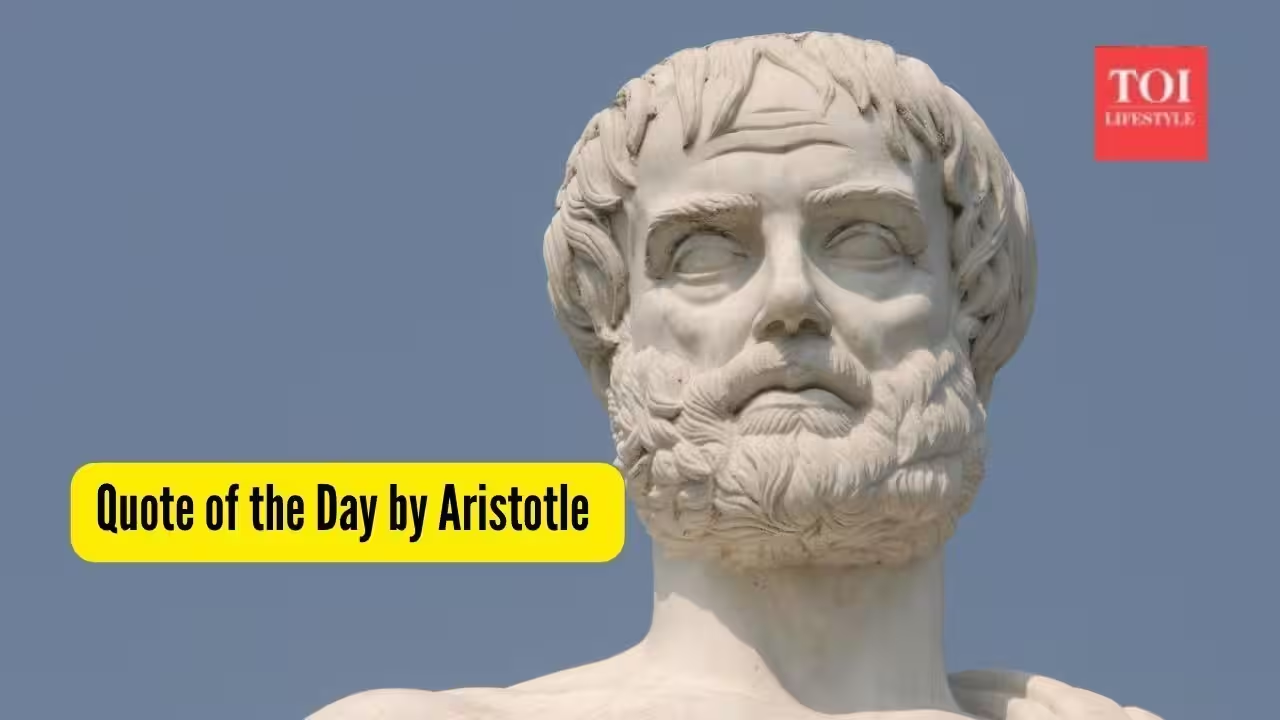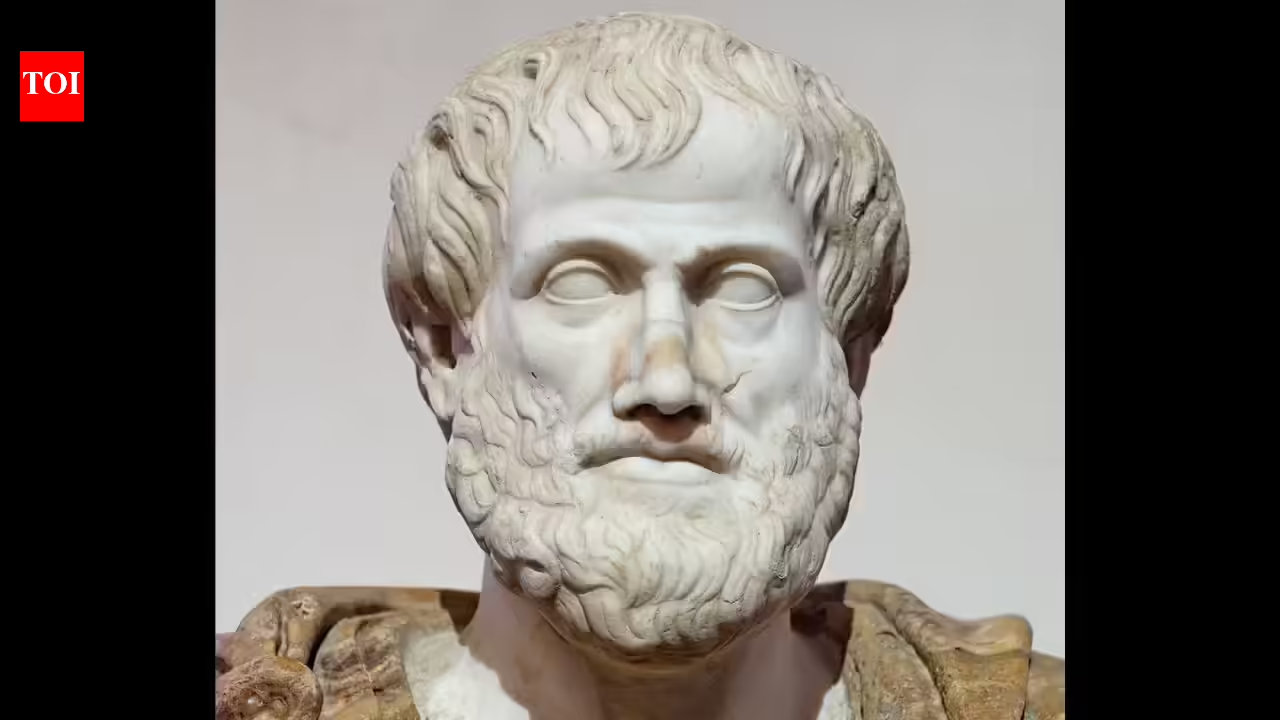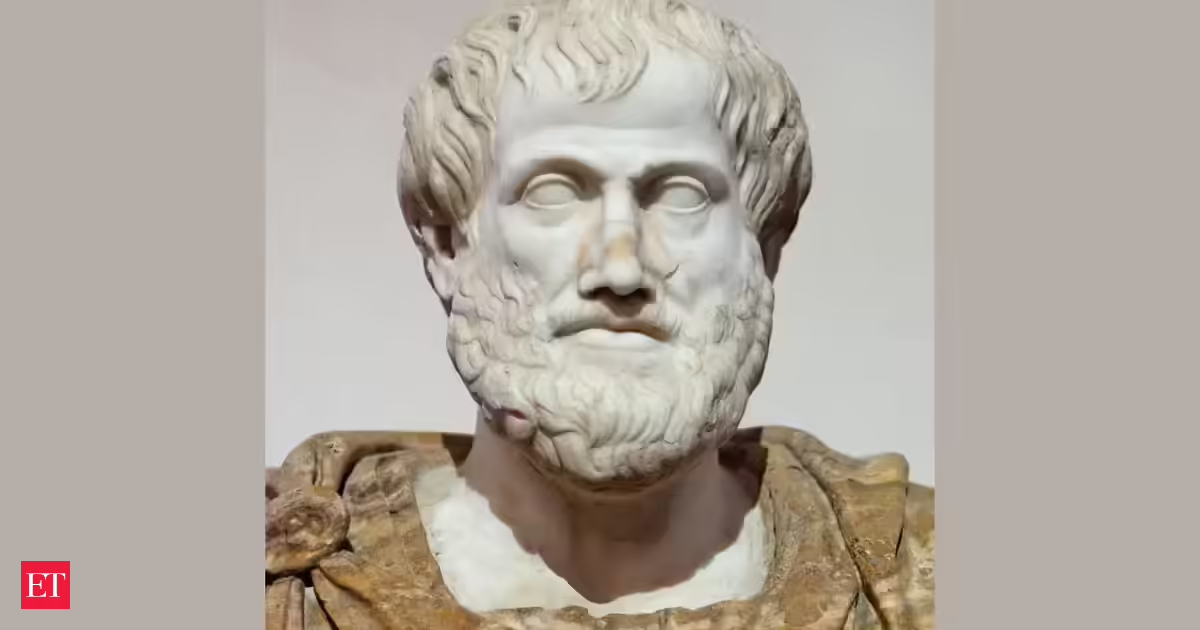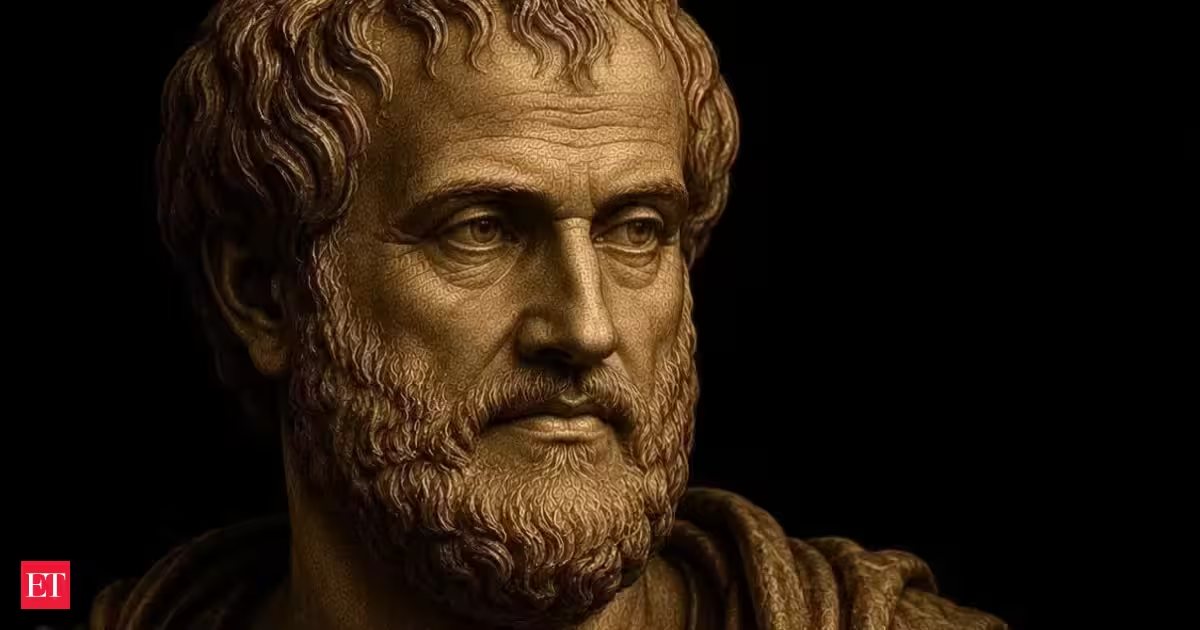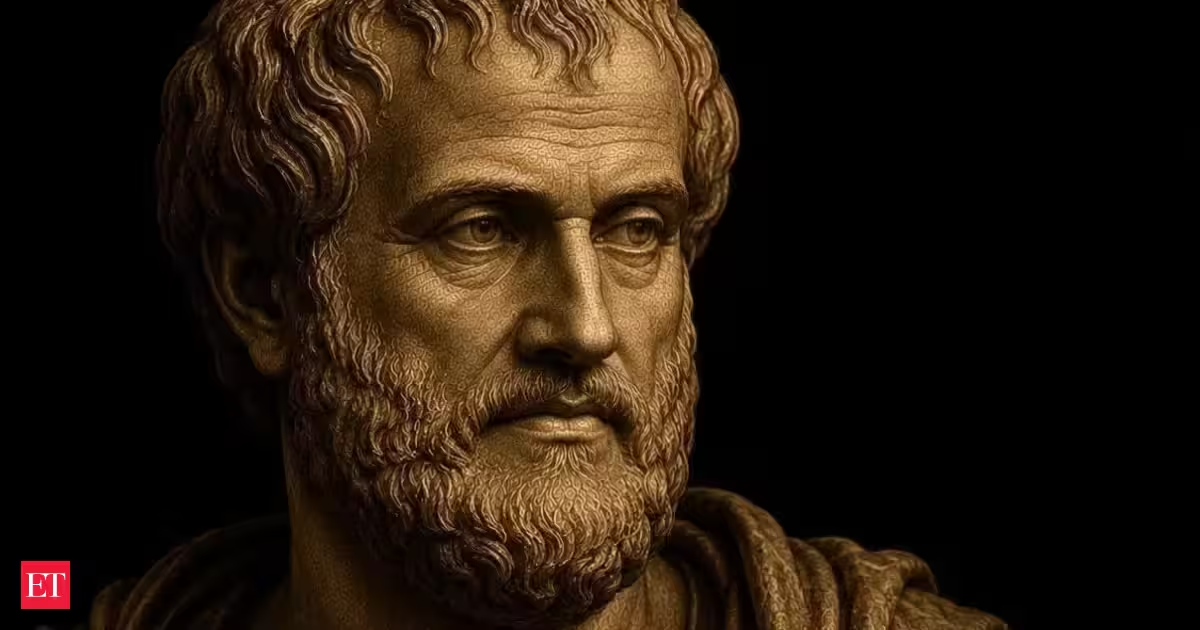
Few emotions are as universal as anger. Yet, today's Quote of the Day by the ancient Greek philosopher Aristotle reminds us that true wisdom lies not in avoiding anger altogether, but in expressing it with restraint, purpose and good judgement.Quote of the Day: "Anybody can become angry, that is easy, but to be angry with the right person and to the right degree and at the right time and for the right purpose, and in the right way, that is not within everybody's power and is not easy." — Aristotle, Nicomachean Ethics (Book II, Chapter 9)Written more than 2,300 years ago, the quote remains strikingly relevant in an age of instant reactions, social media debates and emotionally charged conversations.Quote of the day meaning: What did Aristotle mean?Aristotle believed that emotions are natural, but virtue lies in how we manage them.In this famous passage from Nicomachean Ethics, he explains that anyone can become angry. The real challenge is directing that anger towards the right person, at the right time, for the right reason and in the right measure.The quote reflects Aristotle's concept of the "Golden Mean", the idea that moral virtue is found between two extremes. Rather than encouraging either uncontrolled anger or complete passivity, he advocates balanced emotional control guided by reason.Quote of the day lesson: Why Aristotle's words still matterAristotle's insight is especially relevant today, when disagreements can quickly escalate online and offline.His quote reminds us that reacting emotionally is easy, but responding thoughtfully requires self-discipline. Whether dealing with workplace conflicts, family disagreements or public debates, measured responses often lead to better outcomes than impulsive reactions.The message encourages emotional intelligence, patience and accountability, qualities that remain essential in both personal and professional life.Quote of the day source: Where does the quote come from?The quote is taken from Aristotle's Nicomachean Ethics, one of the most influential works in Western philosophy.The work explores how people can achieve eudaimonia, often translated as happiness, flourishing or living a fulfilled life through ethical behaviour and practical wisdom.Who was Aristotle?Aristotle (384–322 BC) was an ancient Greek philosopher, scientist and polymath whose ideas have shaped philosophy, science, politics, ethics and logic for more than two millennia.Born in Stagira in northern Greece, he joined Plato's Academy in Athens at around 18 and remained there for nearly two decades. After Plato's death, Aristotle later became the tutor of Alexander the Great, before establishing his own school, the Lyceum, in Athens.There, he founded the Peripatetic School, where students explored philosophy while walking and discussing ideas.Aristotle's lasting influence on philosophy and scienceAristotle wrote extensively on subjects including ethics, politics, biology, physics, psychology, poetry, rhetoric and logic.Although only about one-third of his original works have survived, his writings laid the foundations for many branches of modern knowledge.His studies of logic remained the standard for centuries, while his ethical philosophy continues to influence contemporary discussions on virtue ethics, leadership and moral responsibility.During the Middle Ages, Aristotle's works profoundly influenced Islamic philosophers and Christian theologians, including Thomas Aquinas, earning him the title "The Philosopher" in medieval Europe.Quote of the day takeawayAristotle's timeless observation reminds us that strength is not measured by how easily we express anger, but by how wisely we control it.Choosing the right moment, the right reason and the right response requires judgement, patience and character. More than two thousand years after it was written, the quote continues to offer practical guidance for navigating everyday life with wisdom and balance.
Quote of the day by Alexander the Great's teacher, Aristotle: "Anybody can become angry, that is easy, but to be angry with the right person..." Timeless life lessons on anger management, emotional intelligence, self-control and wisdom
Quote of the day Aristotle: Aristotle's timeless wisdom on anger remains relevant today. He taught that while becoming angry is easy, expressing anger in the right way requires reason, self-control and sound judgement. His philosophy emphasises that true virtue lies in managing emotions with balance rather than acting on impulse. These teachings continue to encourage emotional intelligence and thoughtful responses to life's challenges.
569 words~3 min read