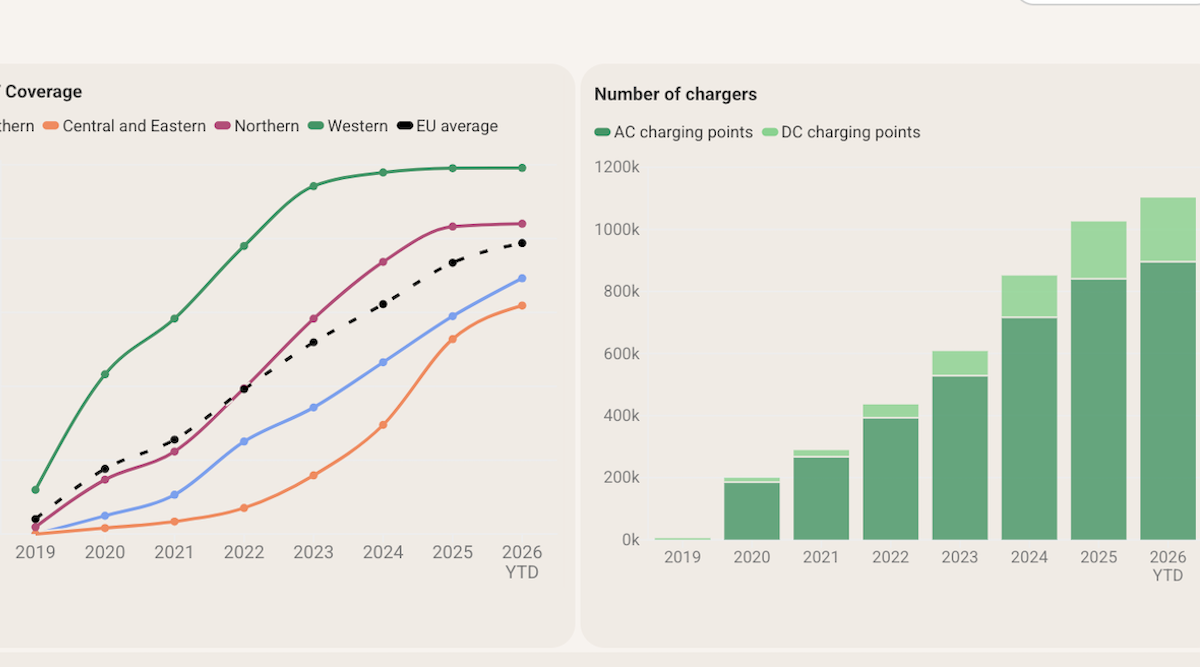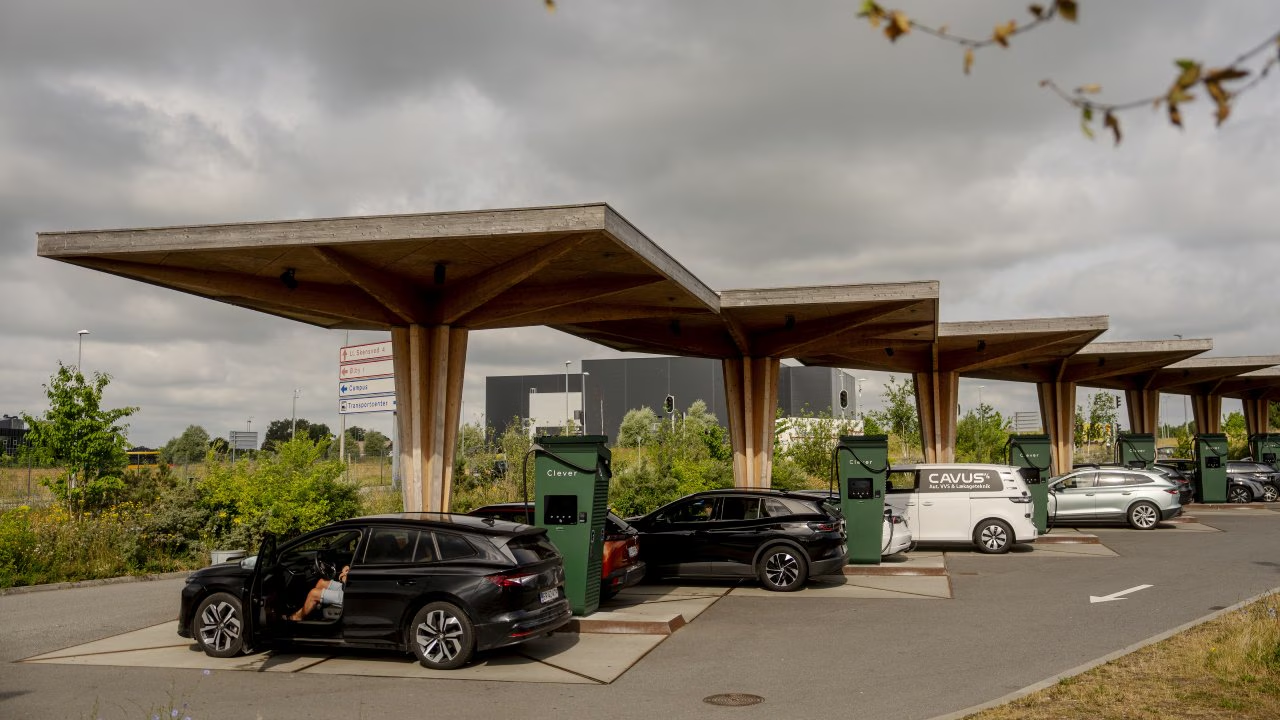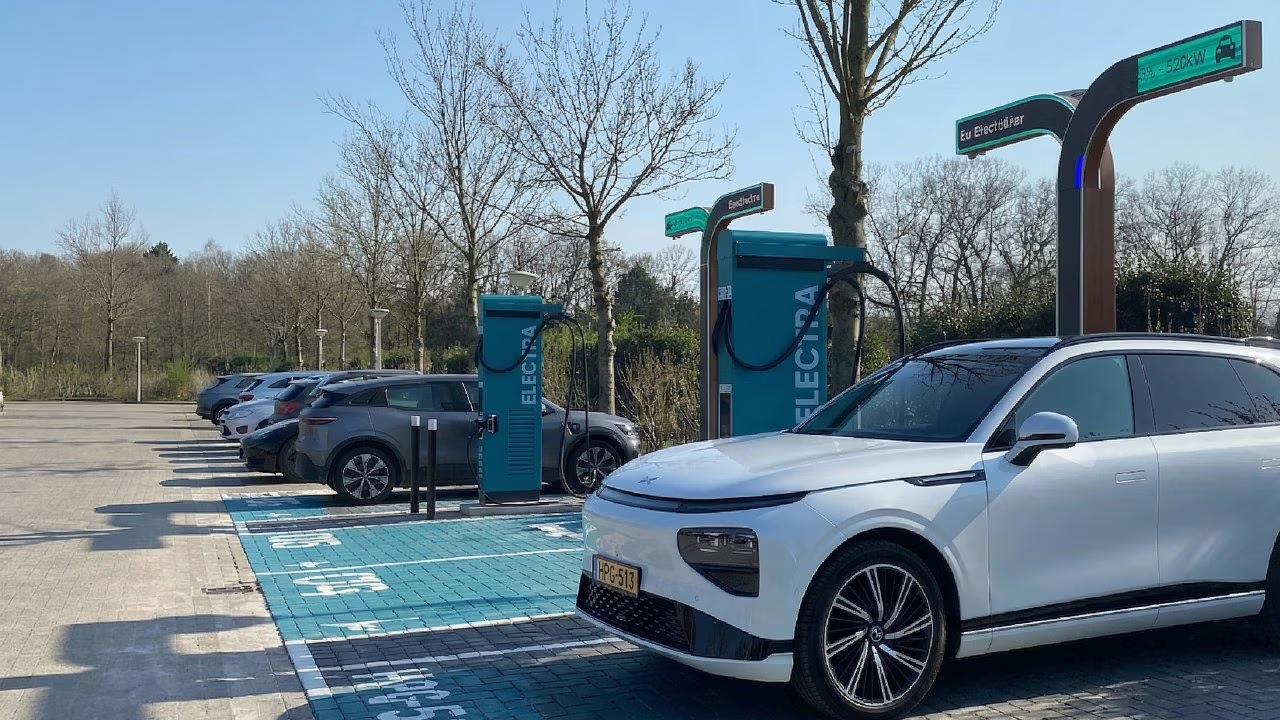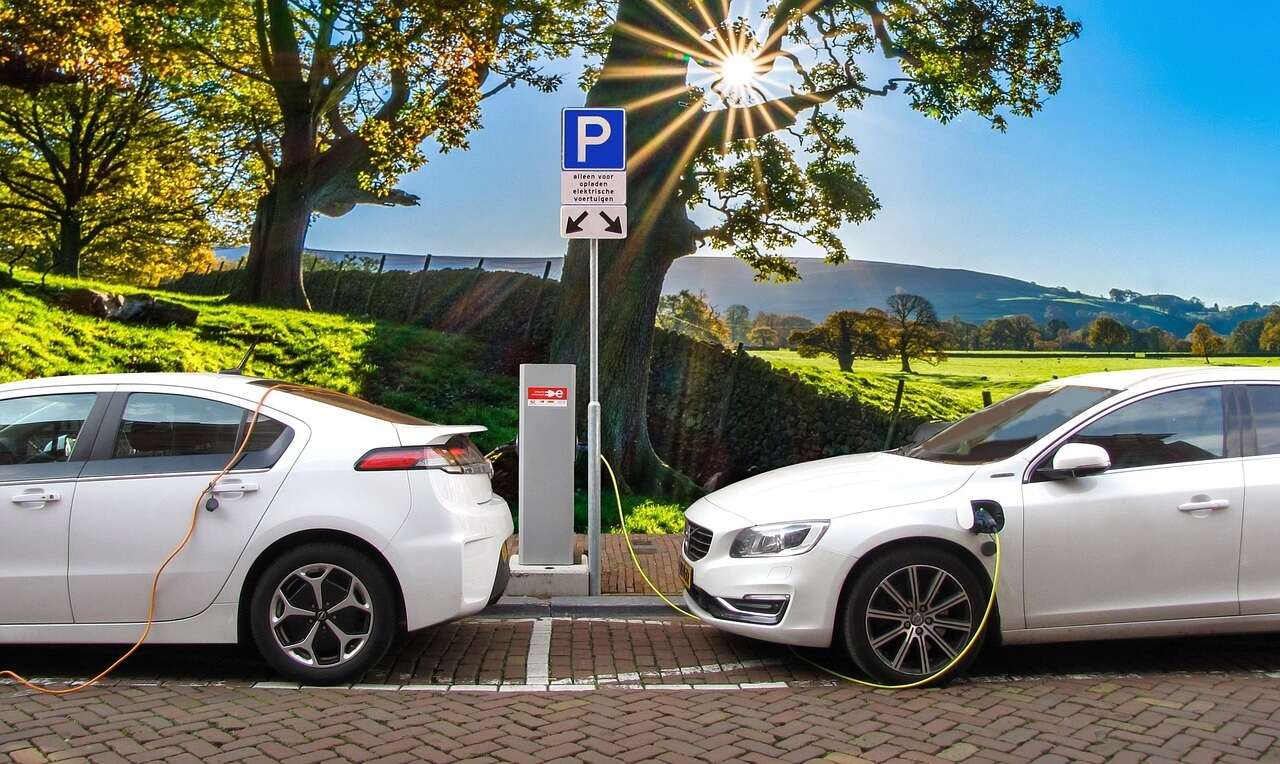
Under AFIR, member states must provide at least 1.3 kW of publicly accessible charging capacity for every battery-electric vehicle registered in their national fleet. By the end of March 2026, all member states except Malta had met this requirement. Across the EU, total public charging capacity exceeds the minimum target by 180%, according to T&E.
The report concludes that charging infrastructure has expanded ahead of the sharp increase in electric car registrations recorded in 2025 and 2026. According to T&E, this suggests the AFIR framework is achieving its objective of supporting the transition to electric mobility.
AFIR also includes geographical deployment targets. By 2025, ultra-fast charging stations with a minimum output of 150 kW must be available every 60 kilometres along the TEN-T Core road network. T&E’s analysis shows that, as of June 2026, 79% of the Core network met this requirement.
In Western Europe, compliance exceeds 99%, while the remaining gaps are concentrated mainly in Spain and several Central and Eastern European countries. At the same time, these markets are among those recording the fastest growth in ultra-fast charging infrastructure.
The report highlights Poland as one example of this development. Within less than two years, the country’s compliance with the TEN-T Core requirements increased from 20% at the end of 2024 to 59% by June 2026.