Support CleanTechnica's work through a Substack subscription, on Patreon, or on Stripe. Help us produce all of the high-quality, original content we publish week after week despite the challenges of content-scraping AI, antisocial media, inflation, and other hurdles.
Only Malta falls short on the EU’s fleet-based target for public charging.
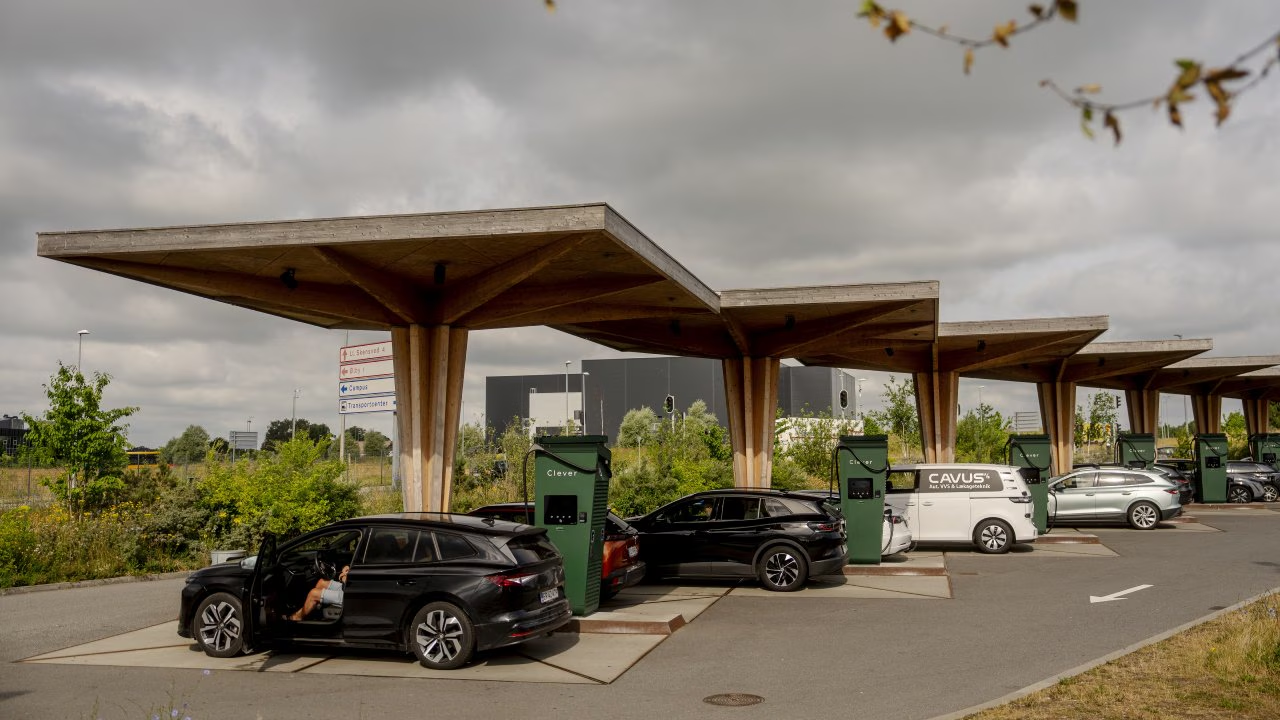
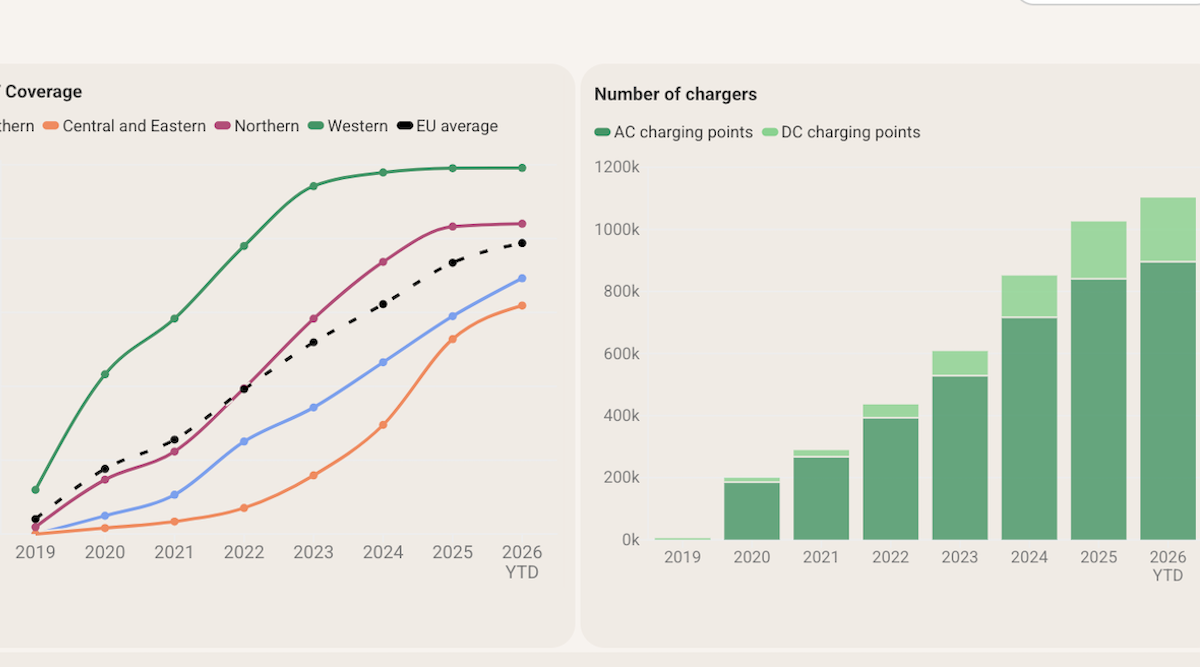
All but one EU country are meeting the bloc’s targets for EV charging infrastructure to keep pace with the number of EVs on the road, new research shows. The analysis by T&E also finds that most of the EU meets its goals for fast chargers to be located every 60 km along main roads. T&E said the network expanded in advance of strong electric car sales growth in 2025 and 2026, showing the charging targets are enabling the EV transition as intended.
Fleet-based targets
There were 1.1 million public chargers in the EU by the end of last year, five times more than in 2020. The bloc’s charging infrastructure law, AFIR, requires member states to have at least 1.3 kW of public charging capacity for every battery electric vehicle (BEV) in the national fleet. By the end of March 2026, all countries except Malta had enough public charging capacity for the number of BEVs on the road. When all national targets are aggregated, the EU as a whole would exceed the fleet-based target by 180%.