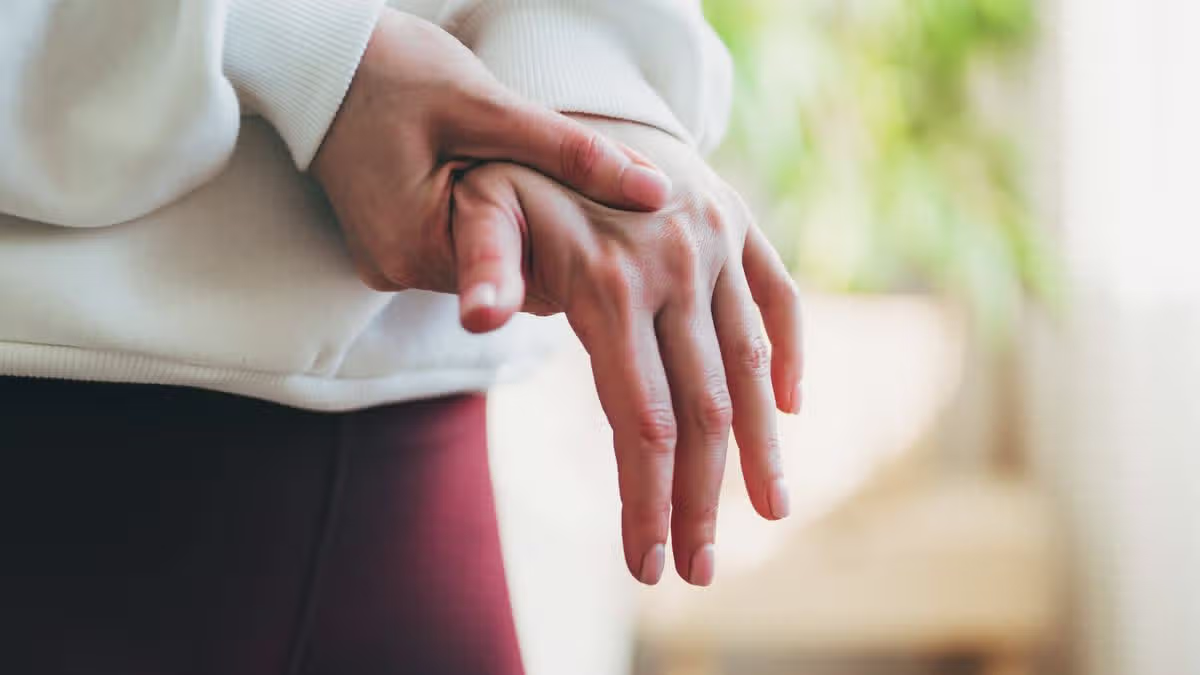
After two years of tests and pain, I finally got an answer.04:32, 20 Jul 2026Updated 08:34, 20 Jul 2026In April 2024, I slipped over while gardening and damaged my wrist. It wasn't serious, and after an X-ray and MRI, I was told I had a bone bruise, which would heal in a few months.My wrist continued to be painful for the next four months despite using ice, pain relief and wrist splints to help it heal. I was then diagnosed with ulcerative colitis, a chronic inflammatory bowel condition that causes inflammation in the large bowel and rectum.While the main symptoms of this long-term health condition are bloody diarrhoea, severe abdominal cramping, rectal pain and urgency, people can develop extraintestinal complications, including arthritis and inflammation of the joints.Arthritis can affect 30% of people with Crohn's disease or ulcerative colitis. The disease is often associated with older individuals, but for people with inflammatory bowel disease, it can impact younger people.One in four adults worldwide has metabolic syndrome, frogs vs cancer, tucking into a low-inflammation diet can cut the risk of developing dementia, and why you hate other people - all this and more in our science newsletterOver the next two years, the pain worsened, and despite blood tests, including a rheumatoid blood test to check for antibodies and inflammatory markers, and many trips to the doctor, arthritis was ruled out, as was Carpal Tunnel Syndrome.A few weeks ago, I was finally sent to orthopaedics and told I had a condition I had never heard of: De Quervain's tenosynovitis.I was shocked. I could hardly pronounce it, let alone know what it was.What is De Quervain's tenosynovitis?De Quervain's tenosynovitis is caused by rubbing of the two tendons that sit at the base of the thumb and wrist. The tendons sit inside a tendon sheath, a tunnel of tissue that surrounds the tendons. When the two tendons rub together, the sheath becomes swollen and thickened, narrowing the sheath and making the tendons painful when the thumb is moved.What are the symptoms of De Quervain's tenosynovitis?Some of the main symptoms of De Quervain tenosynovitis include pain near the base of the thumb, swelling near the base of the thumb, difficulty moving the thumb and wrist when gripping or pinching, and a catching sensation when moving the thumb. The pain can spread up the forearm and into the thumb if it's not treated promptly.My wrist hurts most when I'm writing and lifting items like the kettle or oven trays, grasping objects like a bag, turning my wrist or using scissors.What causes De Quervain's tenosynovitis?De Quervain's tenosynovitis can be caused by rheumatoid arthritis, an injury to the wrist or tendons and fluid buildup, which can be caused by hormone changes during pregnancy. It's thought that the original injury in my wrist is what caused me to develop De Quervain's.Some people are at a higher risk of De Quervain's, including women, people aged between 30 and 50, people who are pregnant or breastfeeding, people who are looking after a baby and those who perform repetitive hand or wrist movements such as gardening, typing or playing certain sports.How is De Quervain's tenosynovitis diagnosed?Diagnosing De Quervain's tenosynovitis is fairly simple with the 'Finkelstein test'. A doctor will ask you to bend your thumb across your palm and then fold your fingers over your thumb. You will then be asked to bend your wrist towards your little finger.For me, the result of the test was obvious; a shooting, stinging pain shot down the thumb side of my wrist and down my forearm.How is De Quervain's tenosynovitis treated?For most people, the symptoms will settle with rest and with modified activities involving the wrist. Applying ice or frozen peas wrapped in a towel for 20 minutes every four hours can also help. The NHS also recommends wearing a thumb or wrist splint for six weeks.As I had been in pain for so long, self-management was no longer an option, and so the specialist recommended a steroid injection.A steroid injection and local anaesthetic were administered in my wrist area below the thumb to help reduce swelling. It was painful, but after a few weeks, the pain has eased considerably. For some people, it can take up to six weeks for the injection to work, and for others, it doesn't work at all.If the steroid injection doesn't work, then surgery is the next option. The surgery is done under local anaesthetic and lasts around 30 minutes.The surgery involves making a small incision along the thumb side of the wrist about 2cm in length. The surgery involves opening up the tendon sheath so the tendons can move more easily. The cut is then closed with dissolvable stitches.Individuals who are pregnant, breastfeeding, have uncontrolled diabetes, or who can't have surgery for another reason will likely be referred to hand therapy instead.Article continues belowIf you suspect you or someone you know has De Quervain's tenosynovitis, contact your GP for an appointment.
I thought I had arthritis but I was diagnosed with condition I'd never heard of
After two years of tests and pain, I finally got an answer.
822 words~4 min read