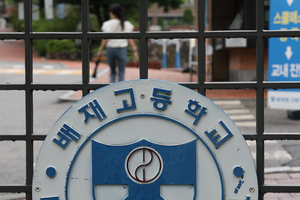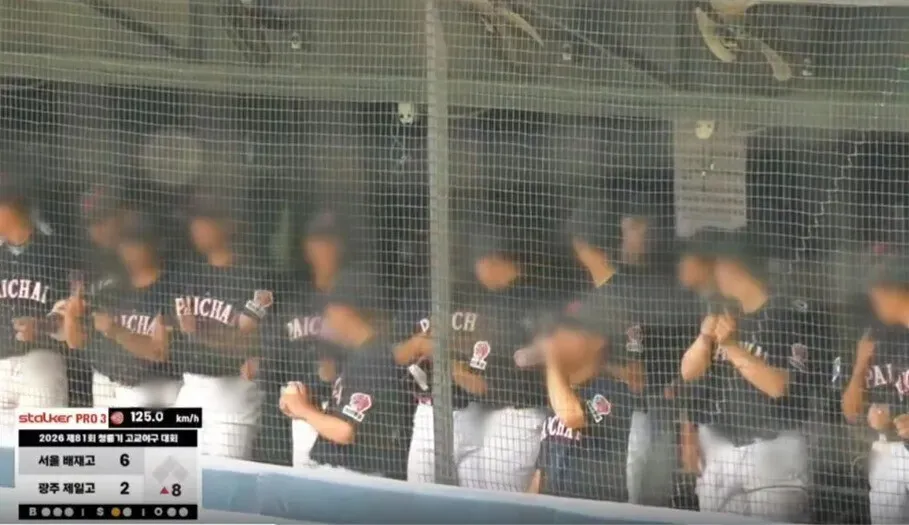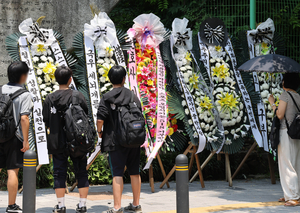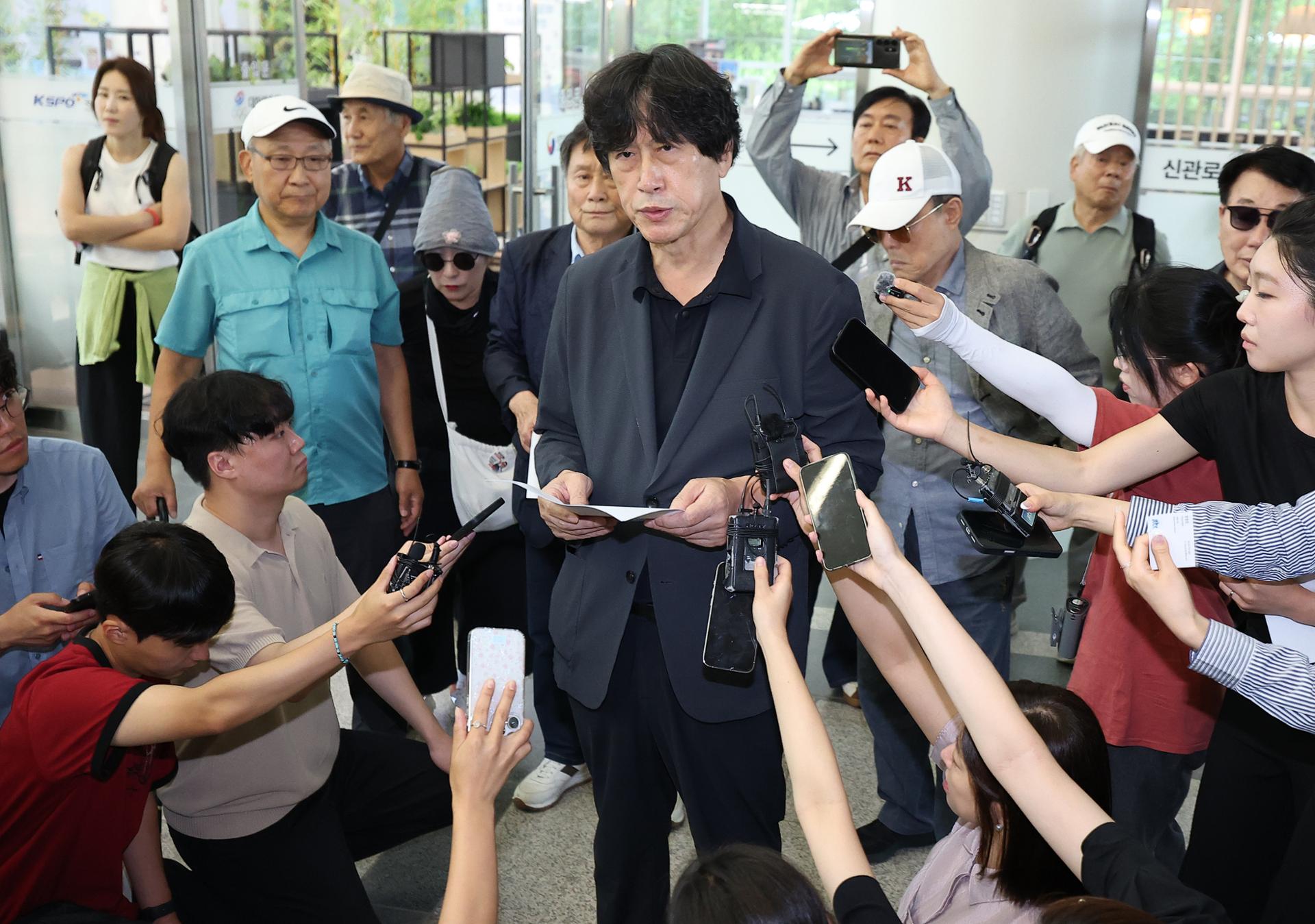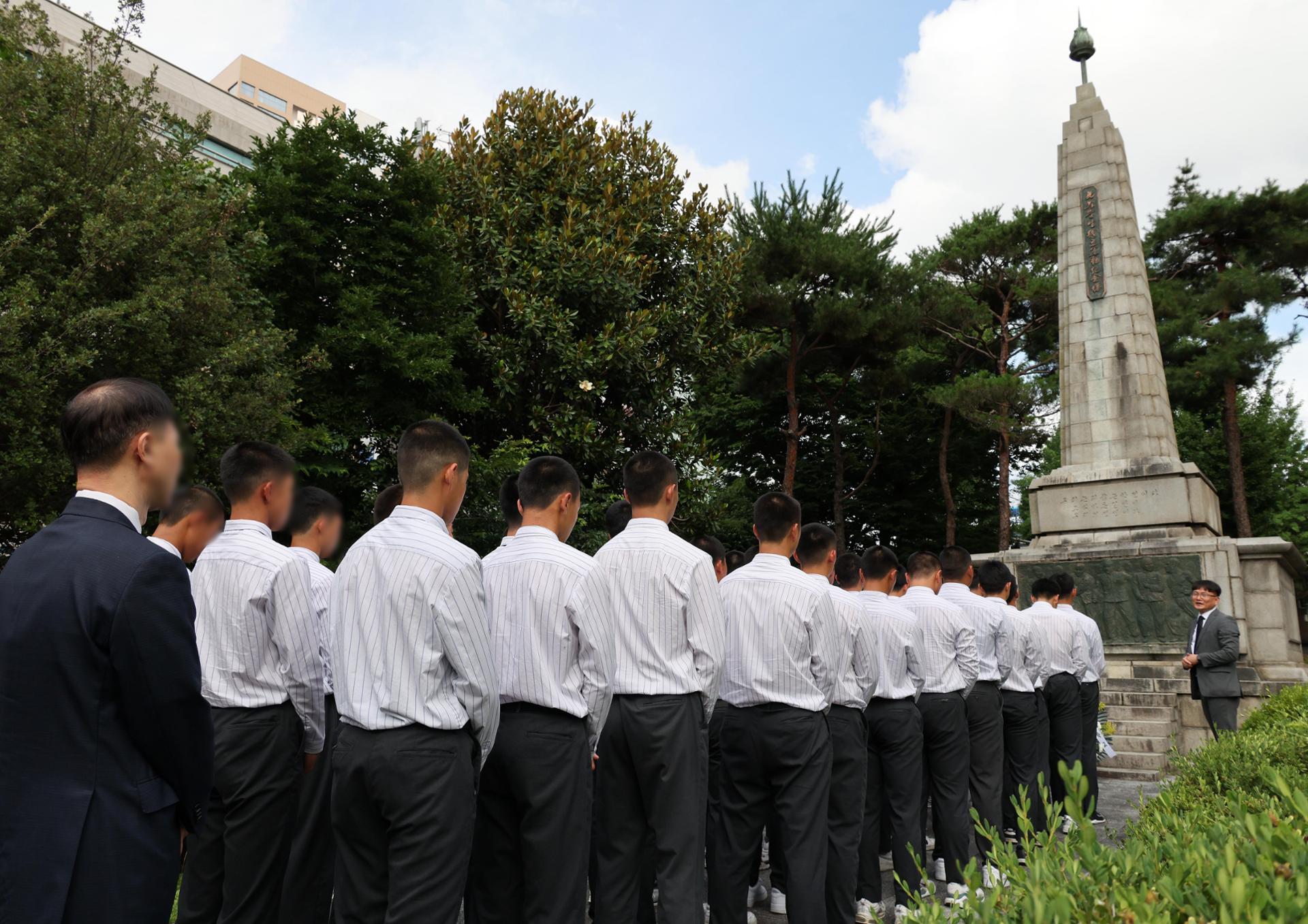
Recently, a cheering culture sparked at a high school baseball tournament sent shockwaves through our society. An arena for youth and competition was affected by mockery and derision directed at the opposing side. The aftermath brought an unprecedented six-month suspension, followed by mutual apologies, forgiveness and the heavy burden of mandatory history education.
While many are quick to condemn this uncomfortable spectacle as deviance of immature youth, a memory lingers in the corner of one’s heart. Over the silhouettes of those school uniforms trading thoughtless taunts, there emerges an overlapping image of another group of uniforms from over 70 youths who were forced to bear a burden of a different magnitude.
Every year around this time, a memorial service is held in Yeosu, South Jeolla Province, to honor the student soldiers who fought in the 1950-53 Korean War. In July 1950, when the Korean Peninsula faced the imminent threat of communist subjugation, countless students from Yeosu and the broader “honam” or the southwestern region comprising both the South and North Jeolla provinces. They were the first in the nation to cast aside their school uniforms. Signing their enlistment in blood, they rushed onto the battlefield. They had no military serial numbers, nor had they received proper training. Yet, the blood these fresh-faced youths shed at the Battle of Hwagae became the decisive catalyst that held the Nakdong River defense line, serving to enable the perilous Republic of Korea to lay the groundwork for a counteroffensive. The life enjoyed by today's youth — competing on the field, laughing and dreaming of the future — is the legacy secured through the sacrifice of those nameless student soldiers.