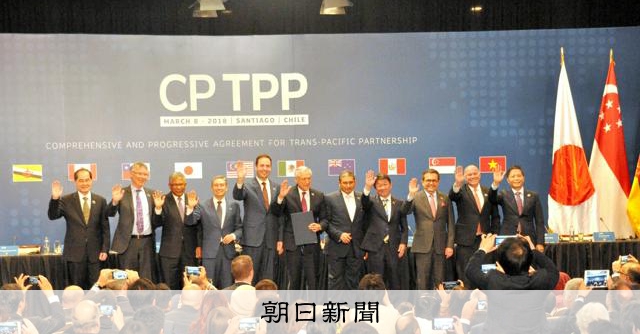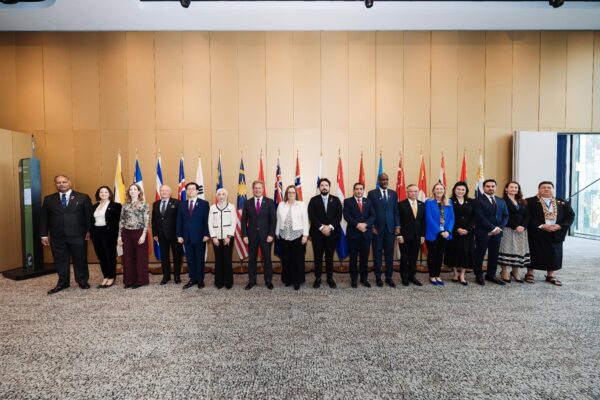
A change of name for the Comprehensive and Progressive Agreement for Trans-Pacific Partnership is on the agenda for a senior officials meeting taking place in Vietnam this week.The 12 nation free trade agreement featuring the likes of New Zealand, Australia, Japan and the UK, has its origins in the Trans Pacific Partnership, or TPP, formed back in 2016.It evolved into the Comprehensive and Progressive Agreement for Trans-Pacific Partnership or CPTPP when Donald Trump withdrew the US from the original TPP agreement in 2017.The change of name was long overdue, according to a global trade expert, who has put forward some ideas for officials to ponder, as the widely used acronym of CPTPP was more than a mouthful for many and made little sense given the global trade organisation's expansion to include non-Pacific nations, such as Uruguay and Britain, with others set to join."Everyone trips over the acronym. No one can remember what it actually stands for. It was always too complicated," head of trade policy at the Heinrich Foundation in Singapore Deborah Elms said.She said a recent poll asking members for suggestions for a change of name,came back with a range of suggestions, with most along the lines of international or global trade partnership."You can imagine people's ideas. Acronyms that were things like FART, you know, all sorts of crazy suggestions."However, she said there were other priorities for the organisation that covered goods, services, investment, intellectual property rights, standards, labour, environment, but had not been updated since 2015."There are folks who say, do we really want to spend our time and energy on a name change that could actually turn out to be a very long and convoluted process. And while we're doing that, we are not doing things like upgrading the digital rules. So you have to, you know, everything is a trade-off, and you have to say what are the most important priorities."She said the agreement was currently about 600 pages of legal rules and thousands of pages of separate schedules for all of the members, which provided a level of certainty and lowered risks for businesses operating between CPTPP countries."There are some provisions in the original agreement that were put in because of requests of members at the time that no longer appear to apply. Those could be adjusted."We have some new chapters that you could usefully add. For example, we've all learned that trade in times of crisis is difficult. We could add a chapter on trade in times of crisis. We could add a chapter on supply chain resilience. We could potentially add a chapter on artificial intelligence as part of the accompanying upgrade to the digital rules, anyways."Elms said she had also been "arguing strongly" for the creation of a secretariat to manage the organisation, which continued to grow, with 12 members, with Costa Rica about to join, and a queue of eight more countries interested."Four more are starting accession. And once you start to get to that level of membership, you really need to have people focused on this full time," Elms said."And some of this is going to get difficult."
'Everyone trips over the acronym': Name change considered for giant free trade pact
A change of name for the Comprehensive and Progressive Agreement for Trans-Pacific Partnership is on the agenda for a senior officials meeting taking place in Vietnam this week.
518 words~2 min read