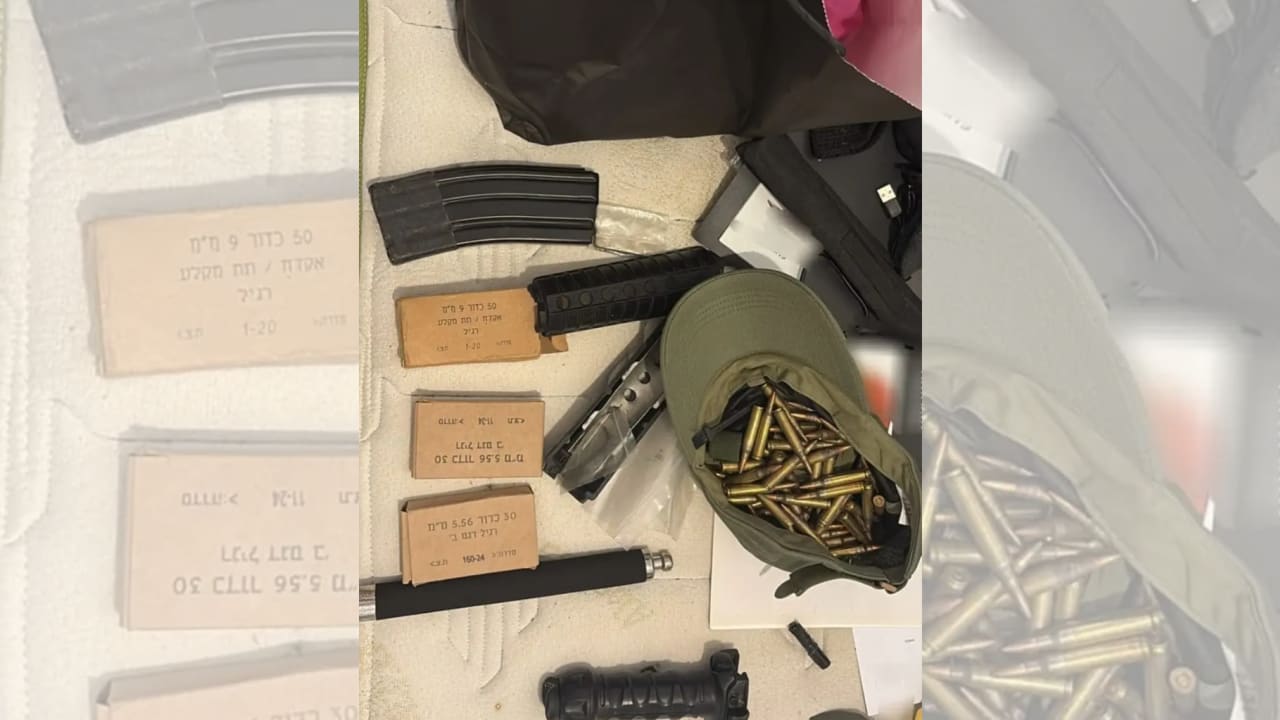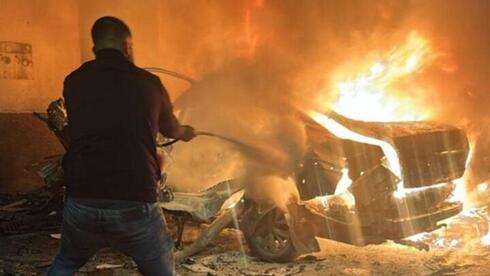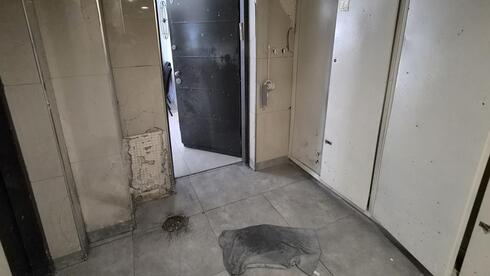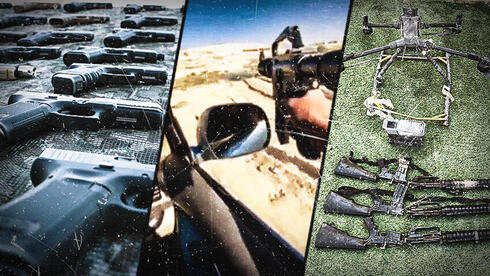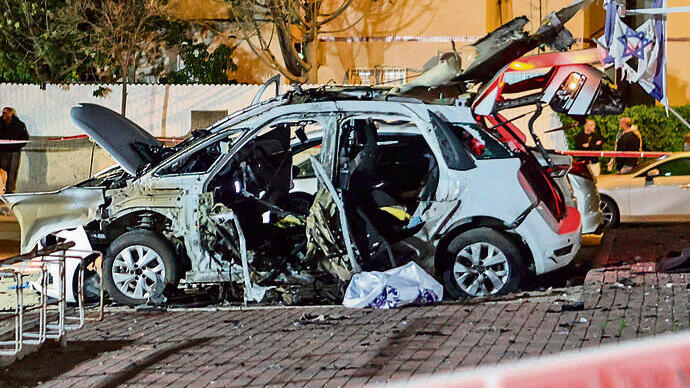
It’s not just grenades: Wartime weapons spillover from the IDF has turned explosives into an off-the-shelf commodity for crime organizations; once reserved for high-profile assassinations, they are now routinely used for threats, extortion and protection racketsShosh Mula|Thursday morning, June 4, 2026. Lia Ofri Malka, 35, from Rishon Lezion, sets out as usual to drive her 2-year-old daughter to preschool. She has no idea that for long minutes, the person operating the explosive device planted in her car has been following her, patiently waiting until she drops off the child and says goodbye to her with kisses at the entrance to the preschool.From there, Malka continues on her routine drive to work at an accounting office in Tel Aviv. Then, on Highway 20, the Ayalon Highway, near the Holon Interchange, with the press of a button from a distance, the ground around her shakes. A powerful explosive device weighing about 1 kilogram, which had been attached to her car, explodes, ripping the vehicle’s frame apart and leaving her no chance of survival.GalleryExplosion in Kiryat Yam in February of this year, which killed Guy Ben Simon and injured a 13-year-old boyWhat initially seemed to police officers who rushed to the scene like another familiar underworld assassination turned out, according to suspicion, to be an act of domestic violence. Chen Cohen, Malka’s estranged partner, was immediately arrested on suspicion of carrying out the act, but in the absence of forensic or direct evidence physically tying him to the detonation, he was released. Prosecutors filed an alternative indictment against him for sending dozens of explicit threats to Malka’s father — chilling recordings and messages that police had even before the fatal explosion, but that failed to prevent the murder, whose warning signs were written on the wall in blood.It was a tragic and unusual incident, but it also became part of the statistics of a wave of assassinations using explosive devices that has escalated over the past year. June, for example, became a deadly show of force by crime organizations, with no fewer than eight vehicles exploding across Israel and eight people losing their lives. Among the cases, in addition to Malka’s murder, were the explosive device that detonated at the Goral Junction in the Negev, killing two people and defined as a criminal accident, and additional assassinations in Jaffa, Holon, Musheirifa, Kiryat Gat and Kiryat Haim.Alongside all of these, June also brought intelligence successes for police, including the thwarting of an attempt to assassinate southern crime boss Eyal Nagar, in which a powerful explosive device was located and neutralized in Ashdod moments before it was activated.Police point to a decline in the number of criminal explosive devices. According to data provided to ynet this week, from the beginning of the year through June 30, 125 explosive devices were used, compared with 175 during the same period last year — a decline of about 30%. Police also said that of the 125 devices, 46 were monitored before they exploded, about 36%.Still, despite police investigators’ success in neutralizing devices at the last moment and despite the arrests of some of those who planted them, the bottom line remains stubborn: So far, none of the assassinations carried out this year by planting explosives has been fully solved. No suspects have been arrested and no indictments have been filed against the perpetrators. The main production line of the engineers of death, serving the criminal underworld, continues to operate undisturbed.This is how it works on the ground:Recently, however, it has become clear that the devices are no longer intended only for assassinations of senior crime figures. A review of this year’s explosions shows that some have adopted explosives as a routine method used for threats, debt collection and allegedly domestic violence.The explosives used in criminal devices come from two sources. The first and main source is military, and its effect is correspondingly far stronger. If criminals once had to improvise and hope for the best, today they have access to standard, high-grade explosives, which explains the climbing “success rate” in the field.The weapons seized in the Jerusalem apartment of a discharged IDF soldier“Most of the weapons circulating in the country since 2024 — fragmentation grenades, demolition blocks and more — are a result of the war,” says Chief Superintendent Yaniv Fadida, head of the Israel Police bomb laboratory division. “We are seeing direct spillover from it into the criminal market.”“Since October 7, there is greater access to explosive materials,” also emphasizes Chief Inspector Liron Koren, head of the drugs and weapons unit in the Intelligence Division. “Most of the devices seized were originally military-grade high explosives, meaning standard explosives that come from the army and cause far more significant damage,” she says.The second source, Fadida explains, is firecrackers and fireworks, which can easily be turned into improvised pipe bombs. Hundreds of tons of them are imported into Israel legally for private events. A source familiar with the fireworks market explains that “this is accessible, available, cheap raw material that is easy to buy without supervision and sold under the guise of a toy.” From there, Fadida continues, it easily leaks into the criminal market, which is estimated at about 40,000 items a year. Here and there, he says, there are still incidents involving improvised devices based on homemade explosive materials, such as chemical fertilizer.Police stress that while most pipe bombs made from fireworks are identified during the preparation stages and thwarted, in the criminal assassinations carried out in the streets over the past year, the main materials used were standard military-grade explosives stolen from the IDF.“Firework-based devices are more common in the West Bank, where there are no standard explosives,” Fadida says.This division draws a clear class distinction within Israel’s criminal pyramid. Local gangs and smaller organizations use improvised devices for extortion and intimidation. The top-tier organizations, by contrast, have access to military-grade standard explosives, such as demolition blocks that arrive as raw material from the defense industries, and cyclonite, an explosive more powerful than TNT, stolen from IDF bases. Magnetic devices attached to vehicles, known as limpet charges and remotely activated with deadly precision, have become the game-changing weapon in turf wars between crime organizations.Weapons seizures over the past month attest to the high availability of military-grade explosivesIn the first stage at an explosives scene, Fadida explains, investigators try to understand what they are dealing with: what type of device was planted, what explosive material was used and what activation system it includes. “Each device has different characteristics. You can see whether the device exploded in the field or whether it was neutralized and thwarted by bomb technicians,” he says.Weapons seizures over the past month attest to the high availability of military-grade explosives. In early July, police and the Military Police Criminal Investigation Division, who came to arrest a deserter at his apartment in Jerusalem’s Ramat Sharett neighborhood, found a cache of weapons stolen from the IDF that was allegedly intended for criminal use. Officers seized standard demolition blocks, components for assembling explosive devices and 36 grenades. The suspect, a discharged combat soldier in his 20s who had been abroad, was arrested when he landed at Ben Gurion Airport, and his detention was extended for questioning.Four days later, in police raids on the homes of crime organization members in Lod and towns in the Triangle region, officers seized demolition blocks stolen from the IDF, along with firearms and ammunition intended for the underworld.In early July, acting on intelligence, Jerusalem District police and Border Police officers conducted a rare operation deep inside the Palestinian city of Hebron in the southern West Bank, intercepting thousands of fireworks allegedly bound for East Jerusalem for use in criminal and terrorist activity.A review of court protocols and conversations with criminal sources shows that to evade police wiretaps, crime organizations regularly use code names to disguise references to explosive devices. Raw explosive material, for example, is sometimes called “cake.”Small or medium devices are called “the child” or “the baby.”A fully assembled device awaiting activation, with magnets for attachment, receives the evocative nickname “the bride is ready.”Large and powerful devices are called “a pot” or “a pressure cooker.”Browsing Telegram and social media reveals an active market for purchasing the auxiliary components used to install explosive devices. These usually include small and advanced electronic components, such as smartwatches, which include an independent SIM card, built-in battery and timer, and are repurposed into delay or remote activation systems.Raw explosive material, for example, is sometimes called 'cake.' Small or medium devices are called 'the child' or 'the baby.' A fully assembled device awaiting activation, with magnets for attachment, receives the evocative nickname 'the bride is ready'The weight of the devices, Fadida says, is determined according to their purpose. Improvised devices, sometimes intended only for threats and extortion, are usually composed of a block of explosives weighing between 1.5 kilograms and 5 kilograms. A standard device, by contrast, usually weighs between 2 kilograms and 40 kilograms or more, including the casing and activation components.“There is no doubt that, in recent months, we are talking about lethal weights,” Fadida says.As for the price, Koren says that according to police intelligence, the cost of a standard military-grade explosive device ranges from 5,000 shekels to 15,000 shekels. The price varies according to the device’s size, the amount of explosive material it contains, the quality of the explosive and other factors.When it comes to improvised devices, Koren explains, prices are significantly lower. Pipe bombs, for example, cost between 2,000 shekels and 4,500 shekels.To use explosive devices, crime organizations depend on professionals known in the underworld as “bomb engineers.” This is skilled and experienced manpower that is generally not found by browsing LinkedIn.“These organizations have a closed list of professionals who know how to assemble or conceal explosive devices,” Koren says.Chief Inspector Liron Koren, head of the drugs and weapons unit in the Intelligence Division(Photo: Yuval Chen)That narrow list is effectively the critical link in the assassination chain. Here too, the IDF plays a central role in providing prior knowledge that becomes highly useful in the criminal sphere.“The engineers may have military training or may be civilian engineers who expanded their knowledge on various networks, such as the darknet. They also do not have to be part of the organization. They work for money and can sometimes move from one organization to another.”Still, she clarifies, this is usually a one-way entry ticket into the criminal underworld. “To assemble an explosive device, you have to understand the field. This is expertise you don’t buy on the street, and whoever prepares them has to take that into account.”Meaning what?
Why Israel’s gang wars are exploding like never before
It’s not just grenades: Wartime weapons spillover from the IDF has turned explosives into an off-the-shelf commodity for crime organizations; once reserved for high-profile assassinations, they are now routinely used for threats, extortion and protection rackets
3,689 words~17 min read