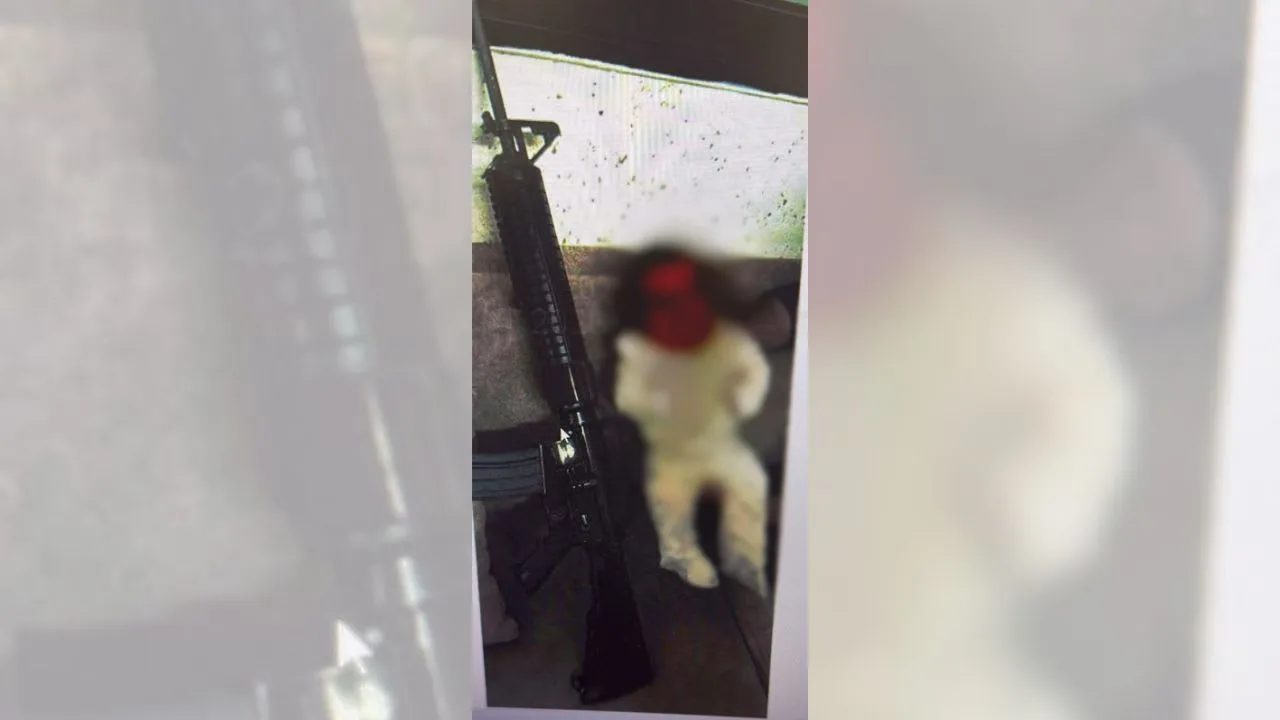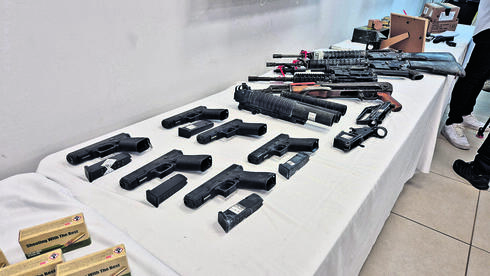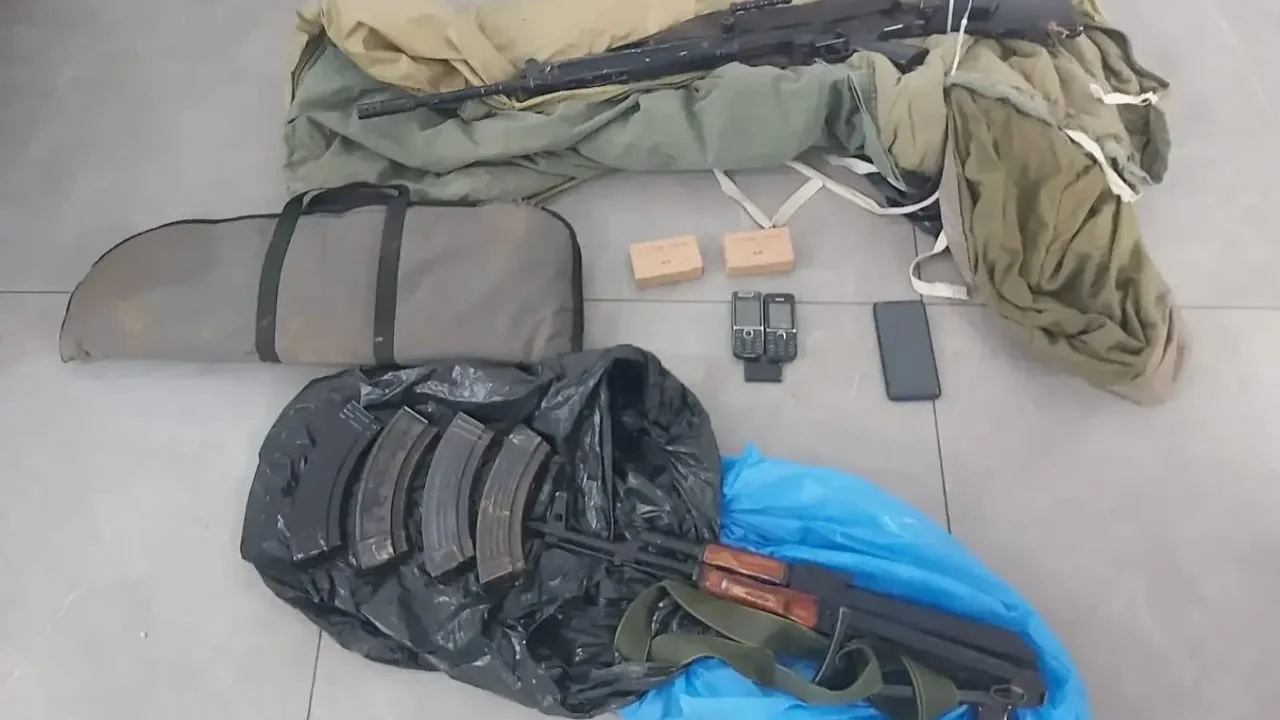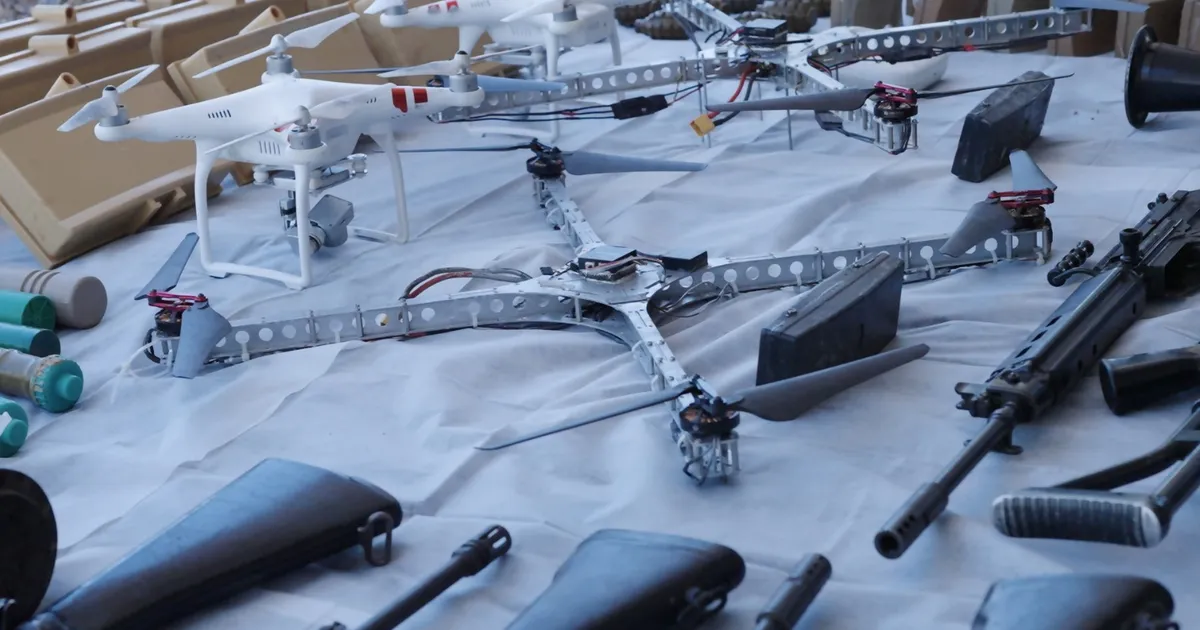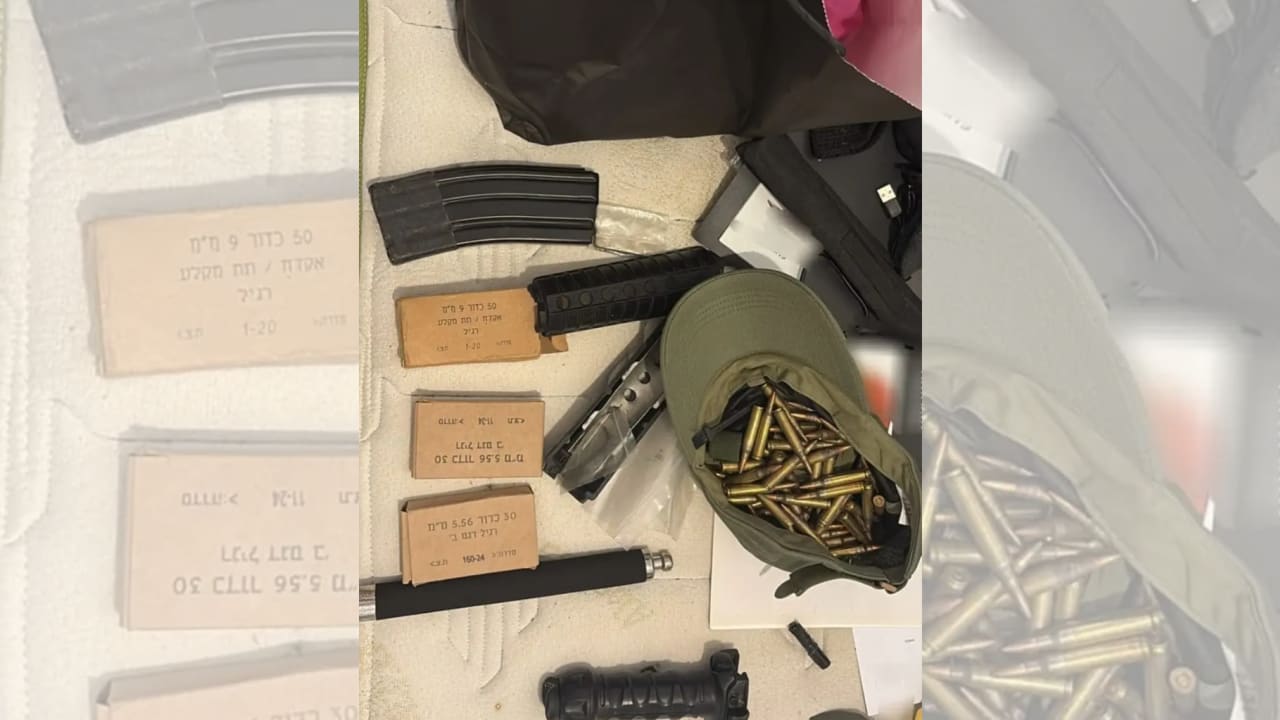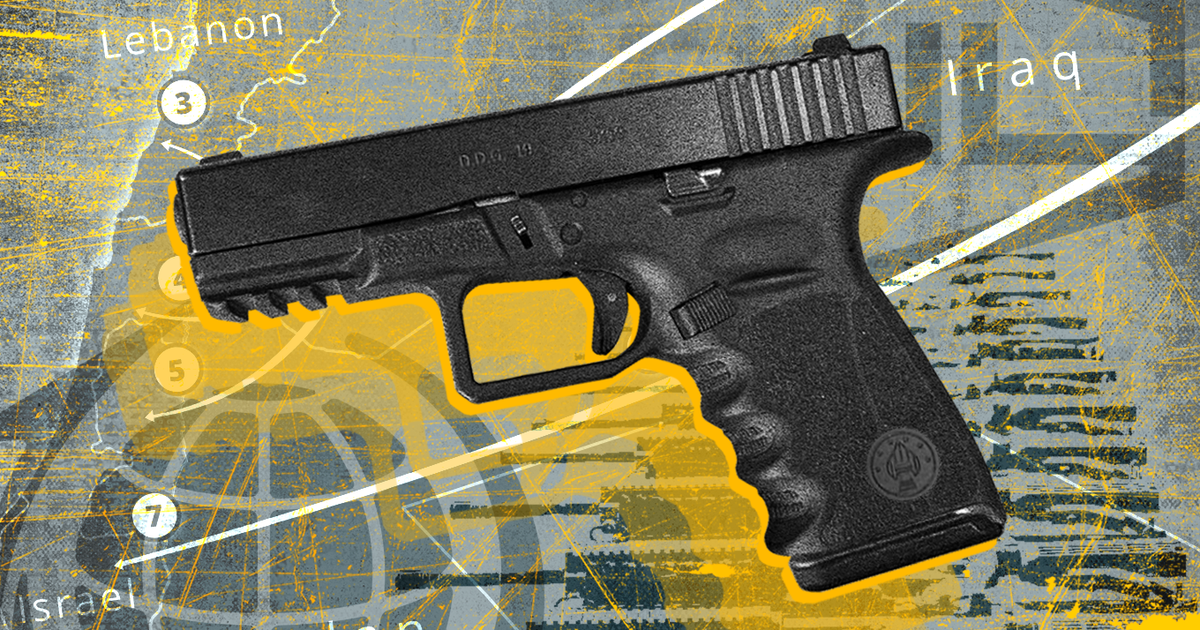
A Haaretz investigation traced the trafficking of hundreds of firearms copied from Israeli-made pistols, reverse-engineered in Iraq and smuggled back into Israel, where they have ended up in the hands of terrorist groups and criminal gangsDeep in Iraqi Kurdistan, near the Iranian border, a weapons factory was established a decade ago. The initiative came from the region's ruling political party, while the financing was provided by the Faruk Investment Group, one of Iraq's largest conglomerates. Management was entrusted to an American named Ross Roggio, a former U.S. Army paratrooper whose Kurdistan venture ultimately ended with convictions for arms trafficking and torture, earning him a 70-year prison sentence in the United States.Since then, thousands of rifles and pistols manufactured at the factory have spread through black markets across the Middle East. A Haaretz investigation found that at least 200 of these weapons were also smuggled into Israel and the West Bank, where some were later used in terrorist attacks and criminal assassinations. But that is not the story's only Israeli connection. The investigation also reveals that many of the weapons produced in northern Iraq are copies of Israeli-designed rifles and pistols.In Israel, discussions about weapons smuggling usually focus on the final links in the supply chain: drones crossing the border from Egypt or shipments intercepted near the Jordanian frontier. Far less attention is paid to where the weapons originate. Among international arms researchers, however, the picture looks very different.In recent years, a mysterious firearms brand called Delta Defense Group (D.D.G) has attracted growing attention after researchers noticed an unfamiliar circular logo featuring what appears to be a chess rook set against a flame. Some also pointed to similarities between the logo and the insignia of the U.S. Army Special Forces Command.A study by the Combating Terrorism Center at the U.S. Military Academy at West Point, which examined the surge in arms smuggling into Israel during the summer of 2023, found that 90 percent of "[…] smuggled weapons coming in through Jordan are handguns" and that "many of the seized handguns are produced by Delta Defence Group[...]."Haaretz spoke with experts who have spent years tracking the path of these mysterious firearms."These weapons are sold on Iraq's black market, and some are smuggled from there into Jordan and Syria," Mick F., an analyst at Armament Research Services (ARES), a consultancy specializing in arms and munitions, tells Haaretz. He says the brand's rifles, and especially its pistols, have become increasingly widespread across the Middle East."Some have even found their way to more distant countries, such as England and Libya," he says.Hamas' Saleh al-Arouri holding a DDG M4 rifle copied from an Israeli model.According to the analyst, the unusually large presence of DDG-manufactured weapons on illicit arms markets strongly suggests they are being produced specifically for illegal trafficking.DDG weapons reach Israel through two primary routes. "Most of the DDG firearms I have seen are either offered on the illicit Iraqi market or smuggled to Syria, Lebanon, Jordan and the West Bank. I'm aware of two routes into Israel: the first is via the West Bank, where the handguns arrive from Jordan; the second is via Lebanon, where the handguns arrive from Syria," Mick F. explains.Shlomo Mofaz, director of the Meir Amit Intelligence and Terrorism Information Center (ITIC), says these smuggling networks blur the line between organized crime and terrorism. He also links them to Iran's ongoing effort to arm Hamas operatives in the West Bank, an operation led by a dedicated unit within the Quds Force, an arm of Iran's Islamic Revolutionary Guard Corps."Israel killed both the unit's commander and his deputy last year," Mofaz says. "But everyone has a replacement."Senior Hamas official Saleh al-Arouri was photographed in August 2023, about six months before he was killed in a targeted Israeli strike, with a DDG-manufactured rifle beside him.The American ConnectionWhile DDG weapons spread throughout the Middle East, their origins remained a mystery.The first clue emerged shortly after the factory was established in 2016, when the FBI began investigating the suspected unlicensed export of firearms components from the United States to Iraq. The investigation led agents to Ross Roggio, a former serviceman from Pennsylvania whose dramatic rise and fall was detailed in a 2023 Rolling Stone investigation.Roggio already had a checkered history in the firearms industry. In the early 2000s, he founded a company that marketed assault rifles, but they were soon found to be defective. Although the business collapsed, Roggio remained active in the industry.His ties to members of the U.S. Special Forces helped him build relationships with senior officials in Iraqi Kurdistan, who wanted to set up a domestic weapons manufacturing capability.According to the Rolling Stone article and court documents, Roggio was hired in 2014 by leaders of the Patriotic Union of Kurdistan (PUK), which controls Iraq's Sulaymaniyah Province near the Iranian border. He worked under two brothers from the influential Talabani family: Polad Talabani, who headed the party's Counter-Terrorism Group, and Lahur Talabany, then the PUK's co-president and intelligence chief.Their goal was to build a production line capable of manufacturing 3,000 assault rifles and thousands of Glock-style pistols every month for the Peshmerga, Iraqi Kurdistan's military forces. By 2016, the factory was barely operational. Problems quickly emerged.Roggio was not happy with his annual salary of roughly $1 million. According to prosecutors, he instead diverted millions of dollars intended for manufacturing equipment to buy luxury watches and sports cars. To cover up the resulting shortfalls, he purchased lower-quality machines and failed to meet production standards.When he feared one of his employees might expose the scheme, Roggio arranged for local soldiers to kidnap and torture the man for nearly 40 days.The scheme began to unravel after the FBI launched its investigation into the illegal export of firearms parts. Roggio was arrested in 2017 during a visit in the United States. In 2022, he stood trial in federal court in Pennsylvania on charges that included arms trafficking and torture. The following year, he was convicted and sentenced to 70 years in prison.In the West, the Kurds are generally viewed favorably, thanks in part to their fight against Islamist extremist groups such as ISIS. According to reports, Israel and the United States even armed Kurdish forces during this year's war with Iran in the hope that they would launch a ground offensive into Iran. But the reality is more complex, explains Elizabeth Tsurkov, a research fellow at the Van Leer Jerusalem Institute's Forum for Regional Thinking.Tsurkov notes that Iraqi Kurdistan is governed by two rival political parties, each with its own loyal security apparatus. The Patriotic Union of Kurdistan (PUK), which is behind the weapons factory, maintains close political and economic ties with Iran."Beyond that," she says, "its members also have very strong relationships with Iran's allies inside Iraq, including militias that the United States designates as terrorist organizations."The city of Sulaymaniyah in Kurdistan, northern Iraq, in February. The factory was established to supply thousands of rifles and pistols to the Peshmerga, the armed forces of Iraq's Kurdistan Region. Credit: Fariq Faraj Mahmood/Anadolu via Reuters ConnectThe city of Sulaymaniyah in Kurdistan, northern Iraq, in February. The factory was established to supply thousands of rifles and pistols to the Peshmerga, the armed forces of Iraq's Kurdistan Region. Credit: Fariq Faraj Mahmood/Anadolu via Reuters ConnectThe Israeli ConnectionDDG weapons were first identified in the Middle East in 2019 by the ARES analyst who spoke with Haaretz. In a series of reports for the Silah Report research group, he argued that DDG was likely a shell company and suggested several possible countries of origin for its rifles and pistols, including China, Turkey and Israel.Since then, the mysterious manufacturer has been discussed on other websites and forums, including Small Arms Tracker and the Israeli military and security forum Fresh. Researchers and firearms enthusiasts alike identified the DDG logo on weapons offered for sale on Telegram. Others spotted it in photographs released by Israeli security forces.In an effort to solve the mystery of the weapons' origins, researchers compared their designs. They all reached the same conclusion: many of the rifles and pistols bearing the mysterious logo closely resemble Israeli firearms.A Haaretz analysis based on dozens of photographs and interviews with firearms experts confirms that they are copies of Israeli-designed weapons. Three DDG firearms appear to have been copied from Israeli originals:One model of the DDG M4 rifles was almost certainly copied from the MZ-4 rifle manufactured by Emtan, an Israeli company based in Karmiel. DDG 19 pistols are based on the Austrian Glock platform but appear to have been copied specifically from Emtan's Ramon, the company's Glock-compatible pistol. DDG C5 and C6 pistols were copied from Bul Armory's Israeli-made Cherokee and Cherokee FS models, respectively.The resemblance extends even to the warning engraved on the pistols: "Warning: Read manual before operating."Experts interviewed by Haaretz agreed that the weapons were almost certainly copied from the Israeli models."The molds used to produce the DDG pistol frames contain features that are identical to those of Emtan's Ramon and Bul Armory's Cherokee," says a source who spent years working in Israel's defense industry.Jonathan Ferguson, Keeper of Firearms and Artillery at the Royal Armouries Museum in Leeds, told Haaretz that when British authorities asked him about a DDG pistol seized in the United Kingdom, he referred them to a Small Arms Tracker article highlighting the striking similarities to Israeli designs.Haaretz reviewed dozens of photographs and videos released by the IDF and Israeli police and found that a significant share of the weapons smuggled into Israel over the past five years were these copied firearms manufactured at the Kurdistan factory.According to the investigation, roughly 200 DDG rifles and pistols copied from Israeli designs have been smuggled into Israel since 2021. Most entered through Jordan, while a smaller number came through Syria. The actual number is likely considerably higher. Many of the published images do not allow for reliable identification of the weapons, and Israeli security agencies do not always release photographs of seized firearms.One shipment intercepted on the Jordanian border also contained rifles bearing the Eagle Firearms Ltd. brand, which, as was revealed during Roggio's trial, were produced at the same factory in Kurdistan.Weapons smuggled into Israel through the Jordan Valley in October 2022. Fifty of the 60 pistols seized were manufactured by DDG. Credit: Israel PoliceWeapons smuggled into Israel through the Jordan Valley in October 2022. Fifty of the 60 pistols seized were manufactured by DDG. Credit: Israel PoliceBased on publicly available information, the smuggling of Kurdistan-manufactured weapons peaked in 2022. But those firearms continue to circulate inside Israel, ending up in the hands of both terrorist groups and criminal organizations.For example, in February 2023, Elan Ganeles was murdered in a terrorist attack near the northern Dead Sea with a DDG pistol, as first reported by the Intelli Times blog. Last month, Israeli forces seized a DDG pistol in Tulkarm that had been copied from Bul Armory's Cherokee model. In March, another pistol of the same model was found in the possession of two suspects accused of attempting a gangland assassination in Tel Aviv's Tel Baruch neighborhood.So how did Israeli weapon designs make their way to the factory in Iraqi Kurdistan? For now, neither the experts nor the sources interviewed by Haaretz have a definitive answer.In testimony during his trial, Roggio said he had provided factory employees with three sample rifles to reverse-engineer: one Chinese-made rifle, one manufactured by the American company Colt, and one "Israeli" rifle.Haaretz located and interviewed a former factory employee, who confirmed that engineers reverse-engineered firearms supplied by Roggio before beginning production. He said he did not know where the original weapons had come from and doubted Roggio himself knew, since they had been supplied by others."He liked telling stories that made him look better," the former employee said. "In those stories, something was always being smuggled."According to the former employee, the engineers relied not only on the physical samples but also on extensive information gathered from online sources.Haaretz contacted Emtan and Bul Armory for comment. Emtan said: "We are not familiar with the matter discussed in the article and have no connection whatsoever to it." A source at Amten told Haaretz that while the company occasionally hears that its firearm designs have been copied, it was entirely unfamiliar with the factory in Kurdistan and said the company has no, and has never had any, connection to it. Bul Armory declined to comment.Haaretz national securityIsraeli arms sold to Qatar, Saudi ArabiaClash imminent as settlers charge aheadBleeding support over Iran, Israel triples influence efforts in U.S.Flamingos, Kushner, Israeli tycoon at center of meltdownIsraeli drones 'generate' Gaza targetsStarlink users, beware of Israeli techIran penetrated Israel's top think tankInfluence OP in France leads to Tel AvivHow Ukrainian wheat stolen by Russia is smuggled to IsraelUkraine stuns Russia in the MedPhotographs circulated in Telegram weapons-trading groups over the past week indicate that firearms bearing the DDG stamp continue to enter the black market, including newly designed models. This suggests the factory in Sulaymaniyah may still be operating. Mick F. from ARES likewise told Haaretz that he continues to encounter DDG-manufactured pistols in circulation.Ironically, the copied firearms often sell for more than the Israeli originals – a common phenomenon on illicit arms markets. A DDG C5 pistol is advertised online for about $1,400, with pickup in Kurdistan. The same pistol sells in Syria for around $1,800. Once smuggled into Israel, it can fetch tens of thousands of shekels. By comparison, the original Bul Armory Cherokee retails legally for about $830.
The mysterious firearms flooding Israel
A Haaretz investigation traced the trafficking of hundreds of firearms copied from Israeli-made pistols, reverse-engineered in Iraq and smuggled back into Israel, where they have ended up in the hands of terrorist groups and criminal gangs
2,240 words~10 min read