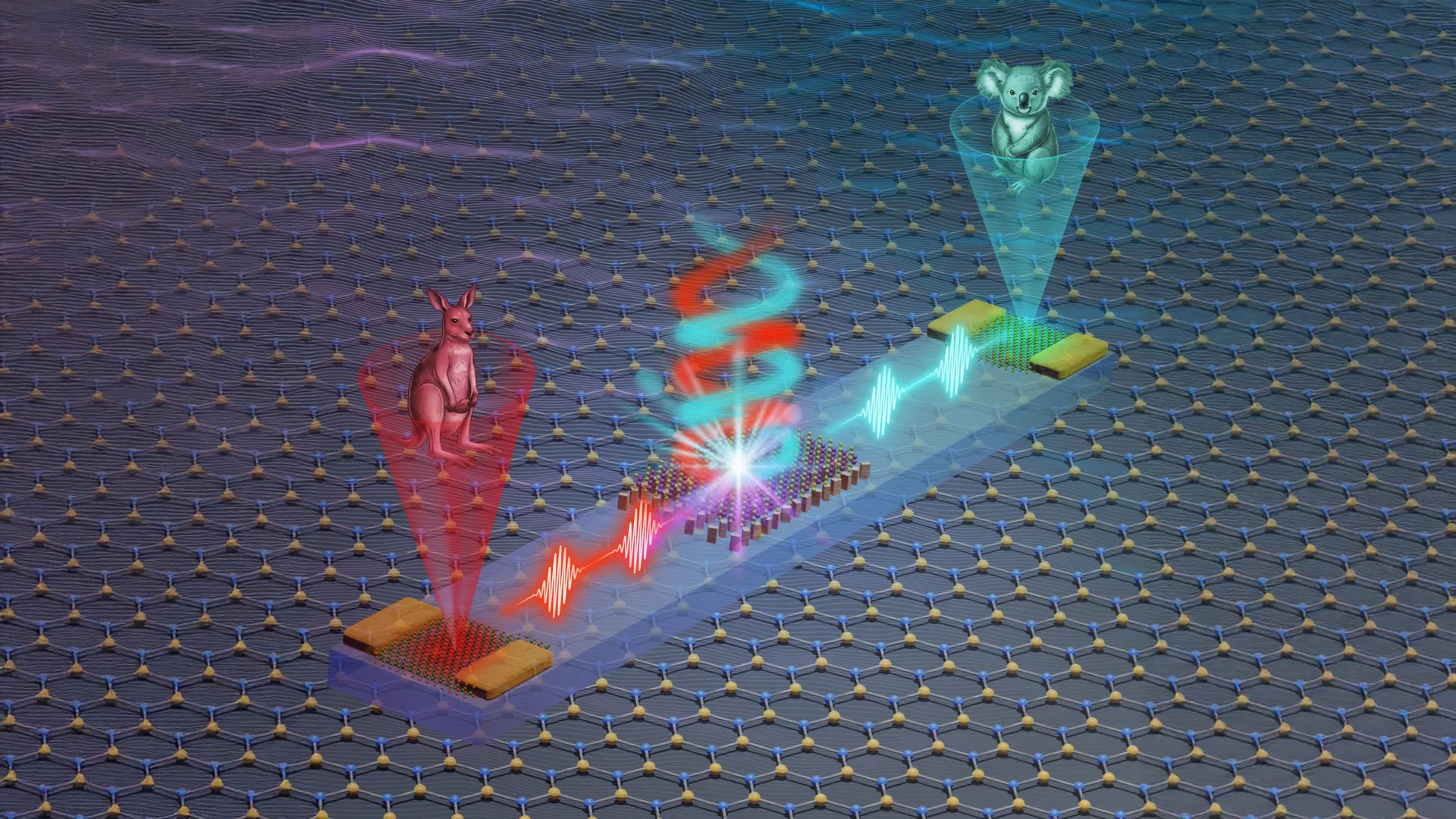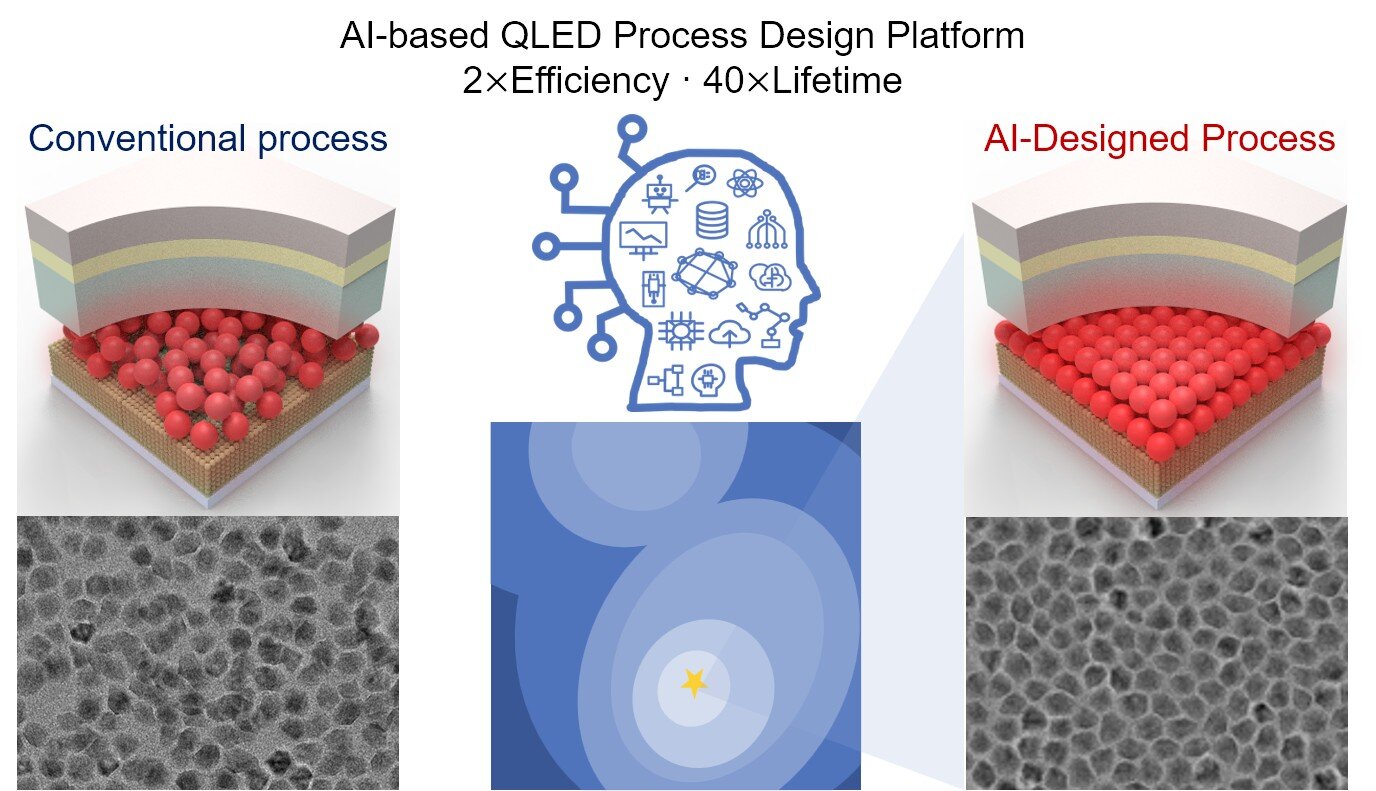
AI-based QLED Process Design Platform (Left) In a conventional fabrication process, quantum dots are packed non-uniformly, hindering charge transport and reducing device performance. (Right) The AI-based process-design platform developed by the research team predicts an optimal solvent composition, enabling more uniform quantum-dot packing. QLEDs fabricated using the optimized process achieved approximately twice the efficiency and more than 40 times the operational lifetime. Credit: Seoul National University College of Engineering
A technology has been developed that allows artificial intelligence to inversely determine the process conditions for quantum-dot light-emitting diode (QLED) devices—conditions that previously required extensive trial and error to identify.
When applied to actual devices, the technology roughly doubled efficiency and extended operational lifetime more than 40-fold, raising expectations that it could accelerate the development of next-generation displays.
Seoul National University's College of Engineering announced that a joint research team led by Professor Jeonghun Kwak of the Department of Electrical and Computer Engineering and Professor Jaehoon Lim of Sungkyunkwan University's Department of Energy Science has developed an AI-based platform that inversely designs the optimal solvent properties for arranging quantum dots uniformly and densely during the fabrication of QLEDs.