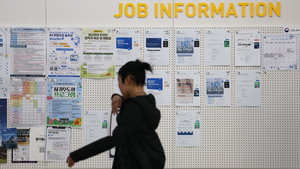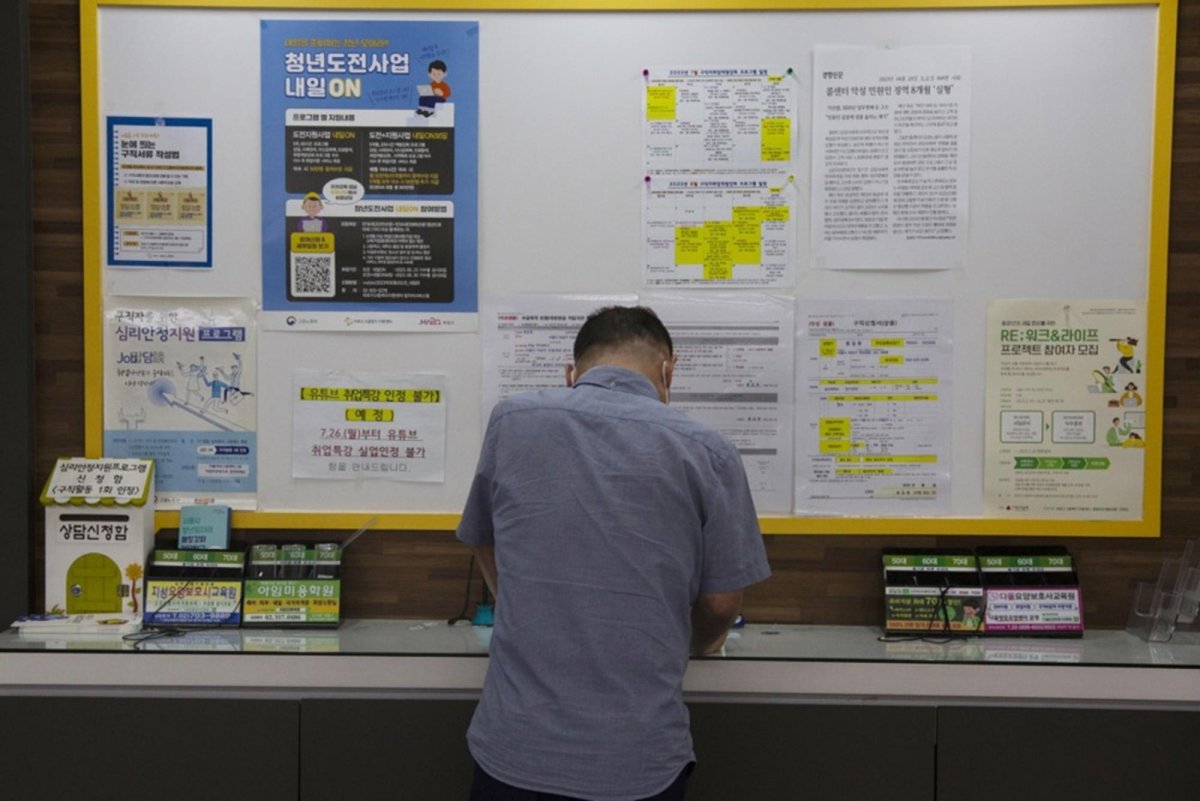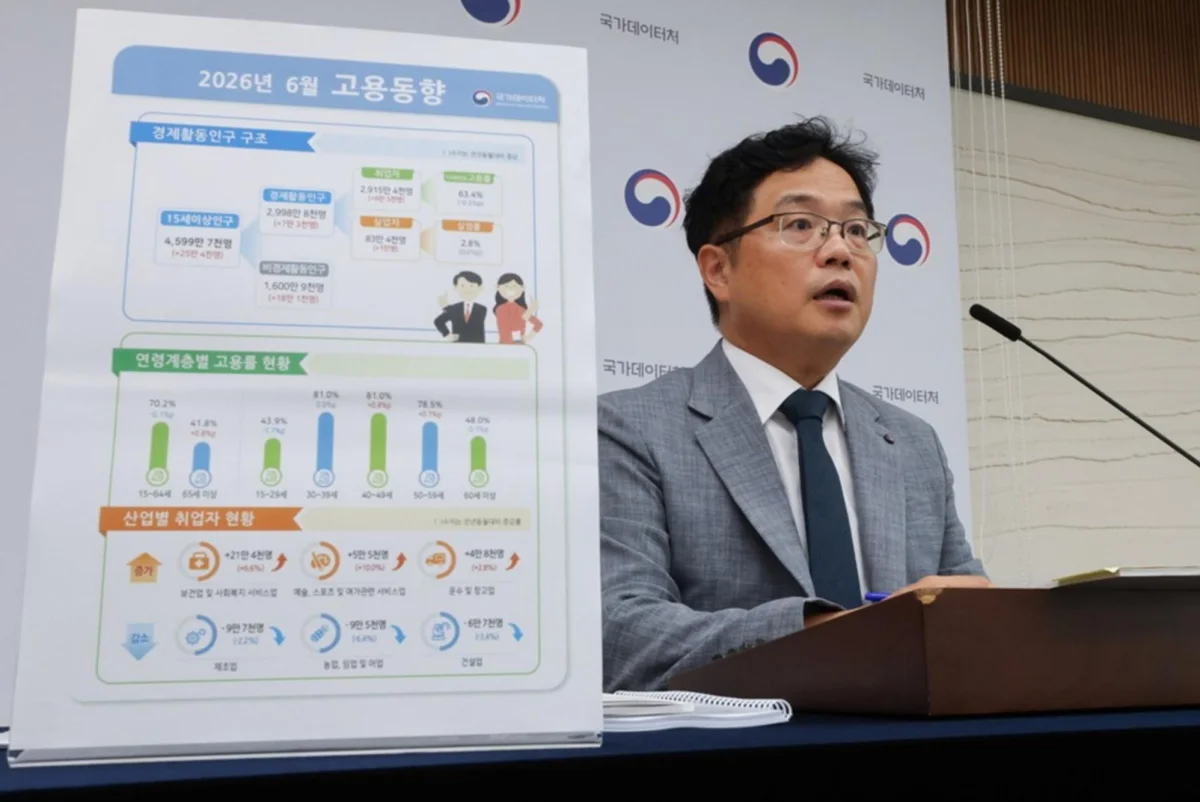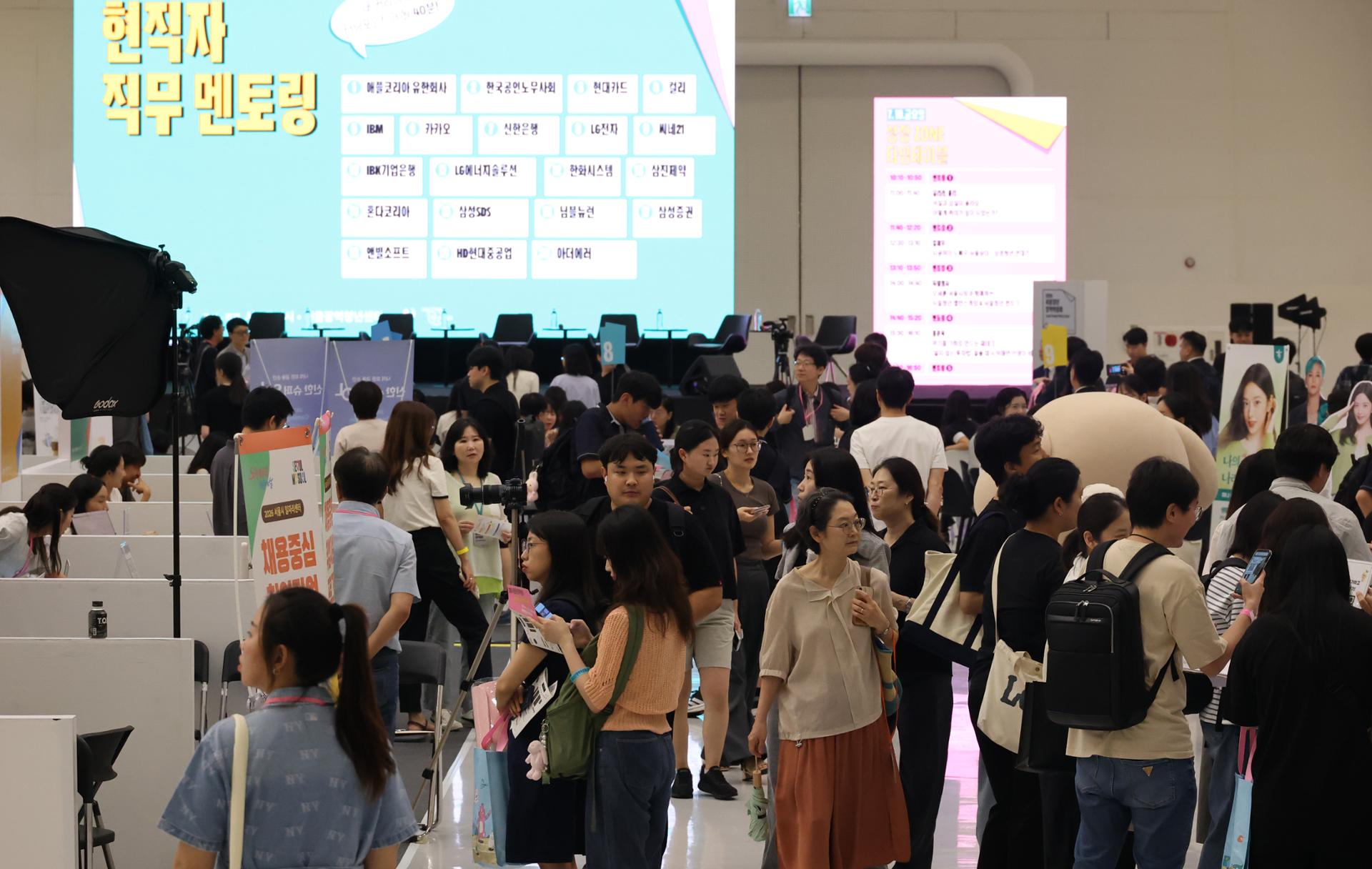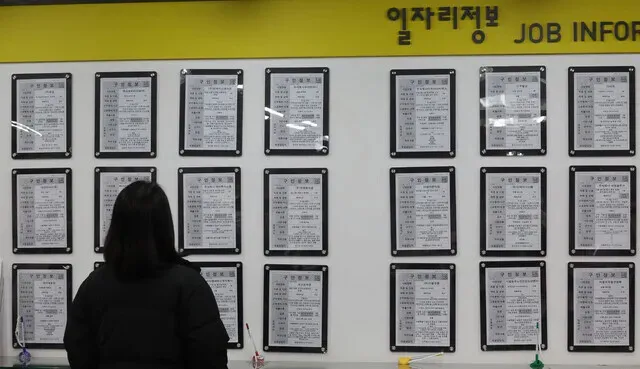
A person looks at job listings at the Seoul Western Employment Welfare Plus Center on Feb. 14, 2025. (Yonhap)
The percentage of young South Koreans identified as being in isolation or seclusion reached 5.2% last year, or more than double the rate two years earlier, research findings show.An increase was also observed in the percentage of young people reporting experiences of depression.On Tuesday, the Office for Government Policy Coordination announced findings from a 2024 survey on living conditions for South Koreans aged 19 to 34. The results showed 5.2% of young people were identified as being in isolation or seclusion — remaining home at all times for reasons not related to pregnancy, childbirth or disability. This represented an increase of more than double from the 2.4% recorded in a survey two years earlier.As reasons for their isolation or seclusion, the respondents cited factors including difficulty finding work (32.8%), difficulty with interpersonal relationships (11.1%), and the discontinuation of their studies (9.7%).First conducted in 2022, the surveys on living conditions for young people are nationally certified statistics compiled and published every two years. For the latest survey, the Office for Government Policy Coordination commissioned the Korea Institute for Health and Social Affairs and Hankook Research to poll 15,098 young people aged 19 to 34 in South Korea’s 17 metropolitan cities and provinces based on findings from a general population and housing survey in 2022.In terms of psychological health, the proportion of young adults reporting experiences with depression stood at 8.8%, while 2.9% of the young people examined reported having contemplated suicide in the past year. The survey findings two years earlier showed 6.1% of young people reporting experiences with depression and 2.4% reporting having suicidal thoughts.The latest survey also showed 6.3% of young people to have required but been unable to receive professional counseling on mental health issues in the past year. The most commonly cited reason for this was the financial burden (38.6%).The findings also showed 32.2% of young respondents reporting experiences with “burnout” in the preceding year. The reasons cited included uncertainties over career and life choices (39.1%), overwork (18.4%), doubts about their work (15.6%), and work-life imbalance (11.6%).Among unmarried respondents, the results indicated declines in plans for marriage and children compared with two years earlier. The percentage of unmarried young respondents who said they planned to marry in the future was tallied at 63.1% (67.8% among men, 57.5% among women), while the percentage stating plans to have children was 59.3% (65.1% among men, 52.8% among women).This represented a decline of 12.2 percentage points from two years earlier, when 75.3% of unmarried young respondents said they planned to marry. The percentage stating plans to have children was also down by four percentage points from 63.3% two years before.Following the lifting of disease control measures related to the COVID-19 pandemic, the South Korean marriage rate increased last year, and the total fertility rate reversed its slide for the first time in nine years as it climbed to 0.75. But the latest findings suggest that a solution to the low birth rate issue remains a long way off.Additionally, the findings showed 54.4% of young respondents to be living with their parents, compared with 45.6% living on their own. A total of 67.7% were employed, with an average pre-tax monthly income of 2.66 million won (US$1,832) and monthly living expenses of 2.13 million won.Kim Dal-won, the director of youth policy coordination at the Government Policy Coordination Office, said, “We plan to actively reflect these survey findings in the formulation of future youth policies so that lives can improve for the young people who represent the future of South Korea.”The research report and related data are scheduled to be published during the first half of 2025 on the Korean Statistical Information Service, Statistics Korea’s national statistics portal (https://kosis.kr/index/index.do).By Lee Seung-jun, staff reporterPlease direct questions or comments to [english@hani.co.kr]