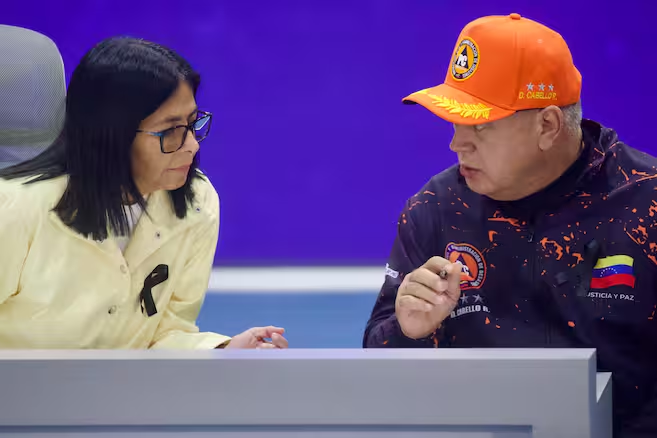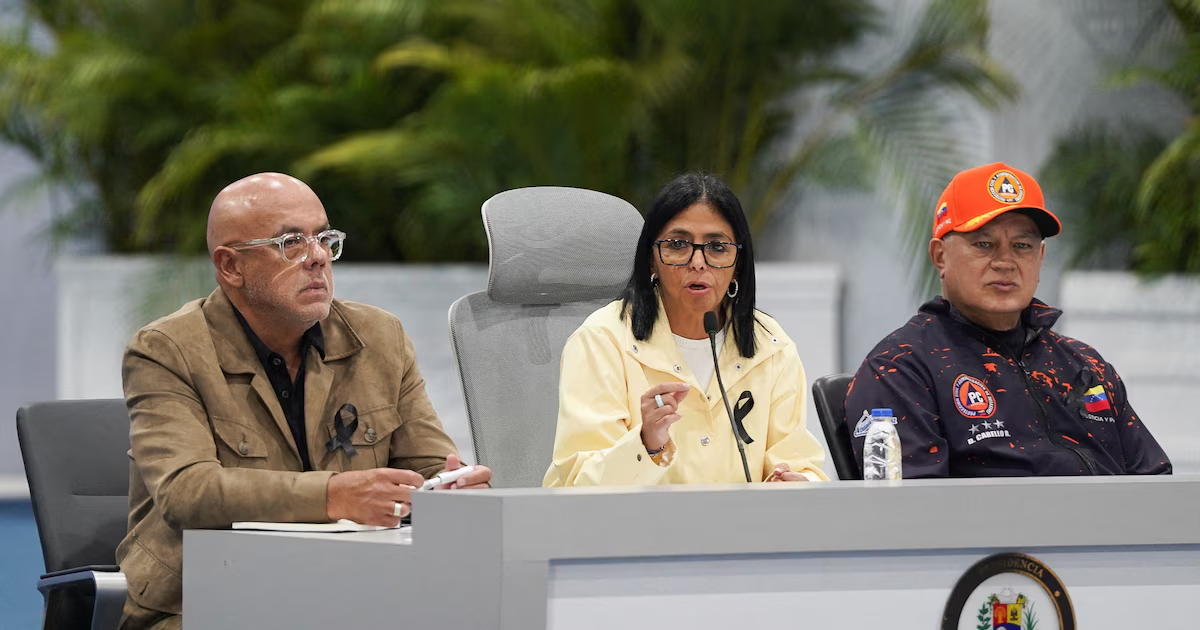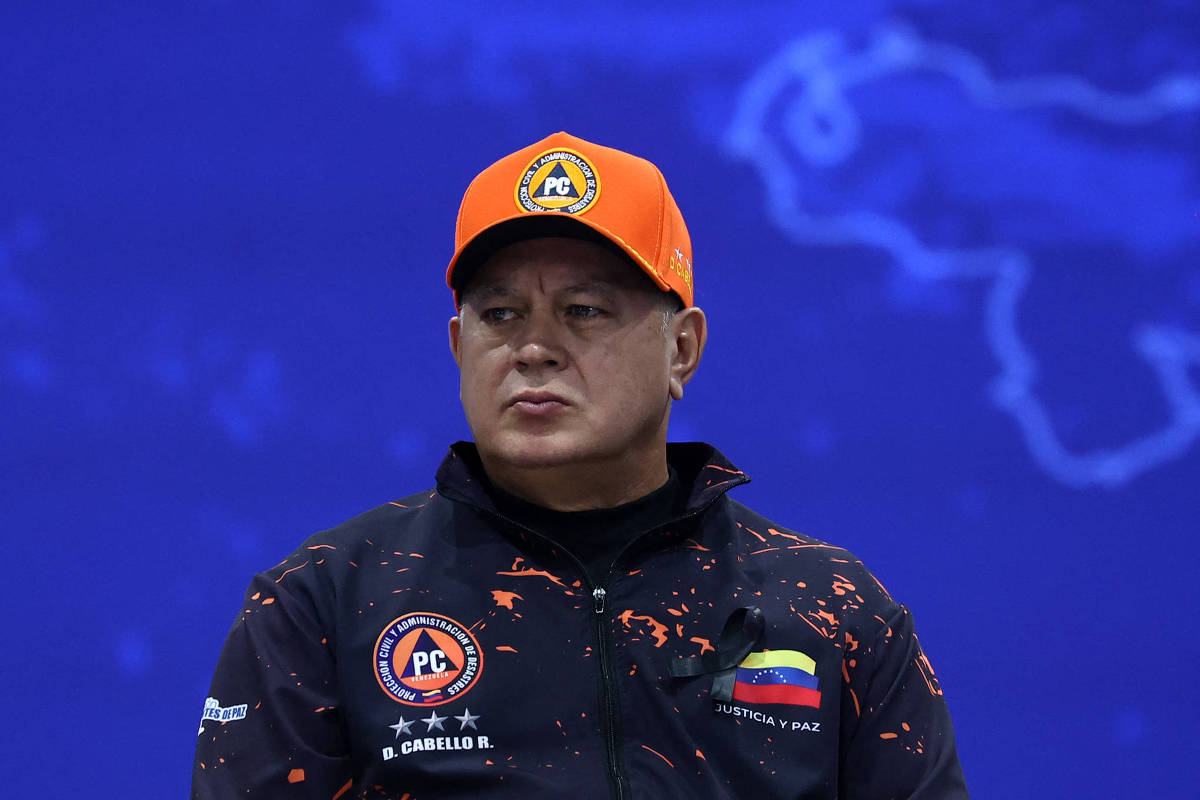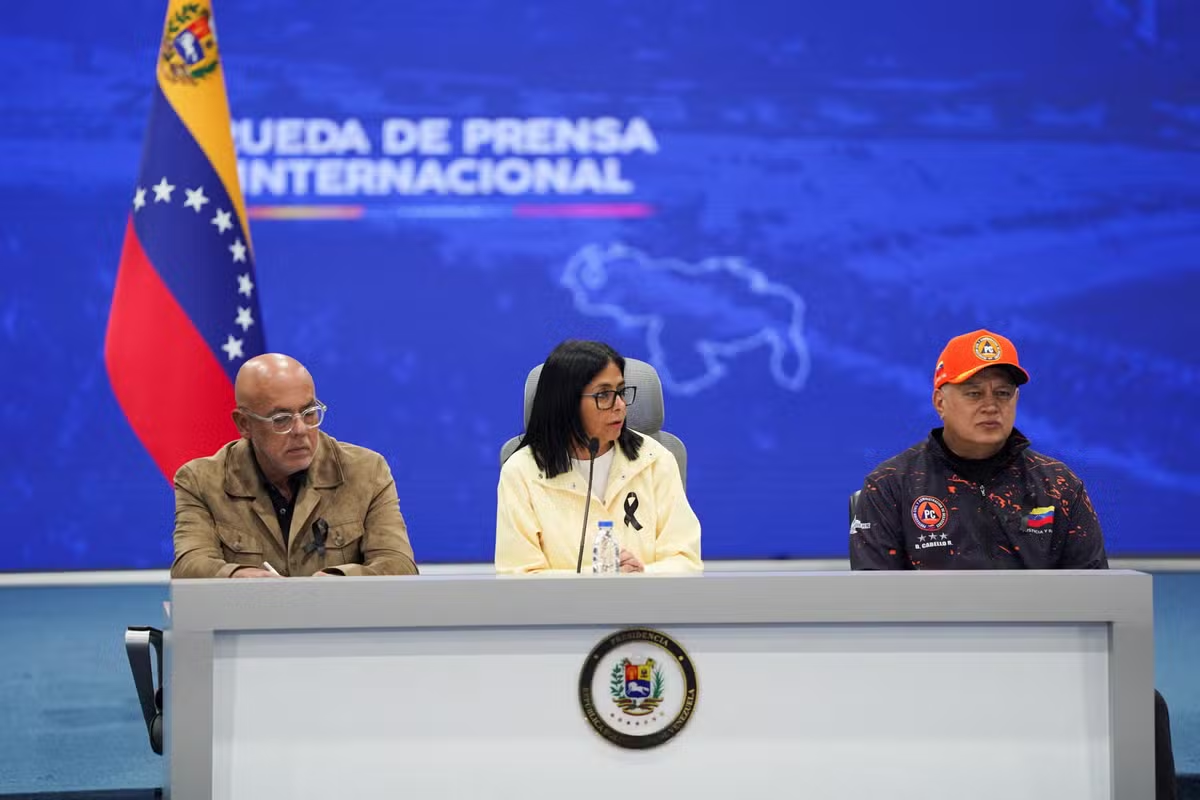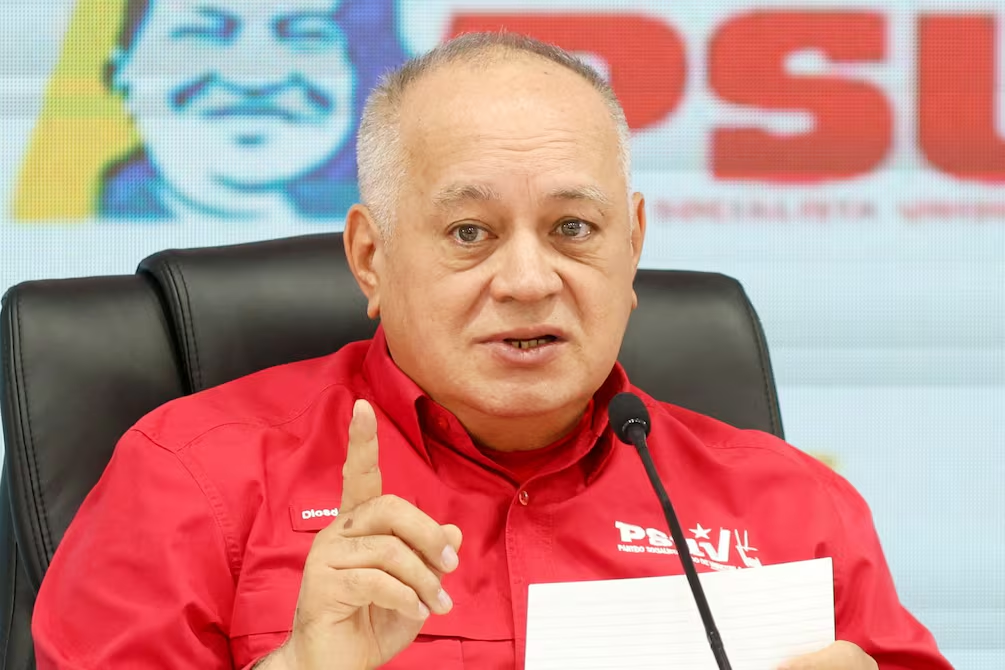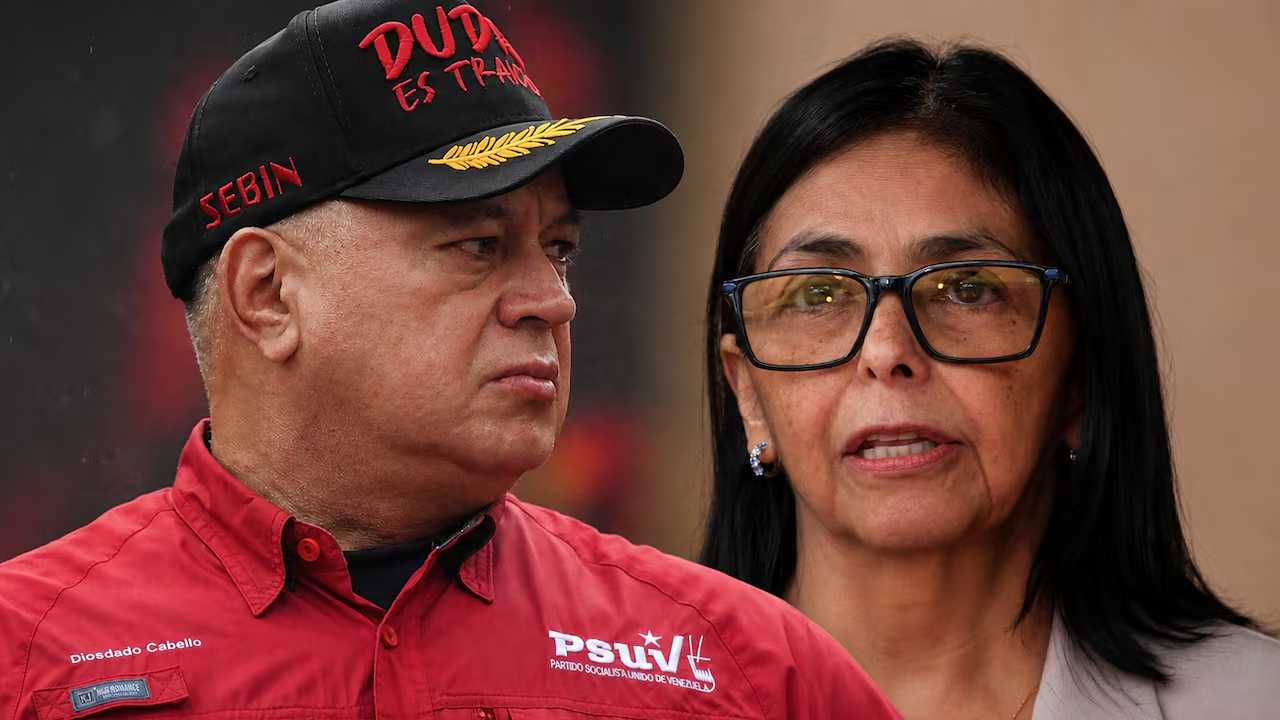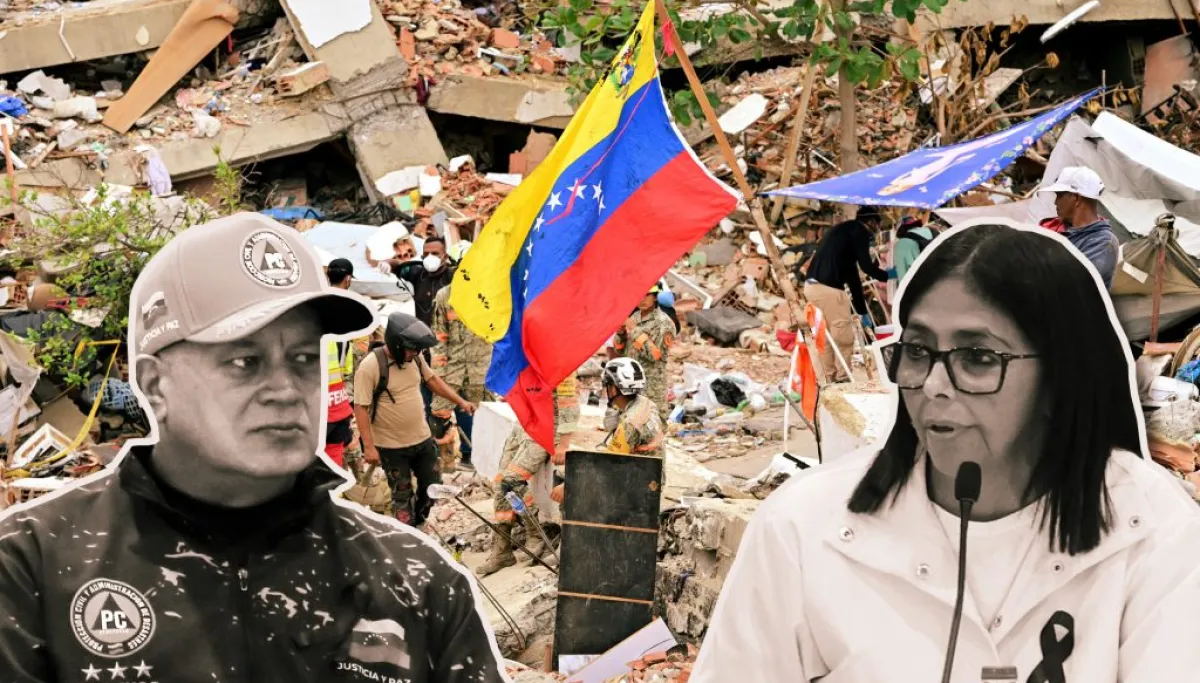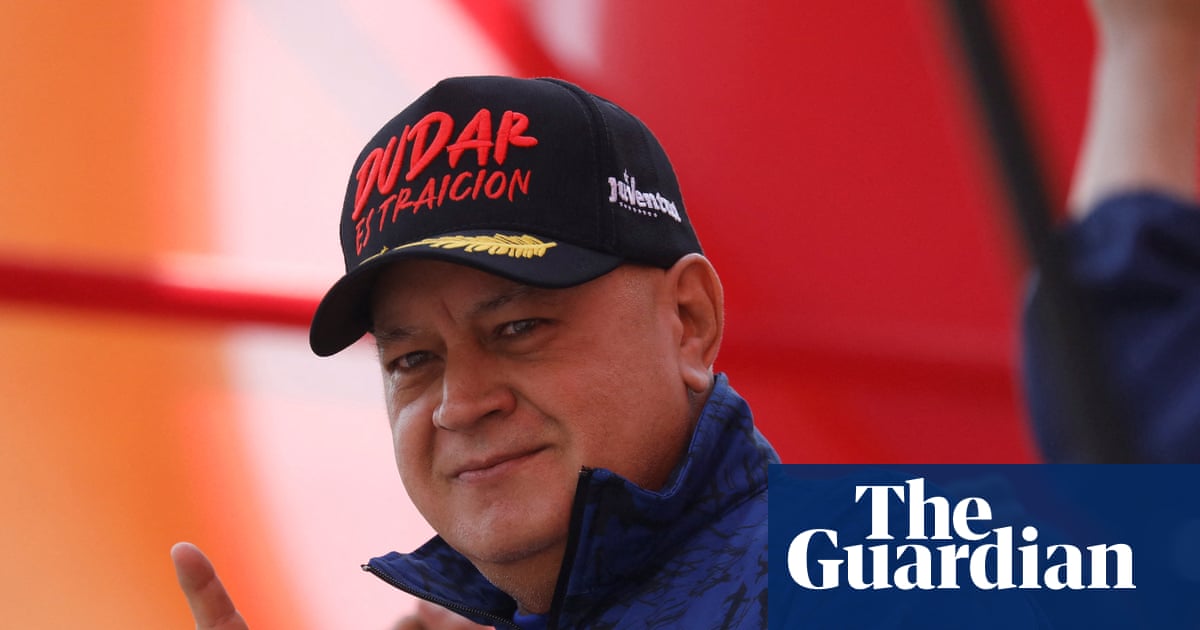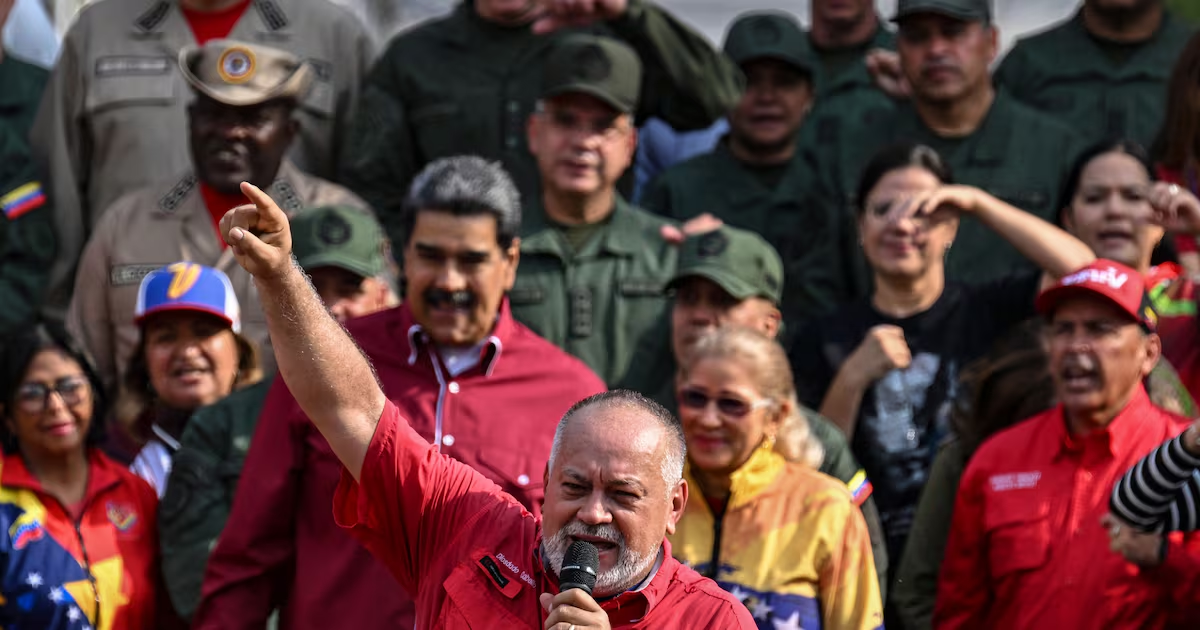
The United States wanted poster offers a $25 million (€22 million) reward for information that leads to his arrest and accuses him of “narco-terrorism” and trafficking cocaine. He is under US sanctions – as are several family members and friends.Yet Diosdado Cabello, Venezuela’s powerful interior minister and for many the most feared person in the country, also seems to be in the good graces of Donald Trump’s administration.In the weeks since devastating dual earthquakes hit Venezuela on June 24, Cabello has held meetings or photo opportunities with US officials who have been helping to co-ordinate the disaster response.When acting president Delcy Rodríguez met US officials several days later to discuss the damage, Cabello was by her side. John Barrett, US charge d’affaires in Caracas, has been pictured touring damaged sites with Cabello, his hand on the Venezuelan’s arm.After the US military captured strongman Nicolás Maduro in January, Cabello said that the former president was a “prisoner of war” and insisted: “Venezuela does not surrender.” But in recent days he met Gen Francis Donovan, head of US Southern Command, the force that led the January raid.A mural depicts Diosdado Cabello, centre, ousted president Nicolás Maduro, right, and Simón Bolívar, the hero of Venezuela’s independence movement, in Caracas. Photograph: Adriana Loureiro Fernandez/The New York Times The apparent rapprochement between the Trump administration and Cabello is emblematic of the topsy-turvy relationship Washington has developed with Venezuela since January, in which the US is working with many of the same people it once denounced and sought to prosecute.Asked whether there had been any change in Cabello’s status as a wanted man, Barrett last week said the US was “100 per cent focused on the response to the devastating earthquakes in Venezuela”. The US plan of working towards a new election “remains intact”, he said.[ ‘The lot of you should be arrested’: Anger at earthquake response grows in Venezuela ]For Venezuela’s opposition members – many of whom describe Cabello as the single figure most responsible for two decades of repression, imprisonment and torture – the images of Cabello rubbing shoulders with Barrett and Donovan have been head-spinning.“I just can’t believe what I am seeing. It is bewildering,” one prominent opposition figure said.The ambiguity reflects a split within the US administration over priorities in Venezuela, analysts say. One faction is focused on ensuring stability in the country and on boosting oil production, while others have placed greater emphasis on paving the way for a democratic transition. Maduro is widely believed to have stolen the 2024 election.Many Venezuelans struggle to imagine a transition to democracy while Diosdado Cabello remains in charge of large parts of the country's repressive apparatus. Photograph: Miguel Zambrano/Getty That tension has been apparent since the first few hours after the raid in January to capture Maduro when US resident Donald Trump announced that Rodríguez, then vice-president, would be taking over and said opposition leader María Corina Machado was “not respected” within the country.The following day, US secretary of state Marco Rubio struck a very different tone when he outlined a three-stage plan for Venezuela that ends with a democratic transition.Many Venezuelans struggle to imagine such a transition while Cabello remains in charge of large parts of the repressive apparatus that has led to many opposition members either imprisoned or, like Machado, exiled.He has been a key player in the Chavista regime since the early days. A former army officer, Cabello was part of the failed 1992 coup attempt that first brought Hugo Chávez to national attention.As interior minister, Cabello is in charge of the police and intelligence services and has influence over parts of the military. He also controls the so-called colectivos, gun-toting paramilitaries used as regime enforcers.Fond of anti-imperialist rhetoric, he has long sparred with Rubio, who in 2019 said Cabello was “a narcotrafficker” who would eventually “end up in jail somewhere”. Asked in May if the reward for Cabello’s arrest on drug trafficking charges was still valid, Rubio said: “US policy on this issue has not changed.”Cabello is “very much a nationalist”, said Eva Golinger, US lawyer who was close to Chávez. “I don’t see him voluntarily leaving Venezuela to live somewhere else unless circumstances change dramatically.”After the January raid, many analysts predicted acting president Rodríguez would seek to work closely with Cabello because she needed his help to retain control. Since then, there have been no signs of open friction between the two – even as she has sidelined other senior regime officials. Rodríguez has appointed his daughter Daniella as tourism minister.However, on July 7th it was announced that Cabello’s brother, José David, was being replaced as head of the tax and customs authority which he had run for 18 years and was an important source of influence. He is now chief executive of a state-owned petrochemicals company.Andrés Izarra, a communications minister under Chávez who later broke with the regime, said Maduro’s arrest had been a “deeply humiliating defeat” for Cabello. “All that grandstanding about how if the US comes in, they’re going to find a new Vietnam. Well, their Vietnam lasted all of two hours.”The path towards a new election received some impetus last Tuesday when the Venezuelan authorities announced the beginning of a formal dialogue with members of the opposition.The opposition said talks would be about “a roadmap towards democracy”, including the establishment of a new electoral commission and electoral register.But a former senior US official said it would be hard to conduct a genuine process towards open elections while Cabello remained in power. “There is no way around it, the US has to get Diosdado out of there,” the former official said. Copyright The Financial Times Limited 2026
‘It is bewildering’: the US rapprochement with Venezuela’s most feared man
Diosdado Cabello is blamed for decades of repression, imprisonment and torture, yet now enjoys Washington’s favour
941 words~4 min read