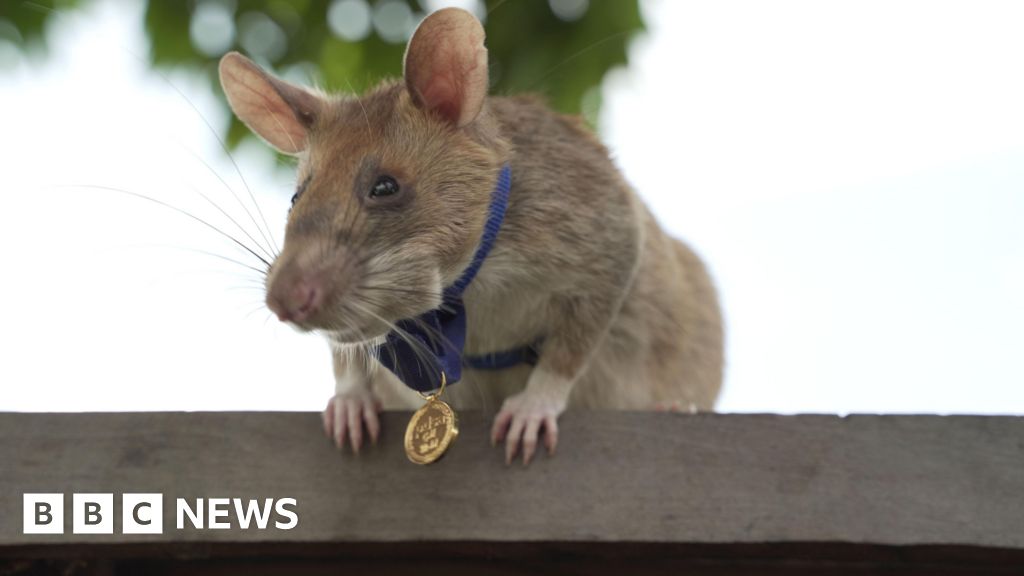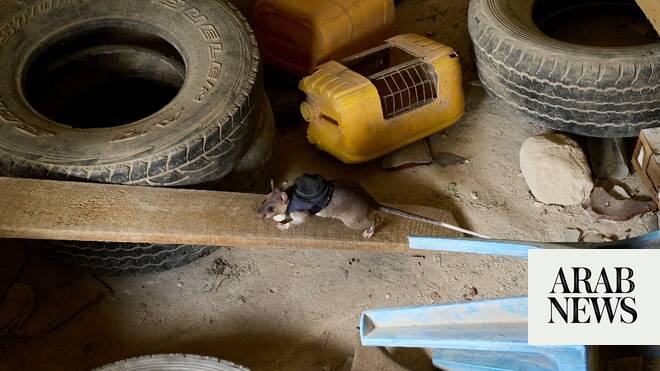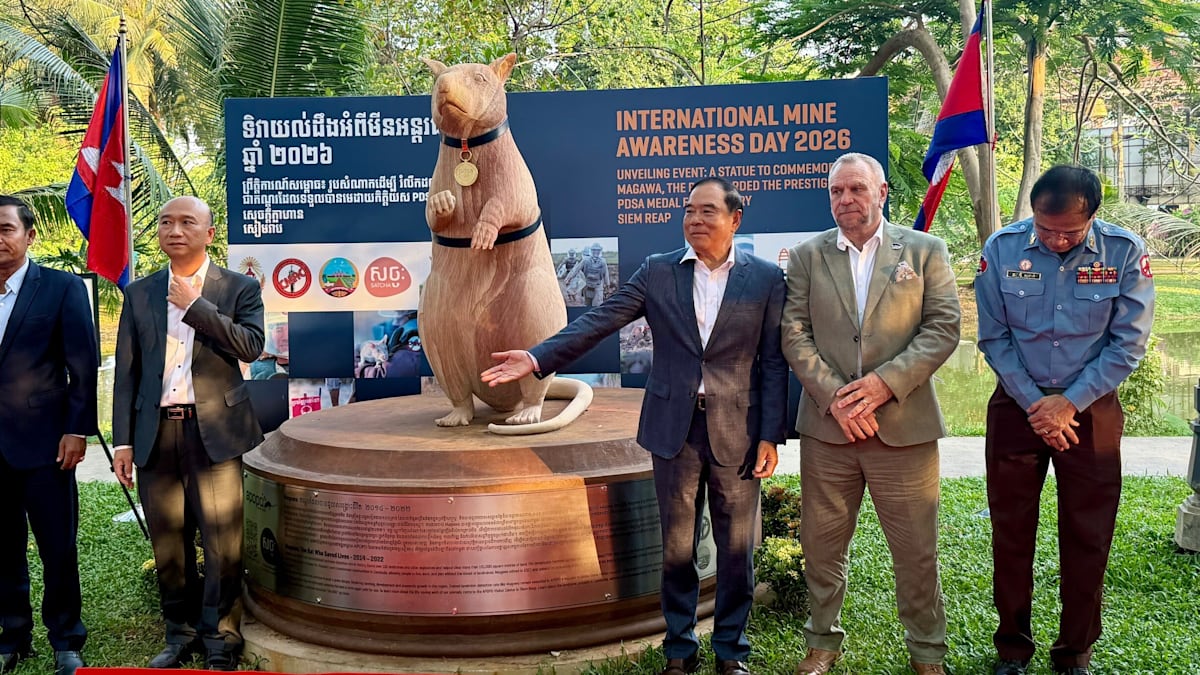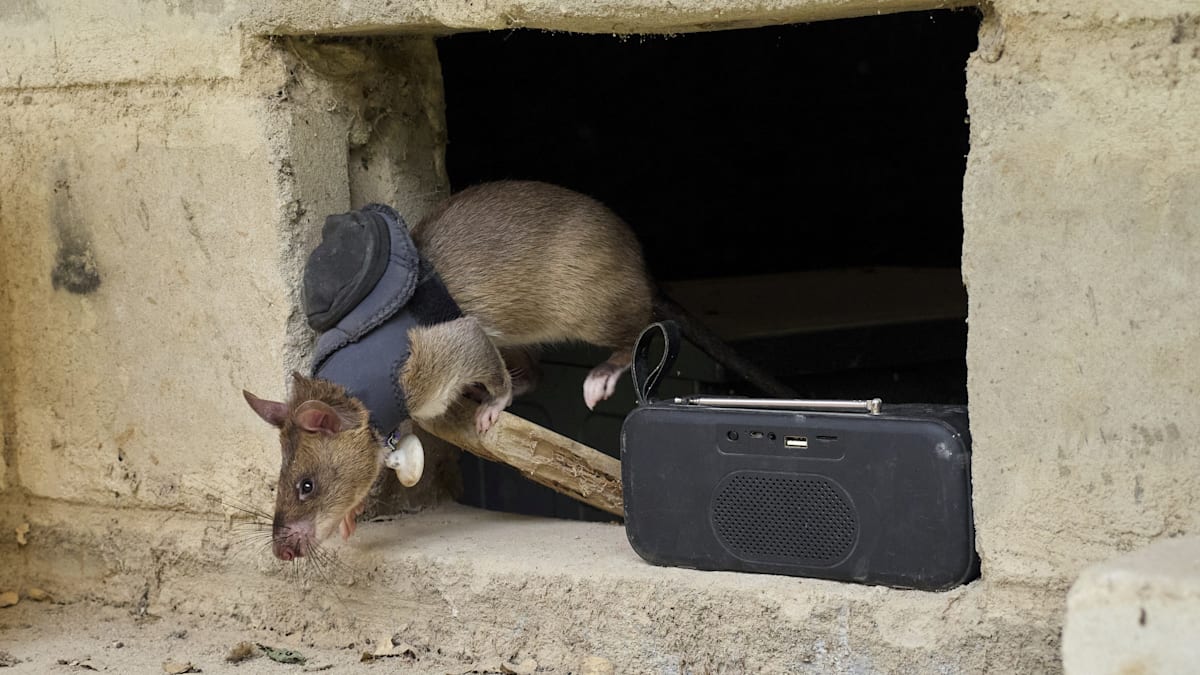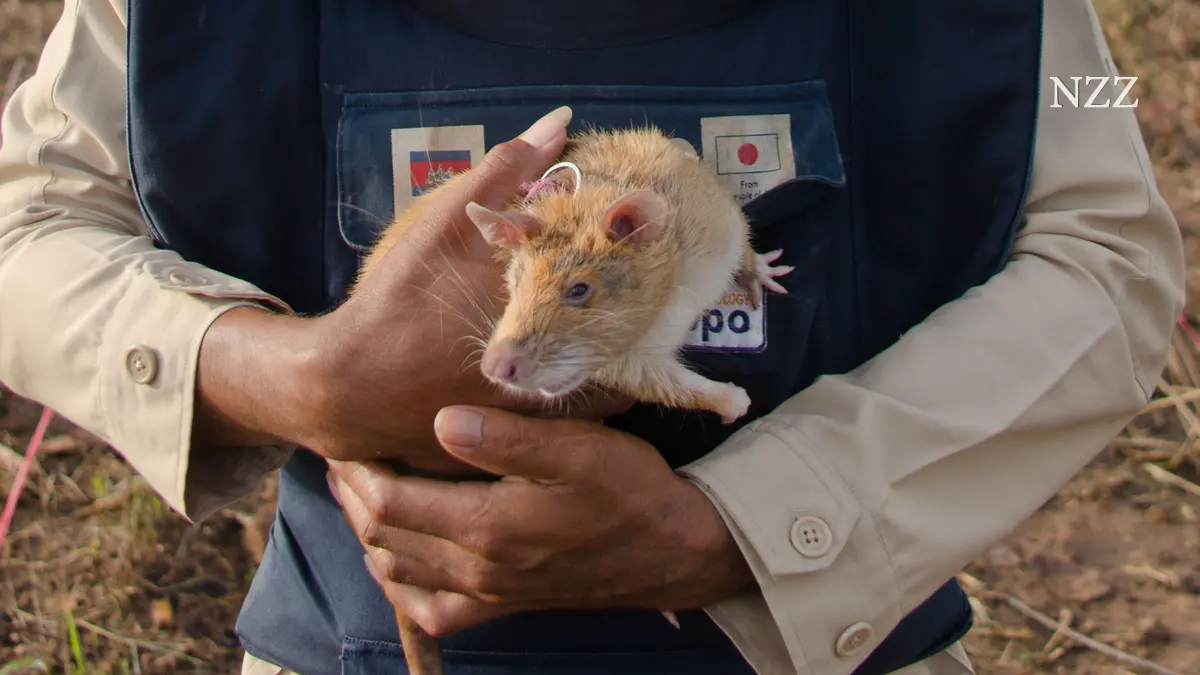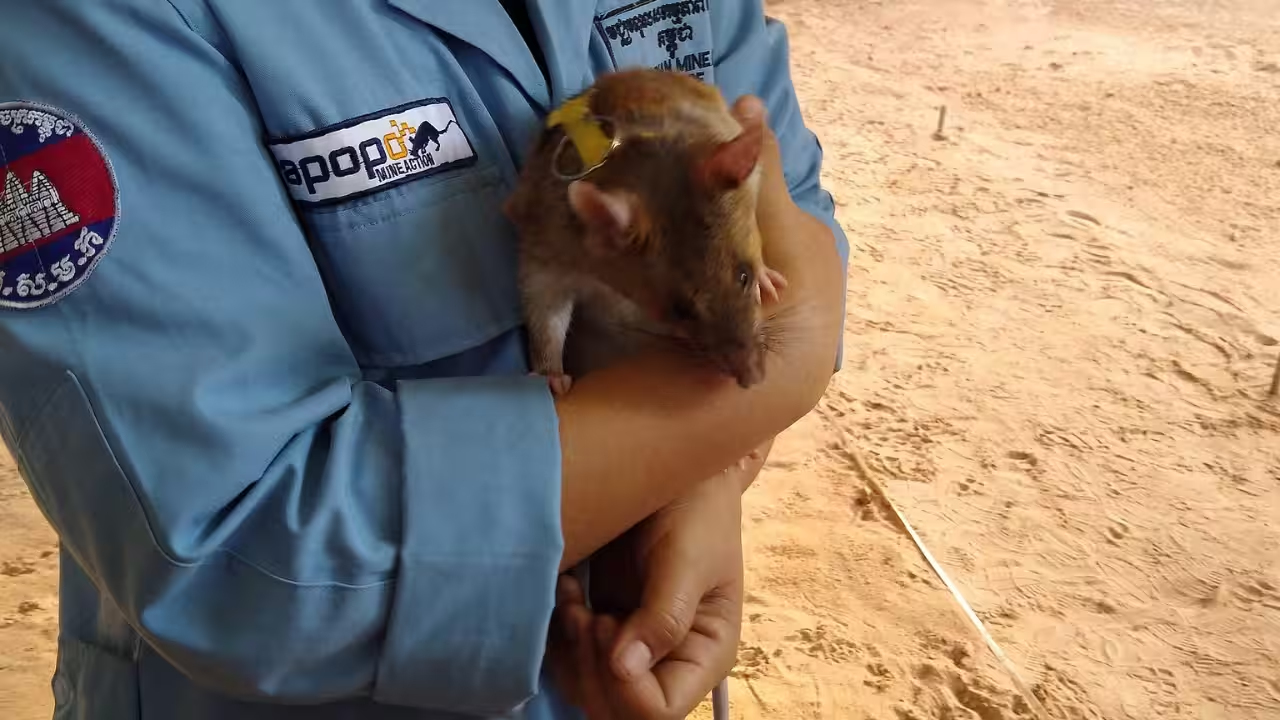
One of APOPO's "HeroRATs" in Cambodia | Wikimedia CommonsGiant African pouched rats are best known for their size, but in several countries recovering from conflict they have become an important part of humanitarian demining efforts. During the 1990s, Belgian designer Bart Weetjens began investigating whether the animals’ highly developed sense of smell could be used to detect TNT, the explosive compound found in many landmines. The idea was unconventional, but it offered a practical advantage. Giant African pouched rats are intelligent, trainable and typically weigh between 1 and 1.5 kilograms, making them too light to trigger most anti-personnel landmines. What began as an experimental project has since grown into APOPO’s internationally recognised HeroRAT programme. According to APOPO, the animals have helped detect more than 155,000 landmines and other explosive remnants of war, allowing large areas of land in countries such as Angola, Cambodia and Mozambique to be declared safe for communities to use again.One of APOPO's "HeroRATs" in Cambodia | Wikimedia CommonsWhy were giant rats chosen to detect landmines?Landmine clearance is one of the slowest and most dangerous forms of humanitarian work. Even decades after conflicts end, unexploded mines can remain buried beneath farmland, forests and footpaths, preventing communities from returning to normal life. Traditional demining teams rely on metal detectors, but these frequently identify harmless fragments of metal, requiring workers to investigate each signal carefully.According to National Geographic, HeroRATS are trained using positive reinforcement. They learn to associate the scent of TNT with a food reward, usually banana or peanuts, and work while attached to a lightweight harness that guides them across marked search lanes. When a rat detects explosives, it scratches the ground to indicate the location for human deminers. Because the animals ignore scrap metal and focus on the scent of explosives, they can inspect large areas much faster than conventional metal-detection methods. APOPO says a trained rat can search an area roughly the size of a tennis court in about 30 minutes, whereas the same task may take a human deminer with a metal detector up to several days. The rats are not responsible for removing explosives themselves; every suspected landmine is still excavated and safely destroyed by trained explosive ordnance specialists.More than detecting explosivesThe impact of the HeroRAT programme extends beyond the number of landmines located. Every explosive removed makes it possible for families to return to farmland, children to walk safely to school and communities to use roads and public spaces that were previously considered dangerous. In countries where conflicts ended many years ago, unexploded landmines continue to affect economic development and daily life, making demining an essential part of long-term recovery.According to the United Nations Mine Action Service (UNMAS), landmines and other explosive remnants of war continue to threaten civilians in dozens of countries and territories. Humanitarian mine action not only removes explosives but also supports reconstruction, agriculture and the safe return of displaced communities.The HeroRAT programme has also demonstrated how animal behaviour can be applied to humanitarian work. Rather than relying solely on machines, it combines the rats’ natural sense of smell with structured training to create an efficient detection system that complements conventional demining techniques.The rats wear harnesses attached to a rope | Wikimedia CommonsFrom minefields to disease detectionAccording to APOPO, some HeroRATS are trained to detect tuberculosis by identifying volatile compounds associated with the disease in sputum samples. The animals can rapidly screen large numbers of samples, helping laboratories identify patients who require further testing, particularly in regions where access to diagnostic resources is limited.More than three decades after Bart Weetjens first explored the idea, HeroRATS remain one of the most distinctive examples of animals being used in humanitarian work. Their success is not simply measured by the number of explosives they locate, but by the communities that are able to safely return to land that had been considered too dangerous to use for years.
In the 1990s, a Belgian researcher trained giant African pouched rats to sniff out TNT: APOPO says its HeroRATS have helped detect more than 155,000 landmines and other explosives
Giant African pouched rats are best known for their size, but in several countries recovering from conflict they have become an important part of humanitarian demining efforts. During the 1990s, Belgian designer Bart Weetjens began investigating whether the animals’ highly developed sense of smell could be used to detect TNT, the explosive compound found in many landmines.
645 words~3 min read