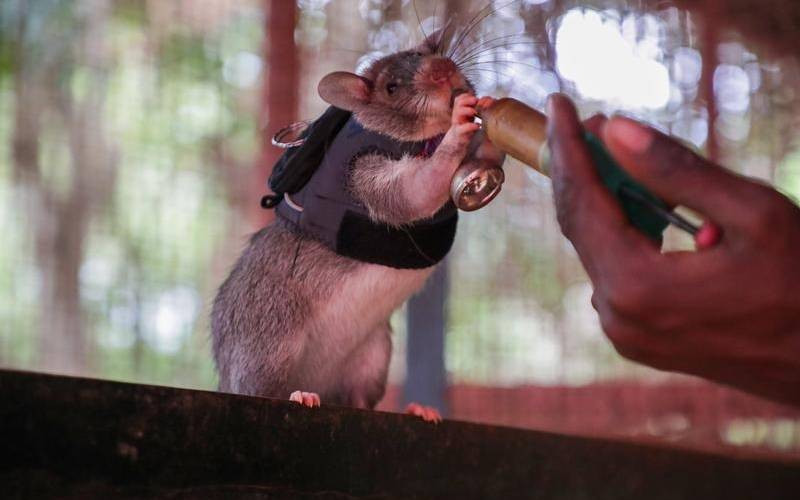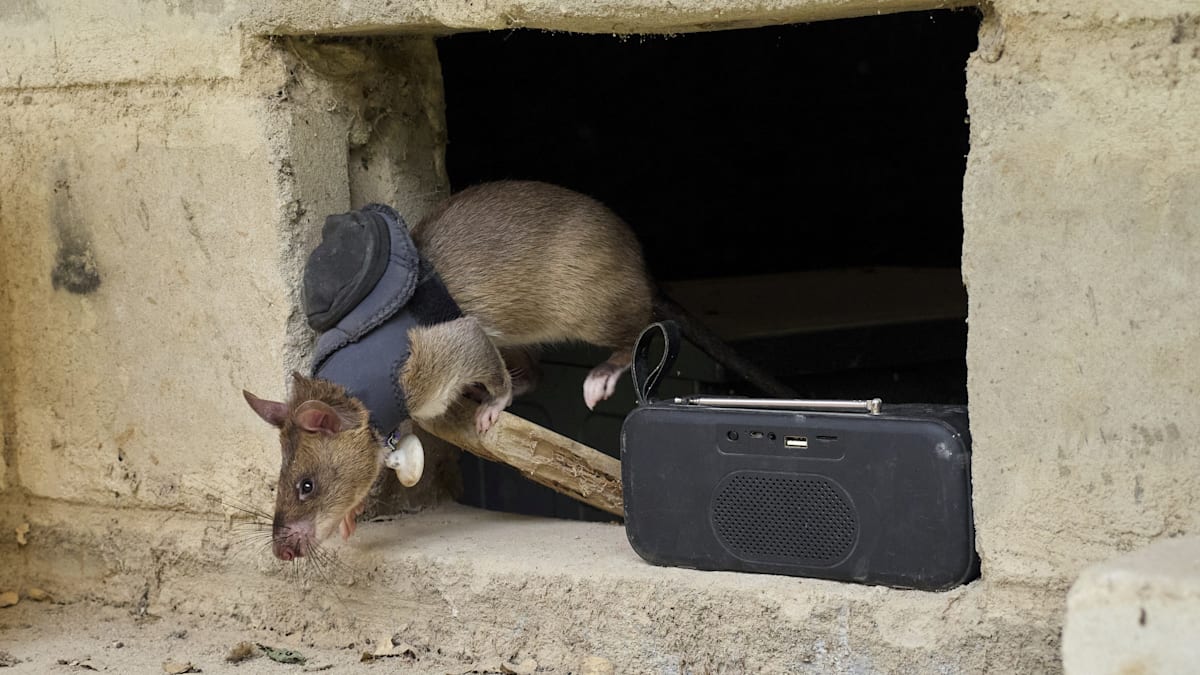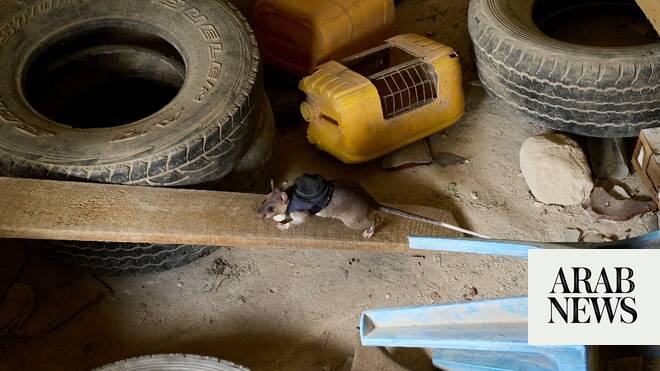
MOROGORO: A man lies unmoving, slumped in the rubble of a simulated earthquake, as an unlikely rescuer approaches: a rat with a backpack. Whiskers waving, the rat breezes past garbage, toppled furniture and scattered clothes to find him and pull a trigger on its pack, alerting searchers above.
Then a resounding click. A survivor has been found. The search in Morogoro in Tanzania’s Uluguru Mountains is over and the rat scurries out of the abandoned building to be rewarded with a banana. A successful mission is complete for this African giant pouched rat being trained for search and rescue operations.
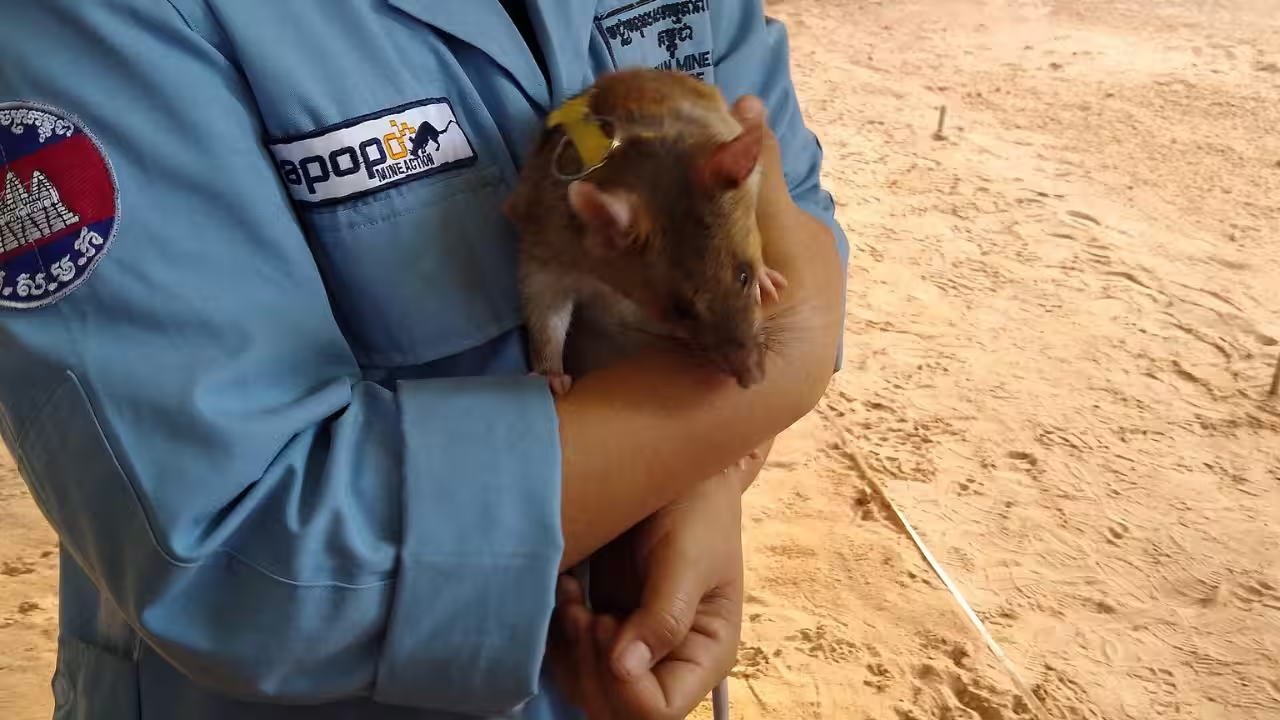
“Their sense of smell is incredible,” said Fabrizio Dell’Anna, an animal behaviorist at APOPO, a Tanzania-based nongovernmental organization that trains the rats for lifesaving applications. “These rats are able to detect explosives, tuberculosis — even tiny amounts of the bacteria — and in this project, they are able to correctly identify and indicate humans.”
In a field nearby, more rats walk on leashes held between handlers, pacing a grid filled with land mines as part of an initiative by APOPO, which works alongside Sokoine University of Agriculture. When they pause, it indicates that explosives are beneath. These rats are readying for their next deployment, perhaps Angola or Cambodia, where APOPO has helped clear more than 50,000 land mines since 2014.