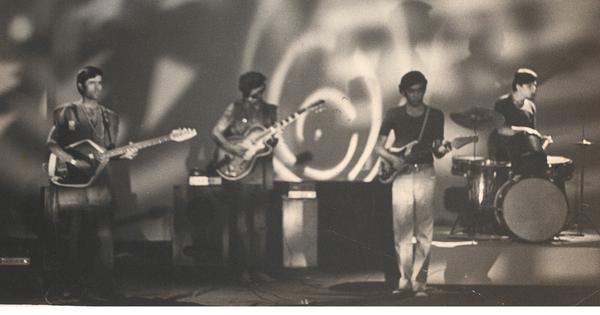
In 1971, a young Parsi guitar player named Cyrus Tata found himself weaving through the Calcutta traffic on his Lambretta scooter with legendary film director Mrinal Sen riding pillion, hanging on to a large amplifier.They were on an urgent chore. Sen had hired innovative sitar player Ananda Shankar to compose the background music for Calcutta 71. Tata, a member of the Ananda Shankar Orchestra, was among the musicians Shankar had roped in to record the tunes.But in the middle of the session, Tata’s amplifier broke down. As his guitar was crucial to creating the sitar-driven psychedelia on the soundtrack, the director immediately took charge. He not only recommended an experienced repairman near Moulali, Sen even offered to accompany the young man there.That scooter ride would seem to be emblematic of Tata’s career, balancing creative music projects and the world of film.The repair job was successful. The recording was salvaged, and Tata even made a brief on-screen appearance in Calcutta 71 with his band High Noon.Long after this dash to the technician’s workshop, Sen would be a regular visitor at the Tata home on Madan Street. A quiet camaraderie developed between the director and the guitarist rooted in family ties: Tata’s father, a film distributor, had arranged the finance for Sen’s Interview (1971).Cyrus Tata himself was later involved with the next two films of Sen’s political trilogy. He distributed Padatik (1973) and played guitar on the soundtrack of both Padatik and Chorus (1974). Sen grew fond of the Tata family – and particularly enjoyed Tata’s mother’s style of preparing the classic Parsi egg dish, akuri.Decades later, in 2003, Sen would laud Tata in The Statesman as “a talented guitarist, nothing short of being a genius”.
From rock to Rabindrasangeet, Parsi guitarist Cyrus Tata has left his mark on Kolkata’s music scene
In this interview, Tata looks back on his long career as a musician and in the film distribution business.
1,957 words~9 min read