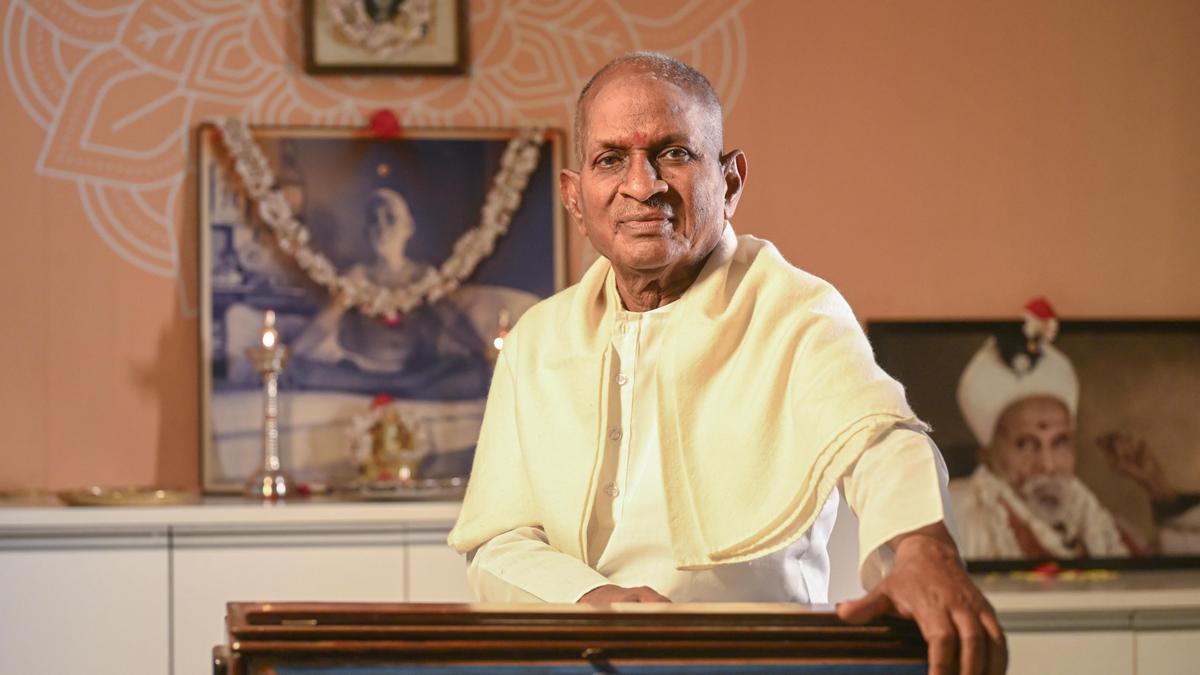
Ilaiyaraaja’s Western classical symphony Valiant recently had its grand premiere in India, with a performance in Chennai in May. It immediately made me think of another beautiful meeting point between Indian and Western music: Calcutta-Nagar, the piano suite by Indo-jazz pioneer John Mayer. It may not have the sweeping scale of Ilaiyaraaja’s symphony, but it carries a quieter magic of its own.Mayer, the Anglo-Indian composer, was born in 1930 on Chandni Chowk Street in Calcutta. He is best remembered for Indo-Jazz Fusions with Joe Harriott, which is widely regarded as one of the finest works in British jazz. He studied at the Calcutta School of Music, worked as a violinist and jazz drummer at the Lighthouse Cinema and then studied classical music with Mehli Mehta – Zubin Mehta’s father – before a scholarship took him to England.This 1993 suite shows a different Mayer: a composer looking back at the city of his childhood and hearing it through a Western classical piano. Restaurants, roads, markets, temples, churches, mosques, rickshaws, and nursery rhymes all are mentioned.John Mayer wrote Calcutta-Nagar, but it was Fali Pavri who first brought it to life on record. Some years ago, I was lucky enough to find a CD copy of the album, released by Guild Records in 1995.Pavri, a Parsi pianist born in Mumbai, had his own deep Indian connection. He began his piano lessons with Shanti Seldon, a prominent Indian pianist and one of the influential teachers of Western classical music in India. From there, his journey took him far beyond India – first to Moscow, where he studied with Victor Merzhanov, and later to London as he built an international career.Timothy Gill, cello and Fali Pavri, piano. Image courtesy Guild Music LtdWhile he was still a student, the legendary cellist and conductor Mstislav Rostropovich heard him play and was impressed enough to invite him to accompany him on a major tour of India in 1998. Years later, Pavri would record John Mayer’s solo piano works for Guild Records. Today, as Head of Keyboard and Professor of Piano at the Royal Conservatoire of Scotland, he remains one of the most convincing voices for Mayer’s demanding, deeply personal, cross-cultural music.Calcutta-Nagar was recorded in the Church of St Silas the Martyr, London, on July 20 and 21, 1995, along with the very accomplished cellist, Timothy Gill.Artistic Impression: Not to scale. Locations are approximate, based on present-day Kolkata geography and historic Calcutta references.1. The MocamboA night club at Free School StreetMayer begins on Park Street, and the choice feels right. The Mocambo piece has polish, swing, and a trace of old Calcutta nightlife. You can almost imagine the dining room: waiters moving between tables, conversation rising and falling, a band somewhere in the room keeping things elegant.Mocambo's jazz history makes the reference even richer. It was among the early Indian nightclubs associated with live jazz in the 1950s, so Mayer is not just naming a restaurant. He is opening a door to a whole Park Street sound world.Trincas and Blue Fox may get the jazz glory that they rightfully deserve, but Mocambo has its story. The legendary Pam Crain was hired before it opened in April 1956 and sang there for over a decade with a six-piece band.
Calcutta-Nagar: Anglo-Indian composer John Mayer captures the city in 18 piano sketches
Mayer does not try to explain the city or make it neat for the listener. He lets the city stay exactly as it is: noisy, sacred, hungry, poor, playful.
2,028 words~9 min read