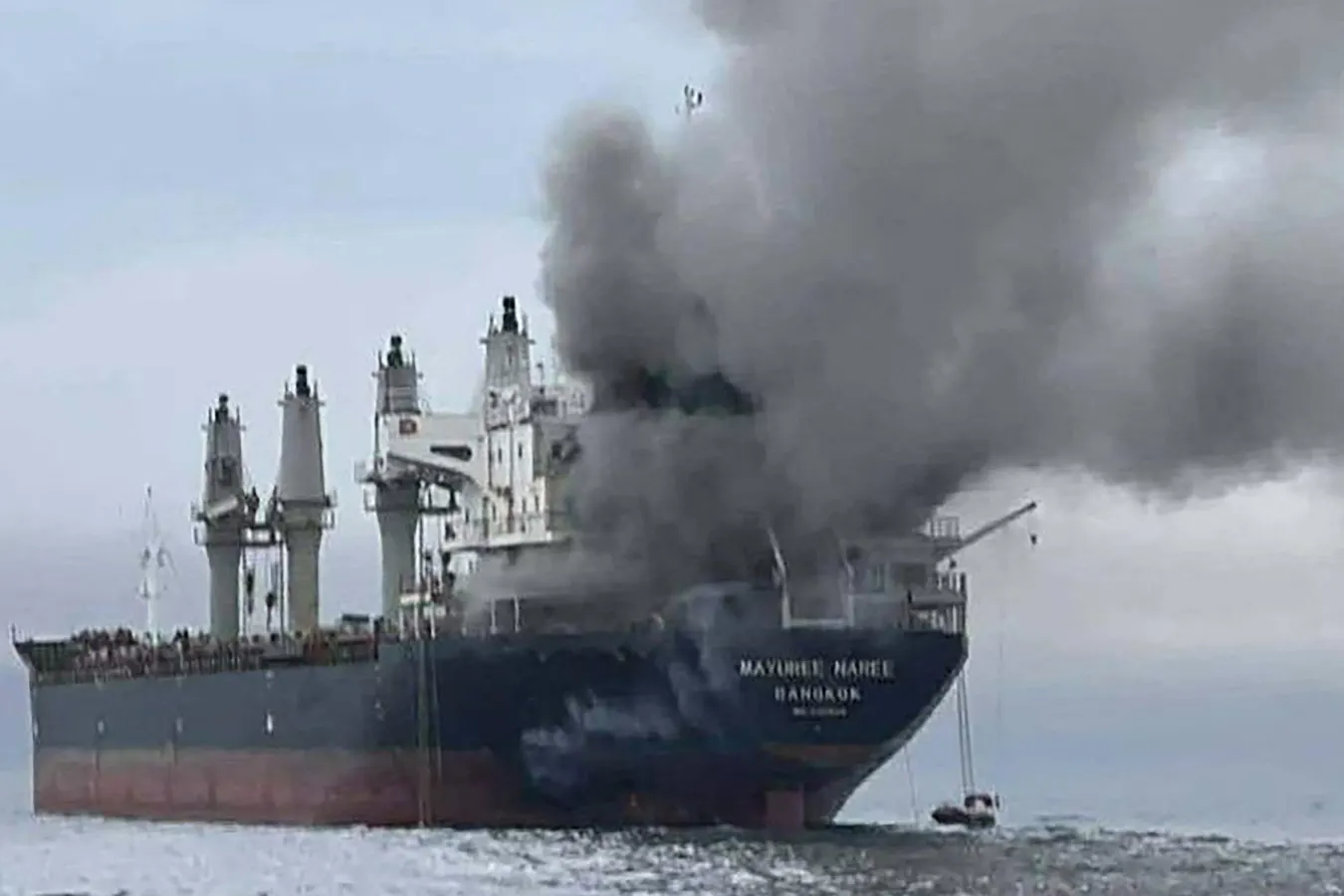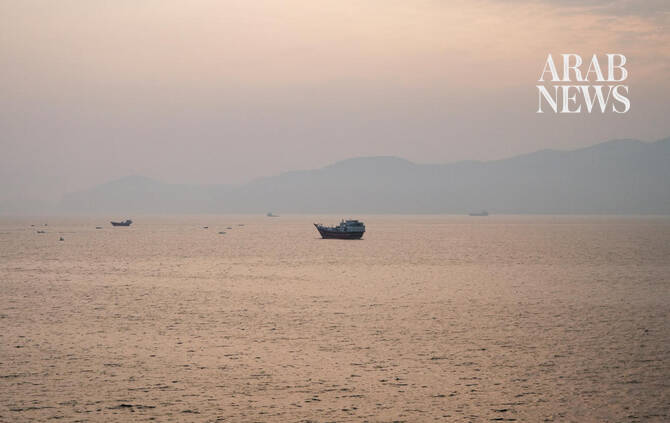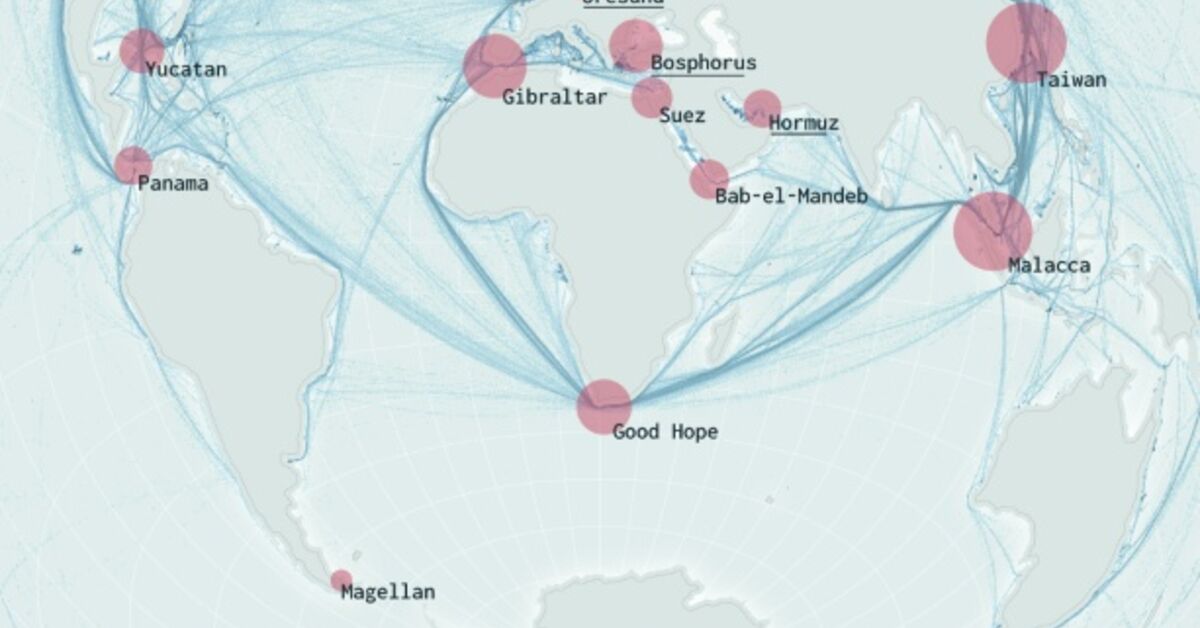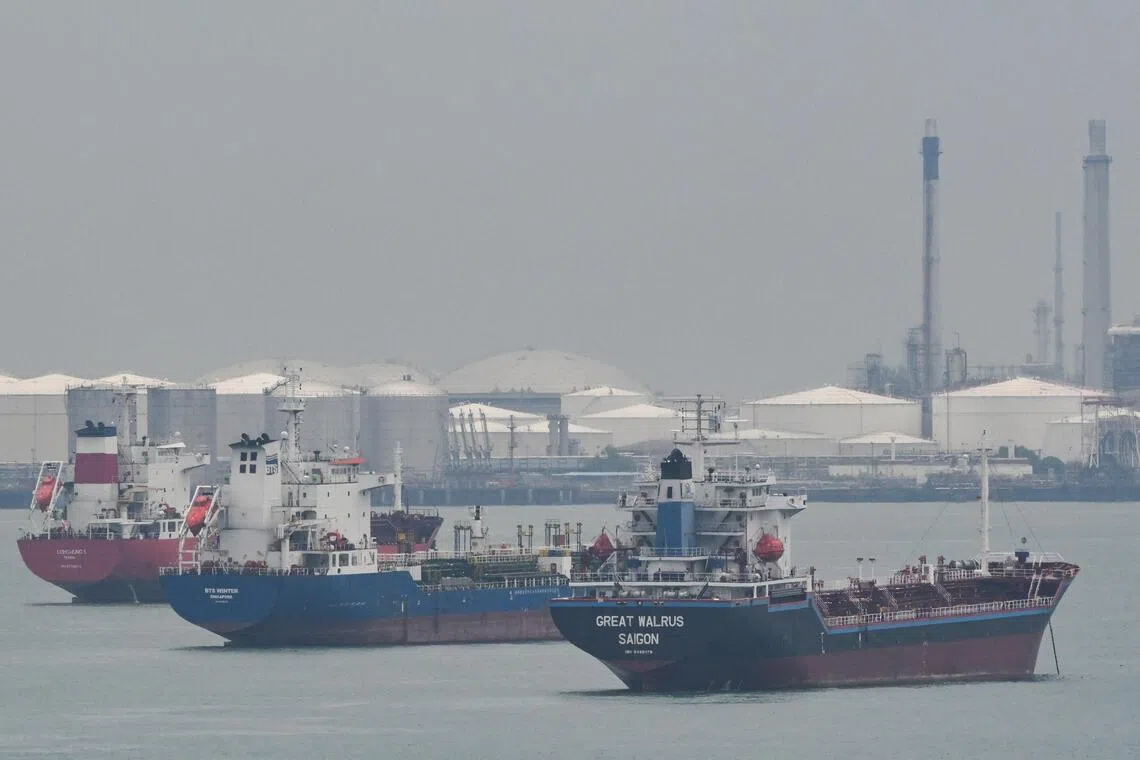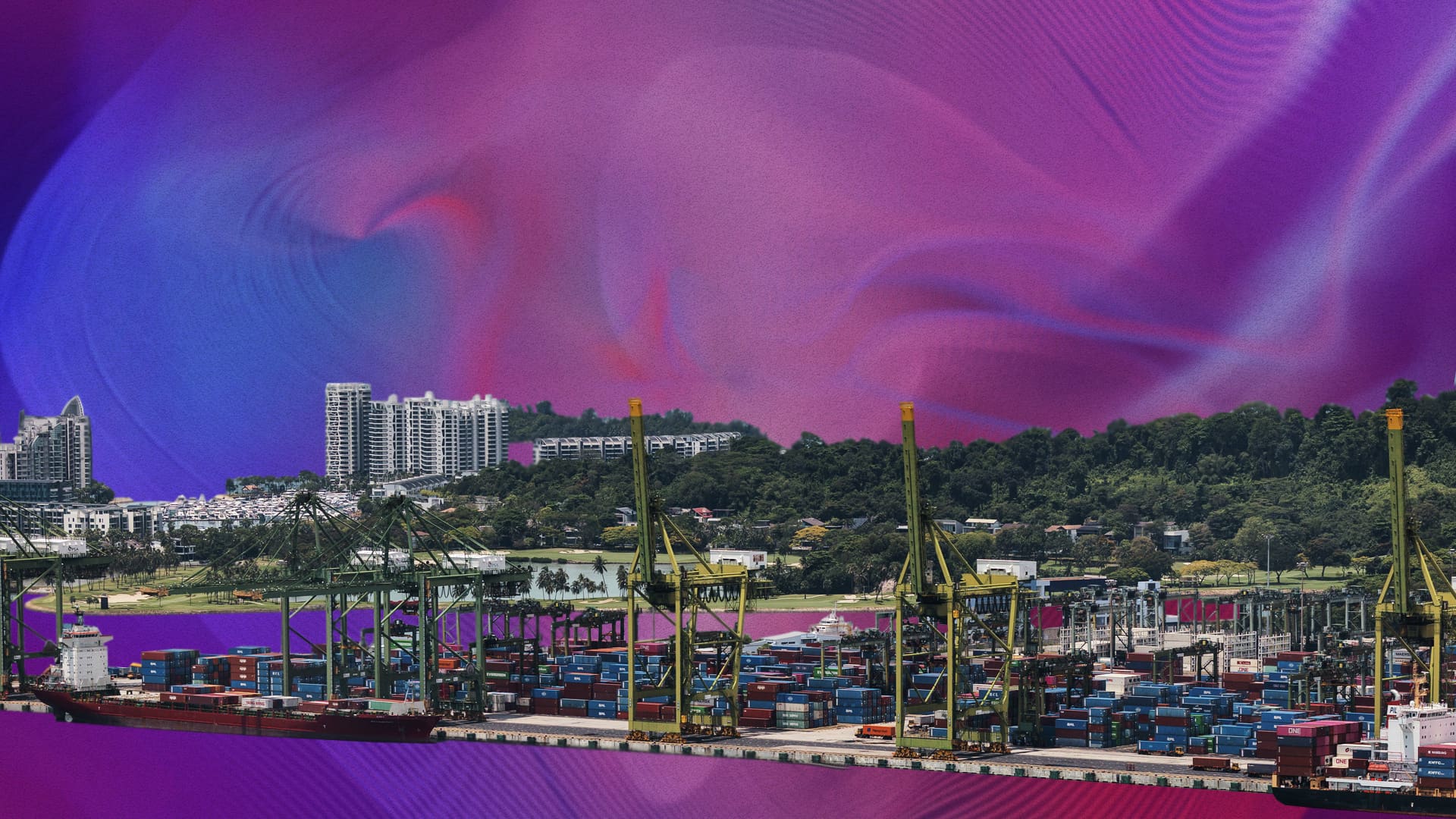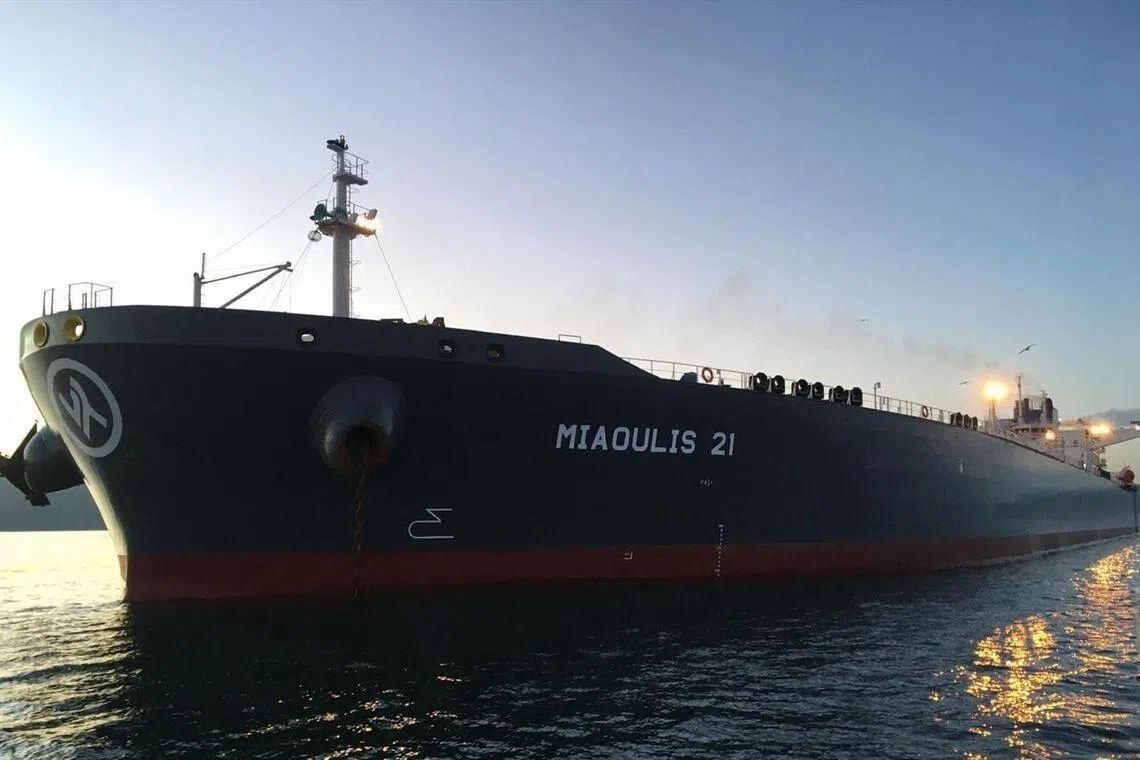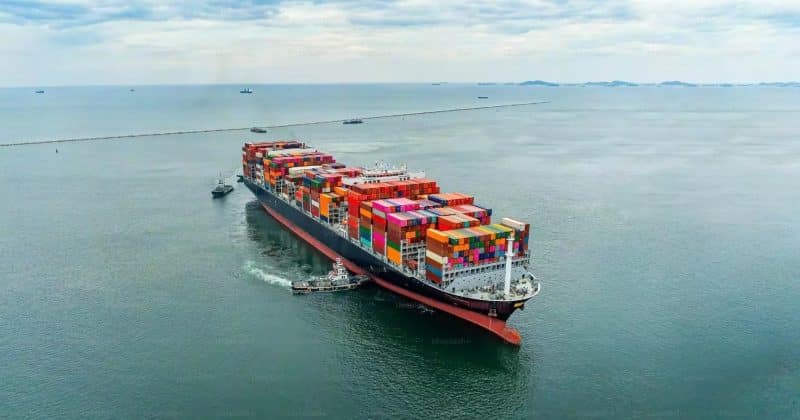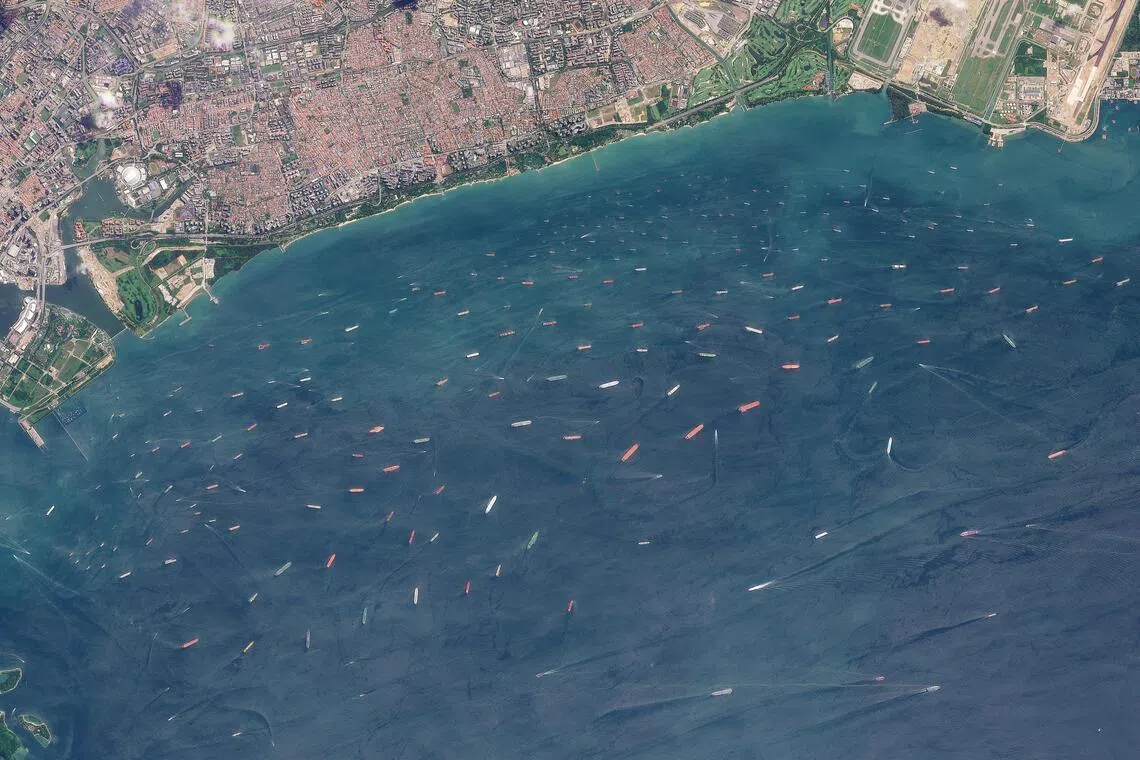
Frequent visitors to Singapore’s East Coast Park may have noticed a busier coastline in recent months, with ships anchored offshore waiting to refuel or discharge cargo.Here is a look at the coastline in March, spanning roughly 214 sq km of waters.Satellite images provided by Planet Labs showed about 208 ships in the Eastern Anchorage between Marina Barrage and Changi Airport on March 1, based on a count by The Straits Times.Satellite images provided by Planet Labs showed 208 ships in the Eastern Anchorage between Marina Barrage and Changi Airport on March 1, based on a count by The Straits Times. PHOTO: SATELLITE IMAGE PROVIDED BY PLANET LABS PBCThat number rose to about 318 on April 28, before easing to around 230 on June 13.Not all ships will need to dock or unload cargo. They could be here to refuel, and some ship-to-ship transfers may take place too.Some vessels also come to Singapore for repairs or for supplies.The observations based on the satellite images are broadly consistent with official data from the Maritime and Port Authority of Singapore (MPA).There were approximately 318 ships in Singapore waters off the east coast of Singapore on April 28. PHOTO: SATELLITE IMAGE PROVIDED BY PLANET LABS PBCThere were roughly 230 ships in Singapore waters off the east coast of Singapore on June 13. PHOTO: SATELLITE IMAGE PROVIDED BY PLANET LABS PBCA mix of vessels come to Singapore, ranging from containers and tankers to barges and tugs.Container vessels and oil tankers in the fairway, and rows of containers and a fully automated electric yard crane system at Pasir Panjang Terminal. ST PHOTO: LIM YAOHUIGeopolitical disruptions, including the conflict in the Middle East, have redrawn shipping routes, and this could lead to more vessels calling at the Republic in the future, say experts.Vessel arrivals in Singapore rose 6.3 per cent year on year in June to 11,520. This brings the total number of vessel arrivals in the first six months of 2026 to 68,630, an increase over the 63,754 vessel arrivals over the same period in 2025.Meanwhile, cargo throughput increased to 307.9 million tonnes in the first six months of 2026, from 300.7 million tonnes in the same period a year earlier.Port operator PSA Singapore told The Business Times on June 26 that vessel arrivals have surged, citing a combination of regional weather disruptions and mounting delays across global trade routes. Analysts added that the conflict in the Middle East, which started on Feb 28 and has disrupted shipping through the Strait of Hormuz, has also prompted some cargo to be rerouted through Singapore. According to freight intelligence firm project44, the Republic has absorbed about 2 per cent of shipments originally destined for the Jebel Ali port in the United Arab Emirates.Here is how the geopolitical tensions have reshaped global shipping, what it means for Singapore’s maritime sector, and whether the Republic stands to play a bigger role as trade routes continue to evolve.Ships anchored in the waters of the Singapore Strait in southern Singapore on April 27. ST PHOTO: KUA CHEE SIONG1. Singapore’s prominence as a global transshipment hub to growMore ships have been calling at Singapore recently, though the numbers have not exceeded pre-Covid-19 levels, said Bernard Aw, chief economist for the Asia-Pacific region at Coface.He noted that vessel arrivals had risen by 4.7 per cent in 2025 to 131,821, although this remained about 10 per cent below the 2017 peak of 145,147.The conflict in the Middle East has disrupted shipping routes, prompting carriers to adjust routing, fuelling, and scheduling decisions, Aw said.“This has benefited Singapore, given its strategic location at the crossroads of major trade lanes: Asia-Europe, Asia-US, and intra-Asia.”He added that Singapore’s political stability, strong insurance and legal frameworks, advanced ship repair capabilities, efficient crew change facilities and access to financing have also enhanced its appeal as a trusted maritime hub.Rows of containers and a fully automated electric yard crane system at Pasir Panjang Terminal on Oct 21, 2025. ST PHOTO: LIM YAOHUIOCBC chief economist Selena Ling said shipping companies remain cautious as geopolitical risks have yet to fully subside despite diplomatic efforts between the US and Iran.“For resilience planning, more diversified route planning is still logical since the geopolitical risks have not fully faded.”She noted that since Singapore sits at the crossroads of major global trade routes, transshipment demand has likely picked up, in addition to anchorage, towage and other associated marine services.While the increase in vessels here could also lead to congestion, Aw noted that waiting times for containers have “remained manageable at generally under two days”, as more berths at the newly constructed port in Tuas become operational.Aw said the disruptions have reinforced Singapore’s role as a regional transshipment hub as carriers divert cargo from ports in the Middle East. However, he noted that if shipping through the Strait of Hormuz normalises, some of the additional transshipment demand could ease.CMC Markets Singapore sales trader Oriano Lizza said vessels rerouted around the Cape of Good Hope to avoid the Strait of Hormuz spend a longer time at sea, meaning more ships are on the water and pass through Singapore at any given time.However, because each voyage takes longer, individual ships complete fewer trips and port calls each month. He added that fleet speeds have also slowed since Feb 28."The longer routes increase the number of ships in transit overall, but the effect is uneven and not a straight line," Lizza said.Oil tankers near the oil refinery in Pulau Bukom on April 26. PHOTO: ST FILE2. Demand for bunker fuel from Singapore could be more volatileThe Republic is currently the world’s largest bunkering port, but the amount of bunker fuel sold has dropped in recent months despite the higher number of vessel calls and disruptions to bunkering activity in the Middle East.In May, for example, bunker sales dropped by 6.8 per cent year on year, extending a decline seen in April as well.Bunker sales slightly recovered in June to record a 1.6 per cent rise year on year.Aw noted that sales volumes have become more volatile partly due to higher fuel prices, as the conflict drove the price of oil over US$100 a barrel. Oil was trading at around US$86 per barrel on July 15.“While Singapore gained diversion demand from vessels seeking to reduce reliance on Gulf bunkering, elevated prices have acted as a constraint,” Aw said.He added that shipowners are increasingly avoiding full refuelling in Singapore, opting instead to sail at slower speeds to conserve fuel, buy only enough to reach lower-cost ports, or postpone non-essential bunkering altogether.So even though more vessels are calling at Singapore, each may be taking on less fuel, he said.It also remains unclear whether bunkering activity will shift permanently from Fujairah in the UAE to Singapore.“Fujairah continues to be structurally important given its proximity to Gulf energy flows and its strategic position along Indian Ocean routes,” he said.Another trend in bunkering that has emerged due to high fuel prices is renewed interest in using alternative fuels, said OCBC sustainability researcher Ong Shu Yi.The Middle East developments highlight the risk of being over-reliant on traditional bunker fuel supplies, which could impact longer-term bunker fuel sales in Singapore.Ong noted that some shipowners are looking at investing in dual-fuel vessels that can use fuel oil and greener alternatives like liquefied natural gas, methanol and ammonia, although the transition is still gradual due to safety risks, storage requirements, high investment costs and a lack of port infrastructure globally.Containers at PSA Singapore. The cost of shipping a 40-foot container has risen sharply over the past year. BT PHOTO: YEN MENG JIIN3. Even higher freight rates to ship goodsWith the conflict in the Middle East running into its fifth month and still unresolved, there is a growing consensus that the disruption will persist into the third quarter of 2026, according to freight intelligence platform Xeneta in June.That will continue to keep freight rates elevated for shippers, who have had to contend with rising rates since the US began imposing global tariffs in 2025.According to maritime intelligence firm Drewry, the cost of shipping a 40-foot container has risen sharply over the past year, increasing by at least 14 per cent to US$828 (S$1,070) on the Rotterdam-Shanghai route and by as much as 121 per cent to US$6,482 on the Shanghai-Los Angeles route.Vineet Puri, Citi’s Asia-Pacific head of shipping, logistics and offshore, said freight rates have been driven higher by several factors: Geopolitical disruptions that have forced ships onto longer routes, fuel surcharges to offset higher energy costs, tighter shipping capacity as vessels are delayed in the Middle East and Gulf region, and rising operating expenses such as insurance premiums.“Disruptions like the Red Sea shipping route closures, sanctions affecting Russian energy, trade wars, the Middle East conflict and impact on gas and oil flows have created an unpredictable environment,” he said.Aw added that the key driver for rising freight rates is a shift in behaviour.“Companies increasingly stockpile inventories in response to longer delivery times and rising input costs – both linked to disruptions in global oil supply. This change has materially increased demand for container shipping, putting upward pressure on rates,” he said.Operations staff working inside the control centre at PSA Tuas Port on Oct 21, 2025. Automated equipment and integrated operations systems will be deployed in the next-generation ports. ST PHOTO: LIM YAOHUI4. Growing demand for maritime talentAs global shipping becomes more complex, Singapore will need more maritime talent, particularly in areas such as digitalisation and artificial intelligence.Puri said shipping companies are actively modernising their fleets in various ways, and that investments in AI and big data have surged to drive efficiency.“They are also pursuing digital transformation and strengthening their operational resilience to navigate the instability caused by geopolitical shifts,” he said.As such, investment in talent is also becoming increasingly important both at leadership and crew levels, he said.This is as the industry adopts AI and digitalisation, and looks for fleet adaptability, nimble operation strategy and real-time decision-making based on data.“Training crew to adapt to changing technologies in fuel and combustion will be a key differentiator,” he said.Singapore Maritime Foundation chairman Hor Weng Yew said in an interview in April that the Republic needs fresh talent to stay afloat.The maritime sector contributes to more than 6 per cent of Singapore’s economy and provides more than 140,000 jobs, according to a maritime lecture in 2025.Hor noted that the talent required spans various disciplines, from those in finance to close maritime deals, to people in data, technology and sustainability, as ships move towards using big data and become more interested in decarbonisation initiatives.Salaries can range from $4,000 to $6,000 for a marine mechanical engineer, and go up to $10,000 for a ship production and operations manager, according to the MyCareersFuture portal.Satellite Images provided by: PLANET LABS PBCProduced by: Sue-Ann Tan and Stephanie Yeow
How Iran war, tariffs are reshaping global sea trade and affecting Singapore
Geopolitical disruptions, including the Iran war, have redrawn shipping routes, and this could lead to more ships calling in Singapore in the future. Read more at straitstimes.com. Read more at straitstimes.com.
1,798 words~8 min read