Story audio is generated using AI
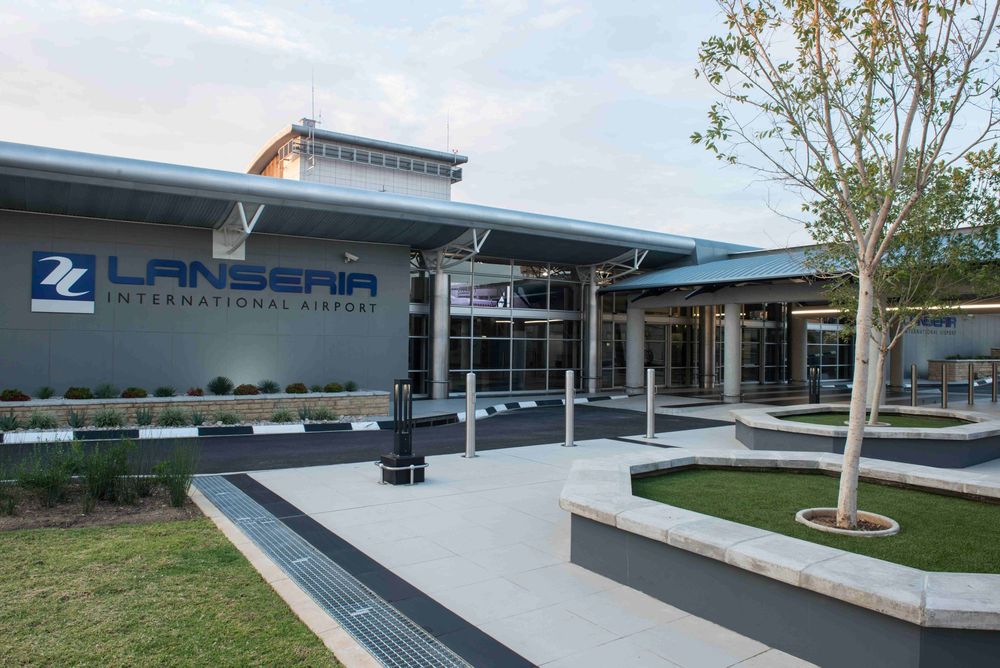
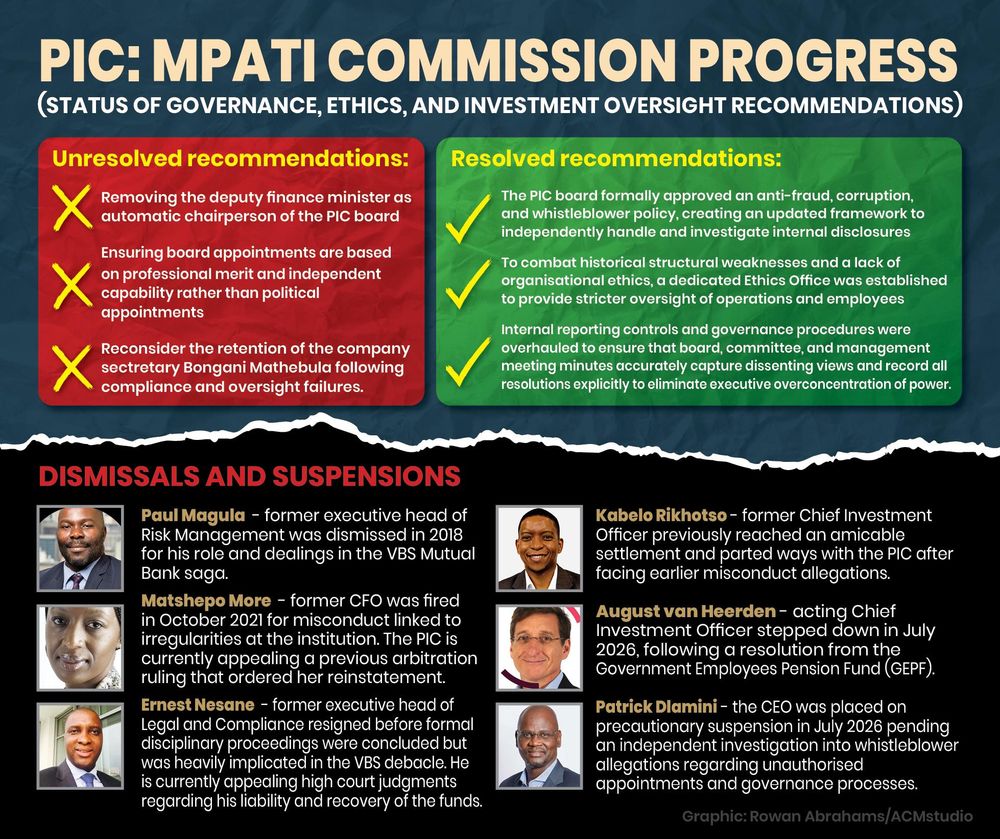
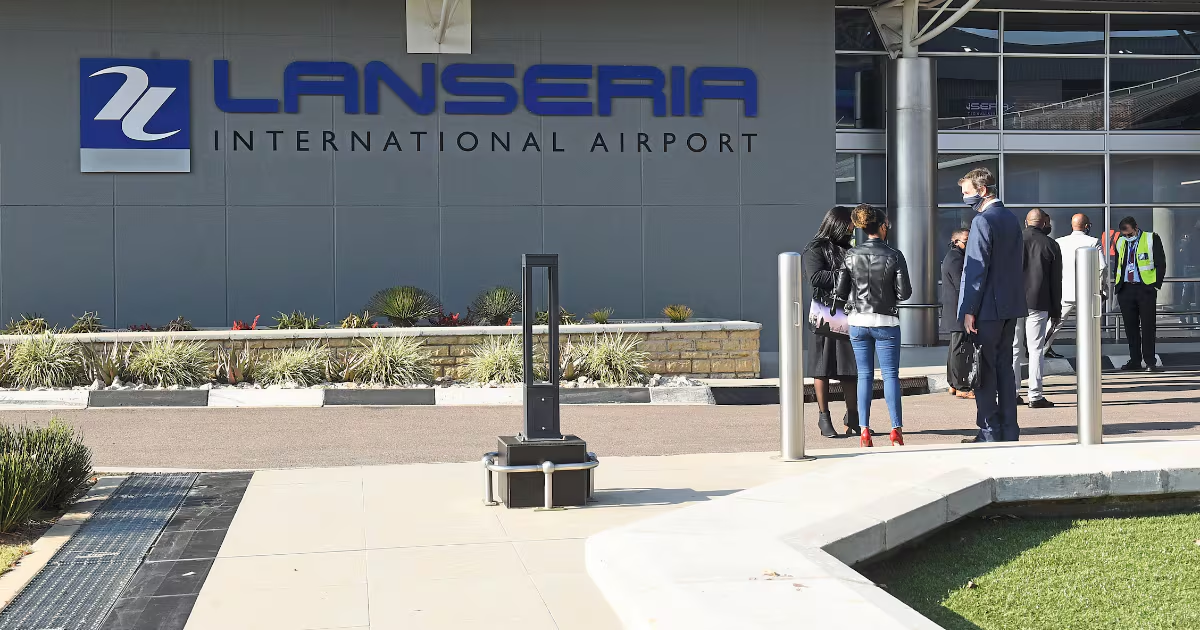
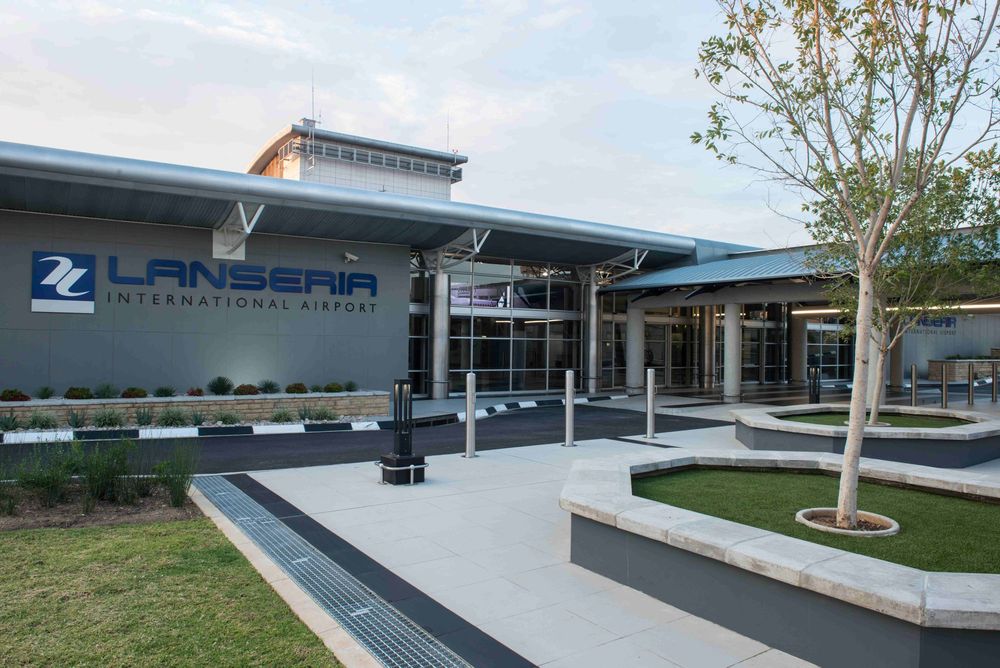
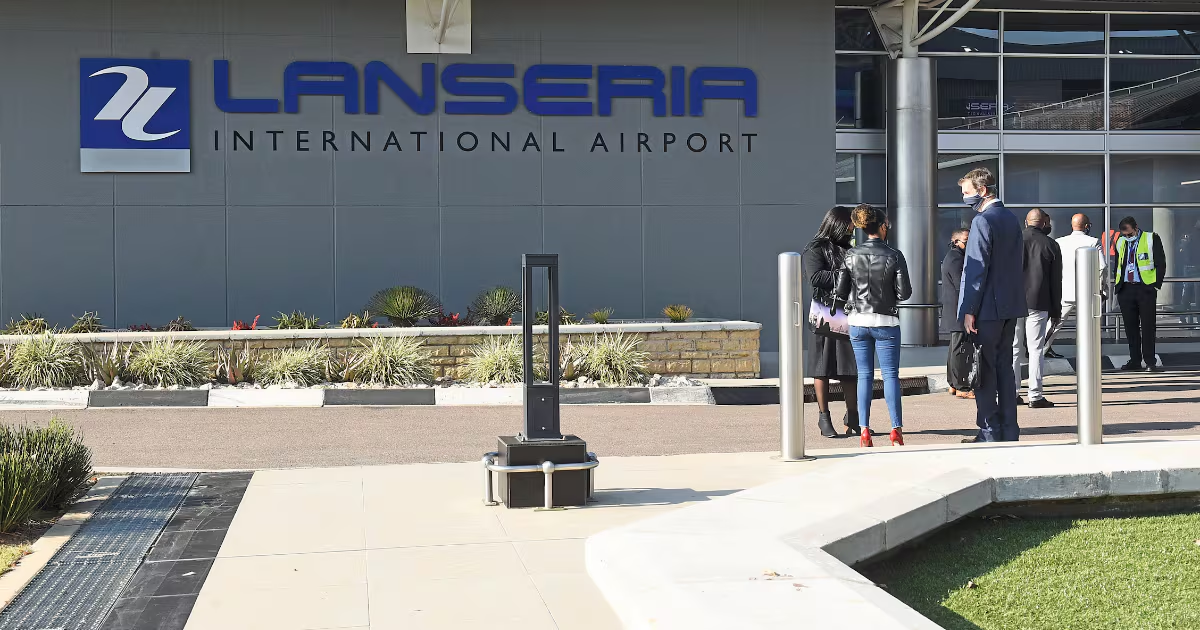
The arbitrators who presided over the dispute between the Public Investment Corporation (PIC) and BEE outfit Acapulco over the valuation of the latter’s stake in Lanseria International Airport relied in part on a Wikipedia article to endorse the glaring double-counting of the property’s value — a decision that left the asset manager R400m poorer.This astonishing claim is contained in a report prepared by professional services firm PwC, with evidence emerging on how the PIC sabotaged its own case to the benefit of Acapulco.PwC investigators were left unimpressed by the PIC’s failure to mount a strong defence, including the asset manager not calling relevant witnesses and resorting to non-specialists to make its case.PwC’s displeasure was also directed at the arbitrators for seemingly failing to interrogate the valuation report produced by accounting firm Crowe, which put Acapulco’s 25% stake at R1bn — R700m more than the valuation of professional services firm BDO.“The arbitrators appear to have used a Wikipedia article stating that double-counting cannot be fully eliminated in accounting. Although the award characterised double-counting as an inherent unavoidable valuation risk, accounting and valuation guidance recognises that while double-counting can arise where DCF [discounted cash flow]-based valuations embed cash flows linked to items recognised elsewhere, this requires adjustment to avoid valuing the same economic benefit twice,” PwC said.“Further, the engagement letter required Crowe to incorporate the property valuation without double-counting, indicating that the risk of double-counting was intended to be managed through appropriate reconciliation rather than treated as unavoidable.“Both expert witnesses identified that the third-party rental income streams were incorporated in both the Crowe valuation of the operating entity and the Mills Fitchet [a property valuation firm that Crowe hired to assist it] property valuation. “However, this was not Crowe’s stated position, as in the correspondence Crowe maintained that its approach did not result in double-counting. It’s unclear how this irreconcilable difference was considered in the arbitration proceedings and award.”The award was handed down in September last year, with payment to Acapulco made the next month.The dispute between the PIC and Acapulco arose in 2023 when Acapulco failed to repay a R333.2m loan from the PIC a decade earlier to buy a 25% stake in Lanseria.The arbitrators appear to have used a Wikipedia article stating that double-counting cannot be fully eliminated in accounting. — PwCUnder the terms of the deal, Acapulco was expected to use reasonable commercial endeavours during the term to raise funds to refinance a portion of the capital loan amount.The final repayment of the capital loan amount was to fall on the 10th anniversary of the first advance date.Acapulco defaulted on the loan, which had ballooned to about R600m, including interest. The PIC then moved to take transfer of Acapulco’s shares in Lanseria.When the valuation of the asset was contested, the PIC and Acapulco hired BDO, which put the value of Acapulco’s stake at about R238.1m — which meant Acapulco was still way short of the R600m it owed the PIC.Dissatisfied with the decision, Acapulco cancelled BDO’s mandate — a decision the PIC strangely agreed to.The appointment of Crowe raises red flagsCrowe Johannesburg was then hired to undertake another valuation, and its appraisal put the value of Acapulco’s at R1bn.PwC found the appointment of Crowe troubling as the BDO engagement letter did not make room for another valuation.Crowe was also introduced to the PIC by one of Acapulco’s directors, Fabian Jauch.PwC found that, unlike BDO, Crowe’s requirements for being entrusted with making a valuation of Acapulco’s stake in Lanseria were less demanding.“Unlike the extensive discussions held in respect of BDO’s appointment, we did not identify any correspondence discussing the suitability of Crowe to perform the valuation of Lanseria Holdings,” PwC said.“Crowe was introduced to the PIC by Acapulco, and, unlike the discussions held in respect of BDO and other potential candidates, we did not identify the same level of due diligence of Crowe’s suitability to perform the valuation prior to its appointment.“We were unable to confirm that the Crowe engagement team had prior experience in valuations of this nature. The Crowe profile obtained during the engagement describes Mr [Gary] Kartsounis [a partner at Crowe] as an audit specialist and does not include valuation-specific experience in any capacity,” PwC added.Crowe and Kartsounios declined to share any details with PwC on the work they did and the methodologies used in arriving at the valuation. Crowe’s number was an outlier in that it was far removed from historical valuations of the asset. Ultimately, the PIC’s view was that Crowe’s valuation inflated the value of Lanseria by about R1.7bn.The protest of Crowe’s valuation saw the parties undertake expedited arbitration — a rushed process that PwC found weakened the PIC’s case because it went into the process with little time to prepare. Insiders have said that was by design.The circus enters arbitration The PIC, which stood to lose the most, did not call Crowe to give evidence at the arbitration on its evaluation, even though it claimed to contest the appraisal. Instead, the PIC turned to PSG Capital, with its then-senior employee Siyabonga Shandu as the expert witness put forward to contest the Crowe valuation.PwC was highly critical of Shandu’s performance as a witness. The professional services firm concluded that the PSG report did not address the fundamental question of whether there was manifest error in the Crowe valuation.“Mr Shandu’s oral testimony and the PSG report did not engage with or provide rebuttals to Crowe’s explanations on the technical aspects of the valuation that were disputed by the PIC,” PwC noted in its report dated May 18.Read: How PIC officials dropped the ball in R400m payout for Lanseria“In consultation with Mr Shandu on January 30 2026, Mr Shandu informed us that he had not testified prior to this engagement and his mandate did not include reviewing the Crowe draft valuation report.”“PSG’s mandate required an assessment of whether the Crowe valuation contained a manifest error. However, neither PSG’s report nor Mr Shandu’s oral testimony addressed this requirement in a manner consistent with that mandate. “Mr Shandu’s admission during testimony that he did not know the meaning of “manifest error” raises concern as to how PSG and Mr Shandu had been briefed, given that an expert cannot properly discharge a mandate grounded in a requirement they do not understand.”PSG defended its report and Shandu’s expertise. Shandu has since left the company “As we have not seen PwC’s report or other review documents, it is difficult to comment further on this statement, save to note that Mr Shandu has extensive valuation experience, qualifying him to be an expert in these matters,” PSG Capital CEO Henning de Kock told Business Times.“As it is a confidential document, we cannot comment on the PSG Capital valuation report, save to note that it clearly identified a number of material issues impacting the Crowe valuation, resulting in a substantially lower valuation being arrived at by PSG Capital. Our report and findings in this regard, including as to manifest error, were dealt with in detail during Mr Shandu’s testimony during the arbitration hearing.”PwC identified the then PIC chief investment officer, Kabelo Rikhotso, who parted ways with the group in March following five months on suspension; his chief of staff, Thando Mziba; the acting head of legal, Bothwell Hlahla; and the acting head of investment, Lindiwe Dlamini, as key players in the Acapulco transaction. However, none of them assumed any responsibility for the fallout over the transaction.“When questioned, each of these key role players either expressly denied making or instructing these decisions, or indicated that their role was limited to providing input or executing instructions received from others,” the PIC report reads.“Although per the governance frameworks, Mr Rikhotso was allocated overall responsibility, the findings reflect that he is notably absent from the documented decision-making process and was not available for consultation with us.”The chair of the arbitration, Thomas Bokaba SC, had not responded to requests for comment at the time of publication. Acapulco’s Kagiso Matjila declined to assist PwC in its probe. The PwC report was commissioned by PIC CEO Patrick Dlamini, who was placed on suspension this week as the fallout from the transaction deepens.Business Times