A small, honest write-up of a thing I built mostly for fun, that somehow ended up working. Code: github.com/teimuraz/rust-mobile-offline-sync
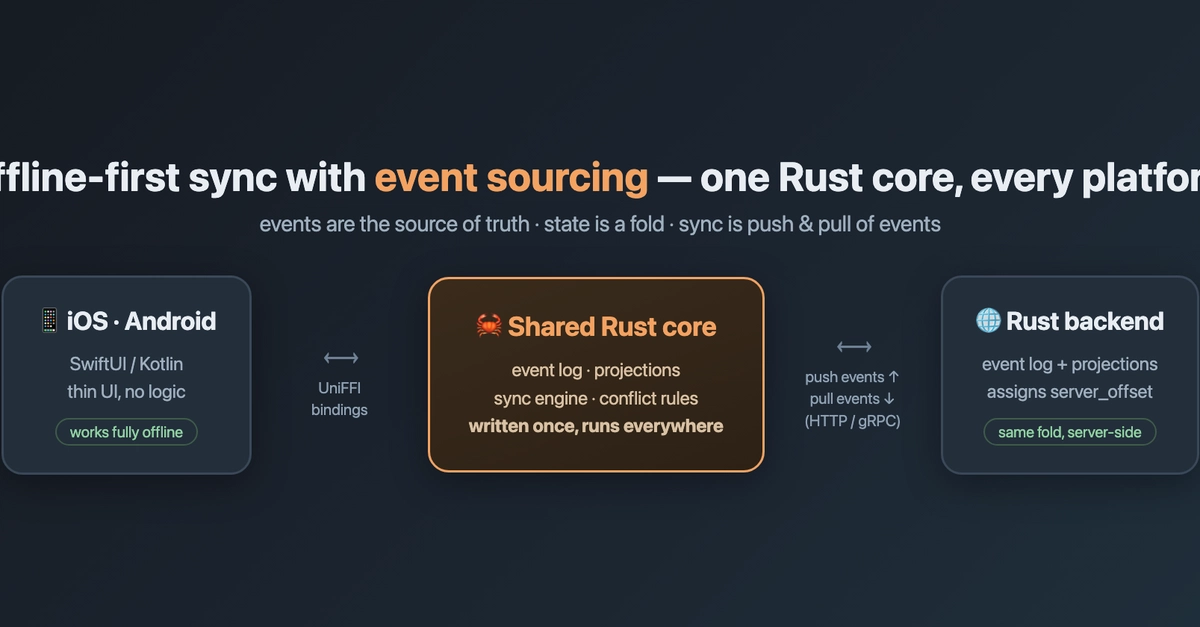
First, the setup — because it explains all the Rust in this post. The app I built this for is TrainVision, a mobile-first platform for collecting machine-learning training data out in the real world (where reliable connectivity is often exactly what you don't have). Its core is written in Rust and shared across iOS and Android via UniFFI: the models, the sync, the business rules are written once in Rust and compiled into a native library both phones call through generated Swift and Kotlin bindings. The backend is Rust too, so the same code runs there. Storage is SQLite on the device and Postgres on the backend. That shared-Rust core is half of what this post is about, event sourcing is the other half — and the two turn out to fit together beautifully for offline sync.
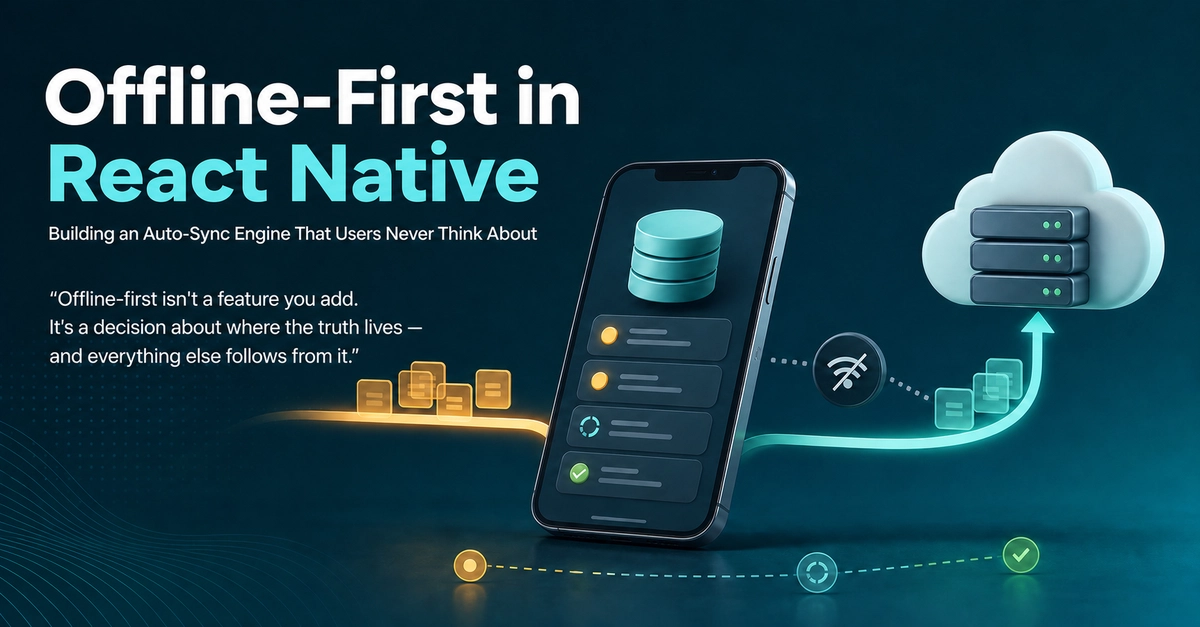
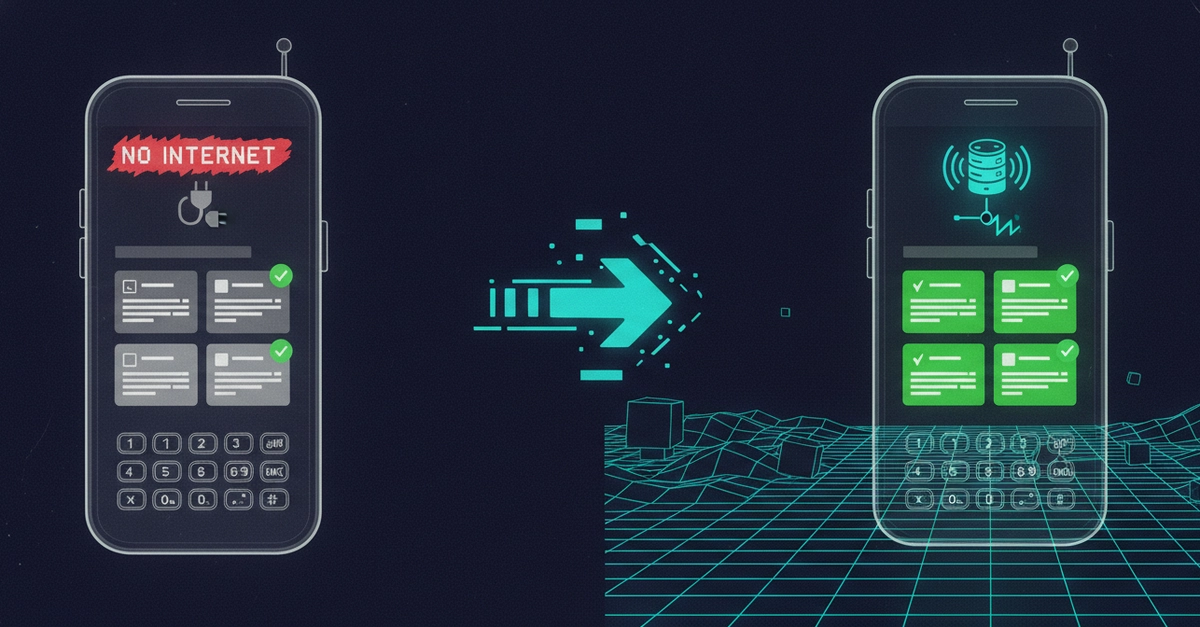
Now the actual problem. I needed an app that works with no internet. Not "degrades gracefully" — genuinely works: you're in a field, a factory, a basement, you capture data all day, and it syncs whenever a connection comes back. Sometimes there's good signal, often it's weak, sometimes there's none at all — the point of offline-first is that the app never assumes the network is there. Connectivity is a nice bonus when it shows up, not something the app leans on.