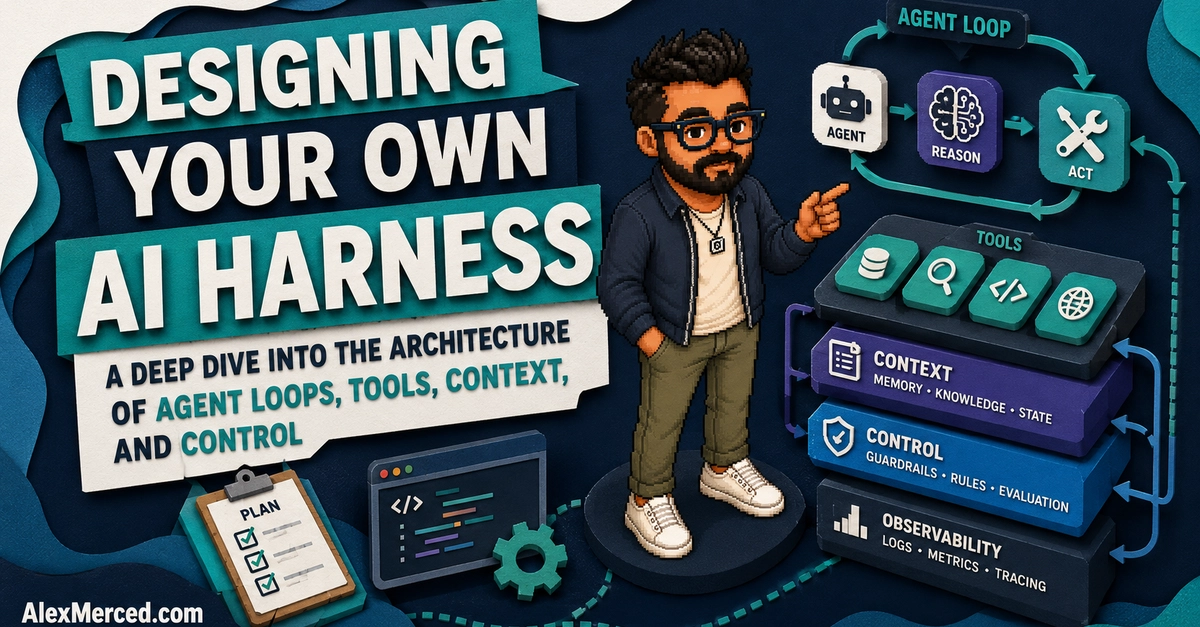
The most underappreciated finding in applied AI this year fits in one statistic: a major framework team took the same model, changed nothing about it, rebuilt only the machinery around it, and watched their score on a leading agent benchmark jump from the low fifties to the mid sixties, vaulting from the middle of the pack into the top five. No new model. No fine-tuning. Just a better harness.
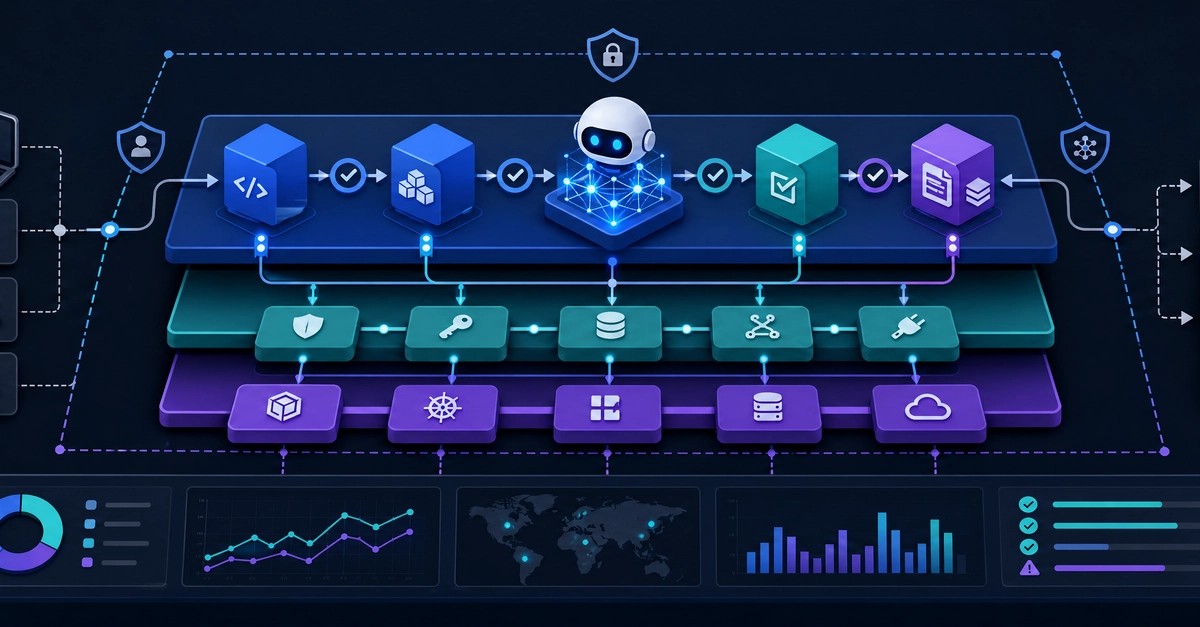
The harness, the loop, tools, context management, permissions, and persistence wrapped around a language model, is where agents are actually engineered, and while most people will rightly use the excellent commercial and open harnesses that now exist, a growing population needs to build their own: product teams embedding agents into applications, platform teams needing control the packaged tools will not cede, researchers who need to see every token, and engineers who simply refuse to operate machinery they do not understand, a camp I have deep sympathy for. For all of them, and for anyone who wants to understand what their off-the-shelf agent is actually doing, this article is the deep dive: the anatomy of a harness component by component, the architectural decisions at each layer with their honest trade-offs, the hard-won patterns, progressive context compaction, permission matrices, filesystem-first tools, budget enforcement, that separate production harnesses from weekend demos, and a staged path from a hundred-line loop to a system you can trust unattended. My biases declared: I work at Dremio, whose MCP server is one of the governed endpoints a well-built harness might call, and my daily drivers are commercial harnesses whose design choices I will reference as evidence throughout, because the best public teachers of harness design are the tools that won.