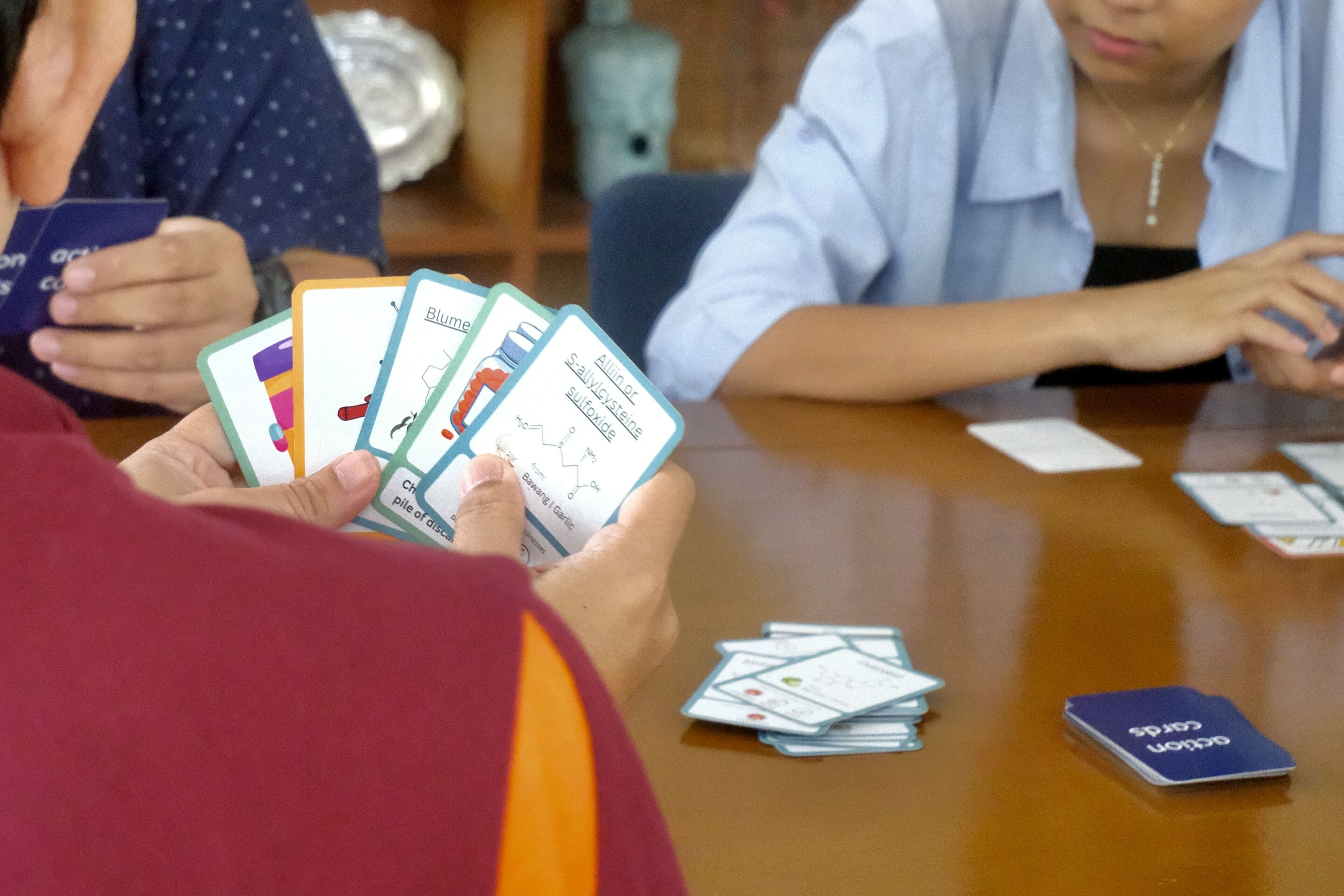
Herbularyo gets players acquainted with both organic chemistry and traditional Filipino medicine in as little as five to ten minutes of gameplay. The scientifically-grounded traditional Filipino remedies found in the game are based on real research from the Philippine Institute of Traditional and Alternative Health Care (PITAHC). Credit: Ateneo de Manila University
Medicinal plants have long been a cornerstone of Philippine traditional medicine, dating back generations. Tawa-tawa, a low-growing herb that thrives in open grasslands, is a valued supplementary treatment for dengue; the gel of the succulent aloe vera can help soothe a scraped knee; boiled guava leaves help disinfect wounds; tea from yerba buena helps relieve minor aches and pains; and ampalaya helps manage diabetes.
These and many other medicinal plants have long been a part of the albularyo's (Filipino folk healer's) toolkit, their value and use passed down through oral traditions. Rooted as they are in word of mouth, it's a surprise to many that Filipino folk medicine is grounded in hard science.
The remedies are familiar. The chemistry behind them, less so.
Researchers from the Ateneo de Manila University Department of Chemistry and Health Sciences Program are addressing this gap by bringing Filipino medical herbal traditions into the science classroom via the educational card game Herbularyo. Their study is published in the Journal of Chemical Education.