Disclosure: I build Schemity, a desktop ERD tool - this post is from our blog and uses it for the examples.
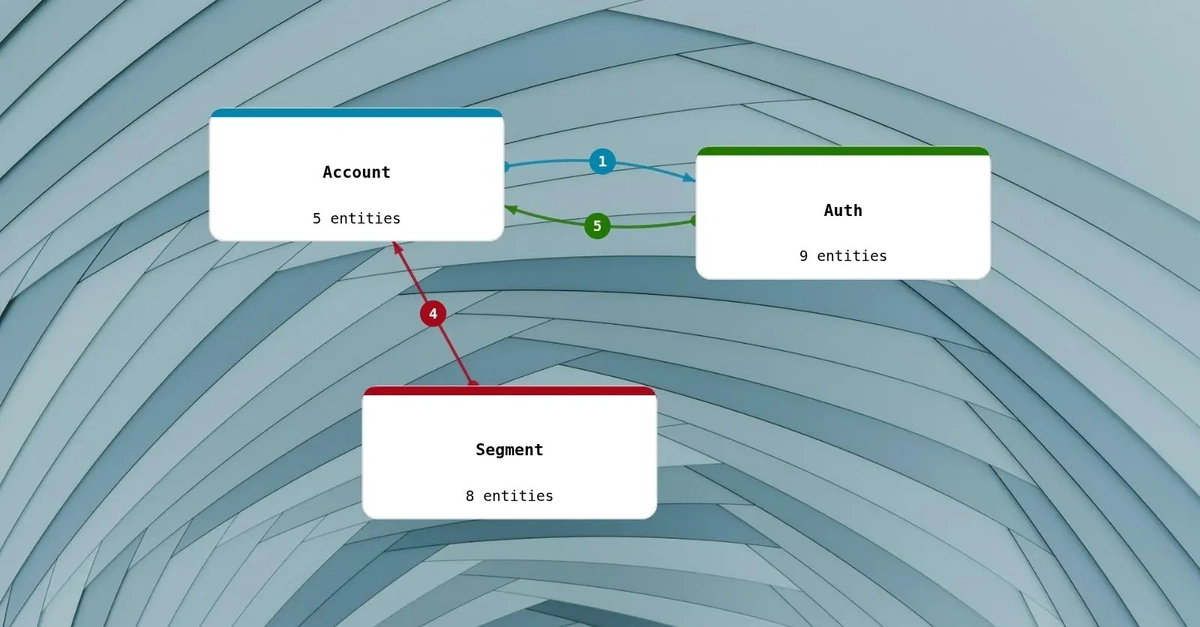
TL;DR: Coupling and cohesion are questions at two different scales, and one diagram cannot answer both. Schemity's main view shows the cross-context edges that measure coupling; its context views isolate one domain to judge cohesion.
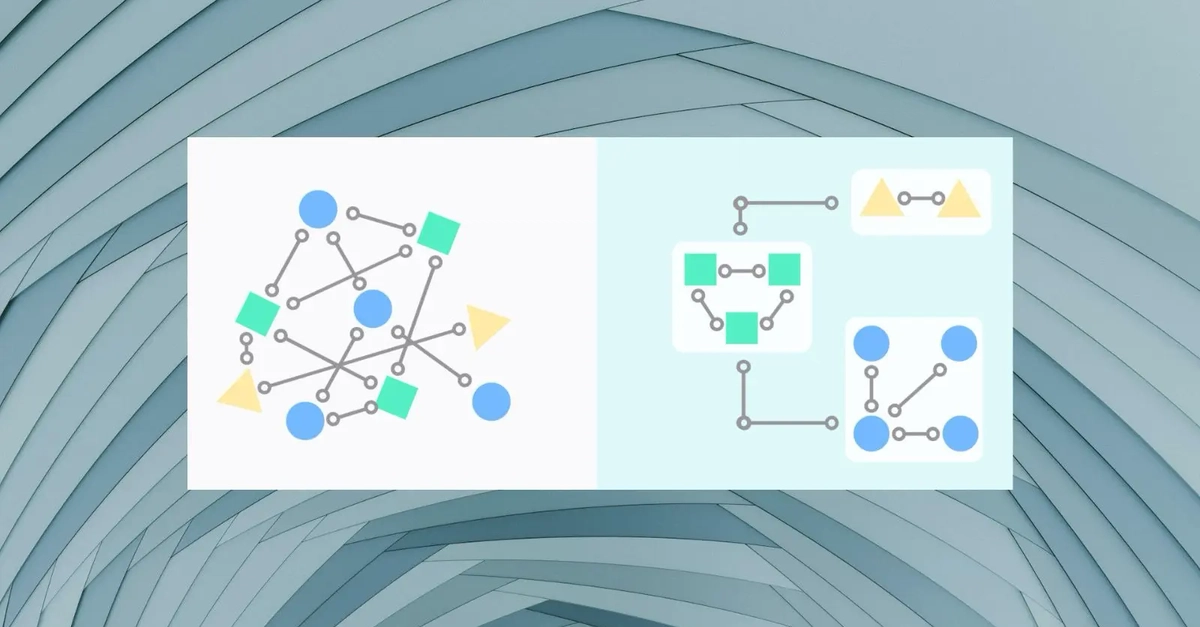
Every engineer can recite the goal: low coupling, high cohesion. Fewer dependencies between modules, more relatedness inside each one. We say it so often that it sounds like one rule. It is two, and they live at two different scopes. Judging coupling takes a whole-schema main view; judging cohesion takes an isolated context view - two questions, two diagrams.
Coupling is a property of the boundaries. It is about what crosses between modules. Cohesion is a property of the interior. It is about whether the things inside a module belong together. A diagram that is good at showing one is usually bad at showing the other, because the scope you need to see is different. To judge coupling you zoom out until the boundaries are visible. To judge cohesion you zoom in until a single module fills the frame and nothing else competes for attention.
This is why I gave Schemity two kinds of view, and why I keep using my own auth schema as the example.