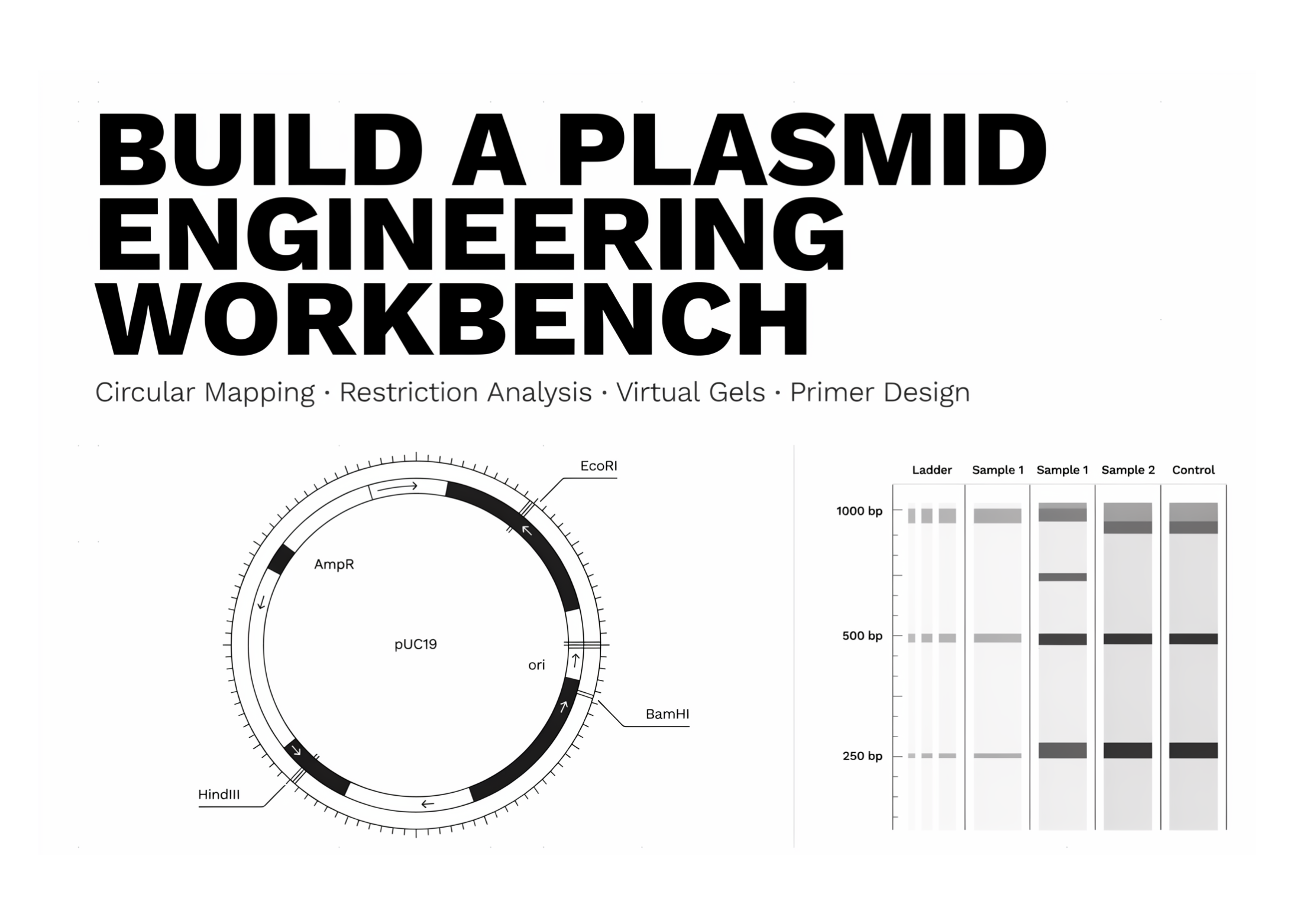
In this tutorial, we build a Google Colab-native plasmid workbench that recreates the core ideas of SpliceCraft inside an interactive notebook environment. Instead of relying on a terminal-based TUI, we use Biopython, NumPy, and Matplotlib to load plasmid records, normalize annotated genomic features, render circular and linear plasmid maps, compute sequence statistics, analyze restriction enzyme cut sites, simulate virtual digests, scan open reading frames, translate CDS features, design primers, and apply sequence edits programmatically. We begin with a synthetic offline plasmid so the workflow runs reliably without external dependencies, while still supporting optional NCBI GenBank fetching and local GenBank uploads.
try:
import Bio
except ImportError:
import subprocess, sys