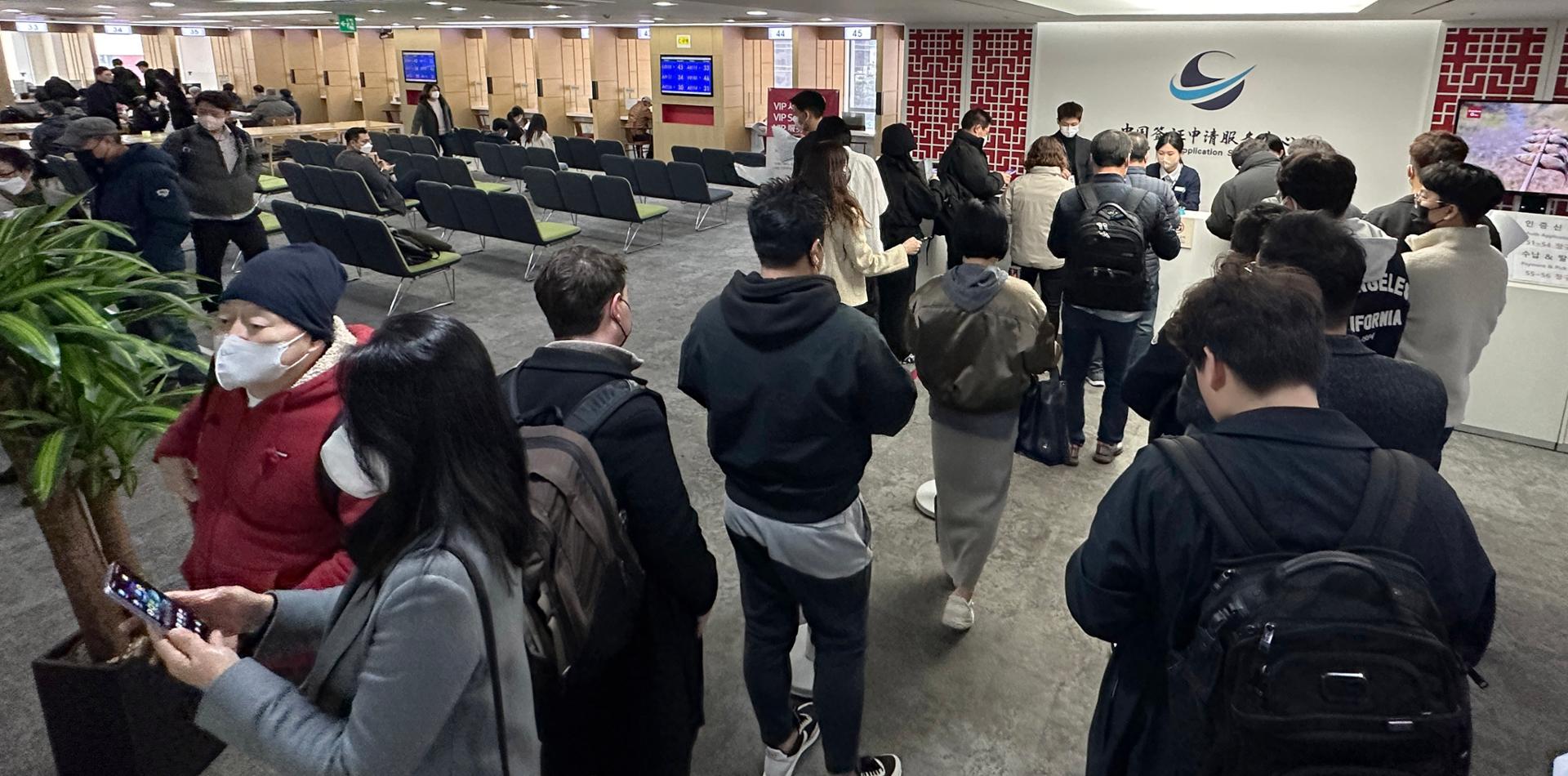
Two people relax next to the Cheonggyecheon in Seoul on July 13. (Yonhap) South Korea is developing a reputation as a desirable destination for foreign tourists and long-term residents alike. As of 2025, both the number of foreign nationals in the country and the number of long-term foreign residents had reached all-time highs, at 2.78 million and 2.04 million, respectively.There are several steps one must take to acquire legal residency in the country, ranging from applying for a residence card to obtaining the correct type of visa.This article will go over some of the steps required for foreigners seeking long-term residence in Korea.Resident registrationA long-term stay is generally defined as one exceeding 90 days.Nationals of 112 countries can enter Korea without a visa, according to a list available in Korean on the website of the Ministry of Foreign Affairs. They can stay for up to 30 to 90 days, depending on their nationality.Foreign nationals aged 17 or older who plan to stay for more than 90 days must obtain a residence card, which was called an alien registration card until January 2021.While a residence card is not required for those under 17, they must still be registered with the authorities by a family member. Those who turn 17 while staying in Korea must apply for the card within 90 days of their 17th birthday.To register as a foreign resident, applicants can visit their local immigration office after making an appointment through the Hi Korea website. The application form can also be downloaded from the websites of schools, district offices or Work in Korea, operated by the government-affiliated Korea Labor and Employment Service.Applicants also need a passport, a passport photo, and other documents depending on their status of stay. The fee is 30,000 won ($20). Workers need an employment contract and documents related to their income and employment status, while students need documents confirming their tuition payment and enrollment.Those wishing to remain in Korea beyond the permitted period of stay must apply for an extension before the current period expires.Registered foreigners seeking an extension can apply at the immigration office with jurisdiction over their registered address or apply online through Hi Korea. The website also provides information on how to file petitions and submit visa applications.Foreign nationals are generally required to return their residence cards when permanently leaving Korea. This does not apply when they have received authorization to leave the country temporarily and return.Keep in mind that changing to a long-term status of stay is generally restricted for most foreigners who entered Korea on a C-3 short-term visit visa or without a visa. Exceptions are granted only in rare cases, such as those involving compelling humanitarian circumstances.A residence card is one of the main forms of identification for foreign nationals, alongside a passport. It can be used in place of a Korean resident registration card for many administrative and legal procedures and serves as proof of a foreign national’s legal status in the country.Cardholders should not lend their residence cards to others or allow anyone else to use them.Since January 2025, foreign residents have also been able to apply for a mobile residence card, which has the same legal validity as the physical card.More information on visas, extensions of stay, proof of legal status and other services for migrant workers, marriage migrants and international students is available through the government-run Service for Foreigners website. A woman shops for hair products at a store in Seoul on July 12. (Yonhap)
How to make your long-term stay in Korea official
South Korea is developing a reputation as a desirable destination for foreign tourists and long-term residents alike. As of 2025, both the number of foreign nat
579 words~3 min read