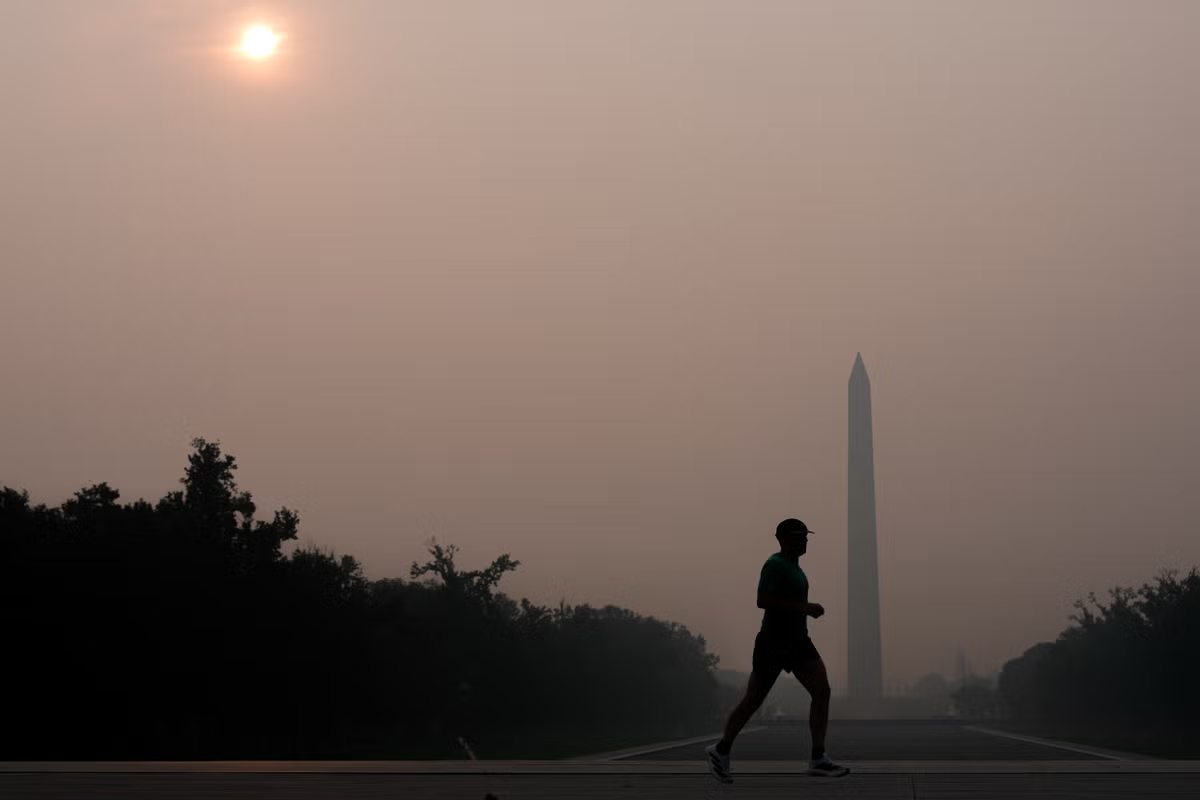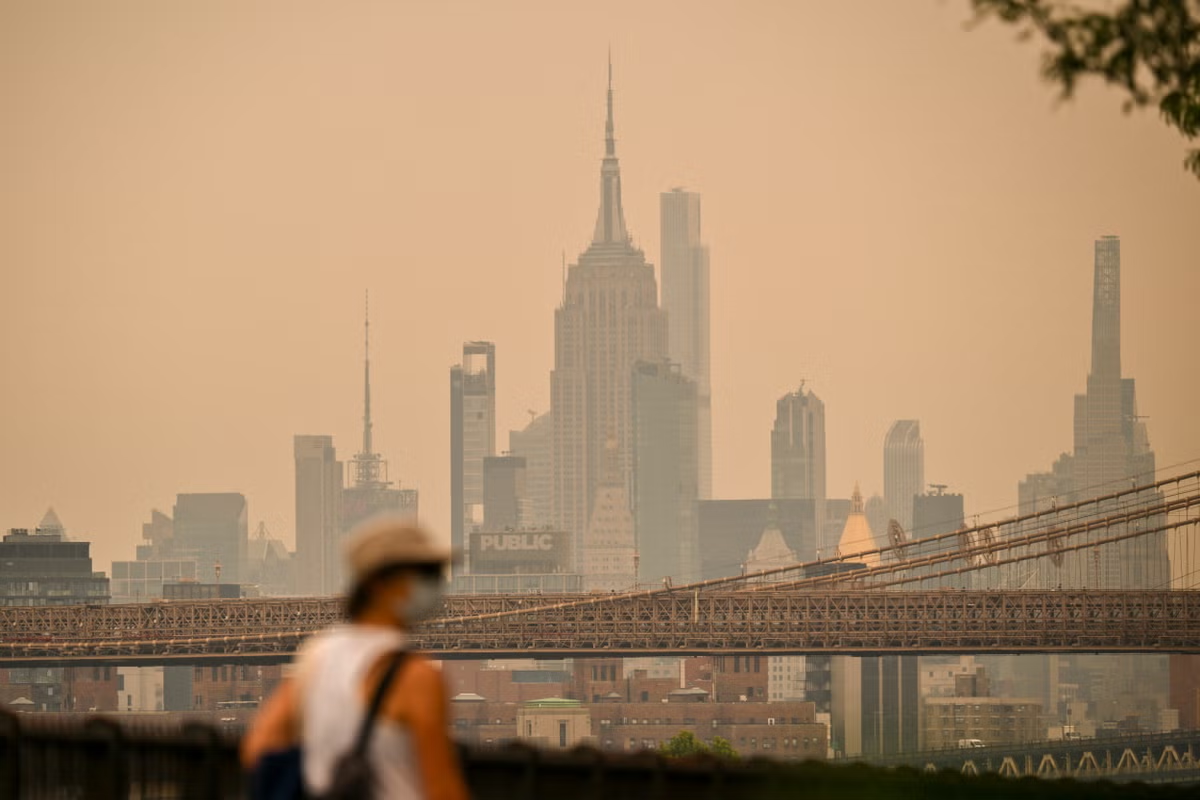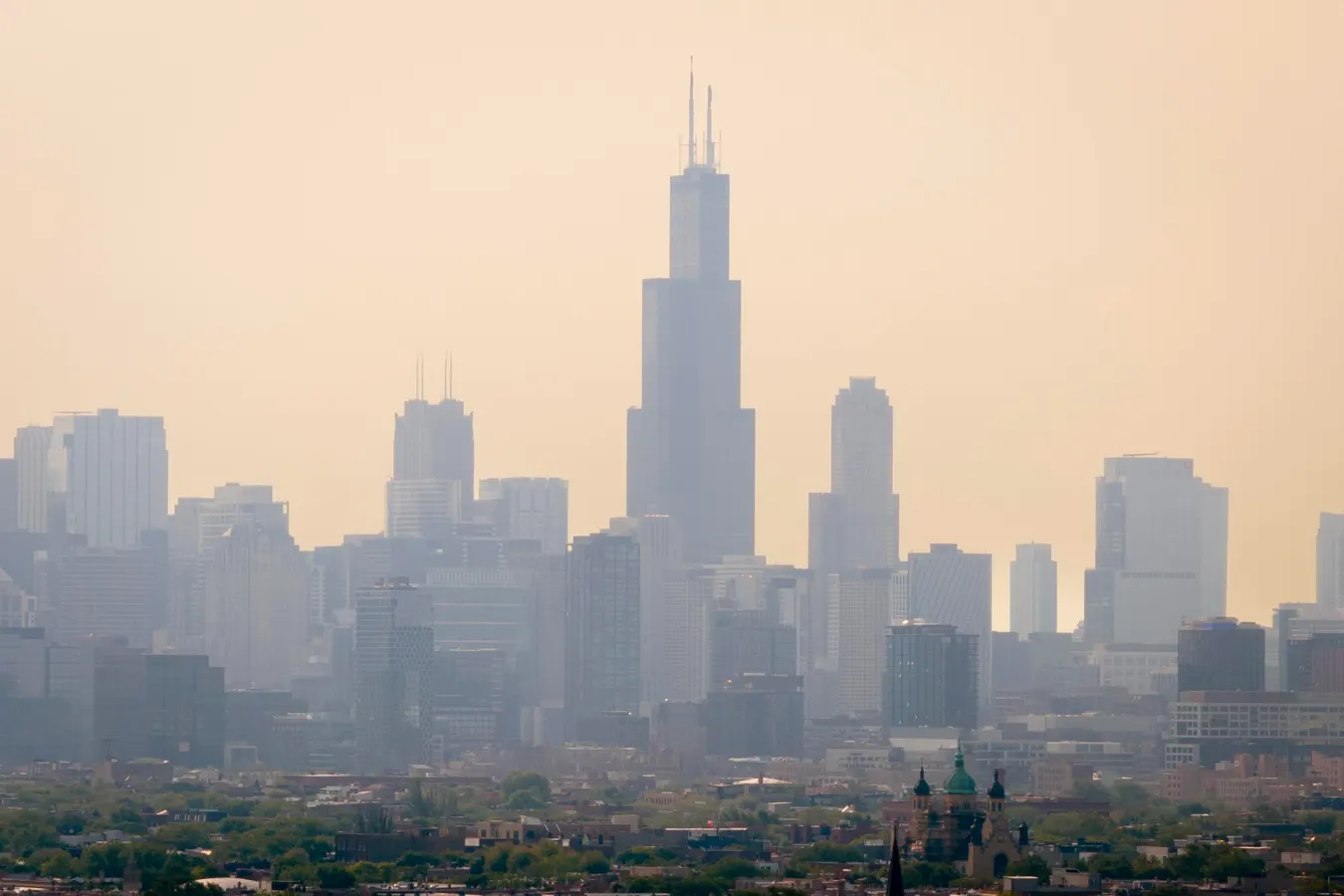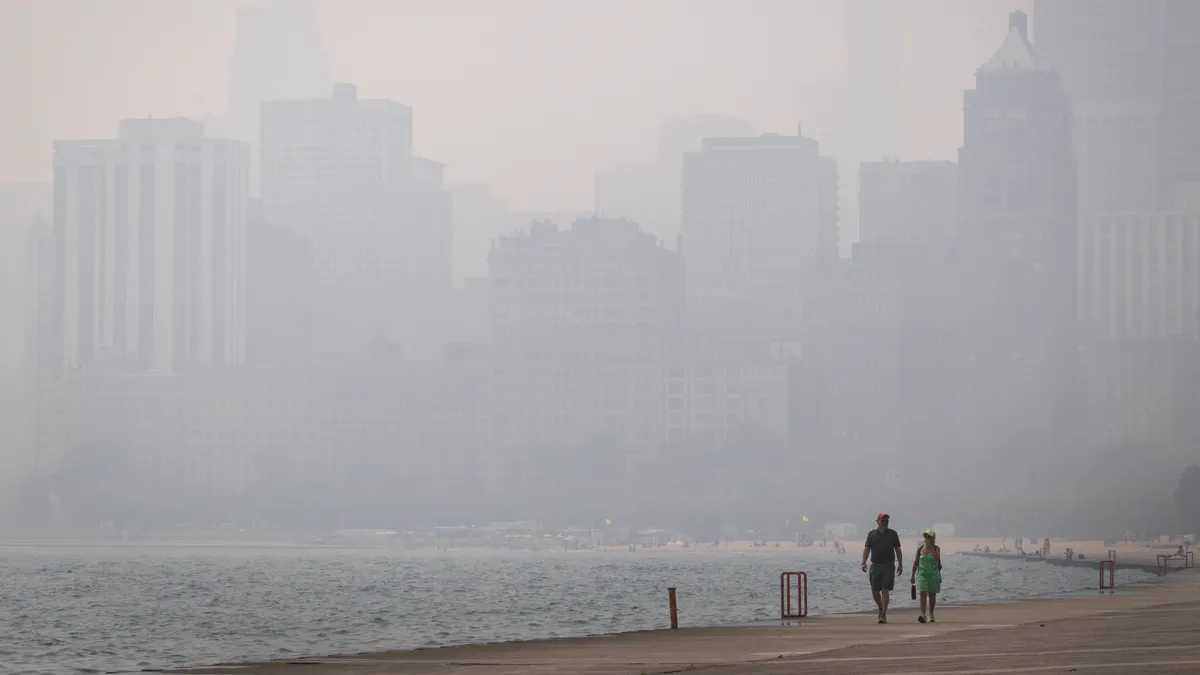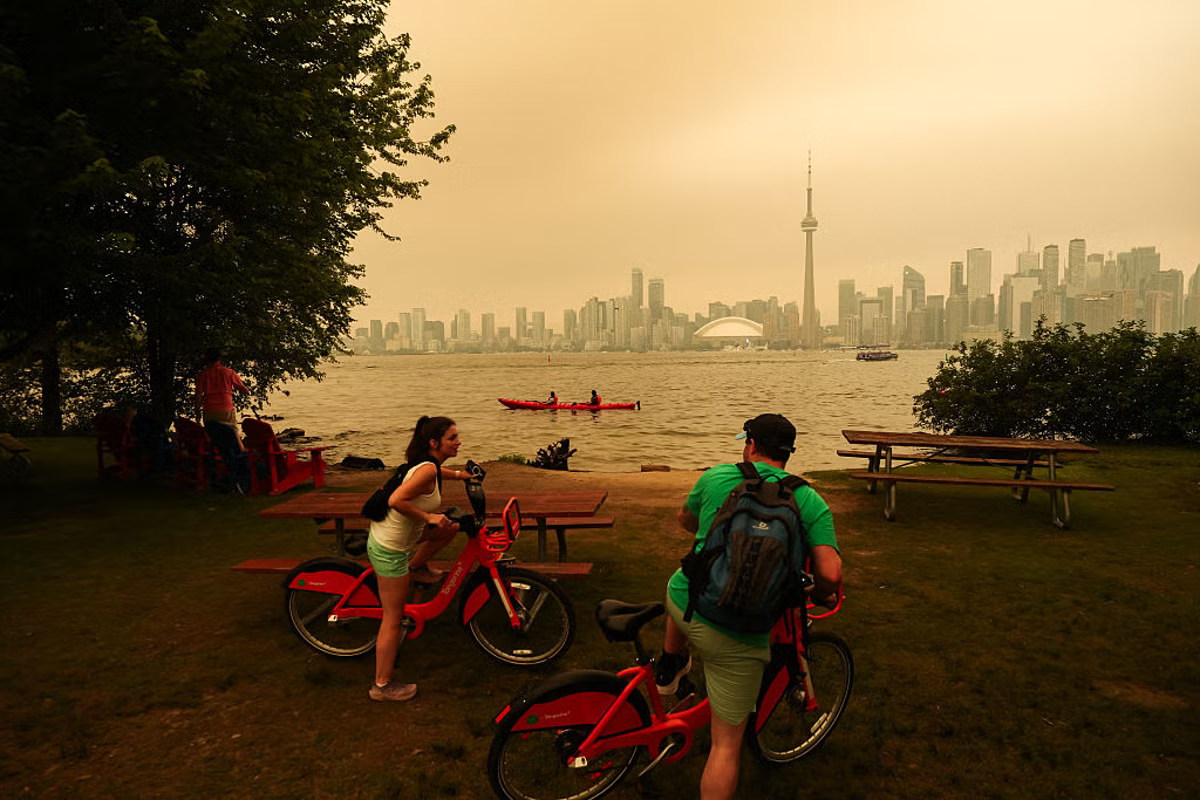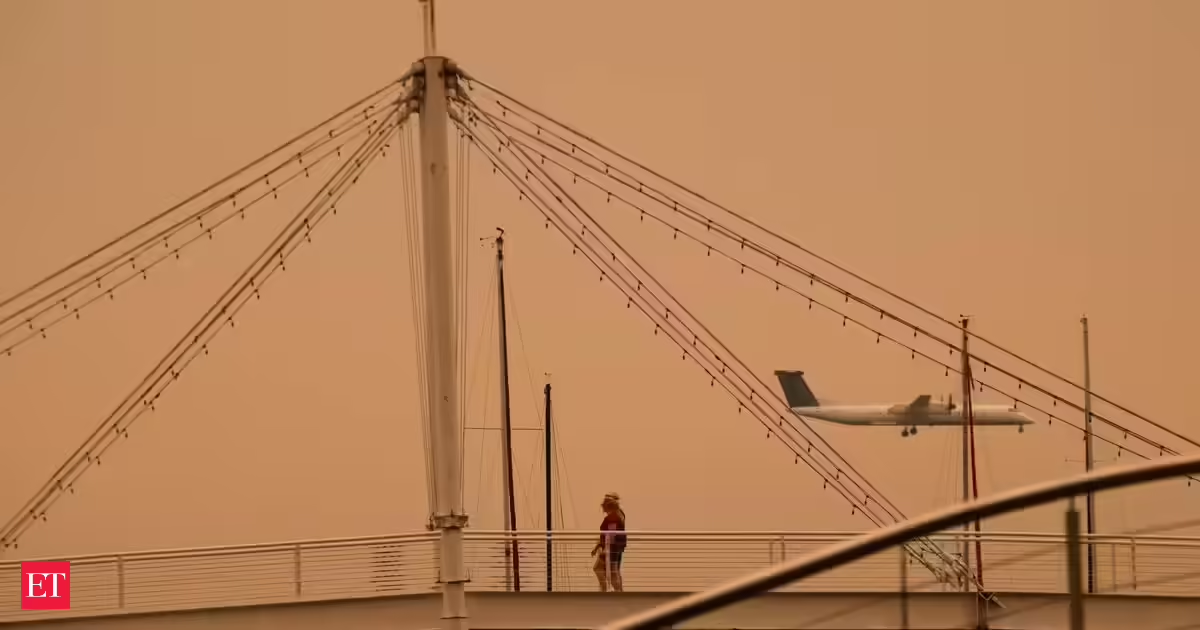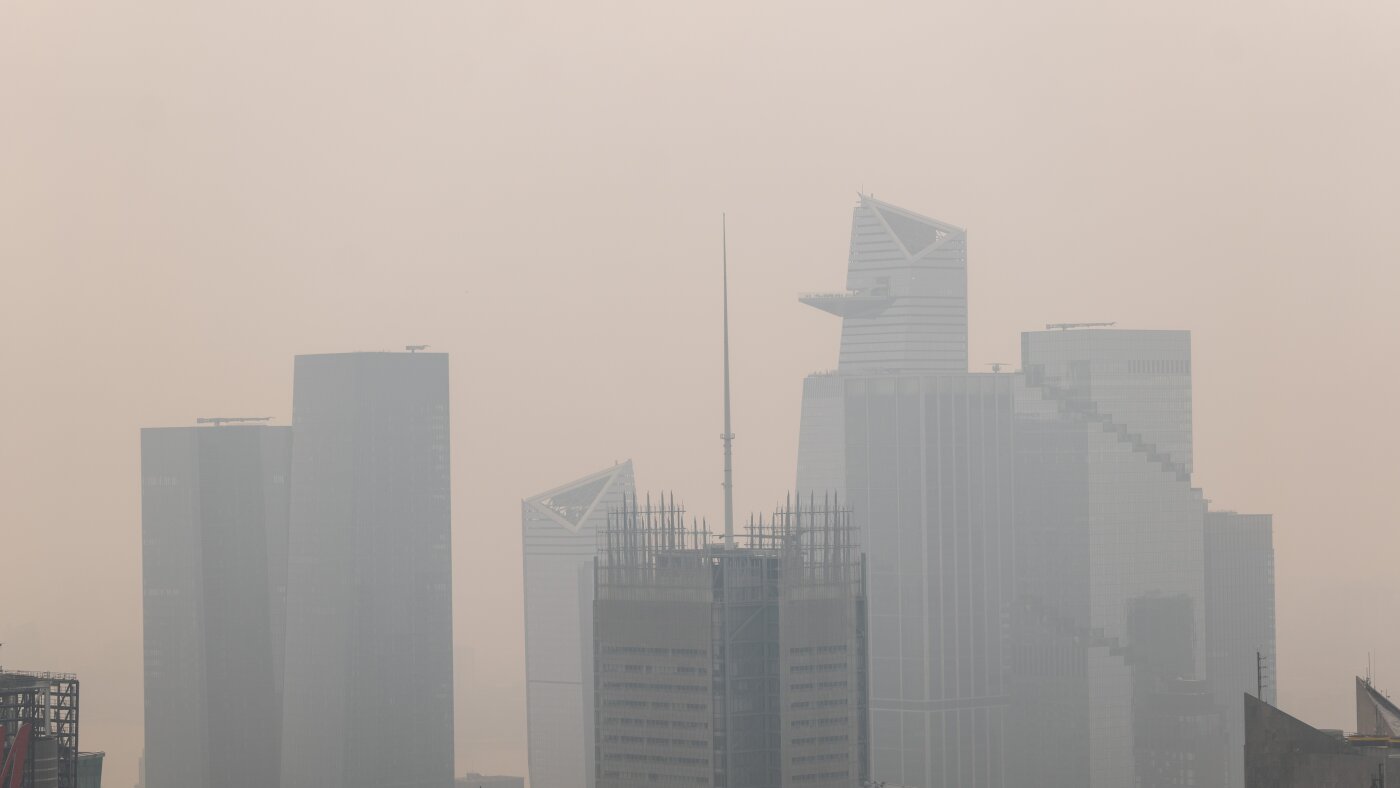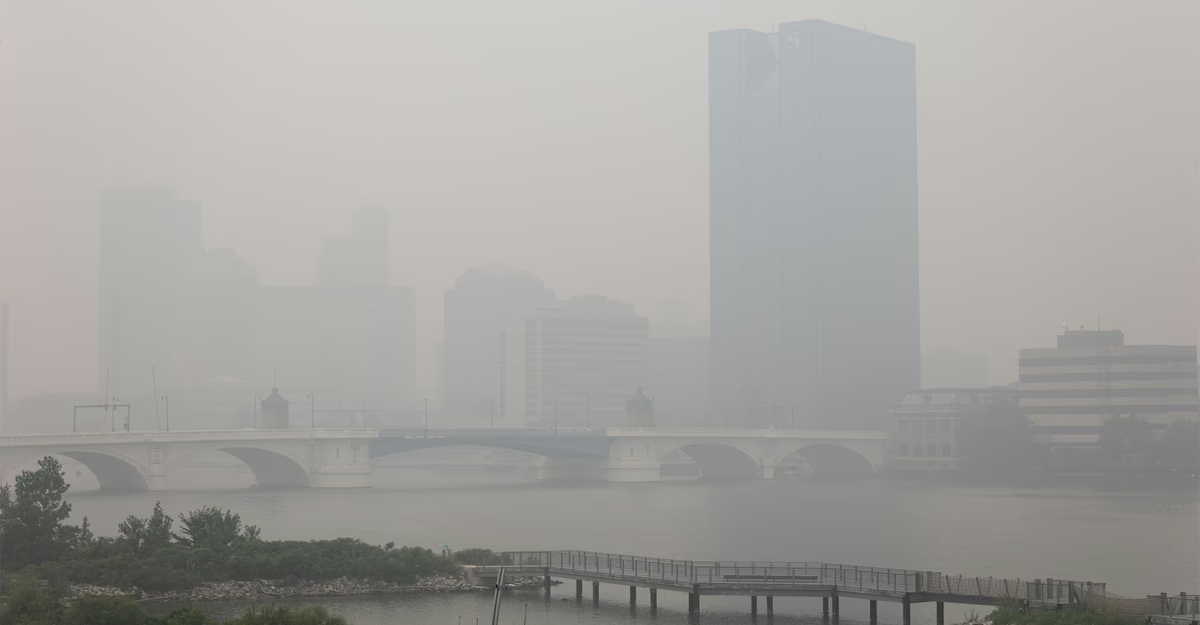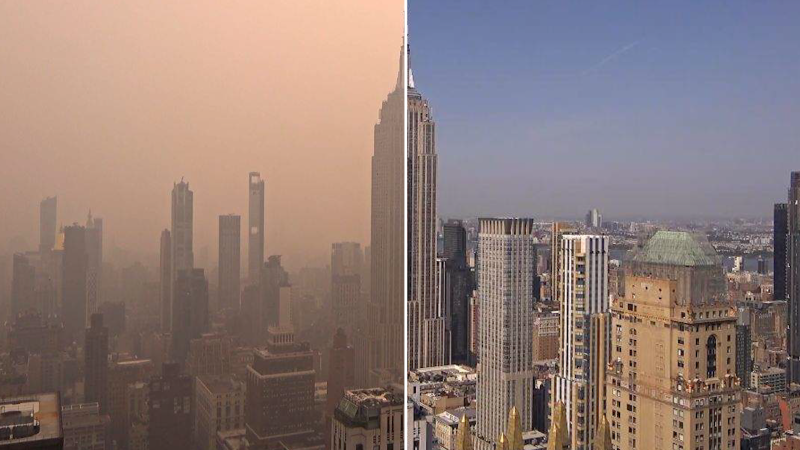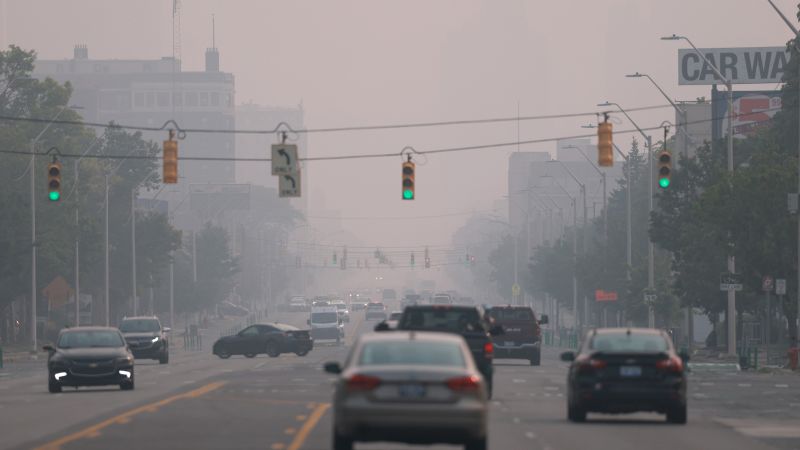
Wildfires are expected to bring unhealthy air to more than 120 million people this weekend, but the smoke and its toxic particles may not always be clearly visible. Some skylines are shrouded in obvious abnormal orange tinges with faint burnt odors. Other horizons may carry no visible indication that something is afoul in the atmosphere — but that doesn’t necessarily mean the air is safe.
“Just because it does look a little bit less brown and orange today doesn’t necessarily mean that the smoke’s not there,” said Dan Westervelt, an atmospheric scientist at Columbia University.
The visibility of smoke can be affected by several factors including the chemicals and particles it carries, how long the plume has been in the air, the weather and angle of the sun.
While the human eye can’t always perceive the danger, air quality monitors can accurately track the number of pollutants in our atmosphere. That’s why it’s important to follow local safety guidance — staying indoors, running air filters and wearing an N95 mask — even if everything looks clear.
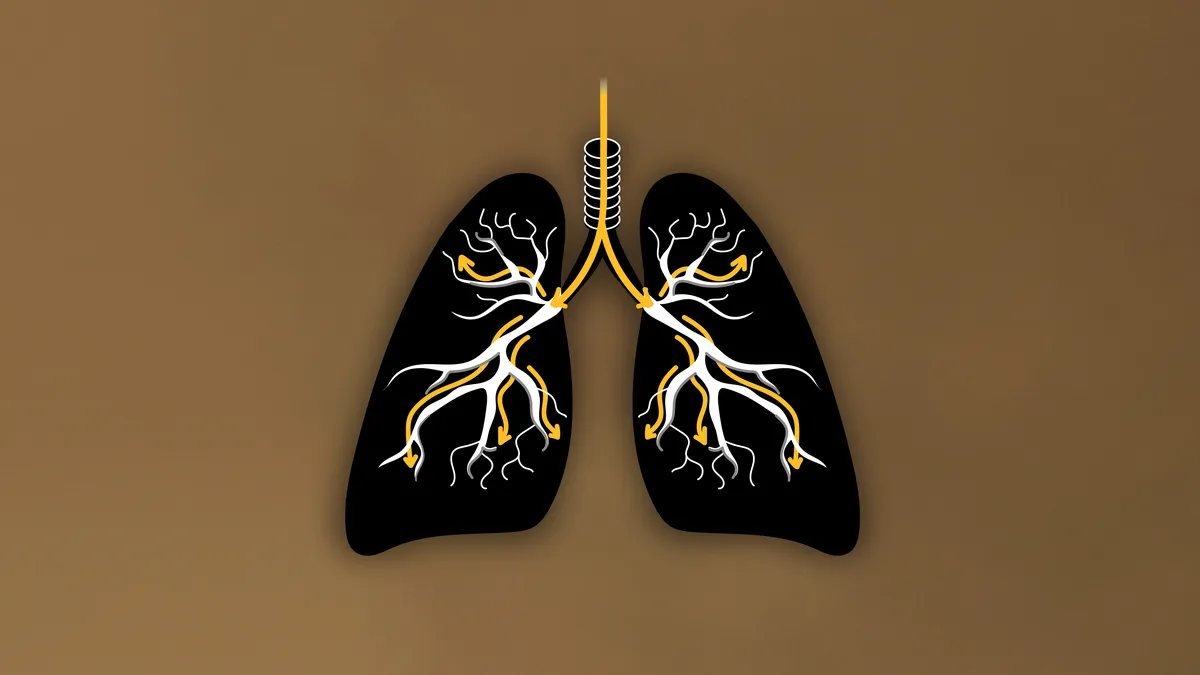
There’s more to wildfire smoke than meets the eye, scientists say, and what you can’t see can hurt you.