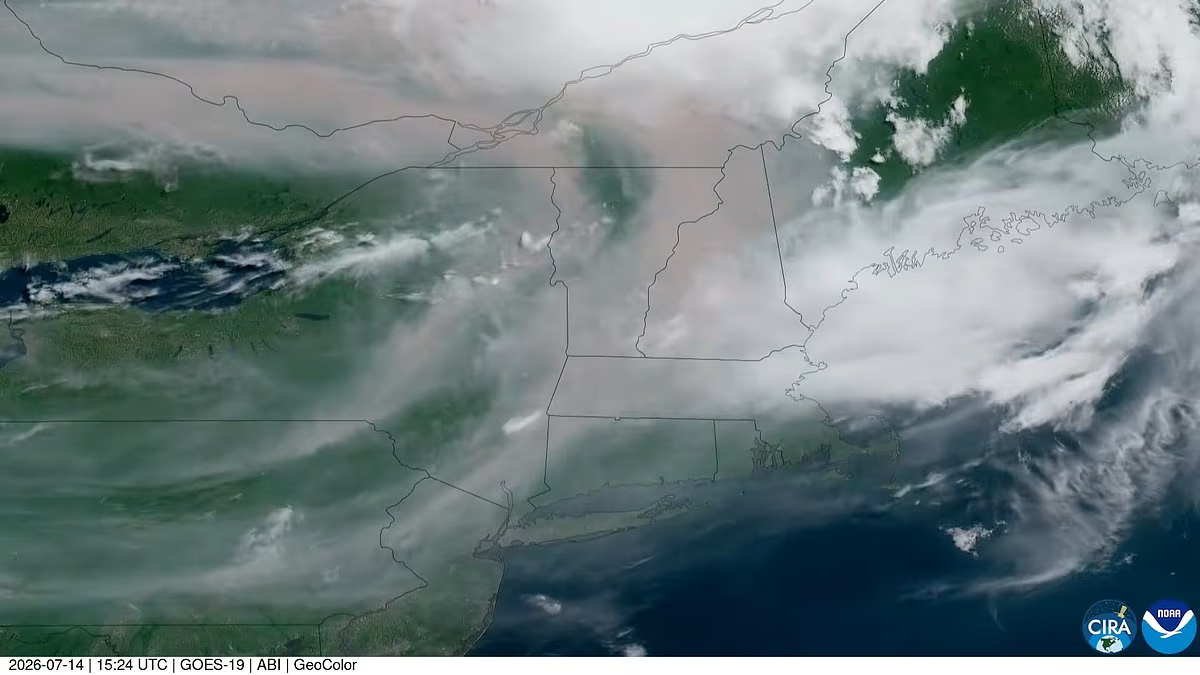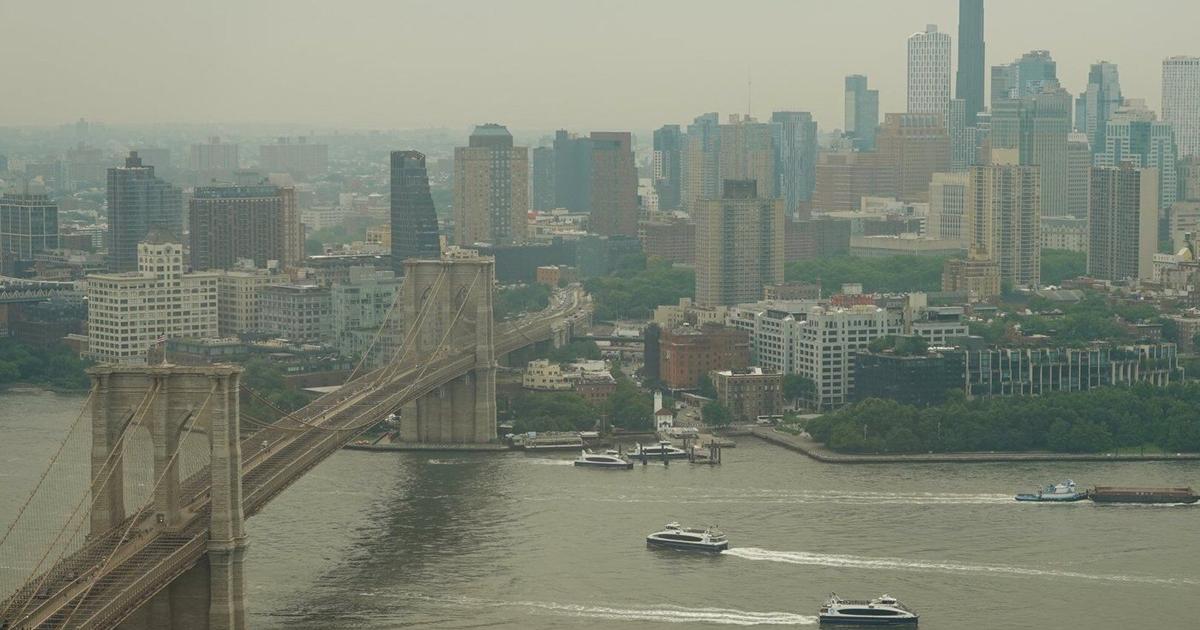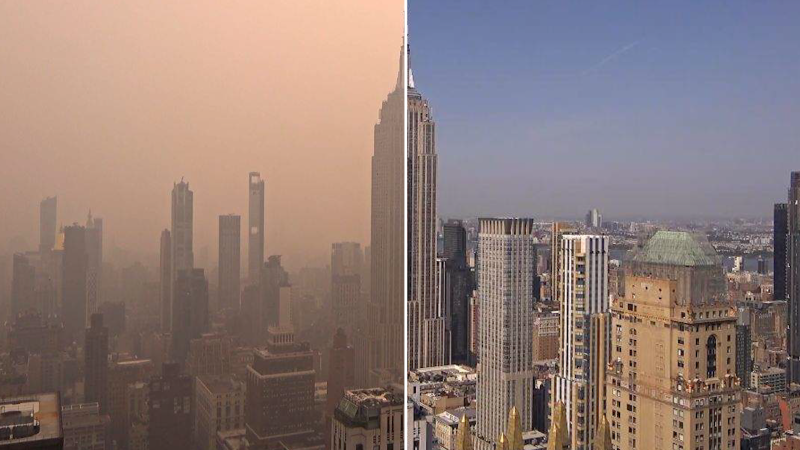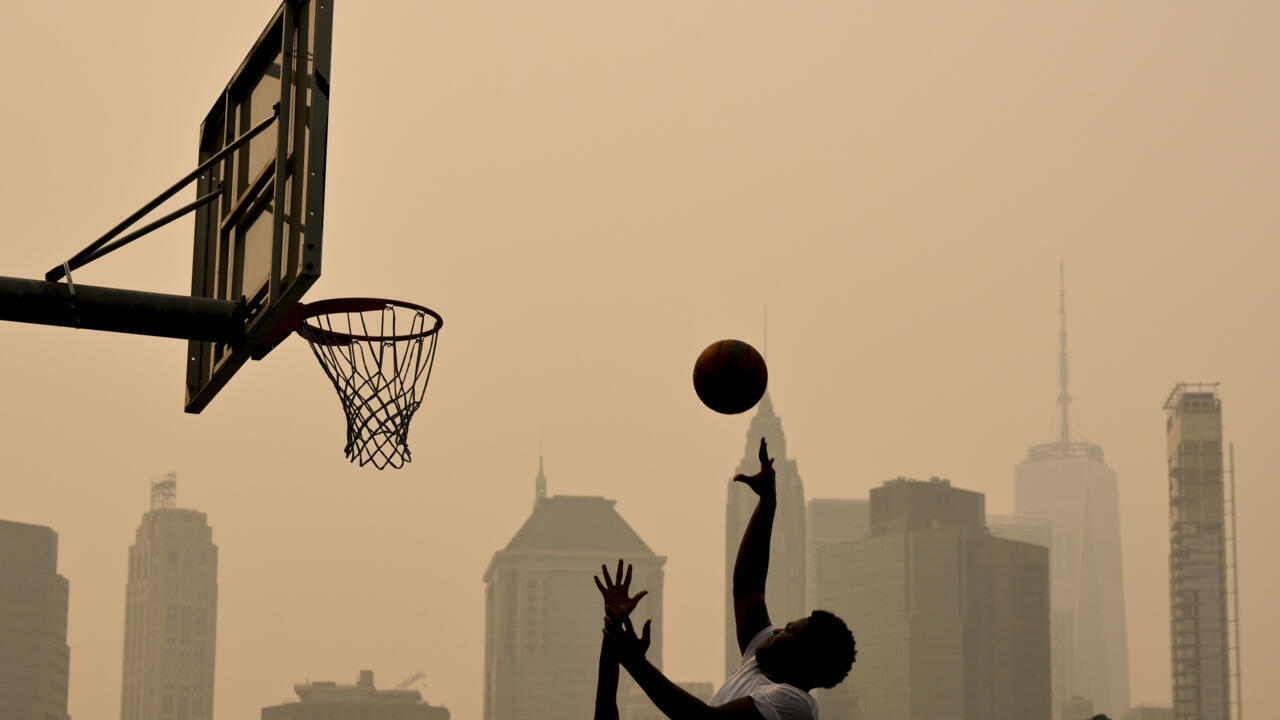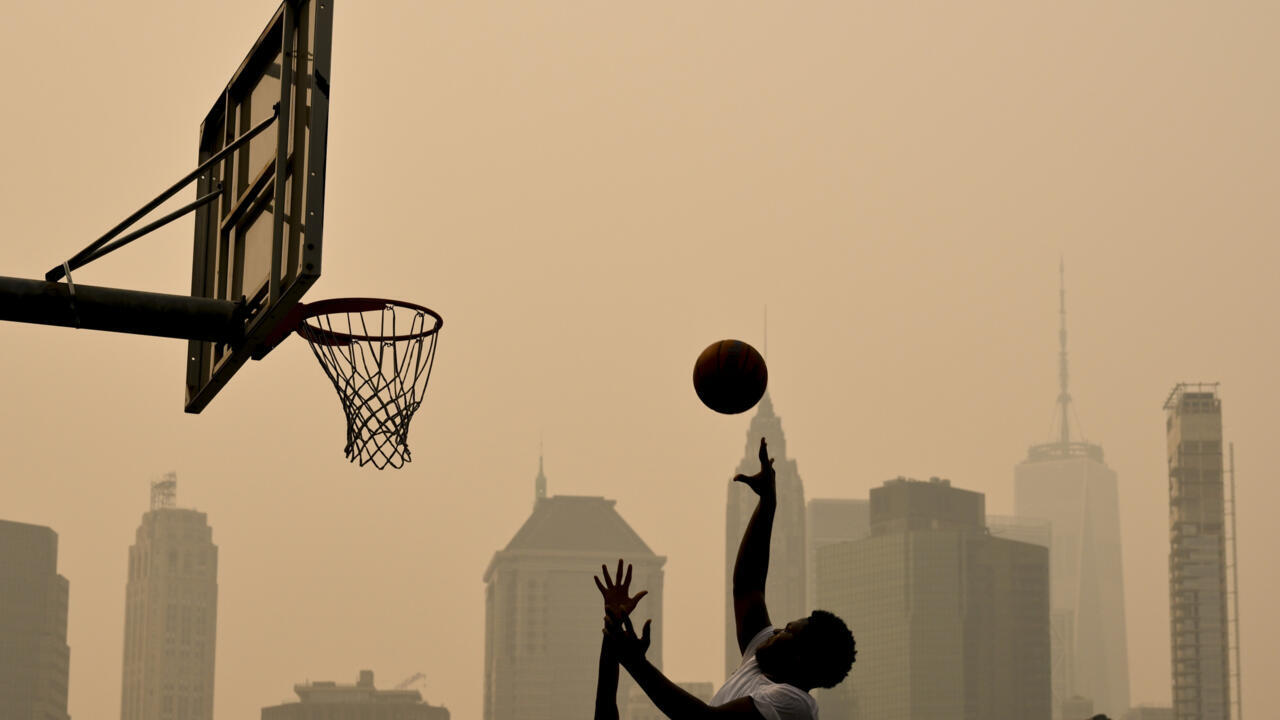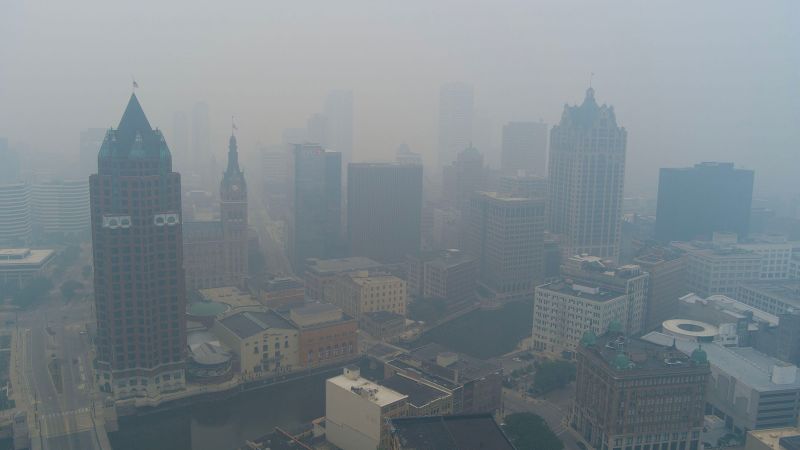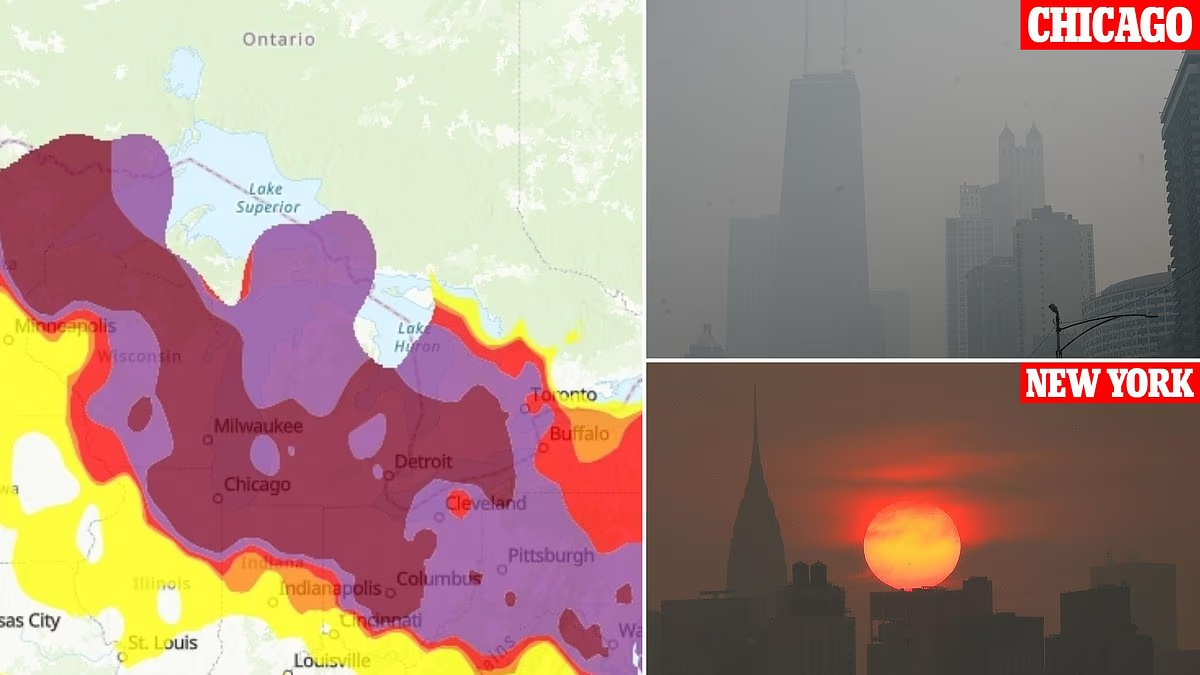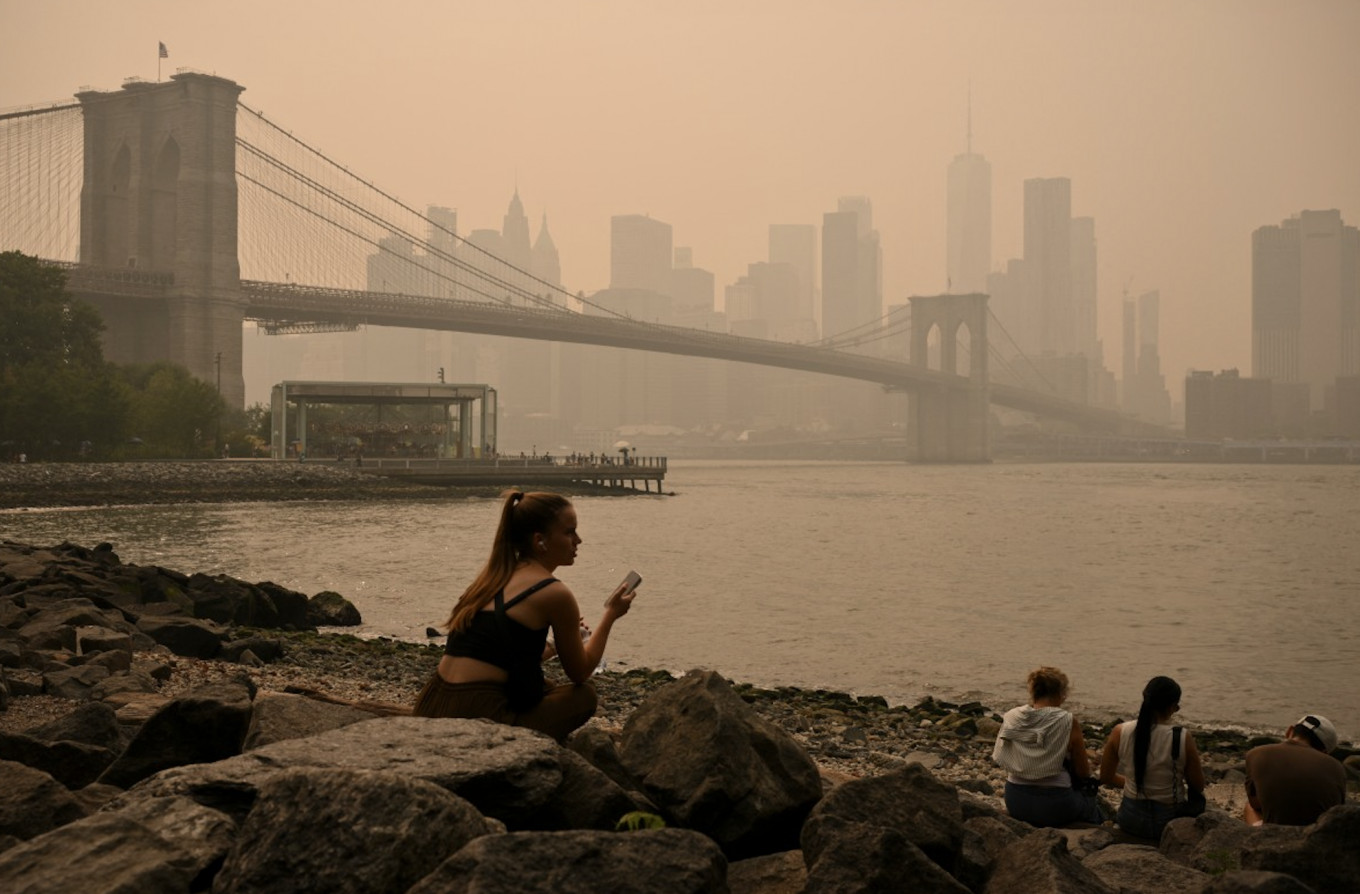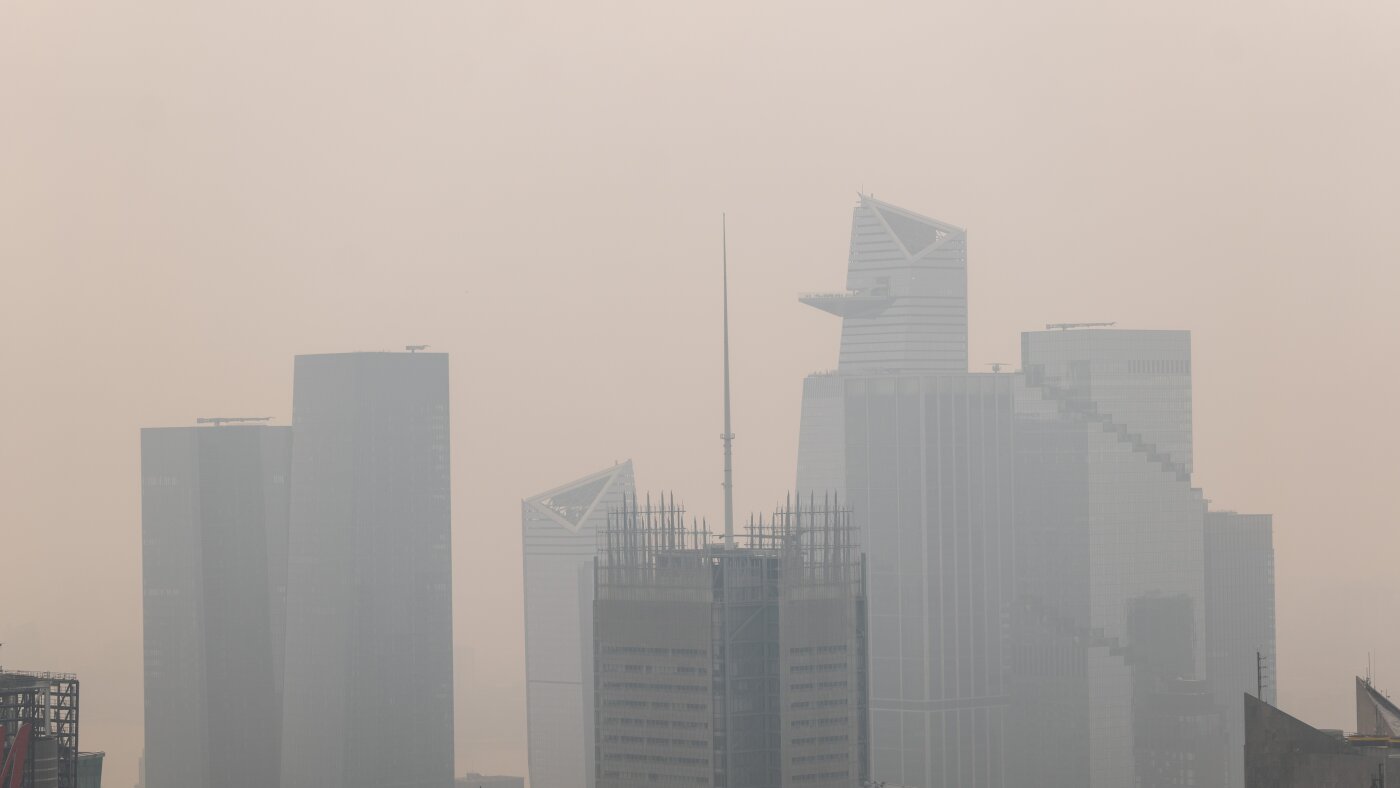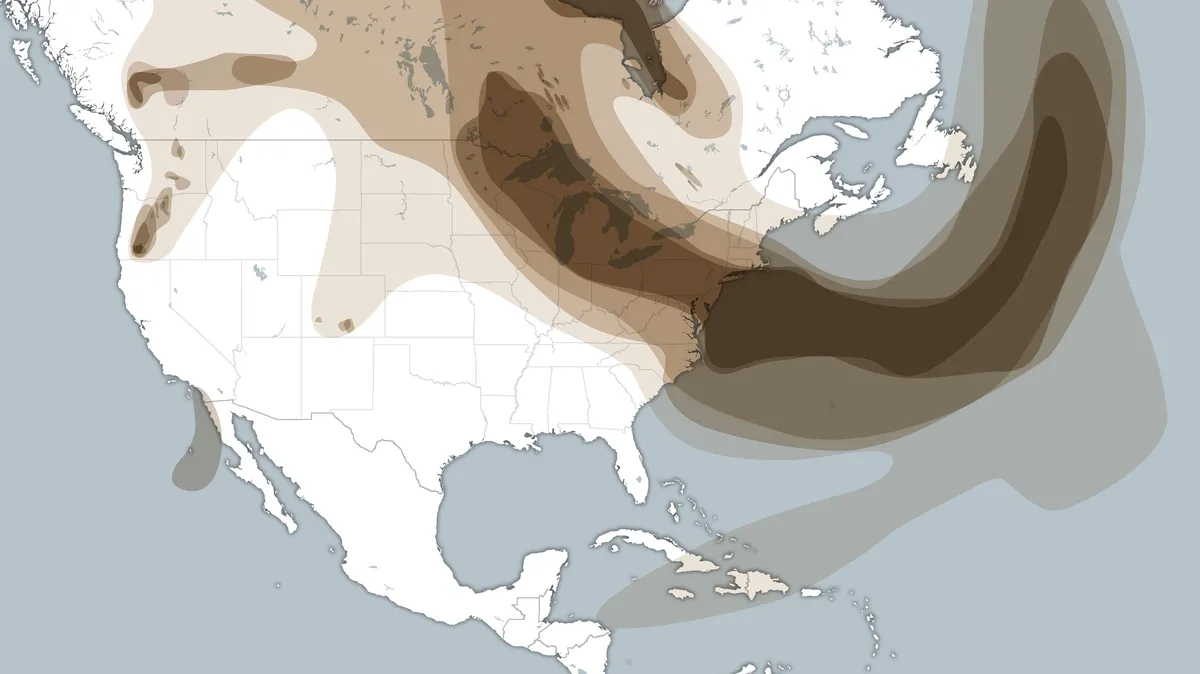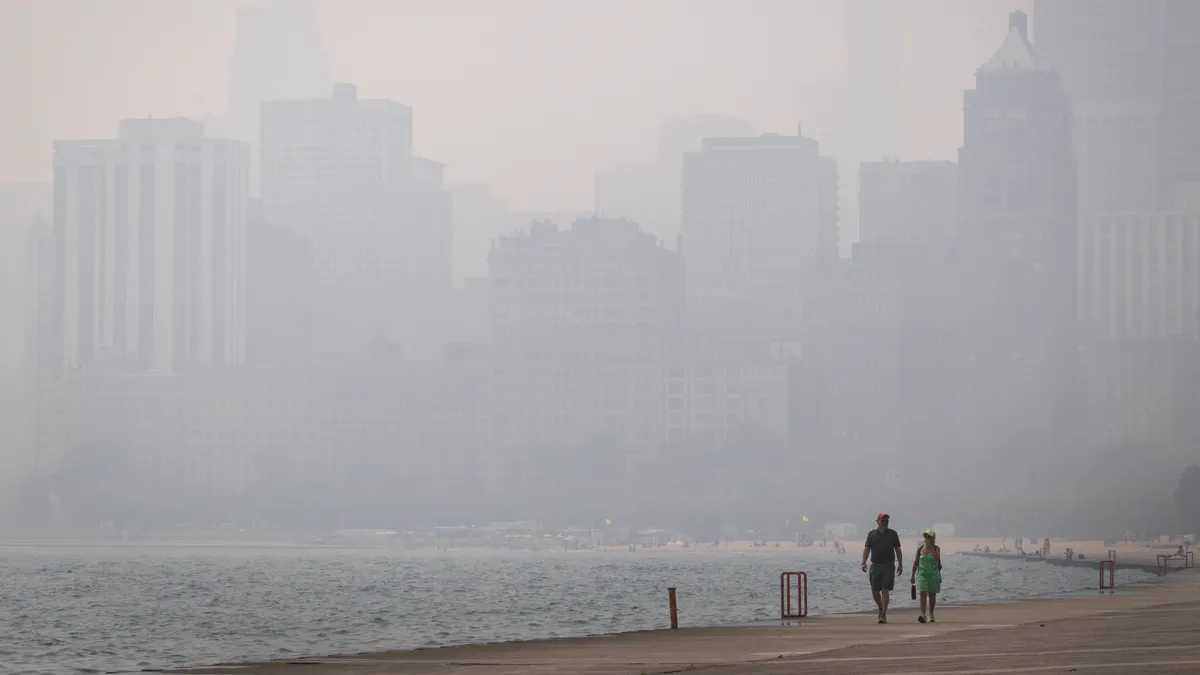
Along with dystopian views of Chicago or the World Cup final’s stadium, wildfire smoke is creating dangerous conditions for people to breathe.Toxic smoke from the Canadian wildfires is setting record levels of hazardous air in the eastern United States.On July 17, hazy skies were commonplace from Minnesota to Virginia as toxic smoke traveled hundreds of miles from Canada, where more than 800 wildfires have been burning. But in addition to dystopian views of Chicago’s skyline or the World Cup final’s stadium in New Jersey, wildfire smoke is creating dangerous conditions as tiny particles enter people's lungs and bloodstream, triggering both short- and long-term health effects.“Unfortunately, the levels − at least where I am − are bad for everyone, regardless of whether you have underlying conditions or not,” Dr. Santina Wheat, program director of the McGaw Northwestern Family Medicine Residency at Delnor hospital, near Chicago, said. “It can impact everyone as they’re breathing.”Air quality index reaches hazardous, unhealthy levelsAir quality indices, which measure fine particulate matter, the tiny pollutants emitted by wildfires, surpassed historic thresholds reached in 2023 during wildfires wafting from Quebec, Canada. In Cleveland, Dr. David Margolius, the city’s director of pubic health, said the local air quality index set a record July 16 of over 600, far beyond the hazardous threshold and nearly doubling the city’s record of over 300 in summer 2023. It’s the highest amount since records have been collected beginning in the 1970s, Margolius said. (Levels between 0 and 50 are considered good with no risk of pollution.)“It was predicted it would happen more in the future,” he said. “Here we are.”July 17 indices showed somewhat cleaner Cleveland air, but they were still near hazardous levels of around 300. In addition to Cleveland, Chicago, Detroit and Milwaukee also experienced record levels of hazardous air quality.Unlike areas long accustomed to wildfires in the western United States, the smoke has been reaching communities that considered themselves at low risk of wildfire, said Alistair Hayden, a professor of public and ecosystem health at Cornell University and a former division chief at the California Office of Emergency Services.Health effects from inhaling wildfire smokeBut the effects are sweeping, said Hayden, who has developed real-time mapping of mortality estimates from wildfire smoke. Hayden projected higher death levels in recent days in Chicago and Detroit, both of which have been engulfed by toxic air.Wildfire smoke has immediate issues such as triggering asthma and heart attacks that show up in emergency rooms, but it also poses longer term risks that are also life-threatening, according to the American Academy of Allergy, Asthma and Immunology.Kirsten Koehler, a professor of environmental health and engineering at Johns Hopkins University, said the tiny particles, smaller than the diameter of a human hair, can stay in the air for long periods of time and aren’t pulled down by gravity. The particles, when inhaled, enter a winding network of airways and get lodged deep inside a person’s lungs, Koehler said. The particles trigger inflammation and oxidative stress, which can harm cells in the body, causing a range of issues that have been linked to neurological damage and cancer.Initial signs of exposure can be irritated eyes, nose and throat, and it can turn into coughing, wheezing, headaches, tiredness and chest pain, according to the U.S. Centers for Disease Control and Prevention. People with underlying illnesses, such as heart disease and diabetes, can have more damage on their lungs and heart with increased effort trying to breathe. Those also at risk include older people and young children, whose bodies have to work harder for clean air and often have weakened immune systems.How to stay safe in wildfire smokeWildfire smoke can travel far, so check air quality, protect your home and be prepared to leave fast if fire danger grows.Steps to reduce exposure to wildfire smokeThere are steps people can take to reduce exposure, though.Wheat, the family medicine physician at Northwestern Medicine, said people should stay indoors if they can, especially if they have air conditioning during hot temperatures. Inside, with cool temperatures, they should make sure windows and doors are closed to decrease air pollution coming indoors. Here are more steps people can take:Check local air quality levels through verified resources, including airnow.gov or the local air quality district.People should look for air purifiers to remove pollutants from entering inside a person’s home, and people can also make their own DIY purifier using a box fan and adequate HEPA filters. (The Corsi-Rosenthal box is a simple filtration system using an air filter, box fan and duct tape.)During wildfires in the West, people have created a “clean room” at home, where you sleep or spend a lot of time. The room shouldn’t have activities that can generate more particles from smoke, like cooking. The doors in the room should be closed to prevent smoke from entering.Avoid outdoor activities. But if you need to, use a high-quality face mask, such as an N95 or KN95 respirator, which can reduce risk of inhaling pollutants.In the car, keep the windows closed and turn on recirculation, said Koehler, of Johns Hopkins. The recirculation system, typically pressed with a button on the dashboard, will keep air in the car circulating through the car’s air filter and reduce particle concentrations.With studies showing climate change is increasing risk of wildfires, toxic air from the blazes will continue to harm Americans.“We really should be planning for a future that’s going to continue to have smoke in it,” Hayden, of Cornell, said.While the current fires continue to burn, the National Weather Service forecast shows the eastern United States can expect rain, which could help dampen harmful air for now.Eduardo Cuevas is based in New York City. Reach him by email at emcuevas1@usatoday.com or on Signal at emcuevas.01.
Wildfires set record levels of hazardous air in US. Ways to stay safe
Along with dystopian views of Chicago or the World Cup final’s stadium, wildfire smoke is creating dangerous conditions for people to breathe.
958 words~4 min read