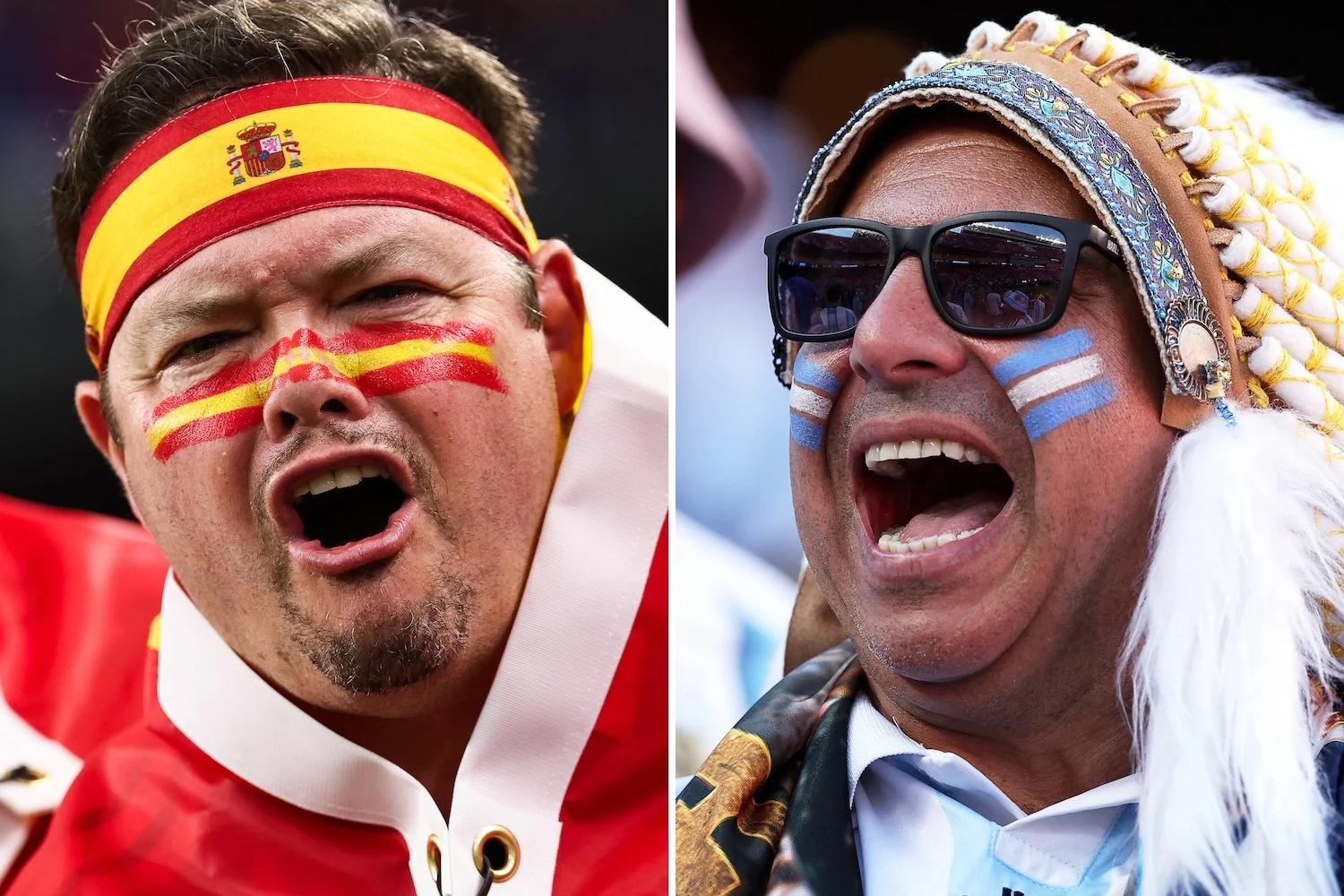
BUENOS AIRES, Argentina (AP) — Cervantes and Borges. Tortilla and asado. Flamenco and tango.Argentines and Spaniards have long been united by blood ties and a relationship of mutual admiration, but the World Cup final between these two Spanish-speaking nations has placed many of them at a crossroads: Should they support La Furia or La Albiceleste on Sunday?“It feels like being caught between a rock and a hard place,” admitted Juan Manuel Posada, a 75-year-old Spaniard originally from Asturias who settled in Buenos Aires in 1968.The clash in New Jersey will mark the first All-Spanish-speaking World Cup final since the inaugural 1930 tournament, when host Uruguay defeated Argentina 4–2 in Montevideo.Buenos Aires was founded by a SpaniardIt was a Spaniard, Pedro de Mendoza, who founded Buenos Aires in the mid-16th century. The battles for independence did not alter the strong cultural influence of the Iberian Peninsula on the young nation — an influence that deepened with the waves of Spanish migration in the first half of the 20th century.
“It’s as if I’d arrived just yesterday. My heart is in Asturias, in Spain, and with the Spanish national team. Without a doubt,” said Posada, a fan of the Spanish club Sporting de Gijón who, in his adopted country, became a supporter of Independiente de Avellaneda. “If Spain wins, great, but if Argentina wins, I won’t be upset at all,” he added in the Asturian accent he still retains.Manuel Fernández Acevedo is 81 years old; he left Baiona, in Vigo, with his family when he was very young to settle in Argentina, where his daughter and granddaughter were born. Torn between the two countries, he said, “May the best team win. If Spain wins, that’s great, and if it’s Argentina’s turn, that’s fine, too.”