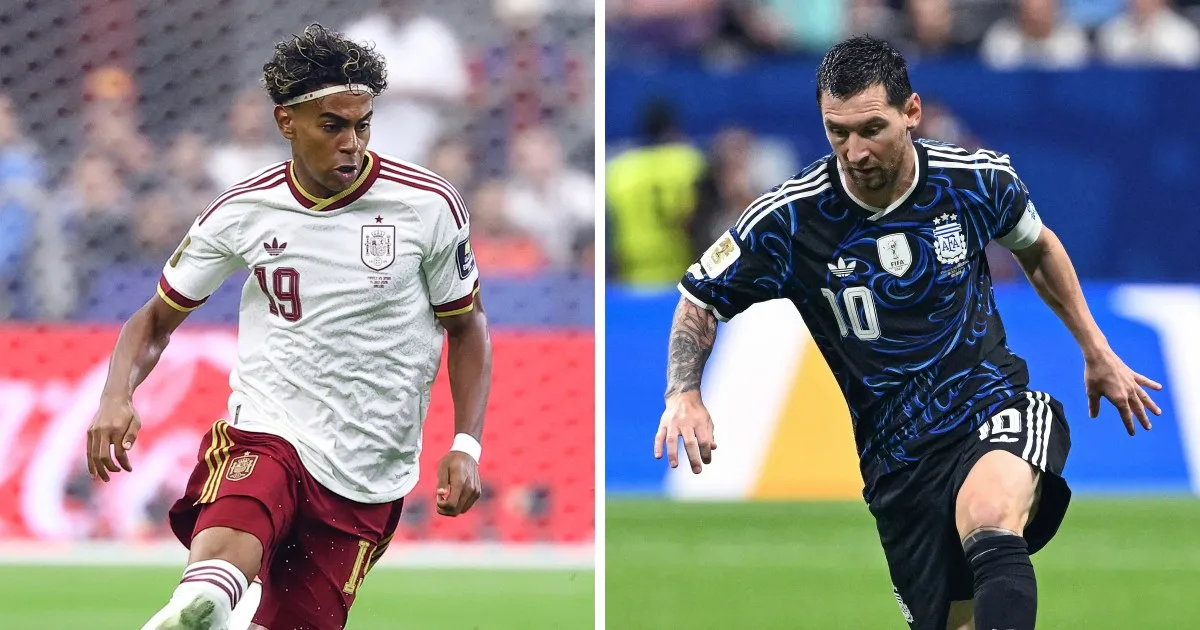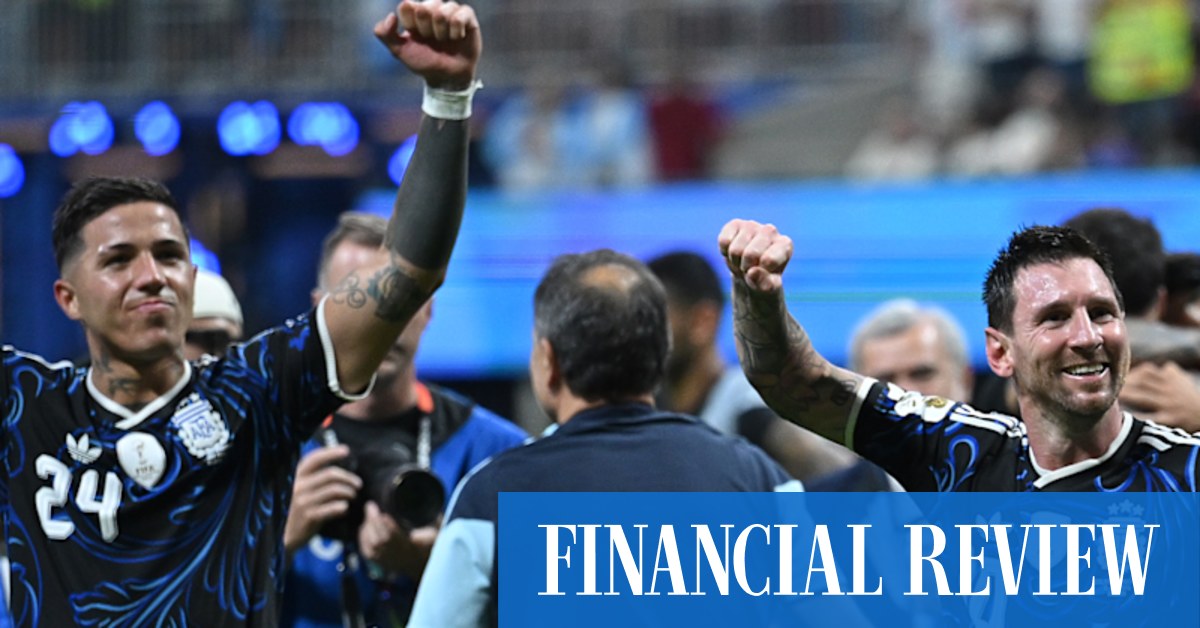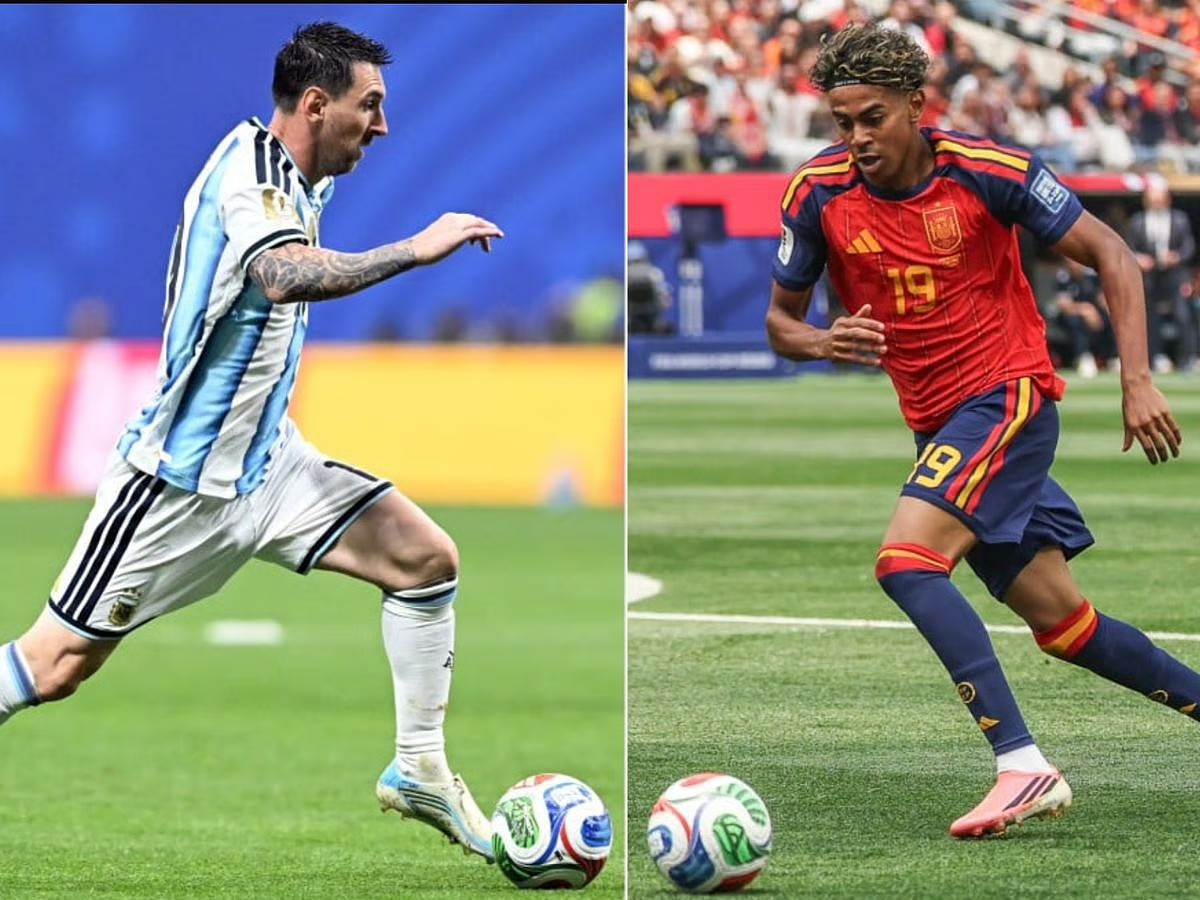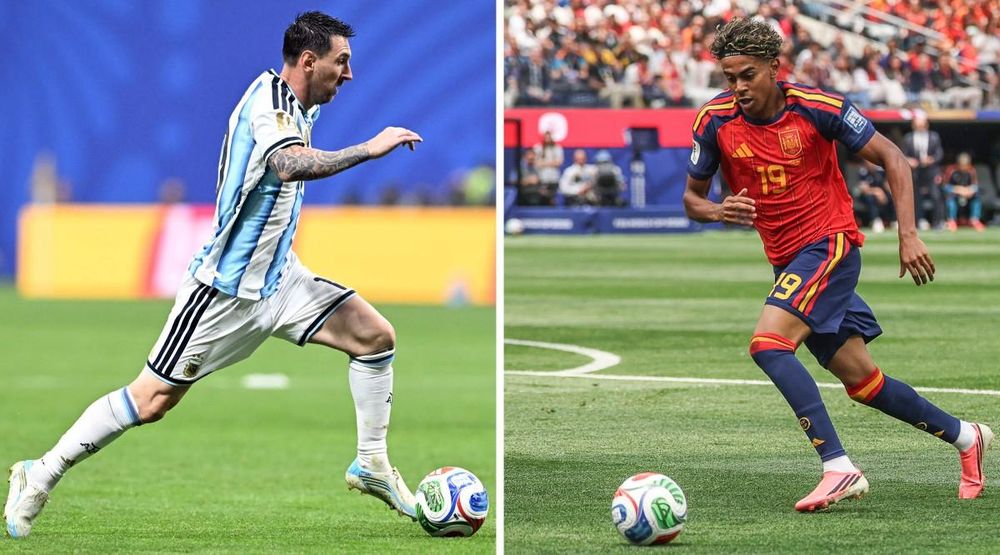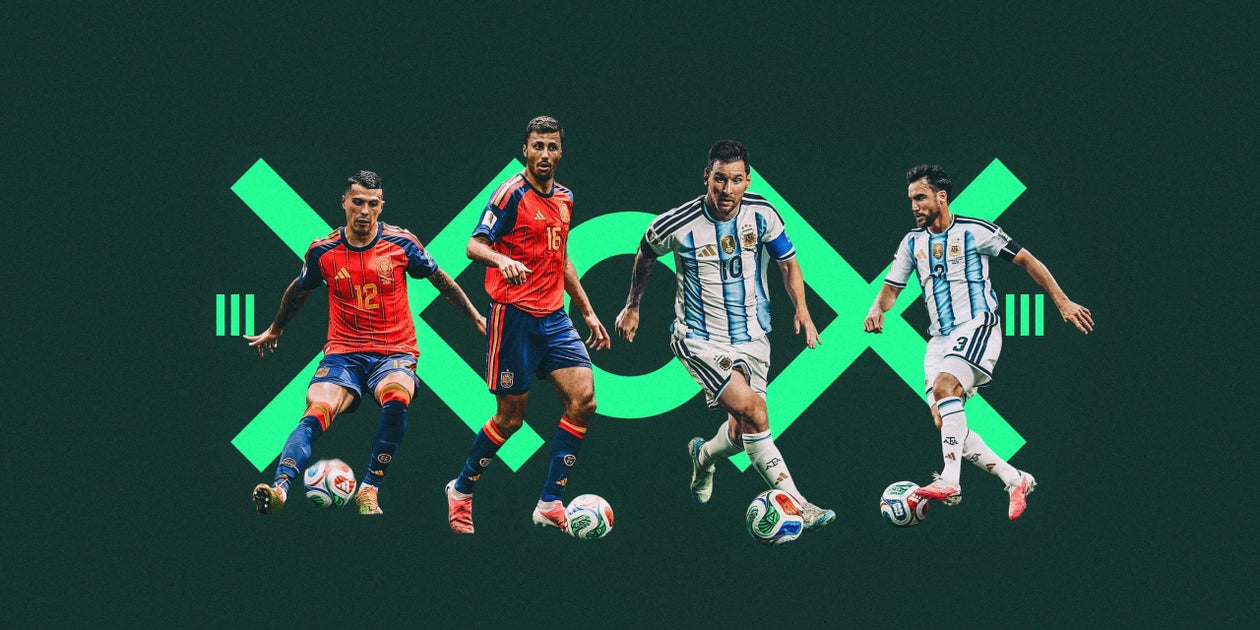
Finals do not get more mouthwatering than this.On one side, you have the most complete, cohesive team in the tournament, with a 19-year-old superstar in their ranks in Lamine Yamal. On the other, a nation led by the best player in the history of the sport in Lionel Messi — now 39, but still capable of deciding the biggest matches almost single-handedly.Sunday’s World Cup final will be contested by Spain and Argentina, and there are narratives to be unpacked all over the pitch.Spain arrive in a men’s World Cup final for only the second time, after their victory in the 2010 edition, with a squad who could match the glory of that generation — and a playing style that is not dissimilar from their golden era. Argentina are in their seventh FIFA final, only Germany/West Germany (eight) have played in more, as they look to retain their world title four years on from that incredible game against France in Qatar, where they won on penalties after a 3-3 draw.After 103 matches played in an expanded 48-team format over five weeks, just two nations remain.This is The Athletic’s definitive data and tactical preview of the 2026 World Cup final.It feels laughable to think that Spain’s tournament-winning credentials were questioned after their opening game.A goalless draw with first-time qualifiers Cape Verde back on June 15 felt like an embarrassment to the European champions at the time, but a stubborn defensive block and an inspired goalkeeping performance from 40-year-old Vozinha managed to keep them at bay, despite their 27 shots and 74 per cent share of possession.Vozinha claims a high ball for Cape Verde against Spain in the group stage (Brett Davis/Imagn Images via Reuters/)It has proved to be the only blot on an otherwise flawless World Cup page for Luis de la Fuente’s side, who are yet to fall behind at this tournament and have only conceded one goal in their seven matches — in the quarter-final against Belgium.Spain’s possession-dominance is deeply ingrained in their nation’s football culture. No player exemplifies that more than the captain, Rodri, whose 655 completed passes are more than any other player in a World Cup finals since records began in 1966.Centre-back team-mate Pau Cubarsi ranks second on 550 completed passes. More impressively, the 19-year-old stands out for his ability to stride forward in possession and fire incisive balls into midfield, averaging over 22 line-breaking passes per game. His completion rate for such passes is 94 per cent, the best in the tournament.Whichever way you look at it, the numbers stack up.Spain have averaged 28 sequences of nine-plus passes per 90 minutes — no nation at this World Cup have a higher rate — but the value that these sequences can offer is multi-pronged.On the one hand, circulating the ball can slowly run down the opponents’ batteries as they are starved of possession for long periods, pinned further back towards their own goal with legs becoming heavier and minds cloudier. On the other, that dominance on the ball is intrinsically linked to Spain’s sharpness defensively on the rare occasions they do lose it. De la Fuente’s side are exceptional at counter-pressing — collapsing on to the ball to quickly regain possession and sustain their attack to suffocate the other team.Is Rodri back to his Ballon d'Or best?Reuben PinderPer FIFA’s data, 12.2 per cent of Spain’s time out of possession at this tournament has been spent in a counter-pressing phase, which is the highest share of any side to reach the quarter-finals. As well as his tempo-dictating actions on the ball, Rodri also tops the list for counter-pressing wins among all players in this World Cup.An example of the 30-year-old’s tenacity is shown below, during the 3-0 round of 32 win against Austria. When Lamine Yamal relinquishes possession in the Austria penalty area, Rodri is on hand to pounce on Marcel Sabitzer — quickly shaking him off the ball before looking up to find four red-shirted team-mates offering themselves as passing options.There is a versatility to Spain that can embrace the transition and accelerate the game — using the moments of brief chaos to their advantage when the opposition are unsettled.This is underpinned below, when looking at their volume of possessions (i.e. how often the ball changes hands) and their attacking efficiency, in which 31 per cent of Spanish moves enter the other team’s penalty area.
Spain vs Argentina: Your ultimate tactical guide to the 2026 World Cup final
Argentina love a late goal and have been hugely reliant on Messi, while Spain are an excellent cohesive unit who have only conceded once
2,066 words~9 min read