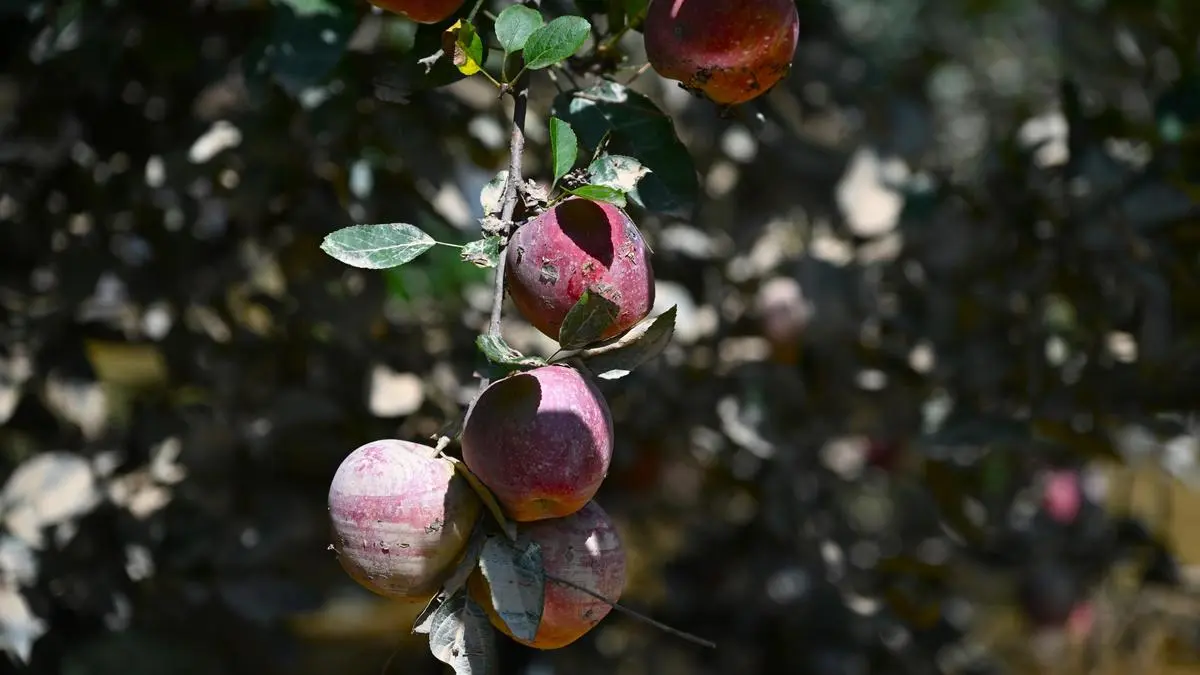
With rainfall remaining well below normal in several key agricultural districts, growers are hoping for widespread precipitation in the coming days
| Photo Credit:
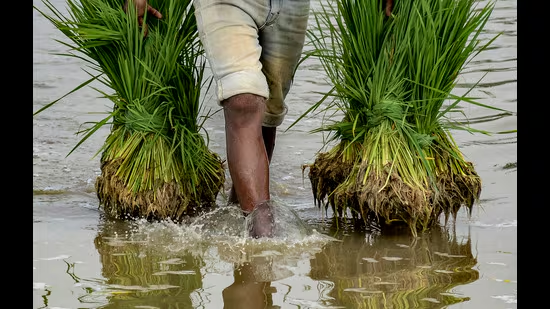
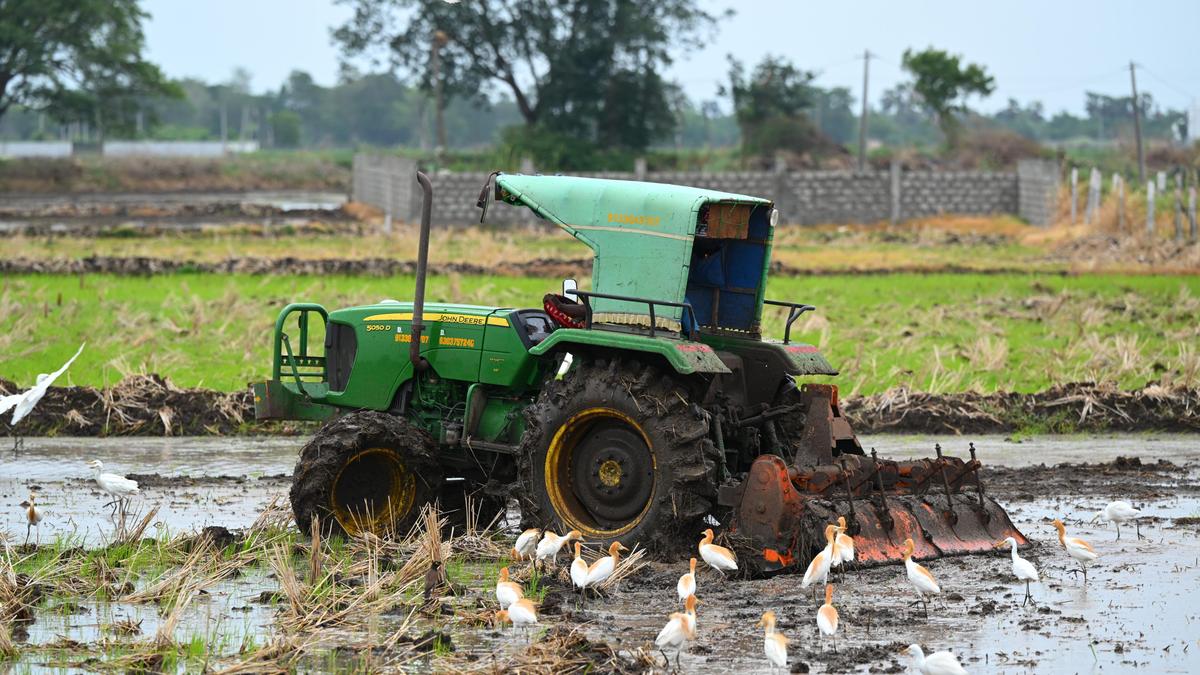
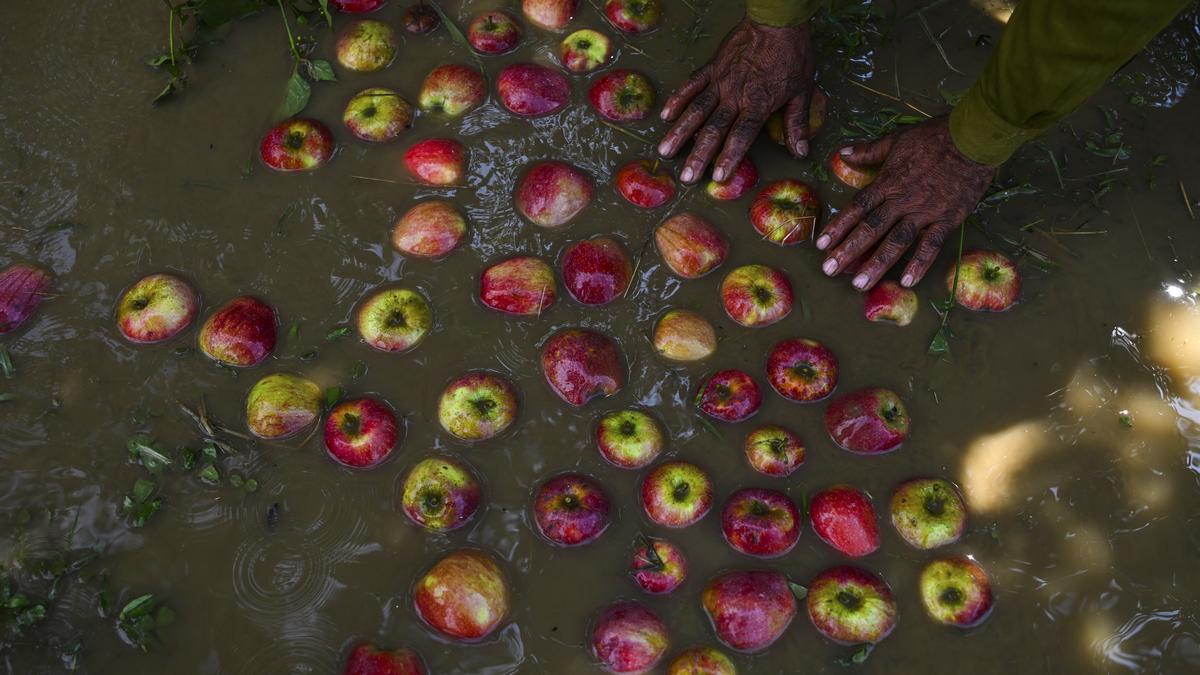
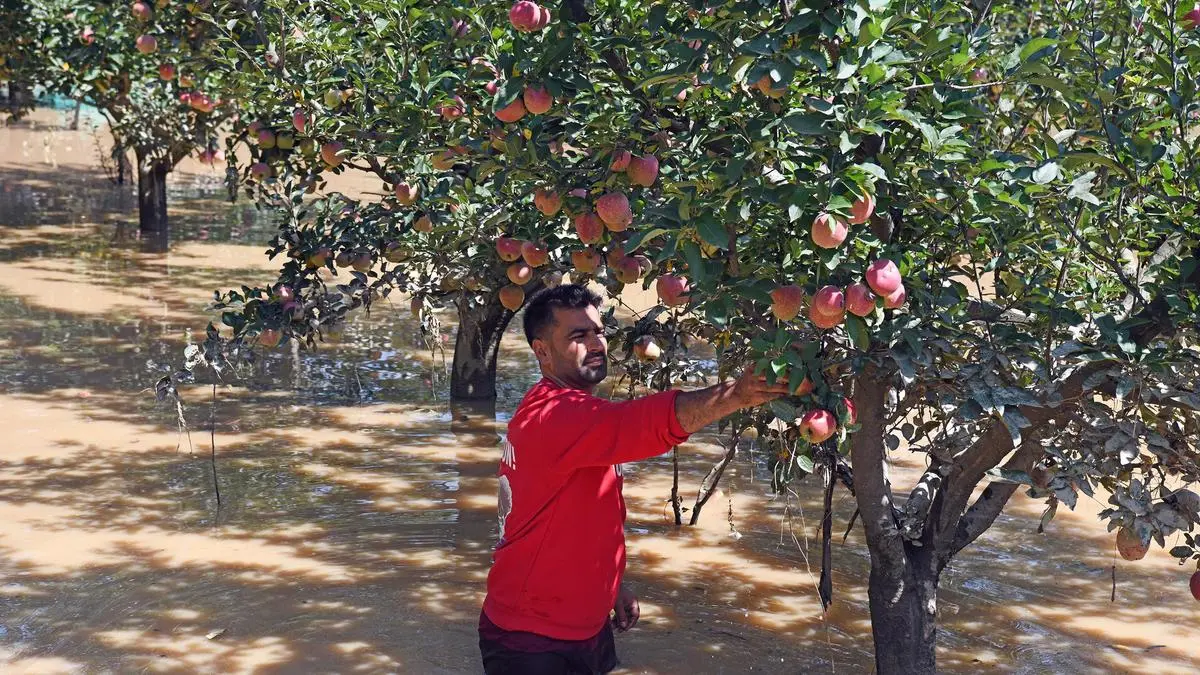
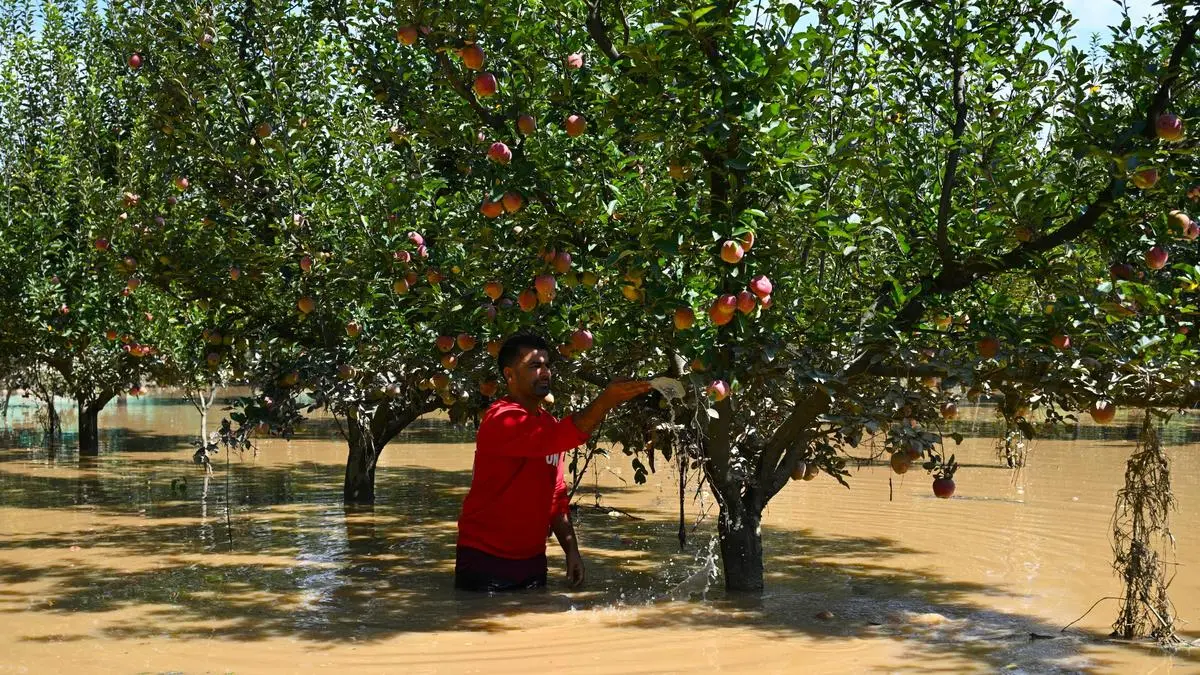
A widening rainfall deficit across several districts of Jammu and Kashmir has begun taking a toll on the Valley’s apple orchards and paddy fields, with growers reporting deterioration in fruit quality and large stretches of farmland drying up amid an extended dry spell.According to India Meteorological Department (IMD) data for the period from June 1 to July 15, Shopian has recorded the highest rainfall deficit at 83 per cent, receiving just 14.4 mm of rain against a normal of 83.5 mm. Kulgam follows with a 63 per cent deficit, while Budgam and Srinagar have each recorded a 53 per cent shortfall and Bandipora 52 per cent, making them the worst-affected districts in the region. The prolonged dry weather has started affecting apple orchards, with horticulture experts warning that moisture stress is increasing the risk of physiological disorders such as fruit cracking and lenticel blotch, particularly as the crop enters a crucial stage of fruit development.“The continuing rainfall deficit is creating stress in orchards and, if conditions persist, growers could witness more cases of fruit cracking and lenticel blotch, affecting fruit quality and market value,” said Tariq Rasool, Associate Professor at Sher-e-Kashmir University of Agricultural Sciences and Technology (SKUAST)-Kashmir. The dry spell has also deepened concerns for paddy cultivation, especially in south Kashmir’s Kulgam district, where irrigation channels have run low and vast stretches of fields are facing drought-like conditions.In several villages, including YK Pora, Khar Gund, Chowgam and Churat, paddy fields have begun drying up as farmers struggle to irrigate their crops.“Our paddy fields have turned into a hard sheath and deep cracks have developed because there has been hardly any water,” said Abdulla Rashid, a farmer from Kulgam. “If rains do not arrive soon or irrigation water is not restored, we fear losing a substantial part of the crop.”Farmers said the lack of rainfall has significantly hardened the soil, making it difficult for paddy plants to grow and increasing the risk of crop failure if the dry conditions continue over the coming weeks.Apple cultivation is the backbone of Kashmir’s horticulture economy, producing around 20 to 22 lakh tonnes annually and supporting the livelihoods of nearly 3.5 million people, directly or indirectly, while Paddy is the Valley’s principal food crop, cultivated across thousands of hectares, with farmers relying heavily on timely monsoon rains and irrigation during the peak growing season.With rainfall remaining well below normal in several key agricultural districts, growers are hoping for widespread precipitation in the coming days. An IMD official told businessline that widespread rains are expected to begin from July 19 with peak activity to be witnessed on July 21 and 22. Published on July 17, 2026