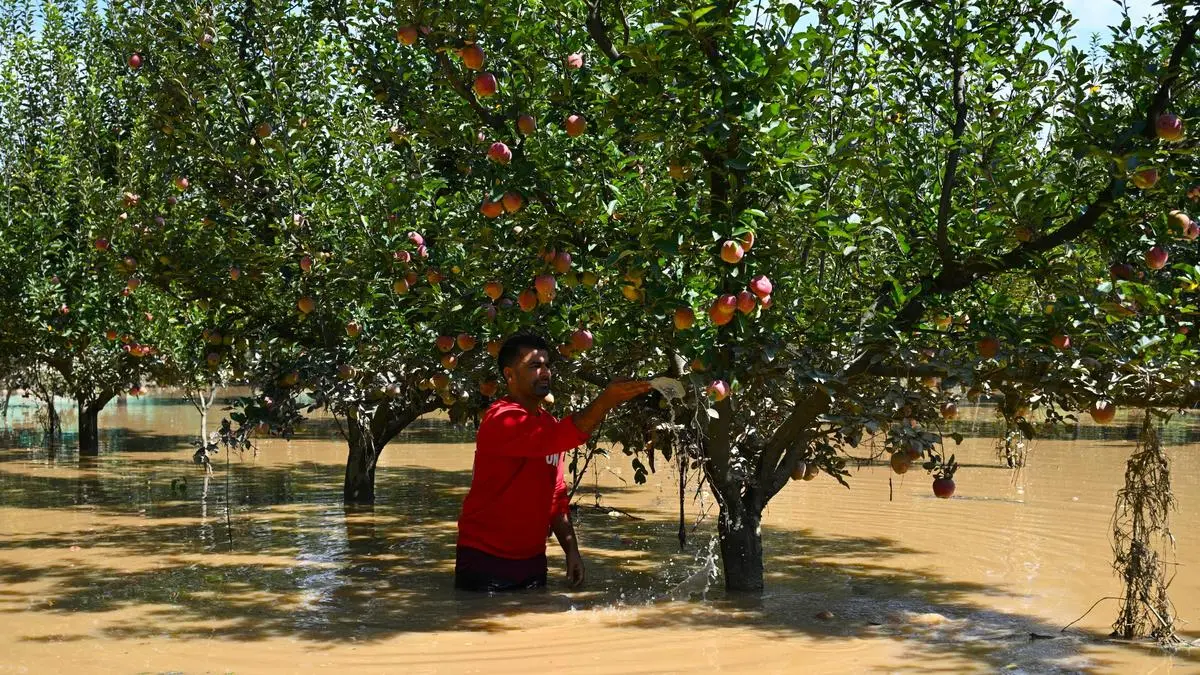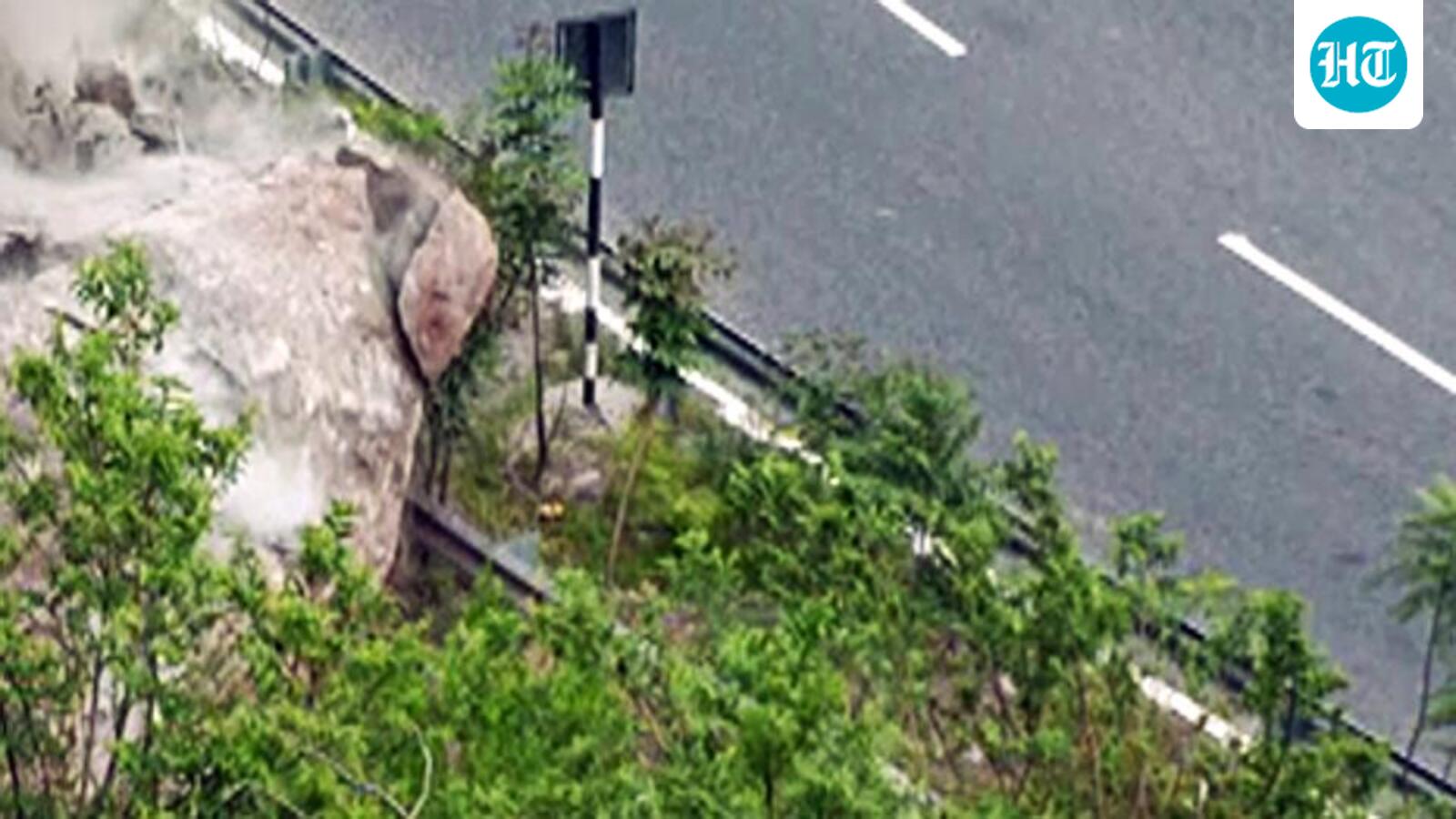
According to farmers, there is still no reliable alternative to the Jammu-Srinagar National Highway.
| Photo Credit:
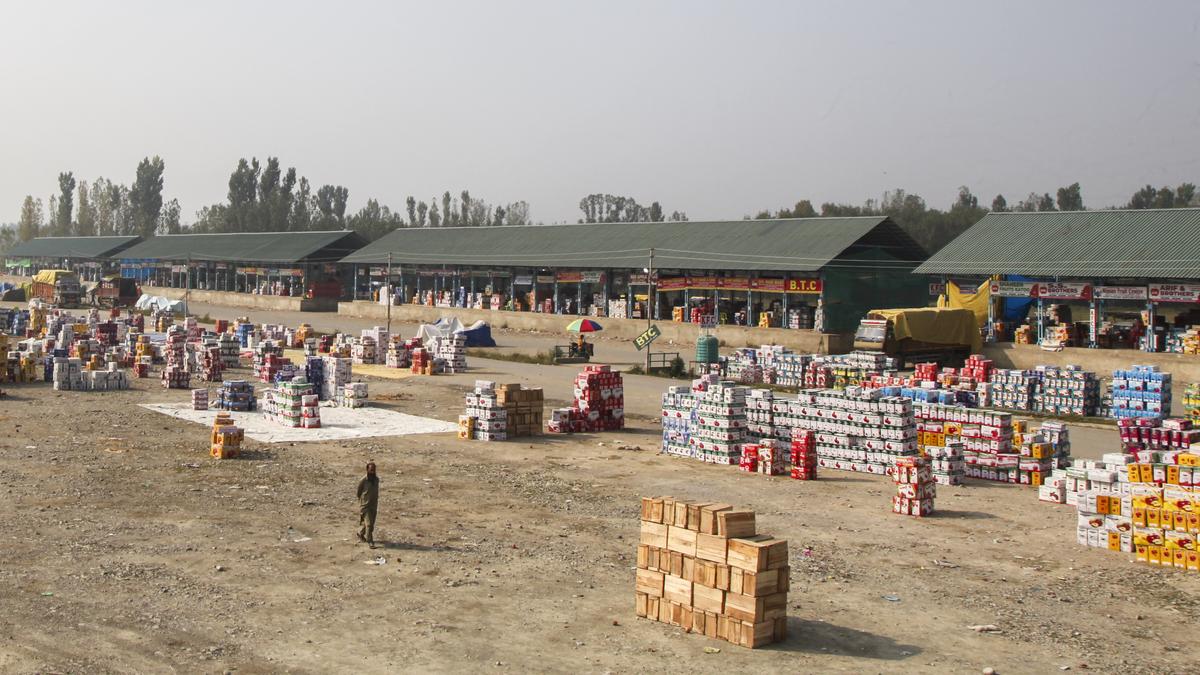
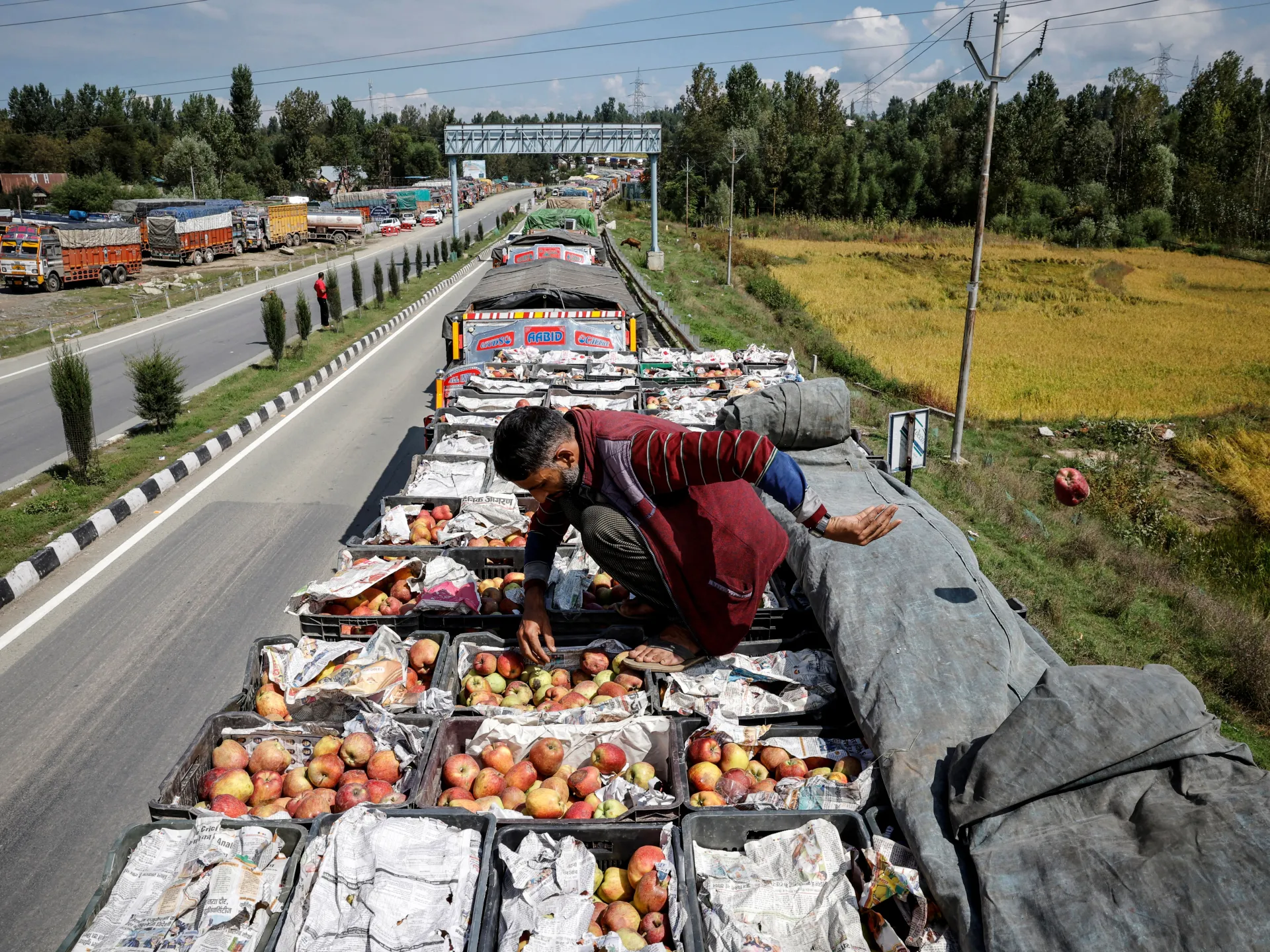
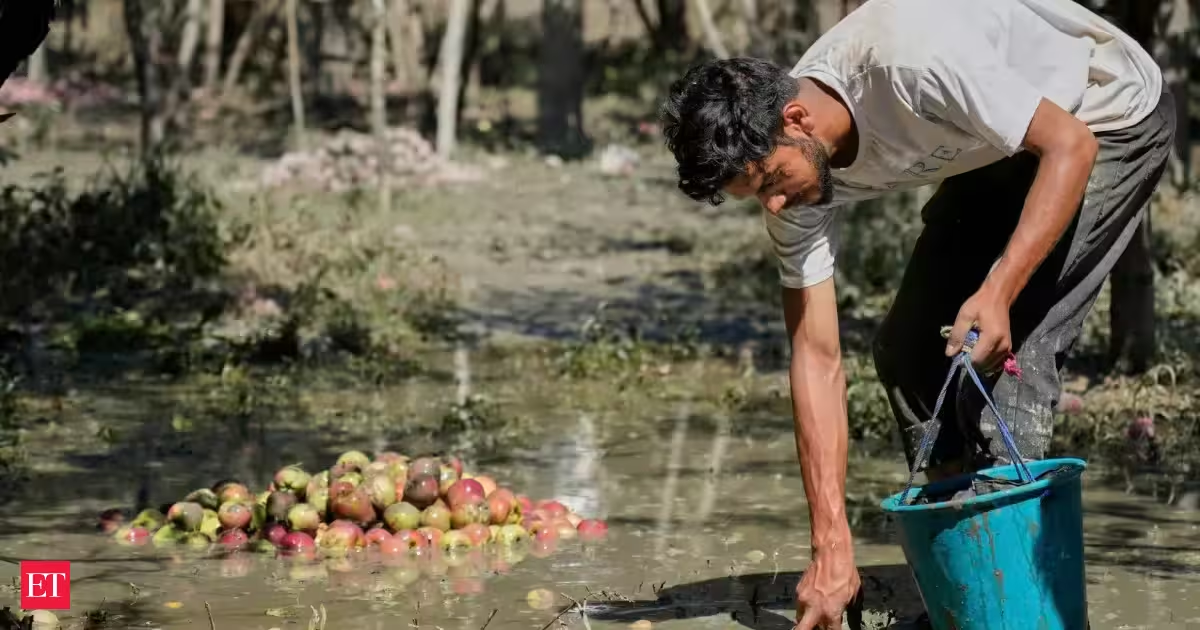
Almost every harvest season, apple growers in Kashmir bear the brunt of frequent closures of the Jammu-Srinagar National Highway, the Valley’s key arterial link with the rest of the country, suffering heavy losses as a result.During the ongoing apple season, landslides and road works have forced repeated closures of the highway, leaving hundreds of fruit-laden trucks stranded along the route.Bashir Ahmad Basheer, chairman of the Kashmir Valley Fruit Growers-cum-Dealers Union, said a truck carrying apples usually takes 15 to 18 hours to reach the Azadpur Mandi in Delhi. But when the highway is closed, the journey can sometimes stretch into weeks.“Due to the prolonged closure, more than half of the fruit rots inside the trucks,” Basheer said.Official data show that the road had remained closed for 284 days between 2018 to 2024. LossesAlthough farmers have not yet calculated the losses of this season, last year the industry estimated the losses between ₹1500 to ₹2000. “The national high way remained closed 3 to 4 times over the last few weeks due to incessant rains leaving fruit trucks carrying highly perishable fruits like pears and plums stranded”, said Basheer. He, however, added that the loss caused due to the road closure has not been estimated yet. A government-commissioned study has estimated that 9.51 per cent of Jammu and Kashmir’s apple production is lost after harvest, underscoring the challenges faced by growers in storing and transporting the perishable crop. The study, conducted by NABARD Consultancy Services (NABCONS) for 2020-22, was tabled recently in the Lok Sabha.Alternat routeAccording to farmers, there is still no reliable alternative to the Jammu-Srinagar National Highway. The historic Mughal Road, which connects Kashmir with Jammu through Poonch, has provided little relief to fruit growers.Farmers said 12-tyre trucks carrying apples and other fruits are not allowed to ply on the road because of its sharp curves and difficult terrain.“Indian Railways introduced parcel trains last year, providing some relief to farmers, but more such services are needed between August and November, when the apple harvest is at its peak,” said Tariq Ahmad, an apple grower.Ahmad added that the cargo trains would not be able to serve farmers effectively unless the railway authorities establish dedicated loading facilities at Sopore, Anantnag, Pampore and Shopian. Officials said the government is augmenting Controlled Atmosphere (CA) storage capacity to reduce post-harvest losses. The Valley currently has a CA storage capacity of around 2.92 lakh metric tonnes, while an additional 30 chambers are expected to be added soon.Published on August 11, 2026