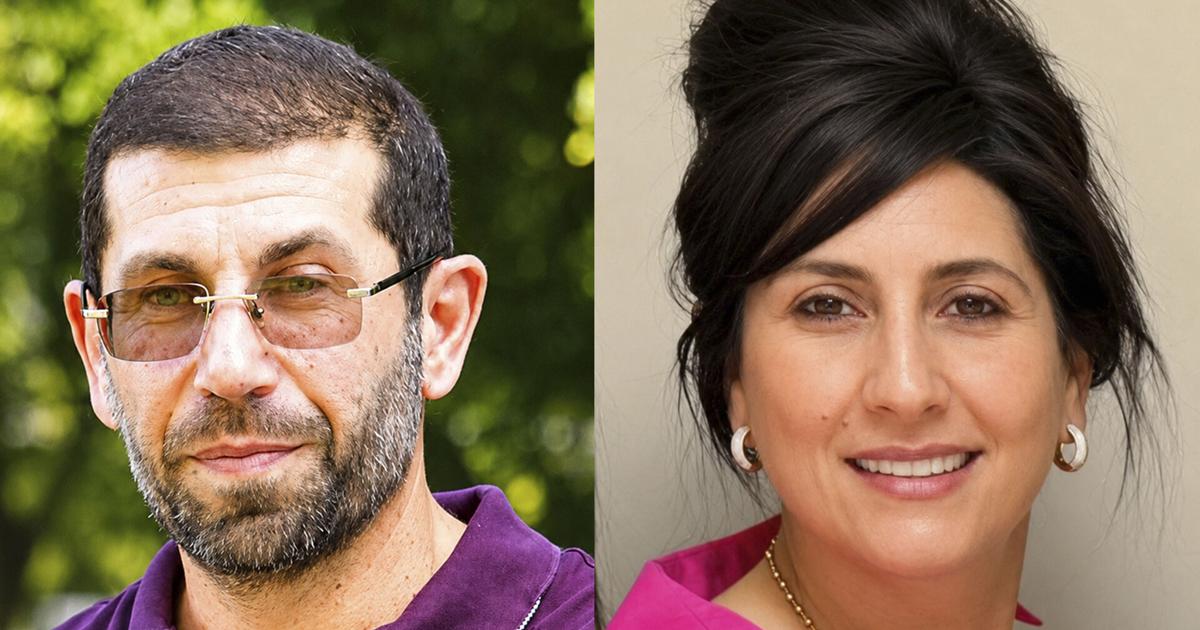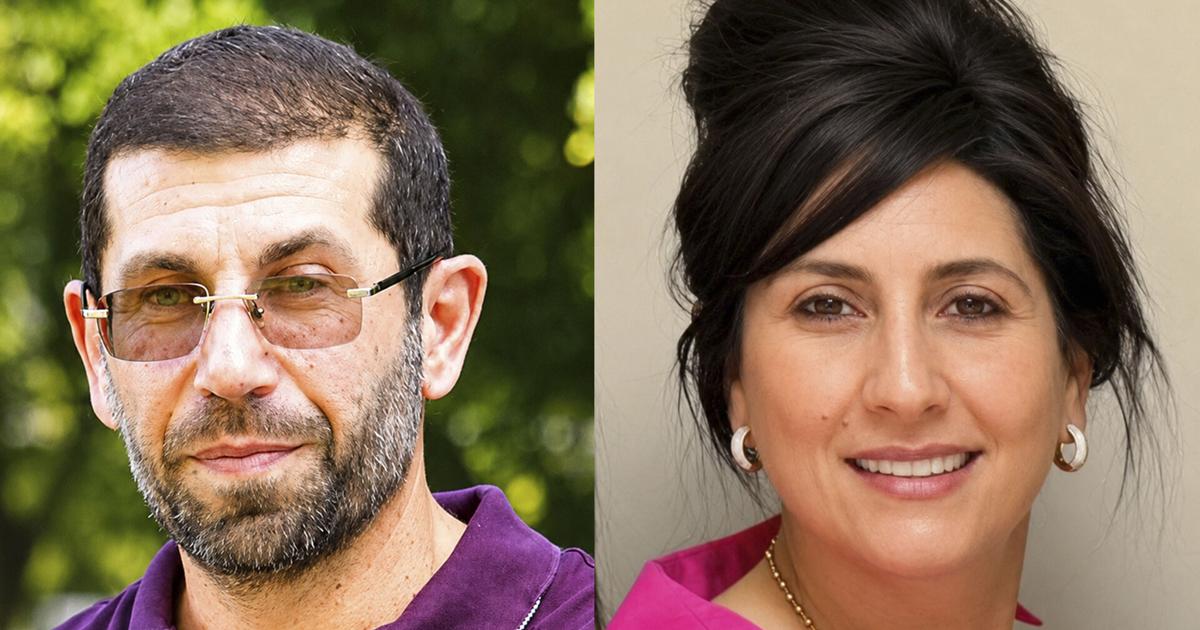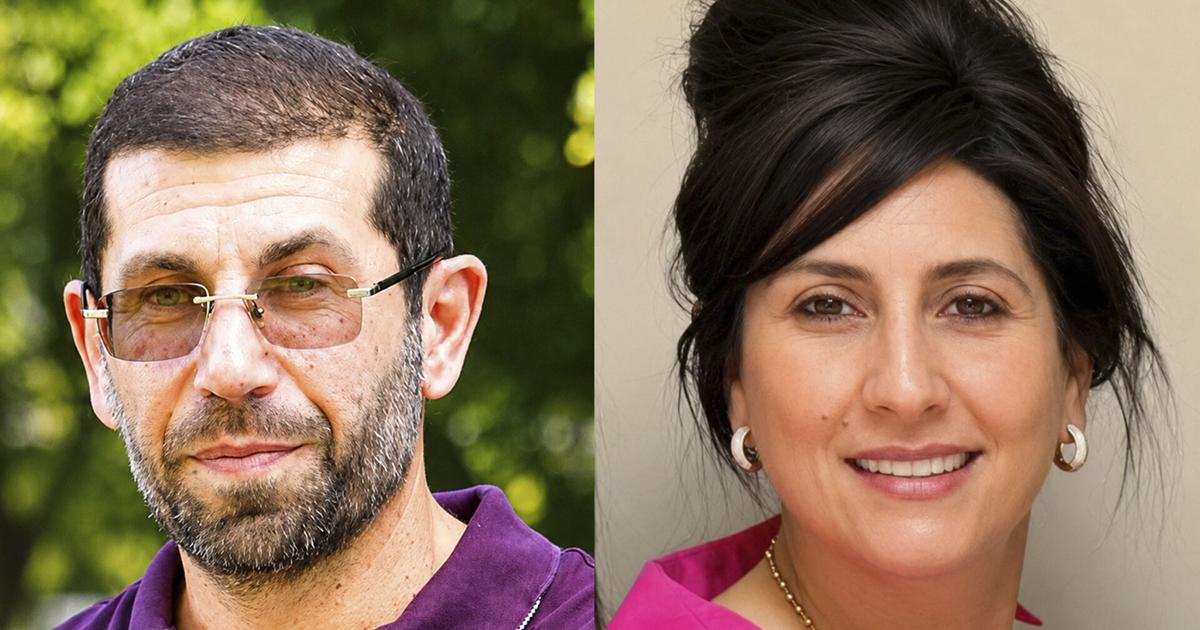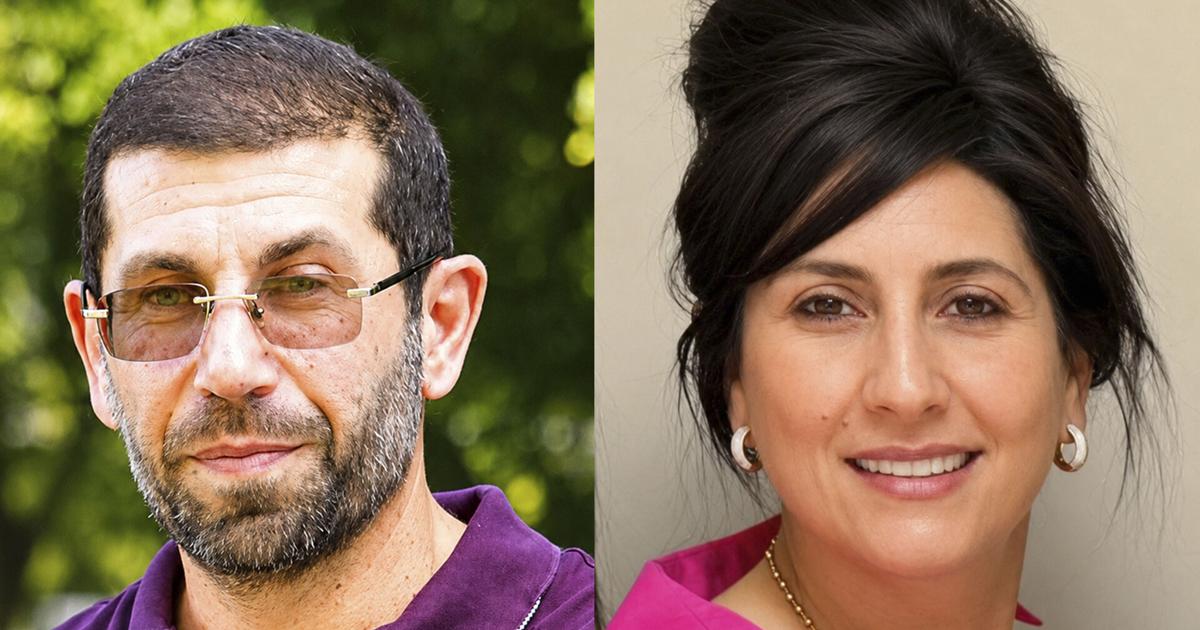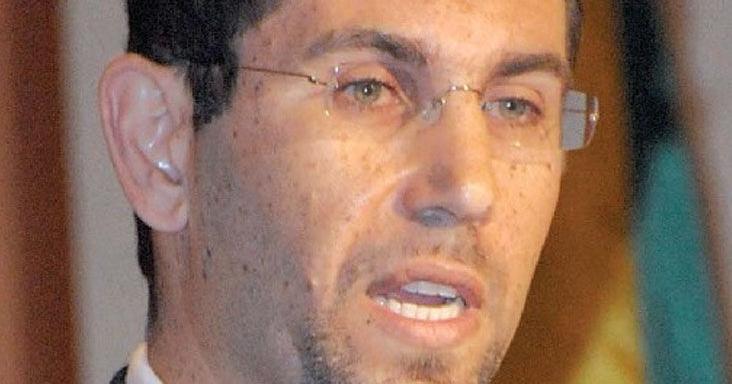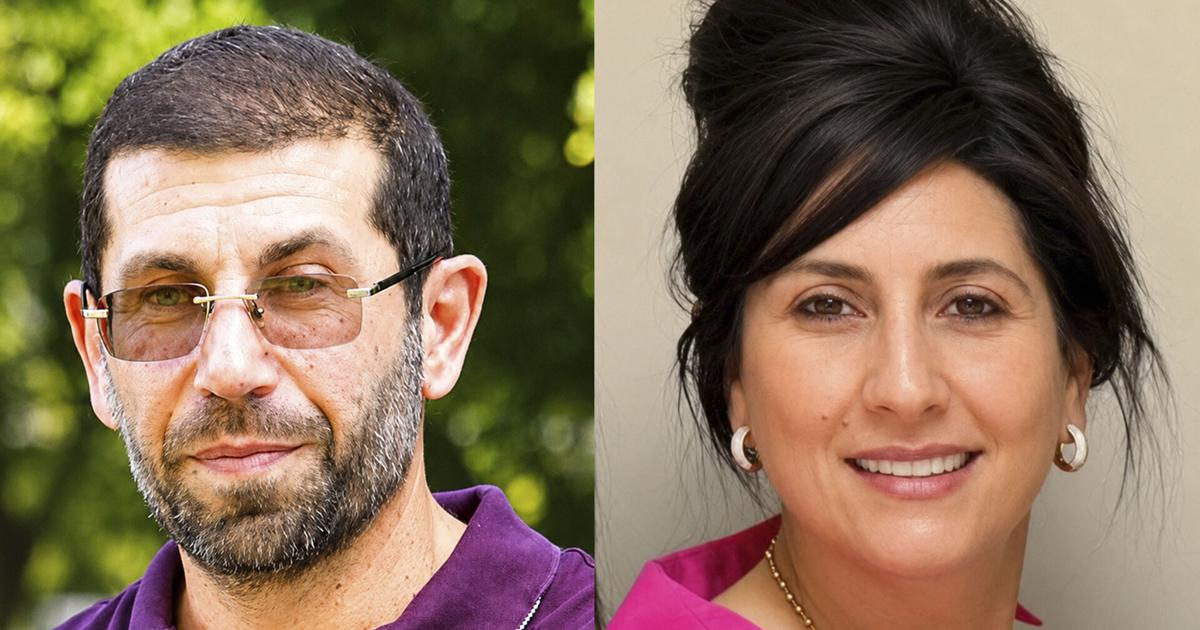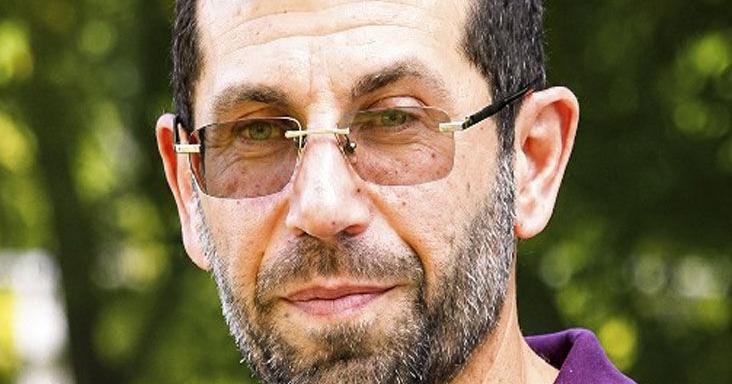
DOMINIC Hadeed and his wife Genevieve Hadeed remained in prison last night despite winning a landmark Court of Appeal ruling ordering their immediate release, after the State filed an urgent application seeking to suspend the decision and take the case to the Privy Council.Hours after the Appeal Court ordered that the businessman and his wife be released from prison and placed under strict house arrest, attorneys representing the State returned to the appellate court seeking a stay of execution of the ruling pending a further appeal.
REMAINS IN CUSTODY:Genevieve Hadeed
The application, which was filed late yesterday, came up for hearing at 8 p.m., before Chief Justice Ronnie Boodoosingh and Justices of Appeal Mark Mohammed and Ricky Rahim.Just before 9.30 p.m., the Hadeeds’ hope of being released was dashed as the panel granted an interim stay to the State, preventing their release.
State attorney Gerald Ramdeen, leaves the Hall of Justice yesterday. Photo: CURTIS CHASE
The hearing of the stay application will commence today at 3 p.m.The panel also granted the State’s application for leave to challenge the ruling of Justices of Appeal Peter Rajkumar, Mira Dean-Armorer and Joan Charles earlier yesterday who ordered that the couple be released from prison and placed under house arrest.In that ruling, the panel had found that the Government could not rely on broad assertions of national security to justify preventive detention without providing sufficient factual particulars to satisfy the requirements of the law.As conditions once they are released, the judges ordered that the Hadeeds must surrender their passports, firearms and communication devices. They cannot leave their home without the permission of the Commissioner of Police, are prohibited from communicating with anyone outside the residence without prior approval, and may receive only authorised legal representatives, medical practitioners and caregivers.Police officers are authorised to enter the premises to conduct compliance checks, and the couple are to be fitted with electronic monitoring devices as soon as practicable if required by the State. Any breach of the conditions would result in their immediate re-detention under the PDOs, the court ruled.Following the delivery of the judgment shortly before 3 p.m., Gerald Ramdeen, one of the attorneys for the State, requested a six-hour stay of the ruling to file an appeal at the Privy Council and to seek an urgent hearing. In addition to that, Ramdeen said police would require time to carry out a “sweep” of the Hadeeds’ residence to confiscate any electronic devices and other items they are not to have in their possession.“The premises have to be searched. We cannot just take their word for it,” said Ramdeen.In response to his requests, Senior Counsel Douglas Mendes, one of the lead attorneys for the Hadeeds, said there was no need for a stay as the couple would be under supervision.He said their children would move in with their grandparents and would seek the police commissioner’s permission before visiting them, adding that there was also a guard booth on the premises.Police, he said, could occupy the booth if they wished, to ensure no one is allowed to enter the house without permission.In the end, the panel refused to grant the stay and allowed police only two hours to search the house.The Express understands that yesterday evening, the State filed an application at the Appeal Court seeking its permission to appeal the earlier judgment at the London-based Privy Council.That application was expected to come up for hearing last night.Courts retain powerThe ruling is among the most significant constitutional decisions to emerge from the current state of emergency (SoE), reaffirming that although the Executive is entitled to considerable deference on matters of national security, the courts retain the power and duty to examine whether detention powers have been exercised lawfully.“The mere invocation and assertion of national security is not sufficient to prevent judicial oversight or scrutiny by a court of the exercise of emergency powers by the Executive,” the judges said.“The unscrutinised exercise of those powers could effectively confer a jurisdiction on a minister to order the detentions of persons at will by PDOs even if their issue is not objectively justifiable.”The Hadeeds have been detained since June 24 after police officers arrested them at their home.Three days later, Minister of Homeland Security Roger Alexander signed PDOs authorising their continued detention on “intelligence” alleging they were involved in an ongoing conspiracy to assassinate Prime Minister Kamla Persad-Bissessar, Attorney General John Jeremie and other senior Government officials.No criminal charges have been laid against either of them.Their relative, Star Sabga, 70, who was also detained under a PDO, remains in prison custody since her detention was not challenged in court.The Court of Appeal stressed that it was not deciding whether the allegations against the Hadeeds were true or false.Instead, it found that the reasons provided by the minister arguably failed to satisfy the statutory requirements for preventive detention because they lacked sufficient factual particulars demonstrating an ongoing conspiracy or developing plan.“The reasons of the minister must amount to reasons for preventive detention,” the judges said.“Gaps in those reasons cannot be filled in by implications of vague national security considerations at large, or the general term ‘intelligence’.”The panel said Alexander was required to disclose sufficient factual particulars demonstrating the alleged conspiracy, the existence of a plan, the involvement of people beyond the Hadeeds themselves, and facts showing that the alleged statements to carry out the alleged plot were made in a context that went beyond the expression of objectionable opinions and amounted to the beginnings of a conspiracy.The court noted that while the statements attributed to the Hadeeds, if made, were “vehement, obnoxious and reprehensible”, there was no assertion in the PDOs that any preparatory steps had been taken to advance the alleged conspiracy.“The statements by themselves could not justify preventive detention,” the judges held.The judges also criticised the approach taken by High Court Justice Frank Seepersad, whose decision refusing interim relief on June 30 has now been overturned.They found that the trial judge accepted too readily that the minister’s reliance on national security and intelligence reports was sufficient to justify the detention orders.“That reasoning...demonstrates an uncritical assessment of the PDOs inconsistent with the standard of review required by a court on a judicial review application,” the appellate court said.The judges added that while courts should not second-guess the Executive’s assessment of national security, they are entitled to examine whether the particulars supplied objectively justify the exercise of such extraordinary powers.The Court also rejected the State’s argument that the Hadeeds had an adequate alternative remedy before the independent tribunal established under the emergency regulations.It found that the tribunal could not subject the minister’s decision to meaningful scrutiny because no case is presented against detainees before it, its recommendations are not binding, and it has no power to grant interim relief.Continuedimprisonmentnot justifiedThe judges further noted that up to July 13-19 days after their arrest—the Hadeeds had neither been charged with any criminal offence nor interviewed by police.While acknowledging that the allegations against the couple were extremely serious and that national security considerations carry enormous weight, the court concluded that continued imprisonment was not justified where there was an arguable case that the PDOs did not comply with the law.It also accepted evidence that continued detention would result in irreparable harm, including the loss of liberty, separation from the couple’s children, reputational damage and concerns over Dominic Hadeed’s ongoing medical treatment.“The public interest and national security considerations can be adequately taken into account,” the judges said, adding that the restrictions imposed would address concerns over any alleged planning, communication or coordination while preserving the appellants’ liberty pending the determination of the substantive case.The appeal was argued by Mendes, Gilbert Peterson, SC, Rishi Dass, SC, Faris Al-Rawi, SC, Chase Pegus and Carlon McLeod for the Hadeeds.The State was represented by Sir James Eadie, KC, Ramdeen, Dayadai Harripaul and Ramdath Phillip.The substantive judicial review, which will determine whether the PDOs were lawfully issued, remains before the High Court and comes up for hearing today before Justice Vigel Paul for case management.CONDITIONS OFHADEEDS’ RELEASE• Immediate release from prison to their home at 23 Pine Avenue, Bayshore, Westmoorings.• Must remain confined to the residence unless granted permission by the Commissioner of Police to leave.• Must surrender all passports and other travel documents.• Must surrender all firearms in their possession.• Must surrender all communication devices.• Cannot communicate, directly or indirectly, with anyone outside the home without the prior approval of the Commissioner of Police.• No visitors are permitted unless approved by the Commissioner of Police.• Only approved attorneys, medical practitioners and caregivers may visit the residence.• Must allow authorised TTPS officers to enter the property at reasonable times to conduct compliance inspections.•May be fitted with electronic monitoring devices as soon as practicable if the State requires them.