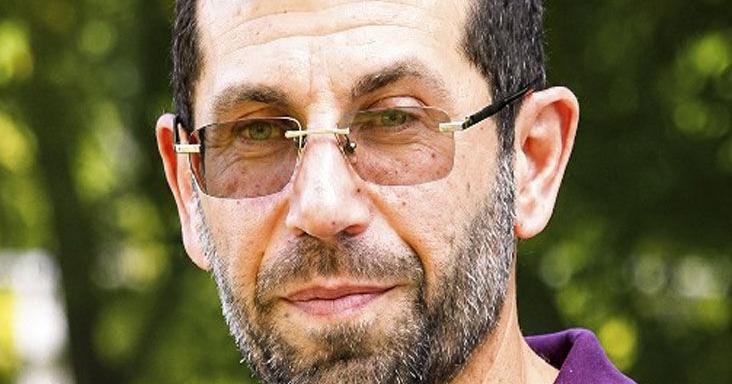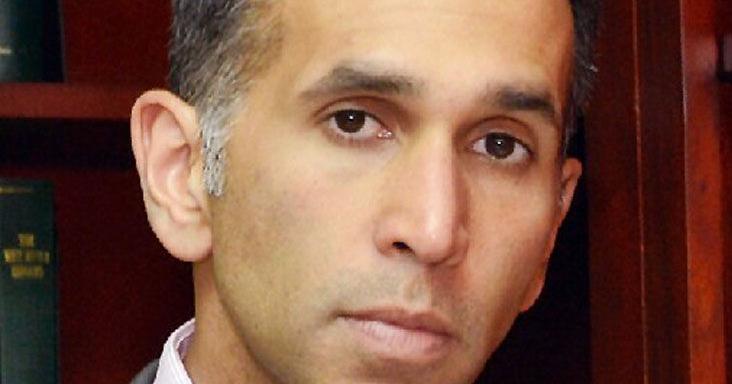
BUSINESSMAN Dominic Hadeed and his wife, Genevieve, will remain behind bars after a High Court judge yesterday dismissed their bid to be released from custody, ruling that the Preventive Detention Orders (PDOs) issued against them were lawful.In a 24-page judgment, Justice Frank Seepersad rejected the couple’s habeas corpus application but stressed that emergency powers do not place the Executive beyond the reach of the courts.
HIGH COURT JUDGE:Frank Seepersad
“A state of emergency (SoE) cannot eclipse the rule of law,” the judge said, adding that the supervisory jurisdiction of the High Court “endures throughout a state of emergency”.The Hadeeds were arrested last Wednesday as police investigated intelligence alleging a conspiracy to assassinate senior members of the Government, including Prime Minister Kamla Persad-Bissessar and Attorney General John Jeremie. They were initially detained under the Emergency Powers Regulations before Minister of Homeland Security Roger Alexander issued PDOs.
ATTORNEY FOR ACCUSED: Douglas Mendes, SC
Dominic Hadeed is being held at the Eastern Correctional and Rehabilitation Centre (ECRC) in Santa Rosa, while his wife is detained at the Women’s Prison in Arouca.Although the couple’s attorneys, Senior Counsel Douglas Mendes, Gilbert Peterson and Faris Al-Rawi, argued that the initial arrest was unlawful and that the later PDOs were therefore invalid, Justice Seepersad rejected that submission.He found that entries in the police station diary contradicted claims that the Hadeeds had not been informed they were being detained under the Emergency Powers Regulations.According to the entries in the diary, the arresting officer, Cpl Eldon Calliste, told the couple they were suspected of acting, or being about to act in a manner prejudicial to public safety by conspiring with others to murder the Prime Minister, the Attorney General and other members of the Government.Justice Seepersad held that this evidence was sufficient to trigger the police officer’s powers under Regulation 13 of the Regulations. He also found that the initial 48-hour detention, together with the subsequent seven-day extension authorised by a senior police officer, complied with the law.The judge said the station diary provided “adequate evidence” that the applicants had been informed of the reasons for their arrest and detention.He further ruled that, even if the initial arrest had been unlawful—a finding he did not make—that would not have invalidated the PDOs.“The issuance of PDOs is legally separate and distinct from circumstances involving the initial arrest and detention,” Justice Seepersad said. He noted that the legislation does not make a valid preventive detention order dependent on a lawful prior arrest.The PDOsTurning to the PDOs themselves, the judge examined whether the statutory requirements for their issuance had been satisfied.He said Alexander’s orders referred to intelligence alleging an ongoing conspiracy to assassinate senior Government officials, statements expressing violent intentions following parliamentary debate on the extension of the SoE, and the couple’s alleged means and influence to carry out such plans.Justice Seepersad said the court was not entitled at this stage to determine whether the intelligence was true, but only whether there was a rational basis on which Alexander could have concluded that preventive detention was necessary.“In the circumstances, it is highly likely that the Minister of Homeland Security was satisfied that the applicants could be prevented from acting in any manner prejudicial to public safety if pre-emptive preventive action was taken,” he ruled.The judge also dismissed arguments by Mendes that police had acted inconsistently by obtaining search warrants when the Regulations did not require them.Instead, he said seeking warrants from a Criminal Court Master, as the officers did, provided an additional safeguard.“If anything, the involvement of the Master introduced a level of judicial oversight over the actions of the police and subjected the available intelligence to a measure of judicial scrutiny,” he said.While dismissing the habeas corpus application and refusing interim relief, Justice Seepersad emphasised that the courts would continue to guard against any abuse of emergency powers.“The rule of law does not recede in times of emergency; it assumes its greatest importance and prominence,” he said, warning that if credible evidence emerged that a PDO had been issued in bad faith, for an improper purpose or without lawful authority, the court “will not hesitate to grant such relief as the law permits”.He added that public confidence depends upon “unwavering fidelity to the Constitution”, with personal liberty and national security remaining complementary constitutional values.Judicial reviewEven though Justice Seepersad dismissed the habeas application, he granted leave to the couple to file a claim for judicial review against the minister’s decision.He directed that the couple file their fixed date claim by 4 p.m. on Friday and set the substantive hearing to take place on July 27.After doing so, Mendes requested that the claim for judicial review be heard by a different judge citing the “robust way” in which Justice Seepersad had expressed his views on the prospects of success of the proceedings. Justice Seepersad agreed to the reassignment.The judgment also noted that while Genevieve Hadeed’s relative, Star Sabga, remains detained under separate circumstances, her case was not before the court.With the habeas corpus application being dismissed, the judge directed that the Hadeeds pay the legal costs incurred by the Office of the Commissioner of Police, against whom the action was brought.Appearing along with Mendes, Peterson and Al-Rawi for the couple were attorneys Chase Pegus and Carlon Mc Leod, while attorneys Ramdath Phillip and Anya Ramute-Mohan appeared on behalf of the Commissioner of Police.