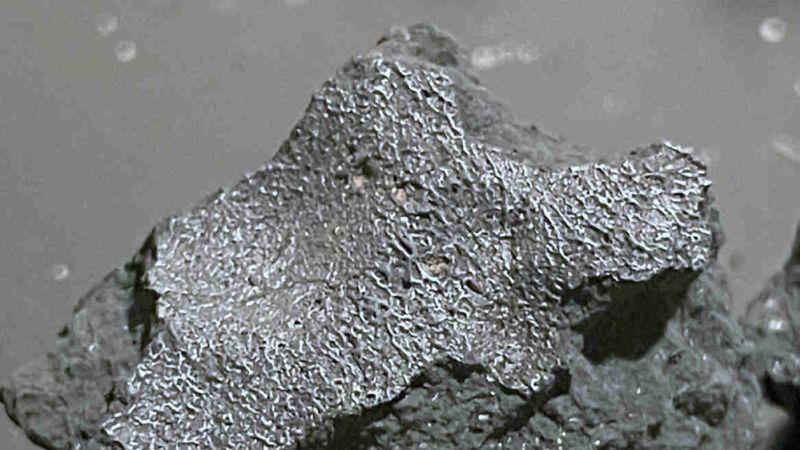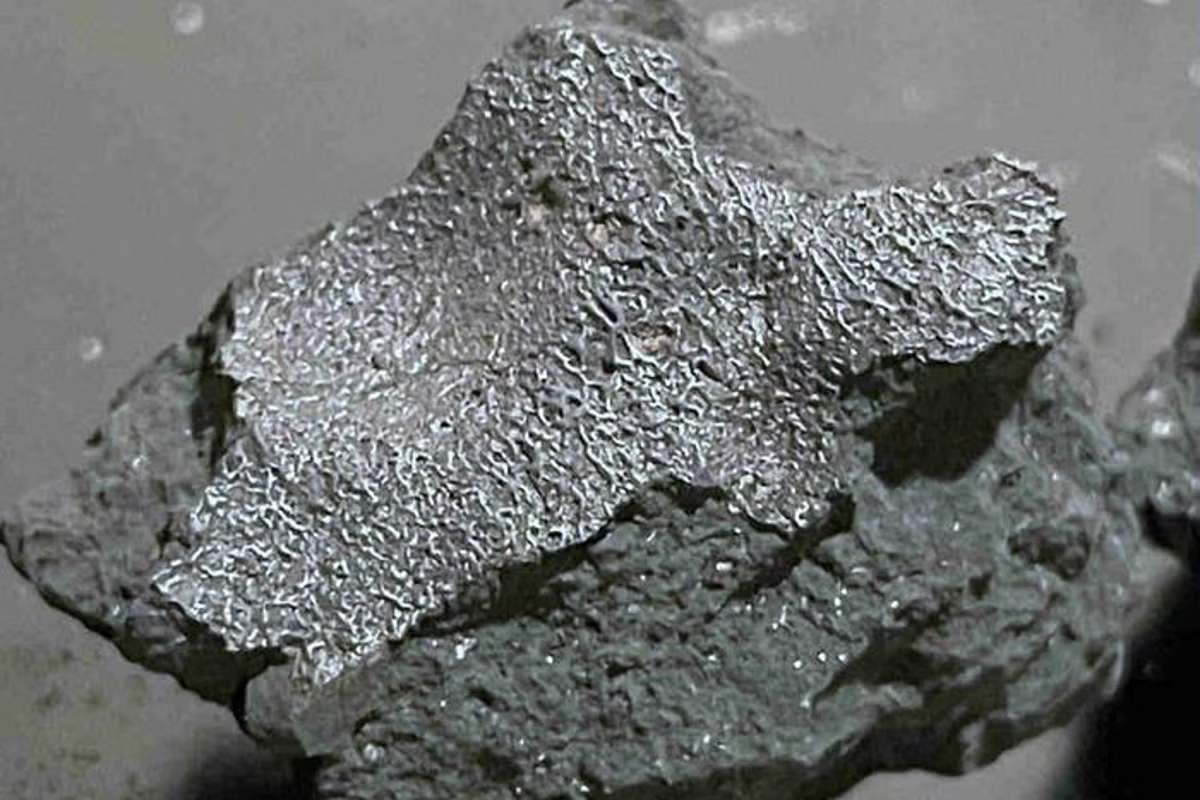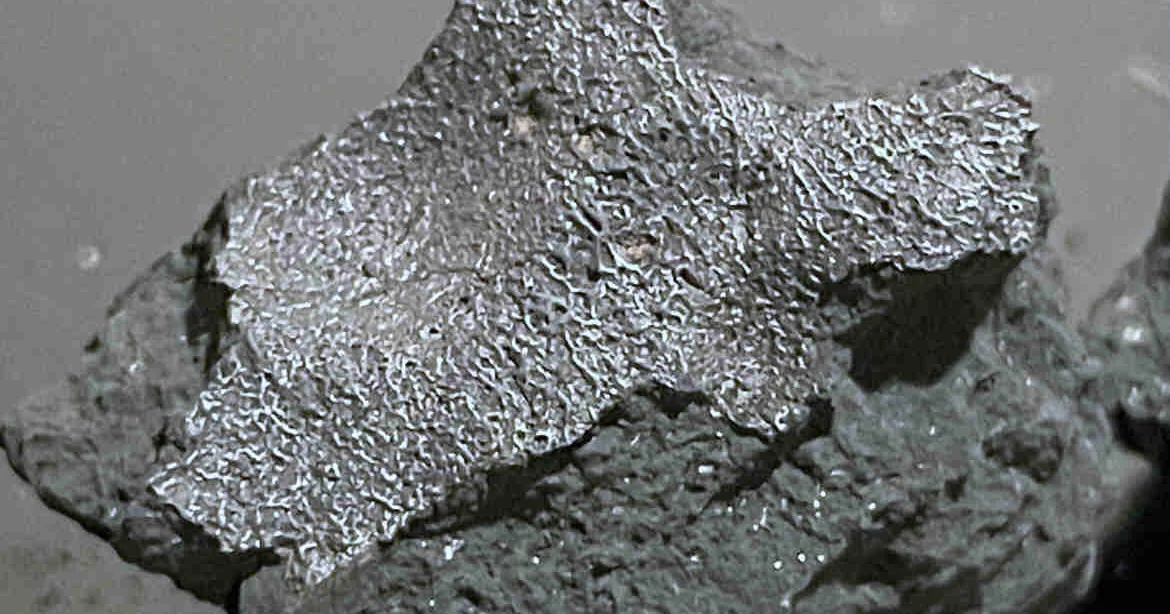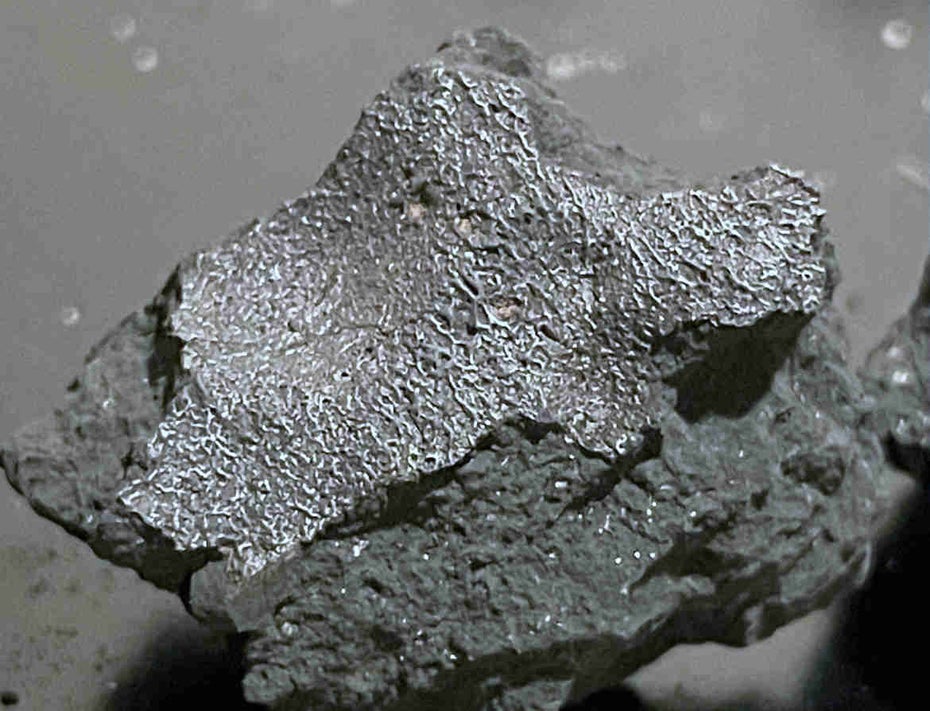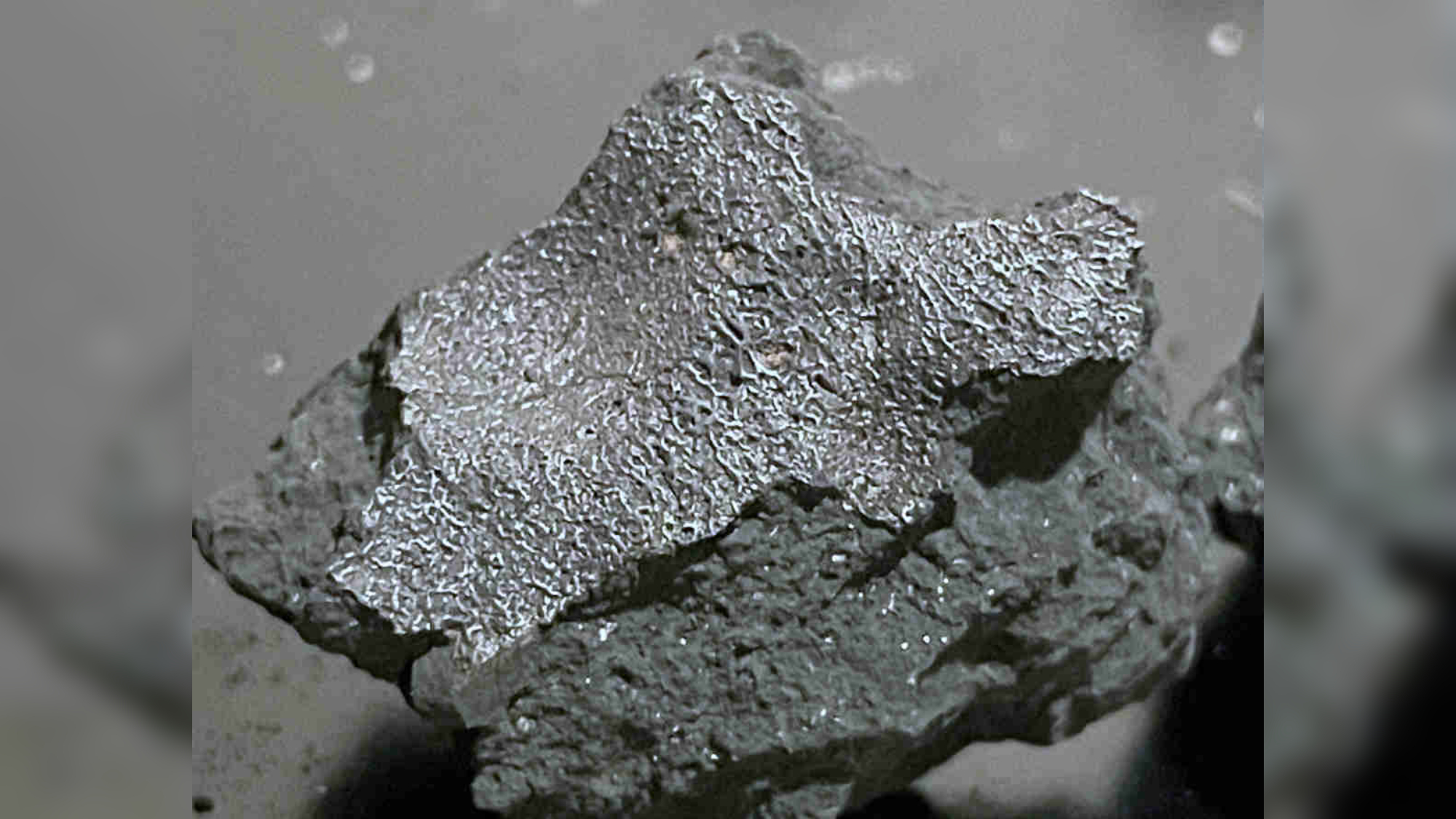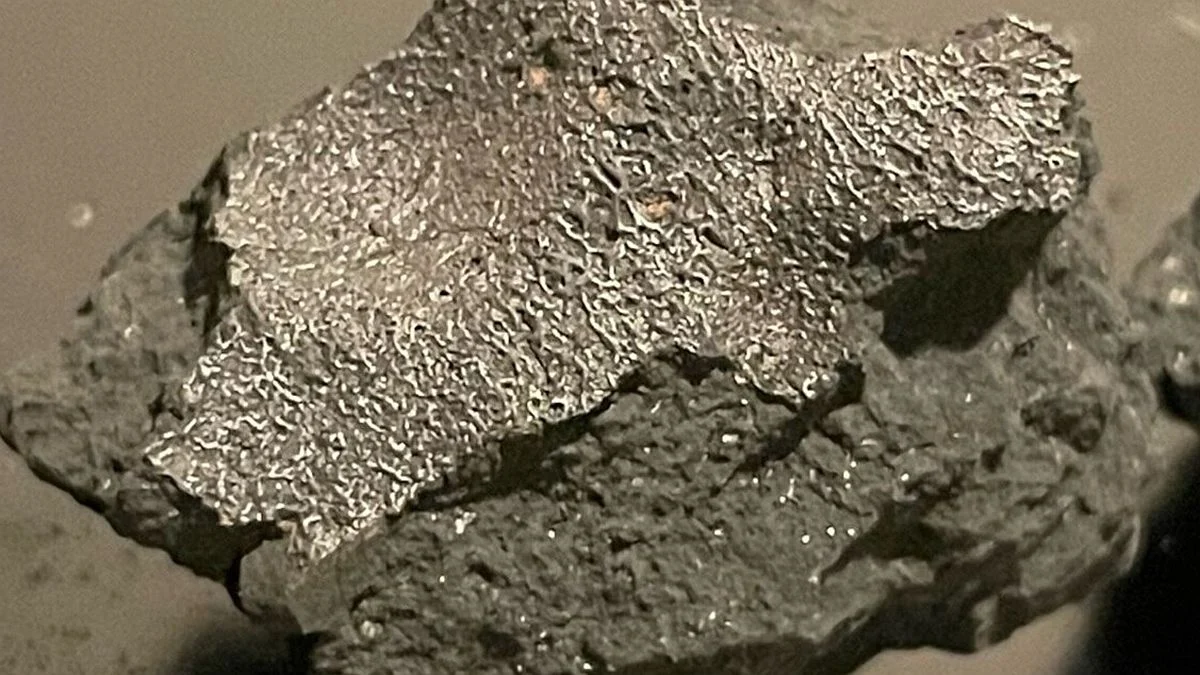
The Hillsborough meteorite. (A. Gordon/Jenniskens et al., Sci. Adv., 2026)
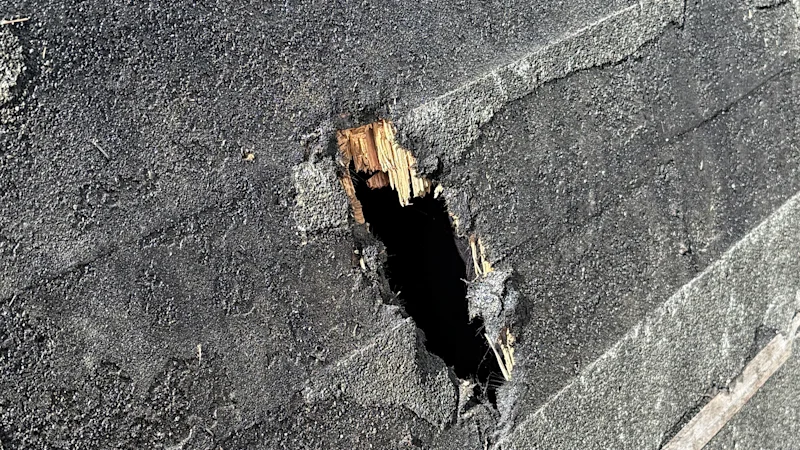
In July 2024, residents of the New York metropolitan area were treated to a rare spectacle as a fireball exploded in the sky, rattling the region with a sonic boom.One New Jersey homeowner got an even closer encounter – a high-speed meteorite fragment punched through her ceiling, shattered, and came to rest on her bedroom floor.The Hillsborough meteorite, as it was later named, was a spectacular boon for science: It was recovered almost immediately, and landing in a house, had escaped rain and soil, minimizing Earth contamination – and preserving its chemistry in unusually pristine condition.Now, scientists have found evidence that concentrated salty brines once flowed through its parent asteroid, driving complex chemistry and leaving behind unusual minerals and a rich suite of organic compounds.The discovery, published in Science Advances, suggests that pockets of salty water inside primitive asteroids may have been far more chemically active than scientists realized – potentially helping produce some of the ingredients for life that later arrived on the young Earth.
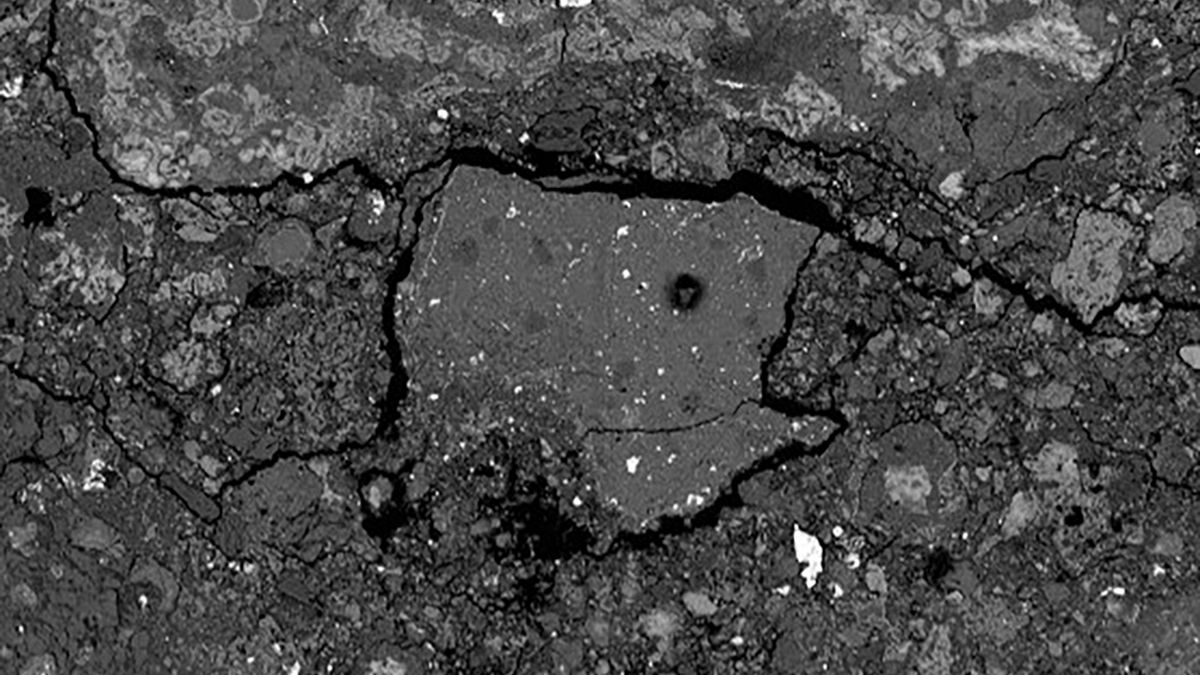
"A forensic study of the fragments revealed that they contained preserved bits from near the surface of a small primitive asteroid where it experienced concentrated salty fluids – a process not previously known from this type of proto-planet world," says meteor astronomer Peter Jenniskens of the SETI Institute and NASA's Ames Research Center.Meteorites preserve a mineral and chemical record of parts of the Solar System, but of the tens of thousands of meteorites recovered to date, most were collected long after they first fell to Earth, by which point they can be significantly altered by prolonged exposure to the terrestrial environment.The Hillsborough meteorite is a rare example of a meteorite that fell in broad daylight over a heavily populated area; its spectacular atmospheric entry was possibly observed by millions, and it was recorded by multiple cameras, from doorbell cameras to dedicated meteor-observing networks.