Growing up in Colombia, Diana Grass had a simple response whenever someone told her something was impossible.“I’ll figure it out.”It’s a phrase that she still lives by today as PhD candidate in the Harvard-MIT Program in Health Sciences and Technology (HST), as she develops soft bioelectronic devices to study the physiological signals through which the brain and body communicate. “I’ve always been fascinated by one question: How do complex systems work?” Grass says.An instinct to get to the bottom of things has guided Grass’ unconventional academic journey across continents and disciplines. Before becoming a neuroscientist and engineer, Grass studied philology and education to understand how language evolves, preserves knowledge, and shapes human communication. Looking back, she sees a common thread. “I wasn’t just studying language,” she says. “I was learning how complex systems communicate.”But it wasn’t until she moved to the United States and began working as a medical interpreter that her scientific interests took a new direction.“Every day, I translated conversations between physicians and patients with neurological disorders,” she says. “Watching those interactions sparked a fascination with the brain. I was intrigued by how a single organ could shape how we communicate, and ultimately who we are.”Working alongside clinicians, Grass watched them rely on laboratory tests, medical imaging, and vital signs to understand what was happening inside the body. Despite remarkable advances in medical imaging and diagnostics, clinicians still rely largely on isolated snapshots of biological processes that are continuously changing inside the body.“The body is communicating all the time,” she says. “We still lack the tools to understand its language.”Determined to better understand the brain, Grass returned to school to study neuroscience with a minor in pre-medicine. She joined an immunology laboratory at Rutgers New Jersey Medical School, where she investigated neuroimmune communication and gained a new appreciation for the body’s interconnected physiology.
Diana Grass: Listening to the body’s language
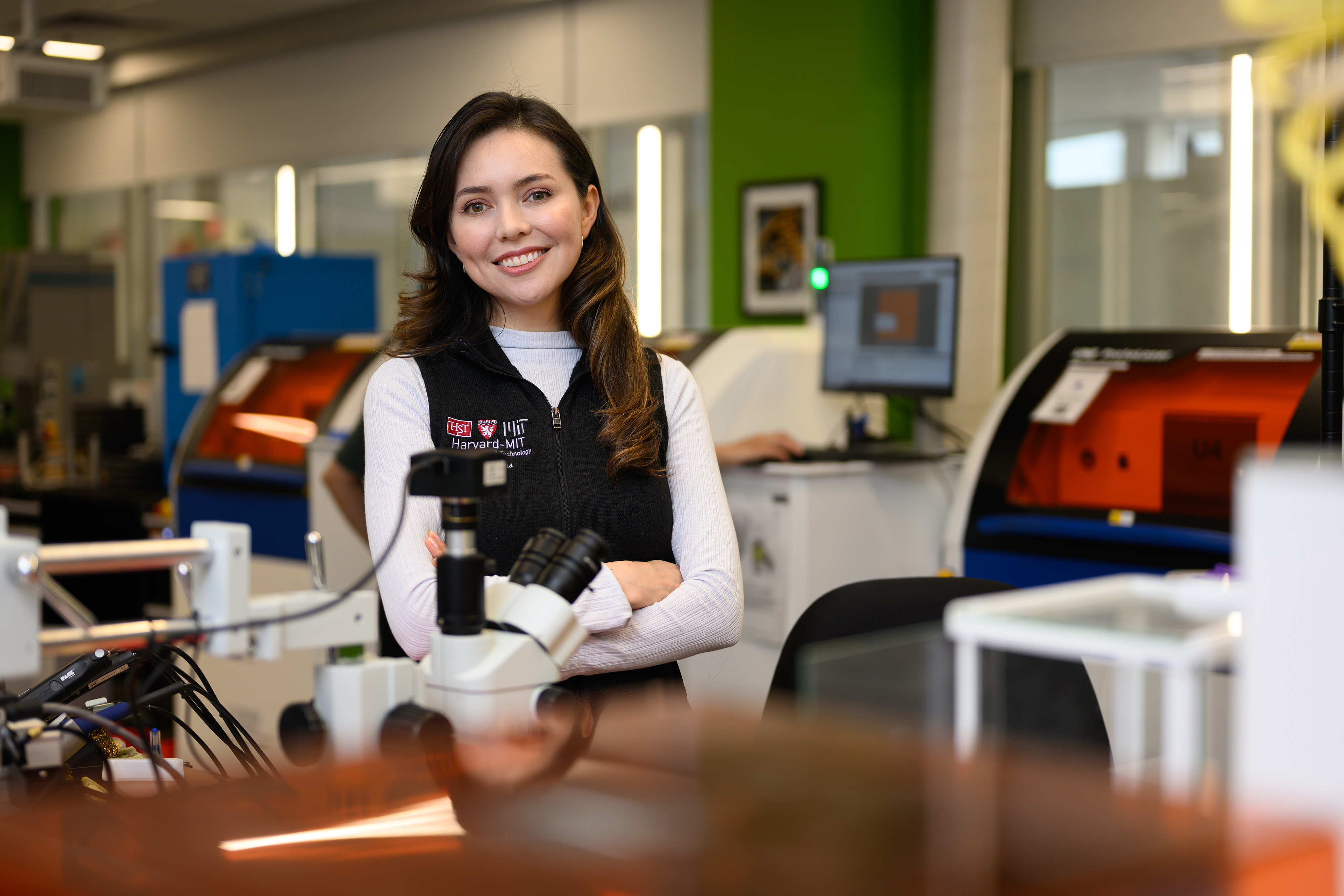
Diana Grass, a PhD student in the Harvard-MIT Health Sciences and Technology Program, develops soft bioelectronic devices that monitor how neural communication coordinates physiology across the entire body. She aims to enable earlier diagnosis, more precise therapies, and a new generation of bioelectronic medicine.
1,033 words~5 min read