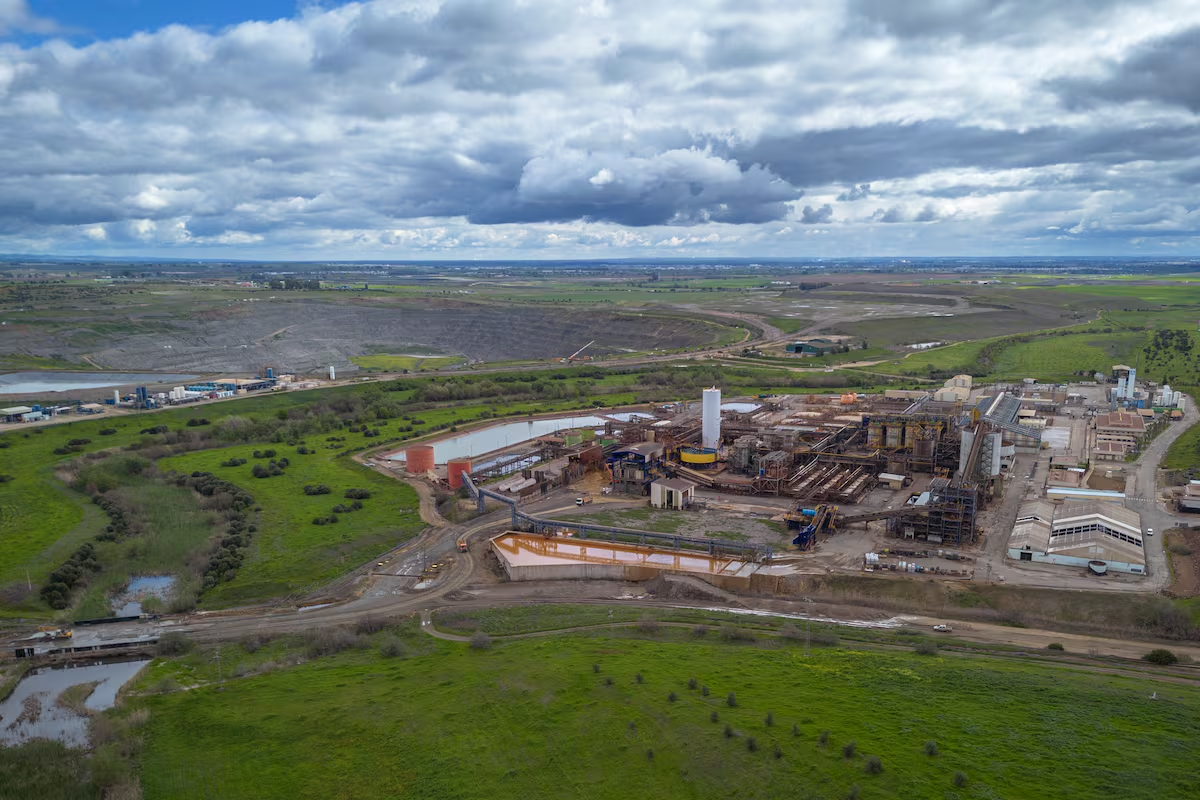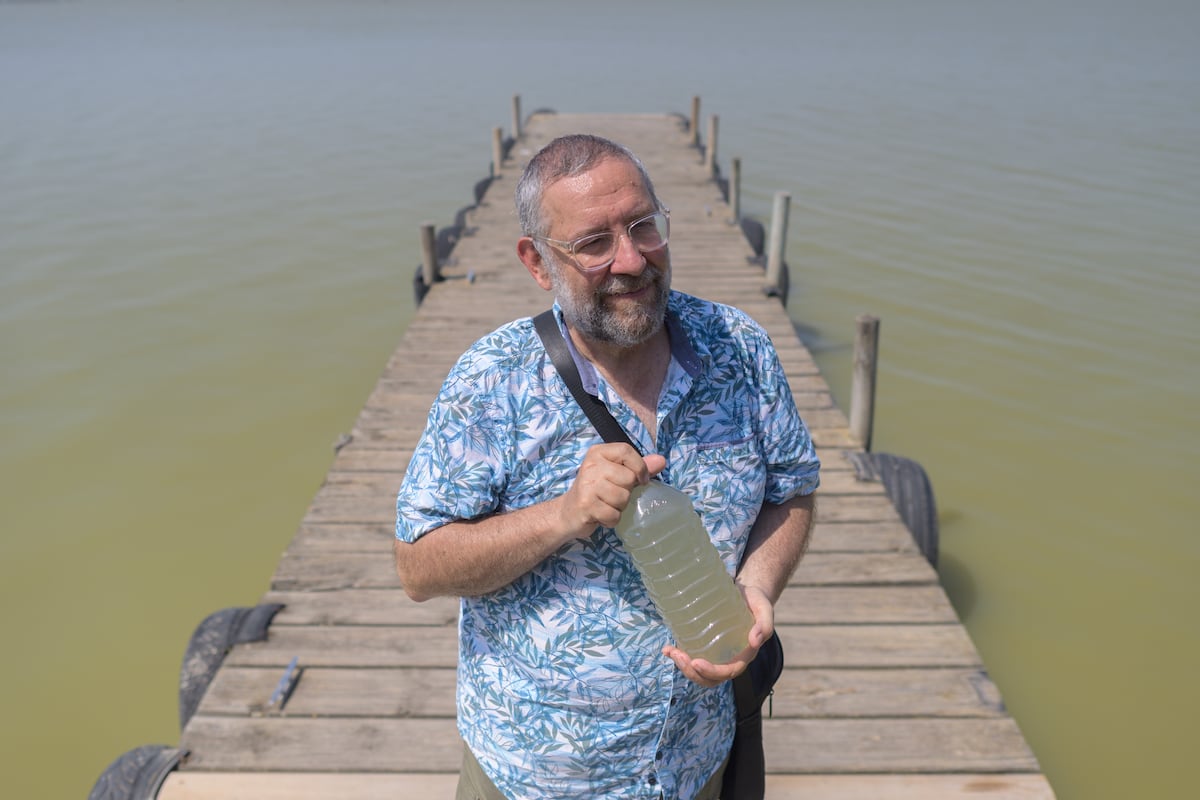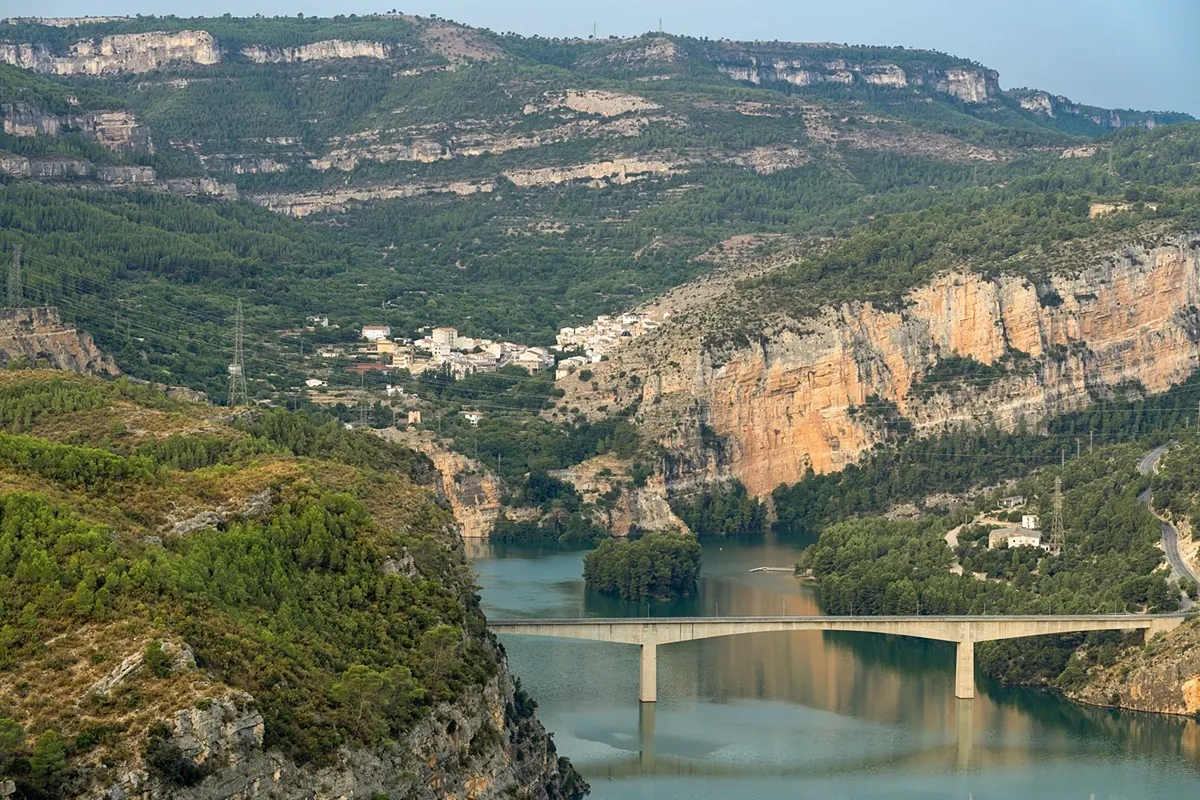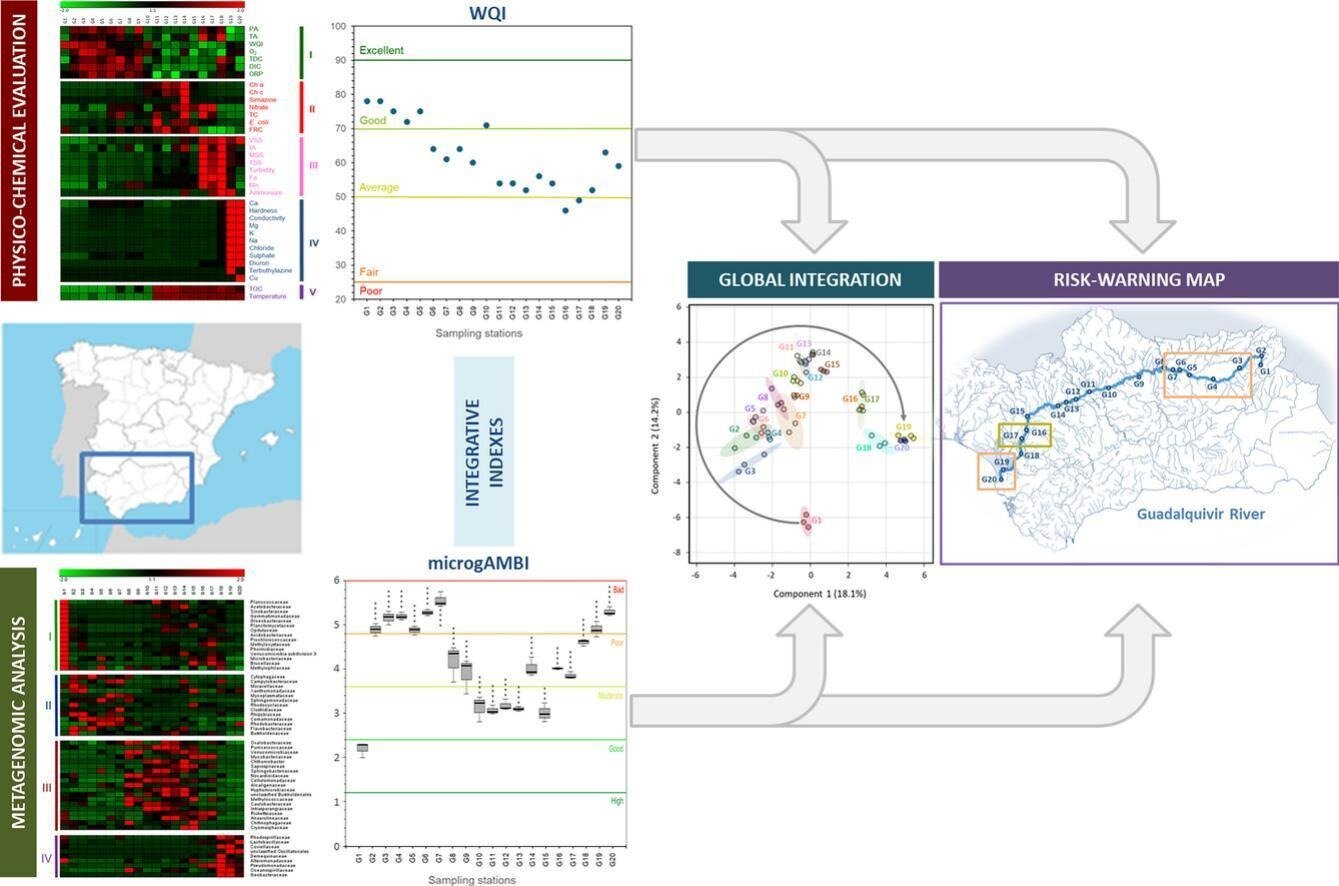
Graphical abstract. Credit: Journal of Contaminant Hydrology (2026). DOI: 10.1016/j.jconhyd.2026.105019
The Guadalquivir is the most important river in Andalusia. Stretching 657 kilometers (408 miles), it forms the backbone of Andalusia, from its source in the Sierra de Cazorla mountains to its mouth in Sanlúcar de Barrameda. These facts, along with its name of Arabic origin (Wadi al-Kabir) and its strategic role in the economy, agriculture and tourism, are widely known. Few studies, however, have comprehensively assessed the quality of the "Great River" along its entire course.
To address this knowledge gap, the "Molecular Biology of Stress Response Mechanisms" and "Waste Bioengineering: Green Engineering" groups at the University of Córdoba have joined forces to study the river's entire course. For the first time, they are carrying out a holistic, multidisciplinary analysis that considers not only the water's physicochemical variables but also microbial factors to assess water quality and identify critical sections where it may be compromised. The Ecotoxicology, Ecophysiology and Biodiversity of Aquatic Systems group at the Institute of Marine Sciences of Andalusia (ICMAN-CSIC) is also participating.